
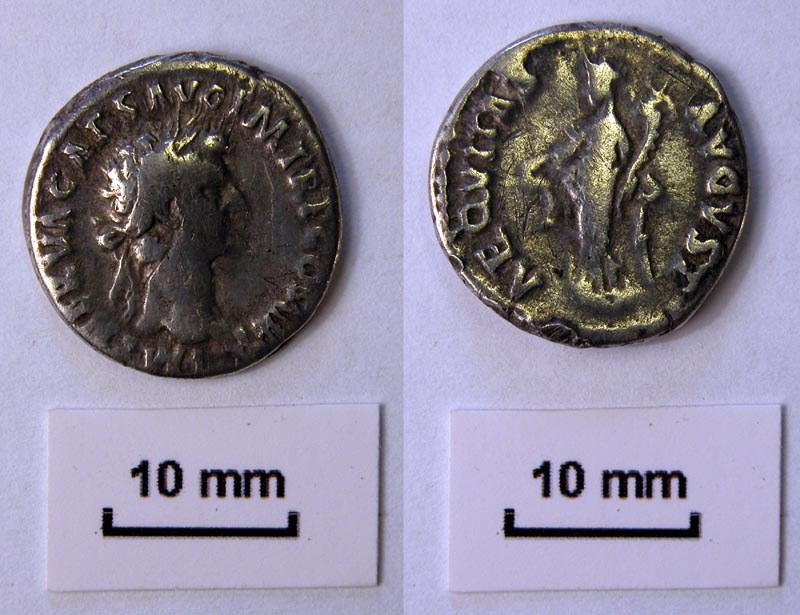
Denarius of Nerva
Roman Imperial silver denarius of Emperor Nerva (96-98 AD), with his laureate portrait and the legend IMP NERVA CAES AVG, and a seated Concordia reverse.
- Country
- Roman Empire
- Denomination
- Denarius
- Metal
- Silver
Got a coin like this?
Identify any coin from a photo, free.
Overview
The Denarius of Nerva is a Roman Imperial silver coin struck during the short reign of Nerva (96-98 AD), the first of the emperors later grouped as the "Five Good Emperors." The example shown here follows the standard imperial pattern of the period: a laureate portrait of Nerva facing right on the obverse, encircled by the legend IMP NERVA CAES AVG, with a personification of a Roman virtue on the reverse.
On this coin the reverse shows Concordia seated left, holding a patera and a cornucopia — a familiar image of harmony and plenty used to broadcast the stability of the new regime. The denarius was the workhorse silver coin of the Roman Empire, roughly the size of a modern dime, and it carried the emperor's image and slogans across the provinces.
Because each denarius was struck by hand from individually engraved dies, centering, strike, and surface preservation vary from coin to coin, and no two examples are exactly alike.
History & Background
Nerva came to the throne in September 96 AD after the assassination of Domitian, chosen by the Senate as an elderly, respected statesman meant to restore calm after the tensions of the previous reign. His rule lasted only about sixteen months, ending with his death in early 98 AD, but it opened the era of adoptive succession that produced Trajan, Hadrian, and the Antonines.
Nerva's brief reign left him little time to build monuments, so his coinage is his most widespread surviving legacy. His denarii and other issues emphasize conciliation and legitimacy through personifications such as Concordia, Aequitas, Fortuna, Libertas, and Salus, along with types marking his measures of relief and public benefit. Reverses of Concordia in particular projected the message of restored harmony between the emperor, the army, and the Senate.
The denarius itself had been the backbone of Roman silver coinage for centuries and remained so under Nerva, struck at Rome and circulating throughout the empire. Coins like this one survive today as tangible records of a pivotal, transitional moment in Roman imperial history.
How to Identify
Identify the coin first as a Roman Imperial denarius: a small silver piece roughly 17-19 mm across and typically about 3.0-3.6 grams, hand-struck so the flan is often slightly irregular or off-center. The obverse carries a laureate (wreathed) head of Nerva facing right, an individualized elderly portrait with a prominent nose and hooked profile.
Read the obverse legend, which runs around the portrait as IMP NERVA CAES AVG in Latin capitals. This inscription — naming Nerva as Imperator, Caesar, and Augustus — is the decisive clue that attributes the coin to him rather than to another emperor of the period. Longer or dated variants of the legend also occur on his issues.
On the reverse, this type shows Concordia seated left, holding a shallow dish (patera) in one hand and a cornucopia (horn of plenty) in the other, with a reverse legend around the figure. The metal should look like toned silver rather than the brassy tone of a base-metal cast, and a genuine strike shows crisp die detail instead of the soft, blurry surfaces of a mould copy.
Value & Collectibility
The denarius of Nerva is collectible and attainable, but because his reign was short his coinage is scarcer than that of longer-ruling emperors, which supports steady collector demand. Value is driven mainly by condition, strike quality, portrait style, and eye appeal rather than by exact rarity.
Worn, off-center, or corroded examples are the most affordable, while coins with a sharp elderly portrait, full readable IMP NERVA CAES AVG legend, well-centered flan, and attractive toning command a clear premium. Particular reverse types, high grades, and coins with pleasing surfaces bring the strongest prices, and demand for Nerva as a historically significant "Five Good Emperors" figure adds interest.
Because Roman silver is frequently forged and prices swing sharply with condition, confirm value against recent auction results for the same type and grade. For any coin of significant value, certification by a recognized ancient-coin grading service reduces both authenticity and grade risk.
Frequently asked questions
Who was Nerva and when did he rule?
Nerva was a Roman emperor who reigned from 96 to 98 AD, chosen by the Senate after the assassination of Domitian. He was the first of the so-called Five Good Emperors and began the tradition of adoptive succession that led to Trajan.
How can I tell a denarius is Nerva's?
Read the obverse legend around the laureate portrait. Nerva's denarii carry his name as IMP NERVA CAES AVG in Latin capitals. That inscription, combined with the individualized elderly, hook-nosed profile, attributes the coin to him.
What does the reverse of this coin show?
This example shows Concordia, the personification of harmony, seated to the left and holding a patera (a shallow offering dish) and a cornucopia (horn of plenty). It was a message of restored stability and prosperity under the new emperor.
Is the denarius of Nerva made of real silver?
Yes. It was struck in silver, roughly 17-19 mm across and about 3.0-3.6 grams. Genuine examples show toned silver and crisp die detail, not the brassy color or soft surfaces of a base-metal cast copy.
Is a Nerva denarius rare or valuable?
Nerva ruled only about sixteen months, so his coinage is scarcer than that of longer-reigning emperors, but denarii are still obtainable. Value depends mainly on condition and strike, with sharp, well-centered, attractively toned coins bringing the most.
Denarius of Nerva guides
In-depth guides for identifying, valuing, and collecting Denarius of Nerva.
Other coins you may enjoy
Tetradrachm of Ptolemy XII
80-51 BC
Tetradrachm of Ptolemy I
305-283 BC
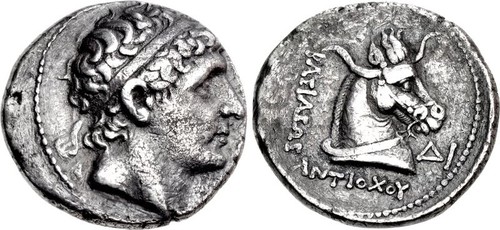
Tetradrachm of Antiochos I Soter
281-261 BC
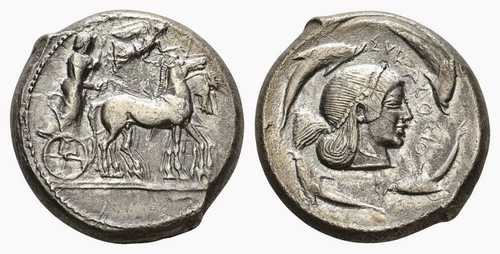
Syracuse Tetradrachm
c. 5th-4th century BC (Classical period)
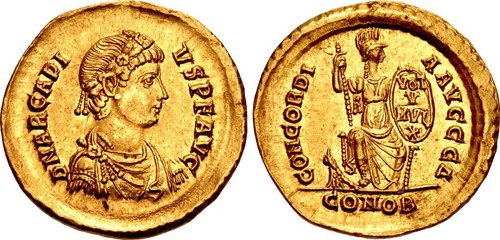
Solidus of Arcadius
AD 395-402
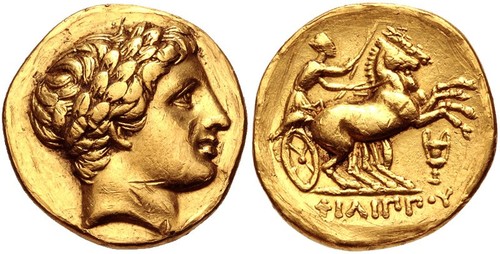
Philip III Gold Stater
323-317 BC
Siliqua of Gratian
AD 367-383
Sestertius of Maximinus Thrax
235-238 AD
Solidus of Valentinian III
AD 425-455
Seleucus I Nicator Tetradrachm
Late 4th-3rd century BC
Nummus of Magnentius
AD 350-353
Follis of Galerius
AD 308-310