
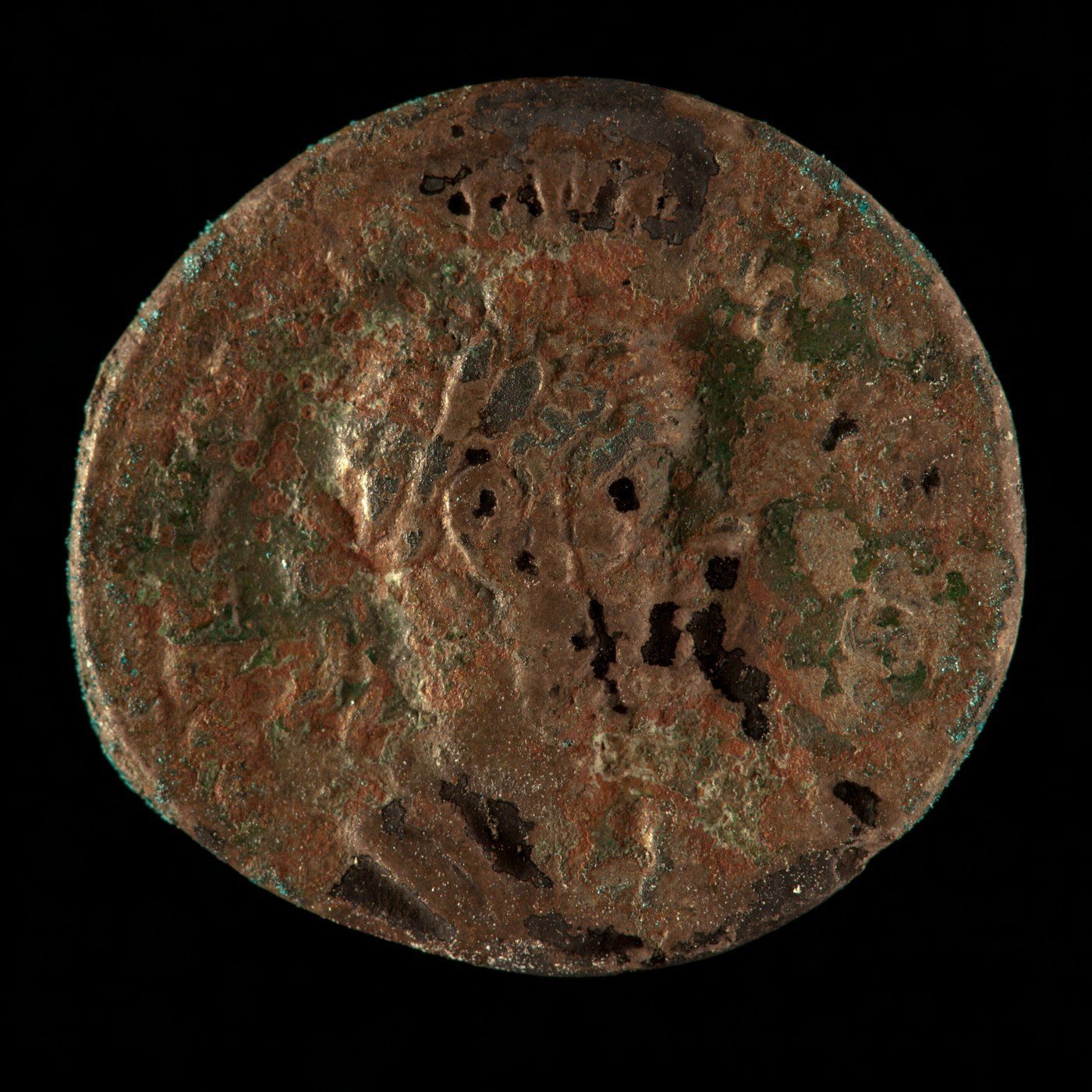
Denarius of Macrinus
Silver denarius of Macrinus (r. 217–218 AD), a bearded emperor portrait paired with a standing deity or personification on the reverse.
- Country
- Roman Empire
- Denomination
- Denarius
- Metal
- Silver
Got a coin like this?
Identify any coin from a photo, free.
Overview
The Denarius of Macrinus is a small silver coin issued during the brief reign of the Roman emperor Macrinus, who ruled from April 217 to June 218 AD. The obverse carries his laureate, right-facing profile with a distinctive beard and a surrounding Latin legend naming him. The reverse of the photographed example shows a standing female figure, one of the deities or personifications (such as Fides, Salus, Securitas, Providentia, or Aequitas) that Roman mints used to advertise imperial virtues and messages.
Because Macrinus held power for barely fourteen months, his coinage was struck over a short window, making his denarii less common than those of the long-reigning Severan emperors around him. The type is a classic example of early third-century Roman silver, produced primarily at the mint of Rome.
History & Background
Macrinus (Marcus Opellius Macrinus) was Praetorian Prefect under Caracalla and became emperor in April 217 after Caracalla was assassinated on the road near Carrhae. He was the first Roman emperor to rise from the equestrian order rather than the senate, and the first who had never held a seat in the Senate before taking the purple. He elevated his young son Diadumenian to Caesar and later co-Augustus.
His short reign was marked by an unpopular peace settlement with Parthia and cuts to military pay and privileges, which eroded support among the legions. In 218 the eastern armies were rallied behind the teenage Elagabalus, a Severan relative. Macrinus was defeated at the Battle of Antioch, captured while fleeing, and executed in June 218.
His denarii were struck within this compressed timeframe. Numismatists note that his portrait evolved during the reign, with earlier issues often showing a shorter beard and later ones a longer, fuller beard styled in the manner of earlier philosopher-emperors—a detail that helps date individual coins.
How to Identify
Look first at the obverse portrait: a mature, bearded man in right profile wearing a laurel wreath, surrounded by a legend that typically reads some form of IMP C M OPEL SEV MACRINVS AVG. The beard is a key marker—Macrinus is one of the few third-century emperors regularly shown bearded, and the beard length (shorter vs. longer) reflects the phase of his reign.
The reverse shows a standing figure—on this example a female personification—usually holding attributes such as a patera, scepter, cornucopia, scales, or standard, with a legend naming the virtue or deity (for example SALVS, FIDES MILITVM, PROVIDENTIA DEORVM, or SECVRITAS). Some legends and mottos are unusually long on Macrinus's coinage.
Physically, expect a silver disc roughly 18–20 mm across and about 2.5–3.5 g. By this date the denarius was debased, so the alloy is silver mixed with copper and can show toning or surface roughness. The larger, radiate-crown "antoninianus" (double denarius) also exists for Macrinus and should not be confused with the laureate denarius.
Value & Collectibility
Macrinus denarii are moderately scarce because of his fourteen-month reign, but they are far from unobtainable and appear regularly in the ancient-coin market. Common reverse types in worn-to-decent condition often trade in roughly the low- to mid-hundreds of US dollars, while sharp, well-centered examples with clear portraits and pleasant toning command more. Rare reverse legends, exceptional style, or high grade can push prices substantially higher.
As with all ancient silver, value depends heavily on strike quality, centering, surface (toning, cleaning, corrosion), and the specific reverse type rather than on a fixed catalog price. Authenticity and provenance also matter—these figures are general context, not a quote, and any purchase should be judged coin-by-coin.
Frequently asked questions
Who was Macrinus?
Macrinus was Roman emperor from April 217 to June 218 AD. A former Praetorian Prefect, he was the first emperor to come from the equestrian order rather than the senate. He was overthrown by supporters of Elagabalus and executed.
Why is Macrinus shown with a beard?
Macrinus deliberately wore a beard, and his coin portraits show it clearly. The beard style shifted during his reign—generally shorter early on and longer later—so it serves as both an identifying trait and a rough dating clue.
What is the standing figure on the reverse?
It is typically a deity or personification of an imperial virtue, such as Salus, Fides, Securitas, Providentia, or Aequitas. The reverse legend names the figure and often carries a propaganda message about the emperor's rule.
Are Macrinus denarii rare?
They are scarcer than the coins of longer-reigning Severan emperors because of his very short reign, but they are still available to collectors. Rarity depends on the specific reverse type and condition.
What is the coin made of?
It is silver, though by the early third century the denarius was debased with copper. Expect a coin about 18–20 mm wide and roughly 2.5–3.5 grams.
Denarius of Macrinus guides
In-depth guides for identifying, valuing, and collecting Denarius of Macrinus.
Other coins you may enjoy
Tetradrachm of Ptolemy XII
80-51 BC
Tetradrachm of Ptolemy I
305-283 BC
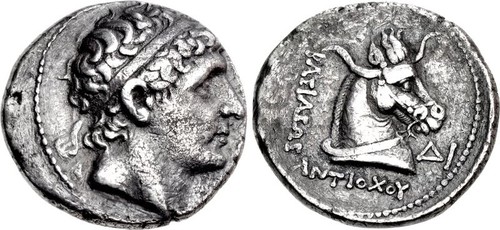
Tetradrachm of Antiochos I Soter
281-261 BC
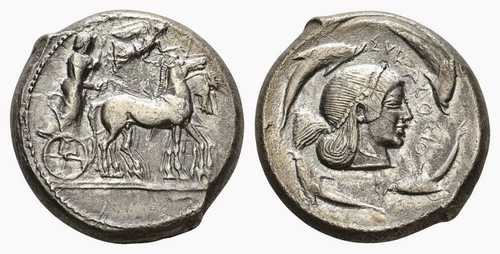
Syracuse Tetradrachm
c. 5th-4th century BC (Classical period)
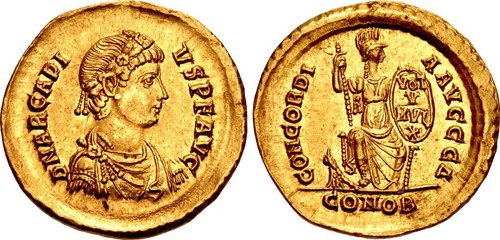
Solidus of Arcadius
AD 395-402
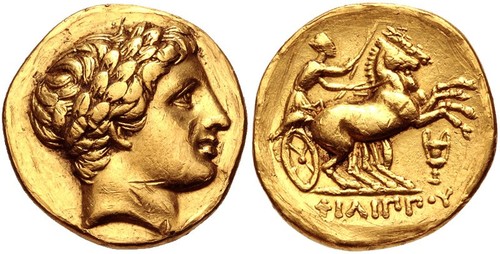
Philip III Gold Stater
323-317 BC
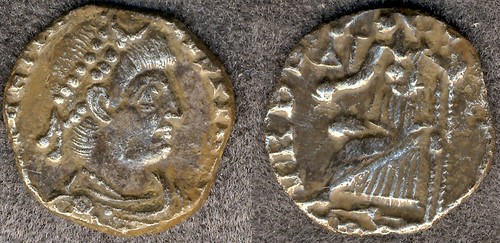
Siliqua of Gratian
AD 367-383
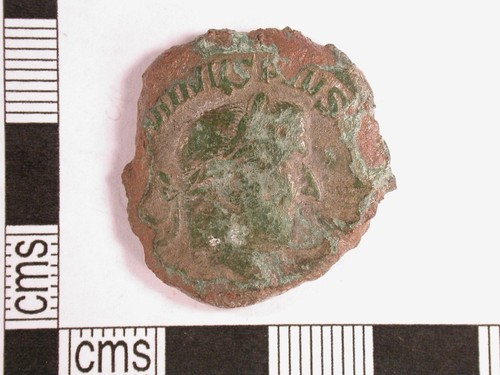
Sestertius of Maximinus Thrax
235-238 AD
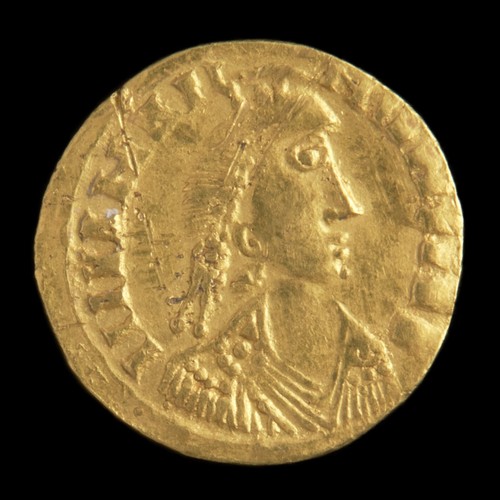
Solidus of Valentinian III
AD 425-455
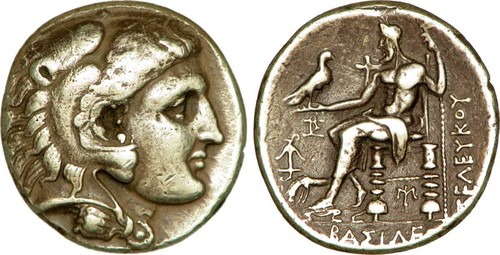
Seleucus I Nicator Tetradrachm
Late 4th-3rd century BC
Nummus of Magnentius
AD 350-353
Follis of Galerius
AD 308-310