
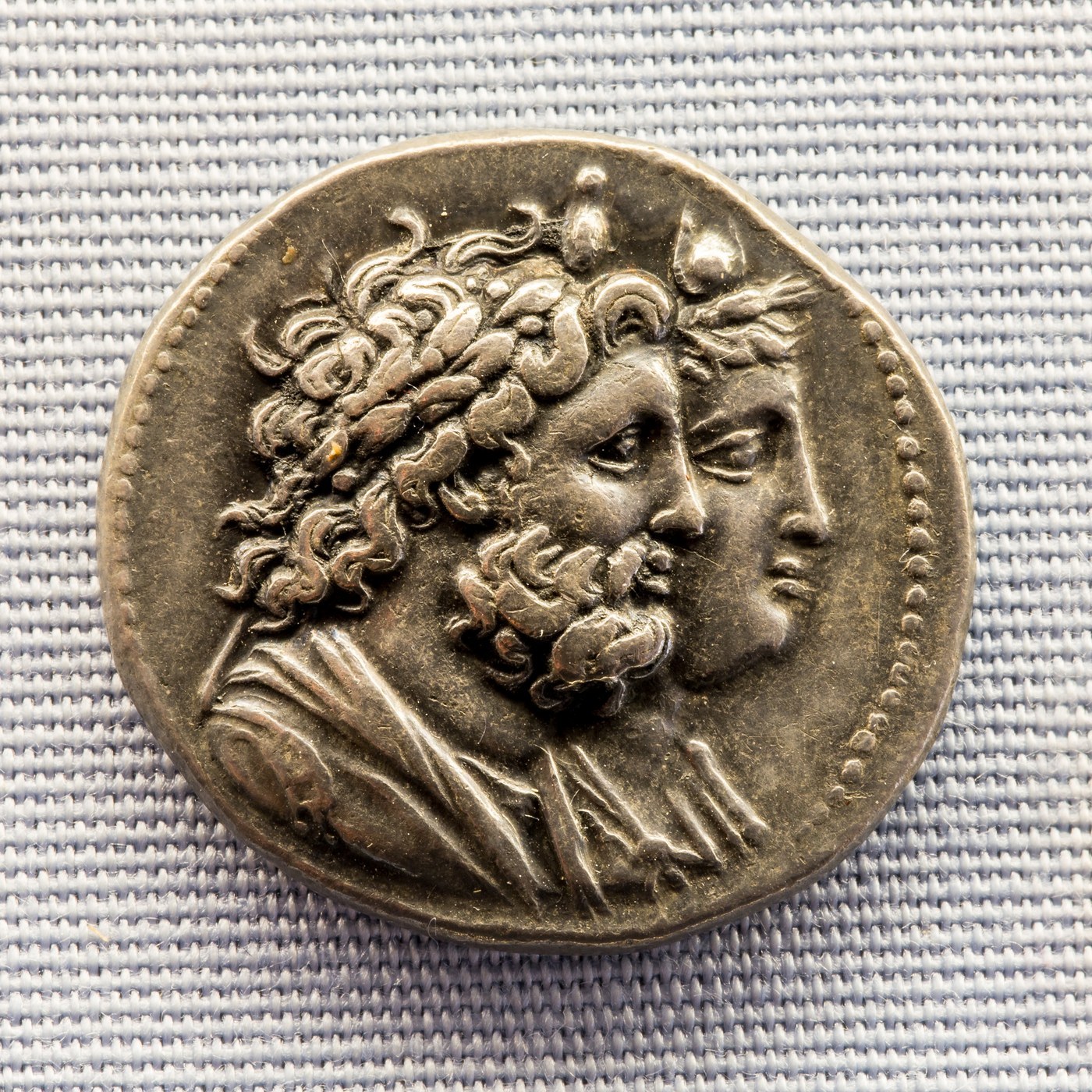
Tetradrachm of Ptolemy IV
Silver tetradrachm of Ptolemy IV Philopator, 221-204 BC, with the jugate busts of Sarapis and Isis on the obverse and an eagle on a thunderbolt on the reverse.
- Country
- Ancient Egypt
- Denomination
- Tetradrachm
- Metal
- Silver
Got a coin like this?
Identify any coin from a photo, free.
Overview
This is a large silver tetradrachm of the Ptolemaic kingdom of Egypt, struck during the reign of Ptolemy IV Philopator, roughly 221-204 BC. Unlike the standard Ptolemaic tetradrachm carrying the founder's diademed portrait, this issue pairs the conjoined busts of the gods Sarapis and Isis on the obverse with the familiar Ptolemaic eagle standing on a thunderbolt on the reverse.
The coin belongs to a special divine-portrait series rather than the everyday royal-portrait coinage, and its imagery advertises the dynasty's close association with the great Graeco-Egyptian cults of Alexandria. It is struck in high-grade silver on a broad flan in the reduced Ptolemaic weight standard used across the kingdom.
The combination of the two jugate divine heads on one side and the standing eagle on the other is the core identifier. It marks the piece as Ptolemaic Egyptian silver rather than an Attic-weight tetradrachm of the Seleucids or the wider Greek world.
History & Background
Ptolemy IV Philopator ruled Egypt from about 221 to 204 BC, the fourth king of the Macedonian dynasty founded by Ptolemy I, one of Alexander the Great's generals. His reign is best remembered for the great victory over the Seleucid king Antiochos III at the Battle of Raphia in 217 BC, a campaign that drew heavily on Egyptian troops and resources, and for a court increasingly marked by luxury and intrigue.
The Ptolemies ran a closed monetary system: foreign coin entering Egypt was reminted into the kingdom's own lighter tetradrachms, which circulated at a fixed rate within its borders. The steady output of Ptolemaic silver funded government, armies, and mercenaries, and it carried a consistent dynastic message through its imagery.
The pairing of Sarapis and Isis on this issue reflects the deliberate religious policy of the dynasty. Sarapis was a Graeco-Egyptian god heavily promoted by the early Ptolemies as a unifying deity for Greeks and Egyptians alike, while Isis was among the most widely worshipped goddesses of the ancient world. Placing the divine couple on royal coinage tied the crown to these powerful cults and to the ideal of the god-favored ruling house.
How to Identify
The obverse shows the jugate (overlapping) busts of Sarapis and Isis facing right, the two heads set one behind the other. Sarapis is the bearded male god, often crowned with a grain measure (the modius) and wearing a taenia or wreath, while Isis is shown with her own headdress and hair in front. Reading the coin as a paired divine couple, rather than a single royal portrait, is the key first step.
The reverse carries the eagle standing on a thunderbolt, the enduring badge of the Ptolemaic house, usually facing left with closed or partly spread wings. Around it runs a Greek legend naming the king, typically in the form of the royal name and the title BASILEOS PTOLEMAIOU, with control letters or small symbols in the field that helped the mint track production.
In hand the coin is a full tetradrachm of high-grade silver, generally on the order of roughly 13 to 14 grams on the reduced Ptolemaic standard and about 25 to 28 mm across. It is struck by hand, so the flan is somewhat irregular and centering varies, and the silver commonly shows old grey or iridescent toning. The pairing of two divine heads with the standing eagle, at tetradrachm size and weight, is the defining combination.
Value & Collectibility
As genuine Ptolemaic silver with an attractive divine-couple design, this tetradrachm carries steady collector demand. Worn but clearly identifiable examples generally trade from around the low hundreds of dollars upward, while well-centered coins with sharp busts, a bold eagle, and clean surfaces can reach the high hundreds and into four figures for the finest pieces.
Value depends chiefly on the clarity of the jugate portraits, the strength of the eagle and legend, the flan's centering, the surface quality and toning, and overall eye appeal. Because the Sarapis-and-Isis type is scarcer and more sought-after than the common Ptolemy I portrait tetradrachm, it tends to command a premium over ordinary Ptolemaic silver of similar grade.
These figures are general market context rather than appraisals. Any individual coin's price turns on its exact condition, style, authenticity, and attribution, and higher-value ancient silver of this kind is often sold with specialist cataloguing or third-party certification.
Frequently asked questions
Who are the two figures on the front of the coin?
They are the gods Sarapis and Isis, shown as overlapping (jugate) busts. Sarapis is the bearded male god, often crowned with a grain measure, and Isis is the goddess shown with her own headdress. It is a divine couple, not a royal portrait.
Why does the reverse show an eagle on a thunderbolt?
The eagle standing on a thunderbolt was the standing badge of the Ptolemaic dynasty of Egypt and appears on their coinage for generations. It identifies the coin as Ptolemaic royal money.
How is this different from a normal Ptolemaic tetradrachm?
Most Ptolemaic tetradrachms show the diademed portrait of the founder, Ptolemy I. This issue instead pairs the divine busts of Sarapis and Isis on the obverse, making it a special divine-portrait type struck under Ptolemy IV.
How big and heavy is the coin?
It is a large silver tetradrachm, generally on the order of roughly 13 to 14 grams on the reduced Ptolemaic standard and about 25 to 28 mm across. Being hand-struck, its flan and centering vary from coin to coin.
What was Ptolemy IV known for?
Ptolemy IV Philopator ruled Egypt about 221-204 BC and is best remembered for defeating the Seleucid king Antiochos III at the Battle of Raphia in 217 BC. His dynasty closely promoted the cults of Sarapis and Isis seen on this coin.
Tetradrachm of Ptolemy IV guides
In-depth guides for identifying, valuing, and collecting Tetradrachm of Ptolemy IV.
Other coins you may enjoy
Tetradrachm of Ptolemy XII
80-51 BC
Tetradrachm of Ptolemy I
305-283 BC
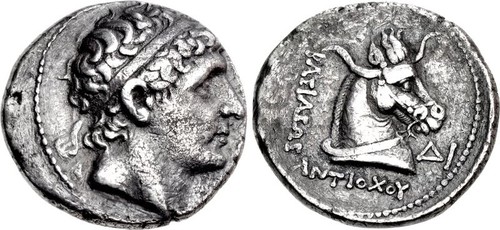
Tetradrachm of Antiochos I Soter
281-261 BC
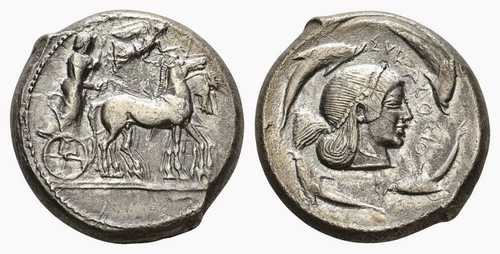
Syracuse Tetradrachm
c. 5th-4th century BC (Classical period)
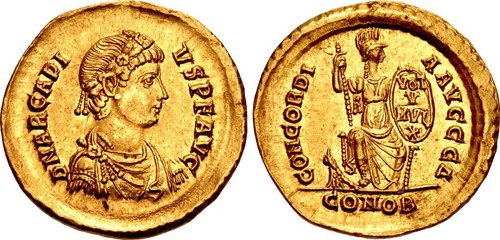
Solidus of Arcadius
AD 395-402
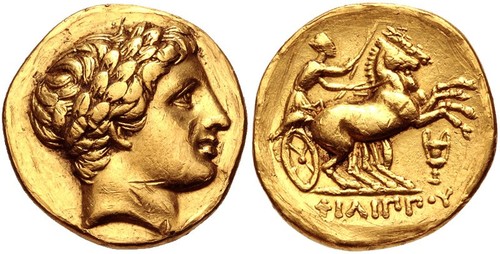
Philip III Gold Stater
323-317 BC
Siliqua of Gratian
AD 367-383
Sestertius of Maximinus Thrax
235-238 AD
Solidus of Valentinian III
AD 425-455
Seleucus I Nicator Tetradrachm
Late 4th-3rd century BC
Nummus of Magnentius
AD 350-353
Follis of Galerius
AD 308-310