
How to Identify the Tetradrachm of Ptolemy IV
A collector's guide to recognizing this Ptolemaic tetradrachm by its jugate Sarapis and Isis busts, eagle-on-thunderbolt reverse, silver fabric, and weight.
Read the full Tetradrachm of Ptolemy IV encyclopedia entry →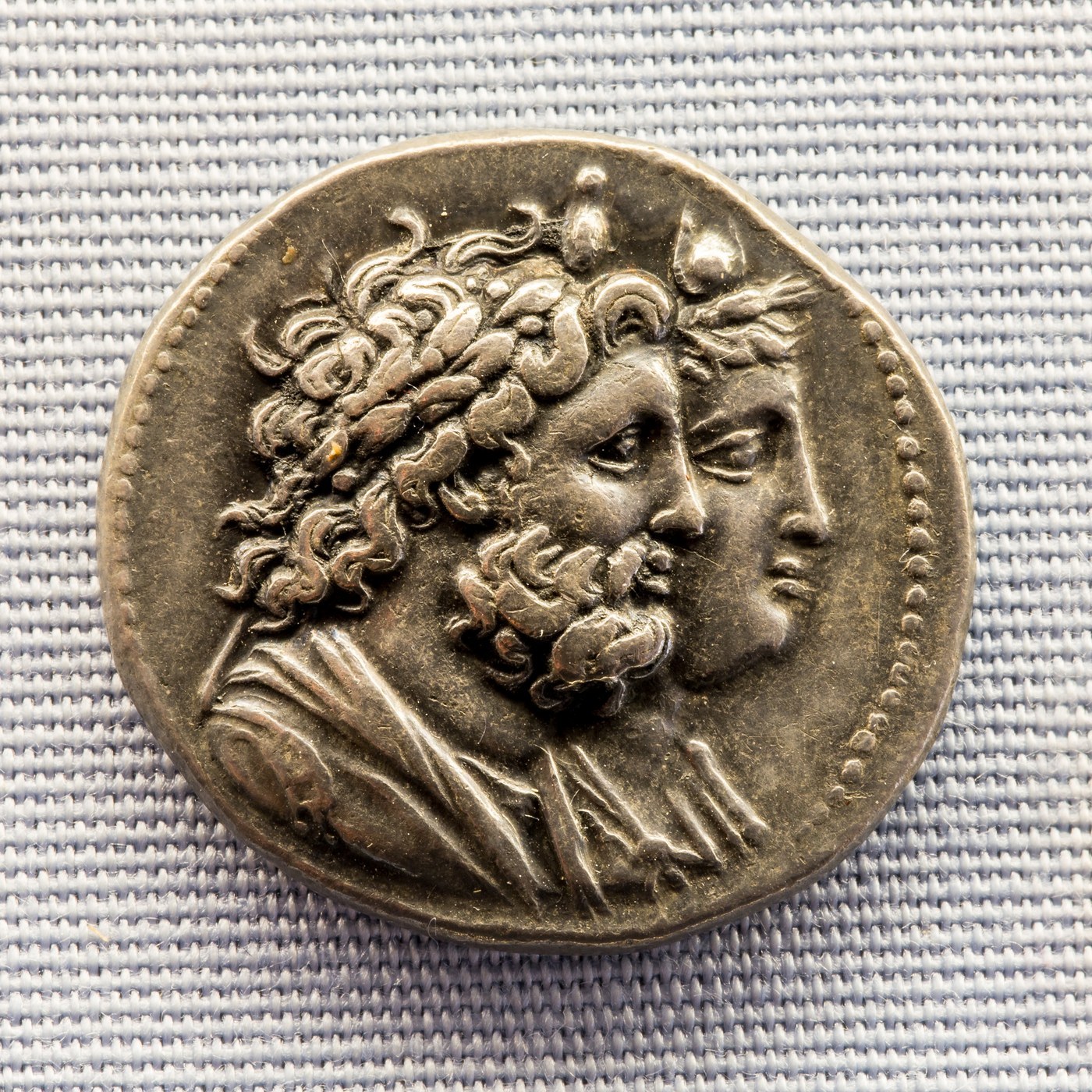
Begin with the denomination and metal. This is a tetradrachm of high-grade silver, generally on the order of roughly 13 to 14 grams on the reduced Ptolemaic weight standard and about 25 to 28 mm wide. Weigh and measure a candidate first: a Ptolemaic tetradrachm is noticeably lighter than an Attic-weight tetradrachm of around 17 grams, and much smaller or lighter silver of the same style will be a fraction rather than a full tetradrachm.
Read the obverse carefully, because the divine couple is the single most distinctive feature. Look for two overlapping (jugate) busts facing right: the bearded male god Sarapis, often crowned with a grain measure (modius) and wreath, set behind the goddess Isis with her own headdress and forehead hair. If you see only one head, or a diademed royal portrait with a distinctive aegis around the neck, you are looking at the far more common Ptolemy I portrait type, not this Sarapis-and-Isis issue.
Turn to the reverse and confirm the eagle standing on a thunderbolt, usually facing left, with a Greek legend around it naming the king in the form BASILEOS PTOLEMAIOU. Check the fields for small control letters, monograms, or symbols; these helped the mint organize production and can assist precise attribution, but they are often weak or off the flan and should never be invented from an unclear reading.
Examine fabric and strike. Genuine coins of this period are hand-made and slightly irregular: an oval or off-round flan, uneven edges, and centering that can crop part of the busts or legend at the rim. Old grey or iridescent toning over bright metallic silver is normal and reassuring, whereas a chalky, porous, or greasy surface is a warning sign. The eagle should sit naturally on the thunderbolt with feather detail that follows the relief rather than looking etched on.
Finally, weigh authenticity with care, since Ptolemaic silver is widely copied. Watch for the tell-tale signs of a cast fake: a seam around the edge, trapped air bubbles, soft mushy detail, and a dull non-metallic tone. Tooled coins show unnaturally sharp, scratchy lines added to worn relief. Because the type is desirable, secure attribution rests on the correct weight, the jugate divine busts, the eagle reverse, and any legible legend and controls; for a significant purchase, rely on specialist cataloguing or third-party certification and documented provenance.
Frequently asked questions
How do I tell this from a common Ptolemy I portrait tetradrachm?
The common type shows a single diademed royal head wearing an aegis. This coin instead shows two overlapping busts, the gods Sarapis and Isis. Seeing a divine couple rather than one royal portrait is the clearest distinction, with the eagle reverse shared by both.
How do I confirm it is a tetradrachm and not a smaller coin?
Weigh and measure it. A Ptolemaic tetradrachm sits on the order of roughly 13 to 14 grams and about 25 to 28 mm across. Lighter, smaller silver of the same style is a fraction, so the weight settles the denomination.
Which head is Sarapis and which is Isis?
Sarapis is the bearded male god set behind, frequently crowned with a grain measure (modius). Isis is the goddess in front, shown with her own headdress and forehead hair. The two are struck as jugate, overlapping busts.
What are the main warning signs of a fake?
A seam around the edge, trapped air bubbles, soft mushy detail, and a dull non-metallic tone suggest a cast copy, while unnaturally sharp scratchy lines on otherwise worn relief suggest tooling. For valuable examples, seek specialist attribution or certification.