
Macedonian Silver Tetradrachm
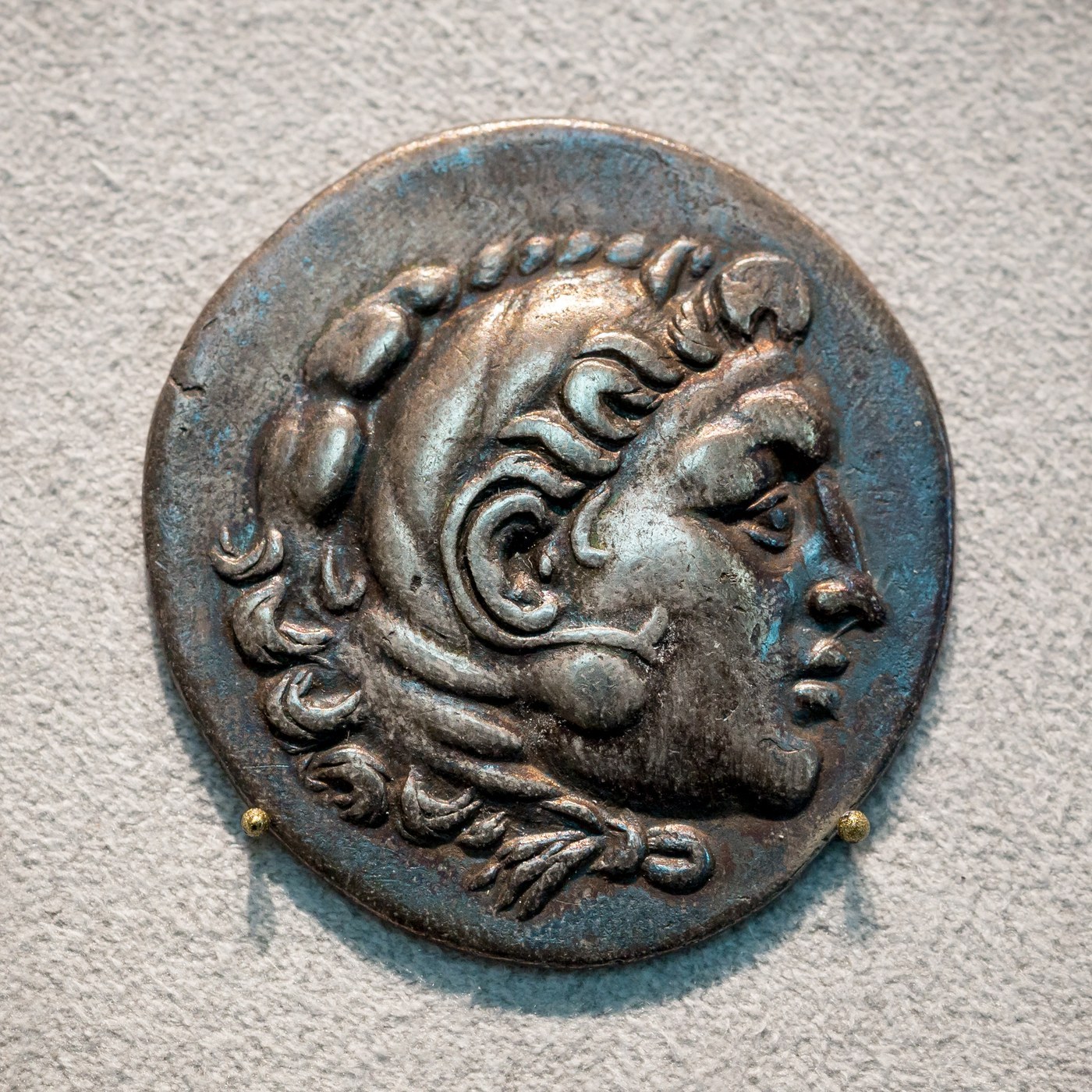
Large silver tetradrachm of ancient Macedon in the Alexander type, c. 188-170 BC, with the head of Heracles in a lion skin and Zeus enthroned holding an eagle.
- Country
- Ancient Macedon
- Denomination
- Tetradrachm
- Metal
- Silver
Got a coin like this?
Identify any coin from a photo, free.
Overview
The Macedonian silver tetradrachm shown here belongs to the famous "Alexander type," the coinage first struck under Alexander III the Great and continued long after his death. The obverse carries the head of Heracles wearing the scalp of the Nemean lion, and the reverse shows Zeus enthroned as aetophoros, holding an eagle on his outstretched hand and a long scepter. This example is dated to roughly 188-170 BC, placing it among the later, posthumous issues of the type struck in the Macedonian world.
A tetradrachm was a large denomination worth four drachms, and it was the workhorse of high-value trade across the Greek-speaking world. Struck in high-purity silver on the Attic weight standard, the coin is a broad, heavy piece typically carrying the Greek legend of Alexander's name beside the seated Zeus.
Because the Alexander type was copied and continued by many cities and kingdoms for well over a century, coins like this are identified by their combination of types, style, legend, and control marks rather than by a single ruler's portrait. The Heracles-and-Zeus design remained one of the most widely recognized and trusted coinages of antiquity.
History & Background
Alexander III of Macedon introduced this silver coinage during his reign in the later fourth century BC, pairing the head of Heracles with Zeus enthroned. The types were loaded with meaning: the Macedonian royal house claimed descent from Heracles, and Zeus was the supreme god whose favor underwrote Alexander's conquests. The vast silver captured in Alexander's campaigns funded an enormous output that spread the coinage from Greece to the Near East.
After Alexander's death in 323 BC, the design proved too useful and too trusted to abandon. Successor kingdoms and free cities went on striking "Alexanders" for generations, keeping his name and types even as local styles and control marks changed. The coin shown, dated about 188-170 BC, is one of these later posthumous tetradrachms, struck well over a century after Alexander himself.
This period fell during the age of the later Antigonid kings of Macedon and the growing shadow of Rome, whose wars with Macedon culminated in the kingdom's defeat at Pydna in 168 BC. The continued production of Alexander-type silver in these decades shows how the design had become an international trade currency, valued for its reliable weight and fineness rather than as the money of any one living king.
How to Identify
The obverse shows the head of Heracles in profile, wearing the Nemean lion's scalp as a headdress, with the lion's jaws and paws framing the hero's face. There is no inscription on this side; the youthful, muscular head in the lion skin is the defining obverse type and is often mistaken for Alexander himself.
The reverse shows Zeus seated on a backless throne, nude to the waist, holding an eagle on his extended right hand and a tall scepter in his left. This eagle-bearing pose is what "aetophoros" means. Beside or behind the figure runs the Greek legend naming Alexander (commonly ALEXANDROU, "of Alexander"), and small control marks or monograms in the field or under the throne help pin down the issuing mint and date.
In hand the tetradrachm is a large, heavy silver coin on the Attic standard, weighing on the order of roughly 16 to 17 grams and measuring in the mid-to-high twenties of millimeters across, sometimes larger with a broad flan. Genuine coins are hand-struck, so expect an irregular edge, some off-centering, and old grey toning. The combination of Heracles in the lion skin, the enthroned eagle-bearing Zeus, and the Alexander legend identifies the type.
Value & Collectibility
Alexander-type tetradrachms are among the most collected of all ancient silver coins, and they trade across a wide range depending on grade, style, and mint. Worn but clearly identifiable examples in circulated condition commonly change hands in the low-to-mid hundreds of dollars, while attractive coins with sharp portraits, a well-detailed Zeus, and good centering can reach into the four figures.
Value is driven by the sharpness of the Heracles head and the Zeus figure, the completeness of the legend and control marks, the artistic quality of the local style, toning and eye appeal, and any documented provenance. Lifetime issues of Alexander himself and coins from celebrated mints tend to command premiums over the many later posthumous strikings, of which this coin is one.
The figures here are general context, not appraisals. Any specific tetradrachm's price depends heavily on its exact mint attribution, condition, and authenticity, and because these coins are widely faked, significant examples are often bought with specialist attribution or third-party certification.
Frequently asked questions
Is the head on the front Alexander the Great?
It is the head of Heracles wearing the Nemean lion's skin, not a literal portrait of Alexander. The Macedonian royal house claimed descent from Heracles, so the hero stood in for the dynasty. Many collectors still associate the face with Alexander himself.
What is Zeus holding on the reverse?
Zeus sits enthroned holding an eagle on his outstretched hand and a long scepter in the other. The eagle-bearing pose is described as aetophoros. The Greek legend beside him names Alexander.
Why is a coin dated 188-170 BC called an Alexander tetradrachm?
Alexander died in 323 BC, but his coin types were so trusted that cities and kingdoms kept striking them for well over a century. This coin is a later, posthumous issue that continues the original Heracles-and-Zeus design.
How big and heavy is a tetradrachm?
A tetradrachm was worth four drachms and is a large silver coin. On the Attic standard it weighs on the order of about 16 to 17 grams and measures in the mid-to-high twenties of millimeters across.
What are the small letters and symbols in the reverse field?
They are control marks and monograms that identify the mint, magistrate, or issue. Numismatists use them, together with style, to attribute a given Alexander-type coin to a place and date.
Macedonian Silver Tetradrachm guides
In-depth guides for identifying, valuing, and collecting Macedonian Silver Tetradrachm.
Other coins you may enjoy
Tetradrachm of Ptolemy XII
80-51 BC
Tetradrachm of Ptolemy I
305-283 BC
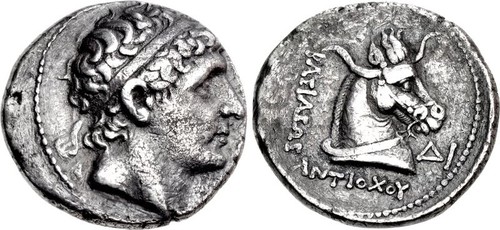
Tetradrachm of Antiochos I Soter
281-261 BC
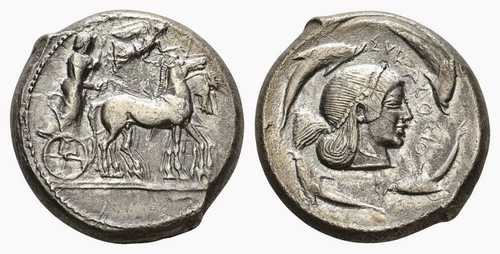
Syracuse Tetradrachm
c. 5th-4th century BC (Classical period)
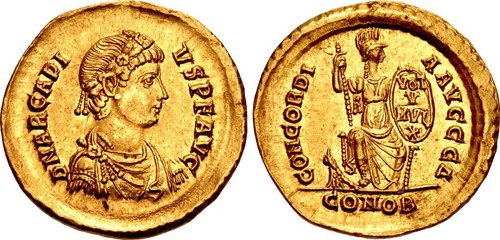
Solidus of Arcadius
AD 395-402
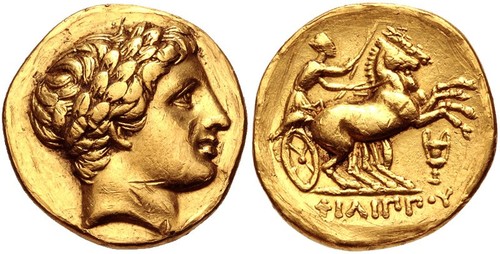
Philip III Gold Stater
323-317 BC
Siliqua of Gratian
AD 367-383
Sestertius of Maximinus Thrax
235-238 AD
Solidus of Valentinian III
AD 425-455
Seleucus I Nicator Tetradrachm
Late 4th-3rd century BC
Nummus of Magnentius
AD 350-353
Follis of Galerius
AD 308-310