
How to Identify the Macedonian Silver Tetradrachm
A collector's guide to recognizing the Alexander-type Macedonian tetradrachm by its lion-skin Heracles, enthroned Zeus, size, weight, and control marks.
Read the full Macedonian Silver Tetradrachm encyclopedia entry →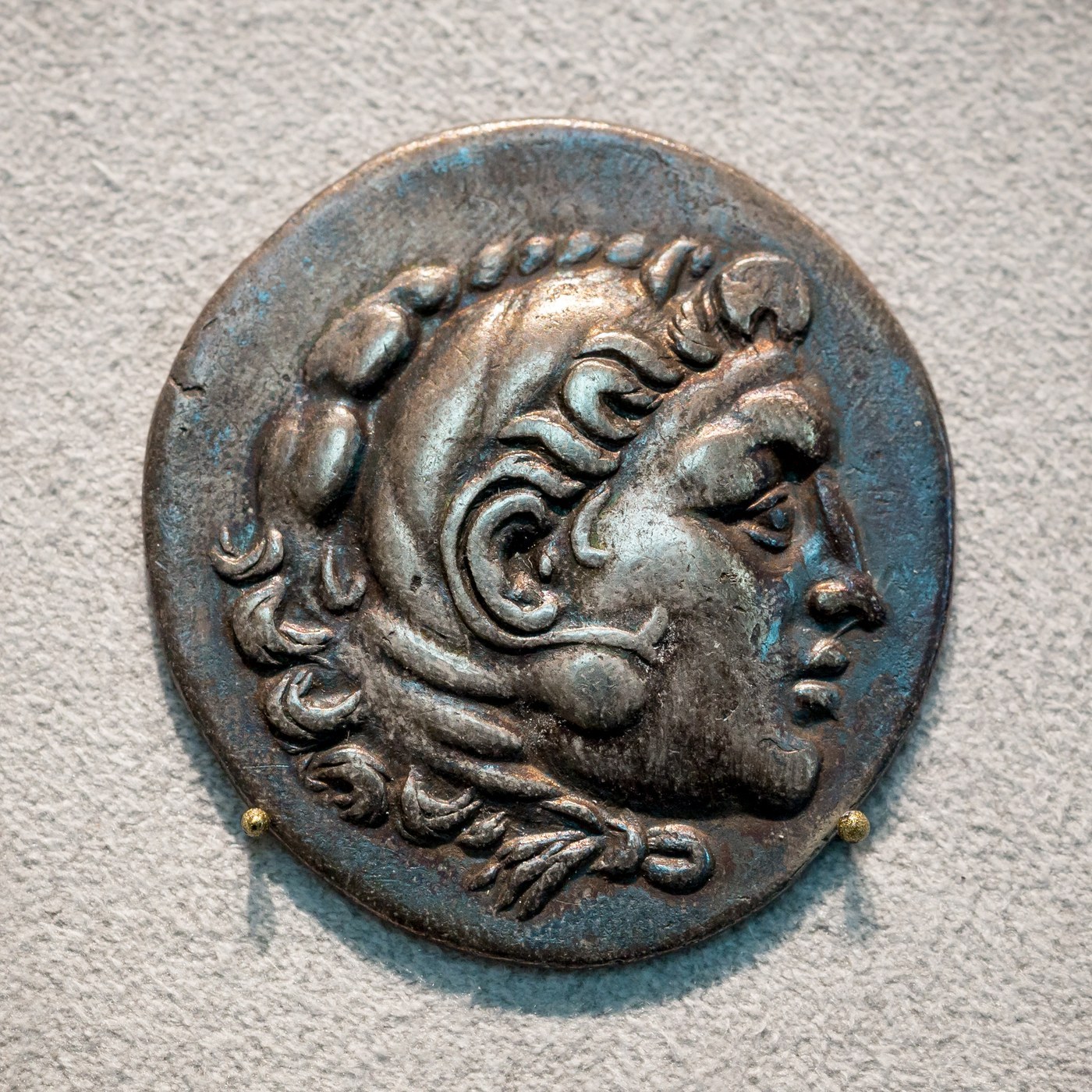
Start with the obverse head. A genuine Alexander-type tetradrachm shows a youthful male head in profile wearing the scalp of the Nemean lion, with the lion's jaws over the brow and its paws knotted at the neck. This is Heracles, not a bare royal portrait, and the lion-skin headdress is the single most reliable obverse clue. There is no legend on this side, so read the face and the lion skin rather than looking for a name.
Turn to the reverse and confirm the enthroned Zeus aetophoros: a seated figure, nude above the waist, holding an eagle on the outstretched hand and a long scepter. Look for the Greek legend of Alexander's name (commonly ALEXANDROU) running vertically beside or behind the throne, and for small monograms or control symbols in the field, beneath the throne, or under the seat. Those control marks, together with local engraving style, are what let a specialist assign the coin to a mint and to a window such as the 188-170 BC range.
Check size, weight, and fabric together. The tetradrachm is a large, dense silver coin on the Attic standard, roughly 16 to 17 grams and about 25 to 32 mm across depending on the flan. Genuine hand-struck examples show an irregular or slightly oval edge, some off-centering that can clip the legend or Zeus's scepter, and natural grey toning. A coin that is suspiciously light, thin, or perfectly round for its type deserves a closer look.
Be aware of look-alikes within the same family. Many mints and rulers struck Heracles-and-Zeus coins, and drachms carry the very same types at a smaller size and lower weight, so weigh the coin before calling it a tetradrachm. Lysimachos, the Seleucids, and other successors issued their own tetradrachms with different reverses; if the reverse is not the eagle-bearing seated Zeus with the Alexander legend, it is a different type. Later Hellenistic and civic tetradrachms and eastern imitations can also copy this design with cruder style.
Finally, weigh authenticity carefully because these coins are heavily forged. Cast copies show a seam around the edge, a soft or bubbly surface, and a dull, non-metallic tone, while tooled or re-engraved pieces have unnaturally sharp, scratchy detail added to worn fields. Transfer-die fakes can be very deceptive. For any significant purchase, rely on the coin's weight and metal, on specialist attribution, and where possible on third-party certification and documented provenance.
Frequently asked questions
How do I know the head is Heracles and not a king?
Look for the lion-skin headdress. The obverse shows Heracles wearing the scalp of the Nemean lion, with the jaws over the forehead and the paws tied at the neck. A bare, diademed royal portrait instead would point to a different Hellenistic type.
How can I separate a tetradrachm from a drachm of the same design?
Weigh and measure it. The Heracles-and-Zeus drachm carries identical types but is much smaller and lighter, on the order of a quarter of the tetradrachm's weight. The tetradrachm runs roughly 16 to 17 grams and about 25 to 32 mm across.
What do the small symbols next to Zeus mean, and do I need to read them?
They are control marks and monograms identifying the mint and issue. You do not need to decode them to recognize the type, but a specialist uses them with the coin's style to attribute it to a place and a date range.
What are the main warning signs of a fake tetradrachm?
An edge seam, a soft or bubbly surface, and a dull tone suggest a cast copy, while unnaturally sharp detail on otherwise worn fields suggests tooling. Off weight for the type is another red flag. For valuable coins, seek specialist attribution or certification.