
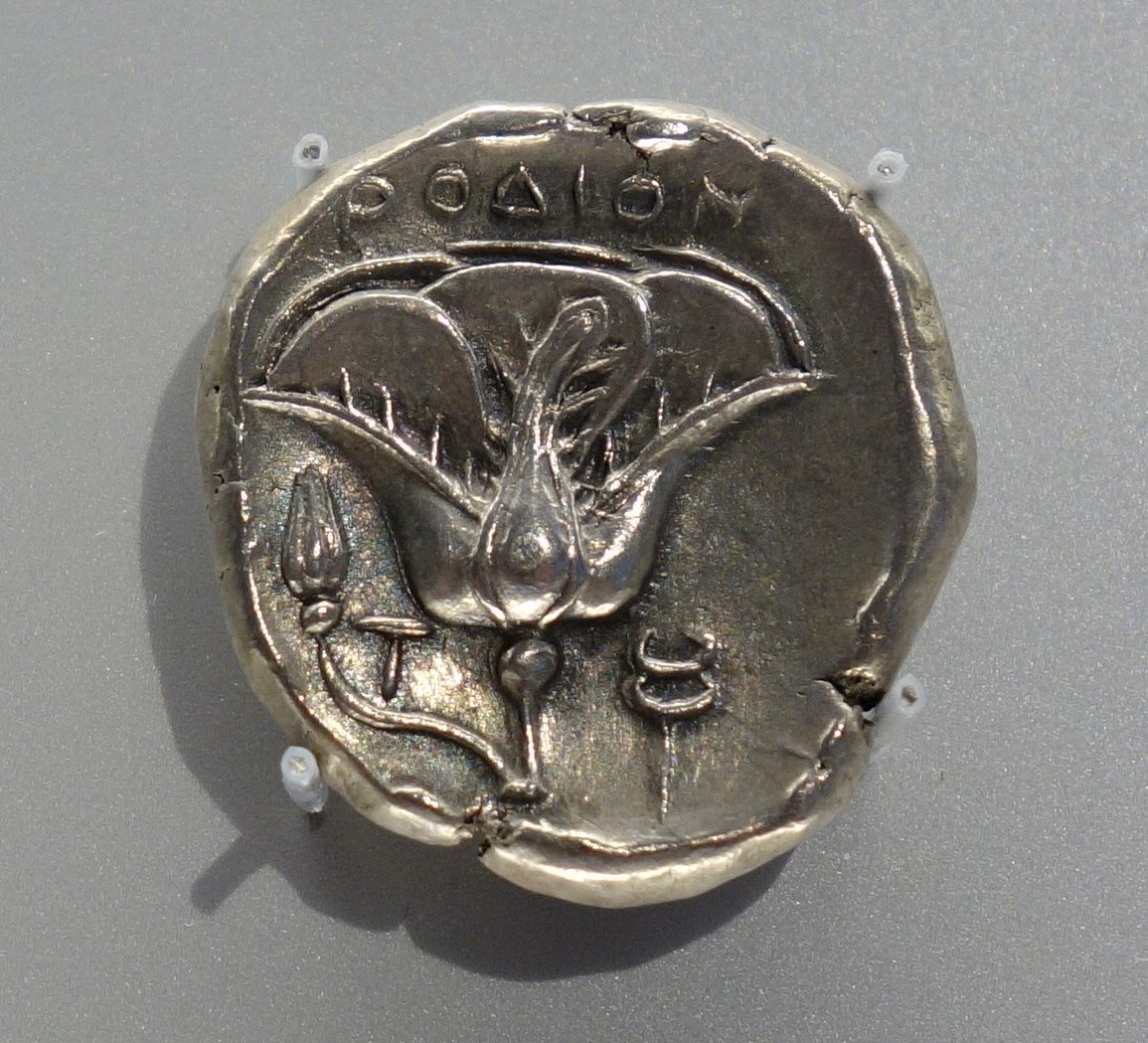
Rhodes Tetradrachm
Silver tetradrachm of the island city of Rhodes, 4th century BC, with the radiate head of the sun-god Helios and a rose, the city's civic emblem.
- Country
- Ancient Greece
- Denomination
- Tetradrachm
- Metal
- Silver
Got a coin like this?
Identify any coin from a photo, free.
Overview
The Rhodes tetradrachm is a large silver coin of the Greek island city-state of Rhodes in the southeastern Aegean. The example here is a classic Rhodian type of the 4th century BC: the obverse carries the head of the sun-god Helios with radiating locks, and the reverse shows a rose in bloom, the civic badge of Rhodes.
The rose is a visual pun on the city's name, since the Greek word for rose (rhodon) echoes Rhodos. Helios was the patron deity of the island, worshipped there above all other gods, and his radiate head paired with the rose made the coinage instantly recognizable across the trading networks of the eastern Mediterranean.
Rhodes was one of the great maritime and commercial powers of the Greek and Hellenistic world, and its silver circulated widely as trusted trade money. The Helios-and-rose design was so enduring that the city struck versions of it for well over two centuries, with the 4th-century BC tetradrachms among the most sought-after of the series.
History & Background
The city of Rhodes was founded in 408 BC when the three older city-states of the island, Ialysos, Kamiros and Lindos, joined together (a synoikismos) to create a single new capital. The unified city adopted the sun-god Helios as its principal deity and the rose as its emblem, and it began striking coinage on which those two symbols became fixed.
During the 4th century BC Rhodes grew into a major naval and mercantile power, and its silver tetradrachms and smaller denominations helped finance and lubricate a far-reaching trade. The coins carried the abbreviated ethnic legend of the Rhodians and, in many issues, the name of a mint magistrate together with a small symbol in the field, which allow the series to be sorted into successive issues.
The same devotion to Helios later inspired the Colossus of Rhodes, the giant bronze statue of the sun-god raised in the early 3rd century BC and counted among the Seven Wonders of the ancient world. The Helios-and-rose coinage continued into the Hellenistic period, but the bold 4th-century BC tetradrachms belong to the era in which Rhodes first established itself as an independent power.
How to Identify
The obverse shows the head of Helios, the sun-god, with thick locks of hair spreading out around the face like the rays of the sun. On many Rhodian issues the head is turned toward the viewer in a three-quarter or near-facing pose rather than a strict profile, an ambitious style meant to suggest the radiance of the sun. There is no inscription on this side.
The reverse bears a rose in bloom, usually shown as a single open flower with a bud branching off to one side. Beside the rose is the abbreviated ethnic legend of the Rhodians (letters reading РОΔ / РОΔΙΟΝ), and many issues add a magistrate's name and a small symbol in the field. On the tetradrachm the rose is often set within a shallow sunken square (incuse) frame.
In hand the coin is a substantial piece of good silver. Rhodian tetradrachms of this era were struck on the Rhodian (Chian-related) standard and weigh on the order of roughly 15 grams, typically measuring in the mid-20s of millimetres across. Age normally gives the silver a grey or lightly toned surface. The pairing of a radiate sun-god head with a rose is the coin's defining signature.
Value & Collectibility
The Rhodes tetradrachm is genuine ancient Greek silver of a famous and widely admired type, and it carries a strong collector market. Worn but clearly identifiable examples with a legible Helios head and rose generally trade in the mid hundreds of dollars, while well-centered, sharply struck coins with a bold facing head and crisp rose can reach into the four figures and beyond.
Value is driven above all by the quality of the Helios portrait, since the facing head is difficult to strike well and often shows weakness or wear on the high points. Centering, the completeness of the rose and legend, the surface and toning, the specific issue and magistrate, and overall eye appeal all matter, and exceptional or provenanced coins command significant premiums.
The figures here are general context rather than appraisals. Any particular coin's price depends heavily on condition, style, and authenticity, and high-value ancient silver of this kind is frequently sold with specialist attribution or third-party certification.
Frequently asked questions
Who is the head on the front of the coin?
It is Helios, the sun-god, who was the patron deity of Rhodes. His hair is shown spreading outward like the rays of the sun, and on many issues his head faces the viewer rather than being shown in profile.
Why is there a rose on the back?
The rose was the civic emblem of Rhodes and a pun on the city's name, since the Greek word for rose, rhodon, echoes Rhodos. It appears with the abbreviated name of the Rhodians beside it.
Is this coin connected to the Colossus of Rhodes?
Indirectly. The Colossus was a giant statue of Helios, the same sun-god shown on the coin. The statue was raised in the early 3rd century BC, while these tetradrachms honor the god the city had worshipped since its founding.
How much does it weigh?
A Rhodian tetradrachm of this period was struck on the Rhodian standard and weighs on the order of about 15 grams, measuring roughly in the mid-20s of millimetres across. Exact weights vary from issue to issue.
What do the letters on the reverse mean?
They are the abbreviated ethnic of the Rhodians, reading toward ROD or RODION (of the Rhodians). Many issues also add a magistrate's name and a small symbol, which help place a coin within the series.
Rhodes Tetradrachm guides
In-depth guides for identifying, valuing, and collecting Rhodes Tetradrachm.
Other coins you may enjoy
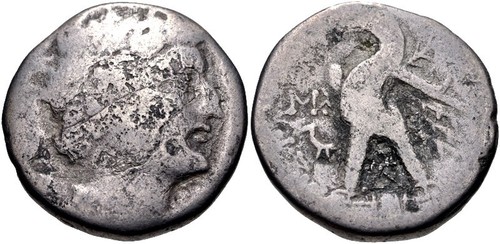
Tetradrachm of Ptolemy XII
80-51 BC
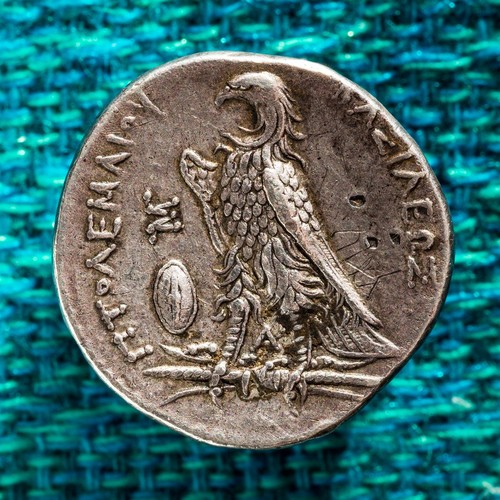
Tetradrachm of Ptolemy I
305-283 BC
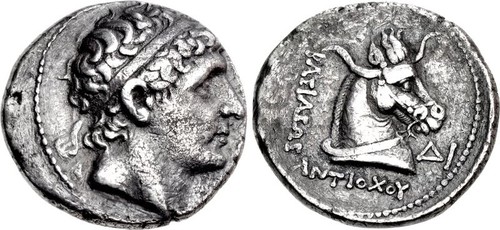
Tetradrachm of Antiochos I Soter
281-261 BC
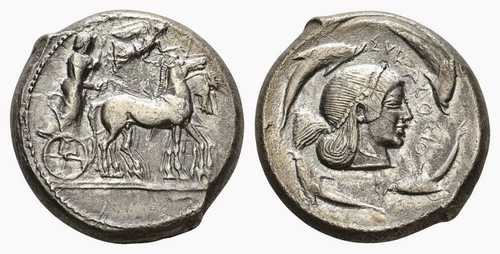
Syracuse Tetradrachm
c. 5th-4th century BC (Classical period)
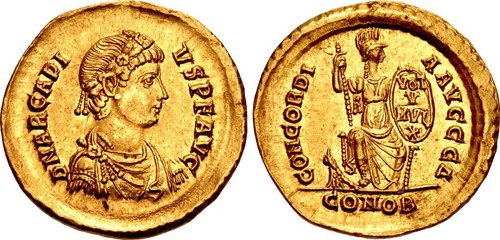
Solidus of Arcadius
AD 395-402
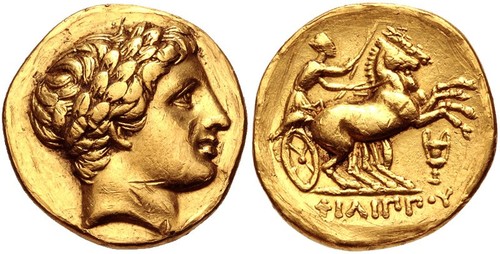
Philip III Gold Stater
323-317 BC
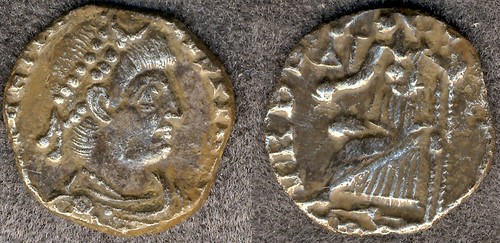
Siliqua of Gratian
AD 367-383
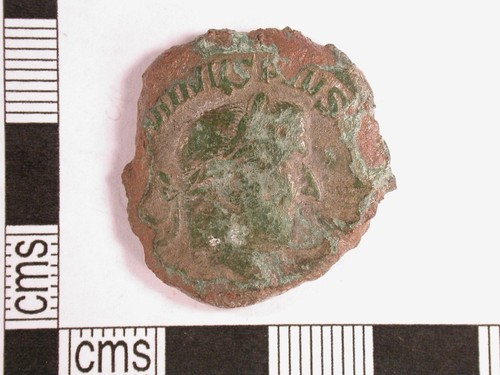
Sestertius of Maximinus Thrax
235-238 AD
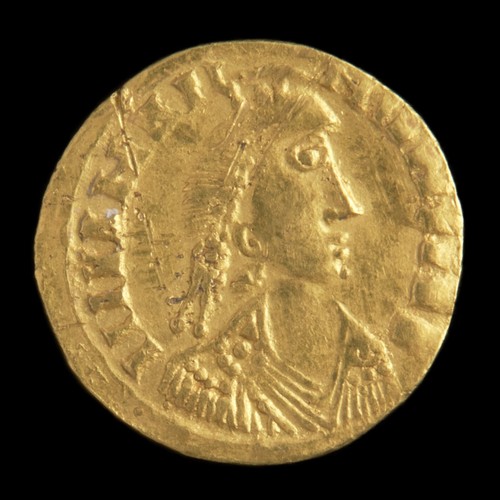
Solidus of Valentinian III
AD 425-455
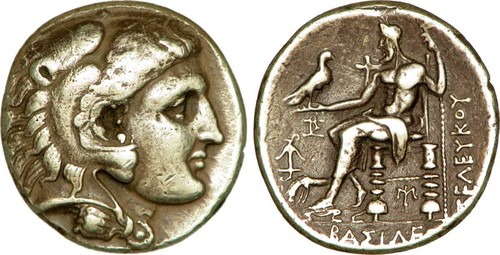
Seleucus I Nicator Tetradrachm
Late 4th-3rd century BC
Nummus of Magnentius
AD 350-353
Follis of Galerius
AD 308-310