
How to Identify the Rhodes Tetradrachm
A collector's guide to recognizing the Rhodian tetradrachm by its radiate Helios head, rose reverse, ethnic legend, and heavy silver fabric.
Read the full Rhodes Tetradrachm encyclopedia entry →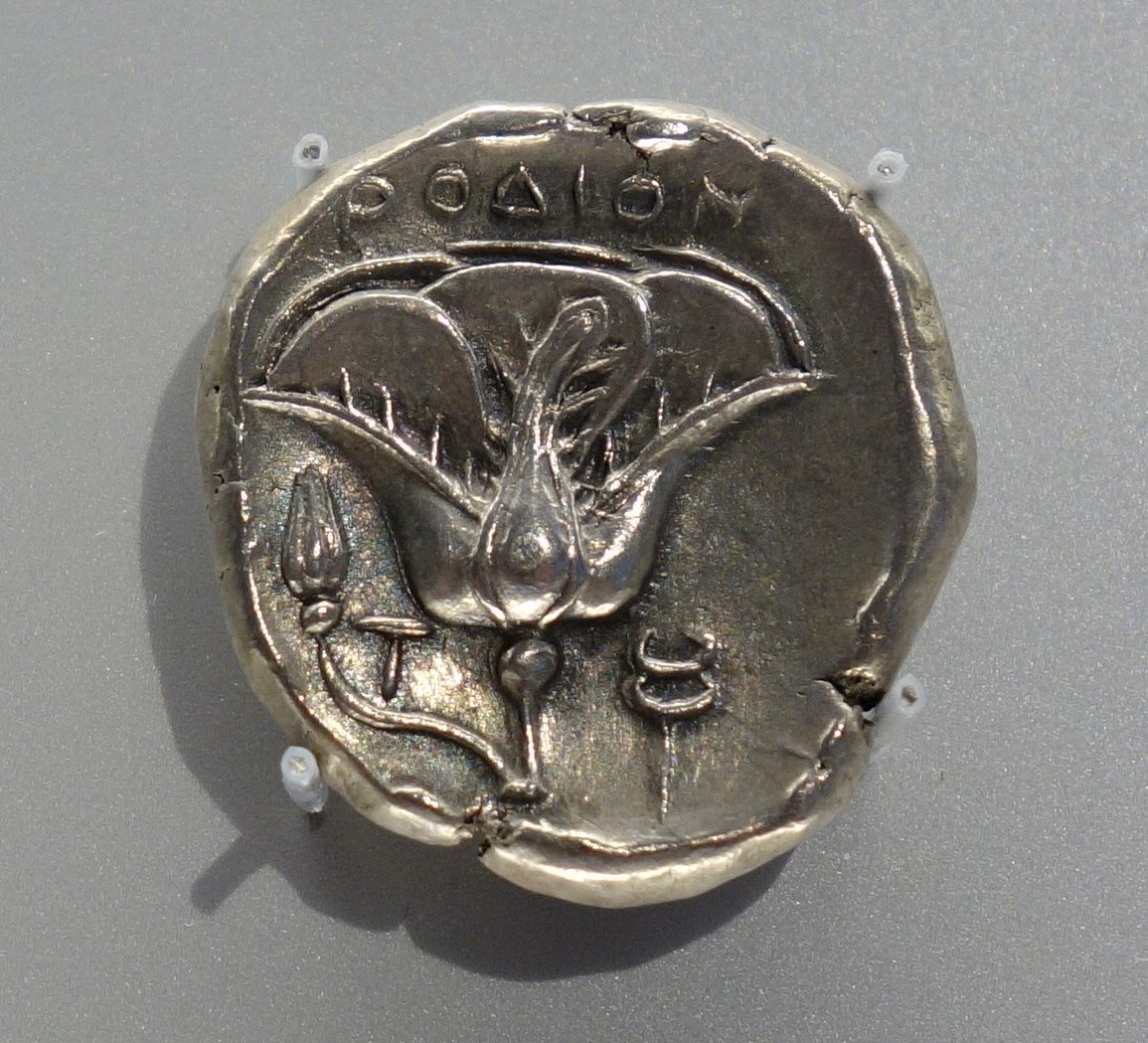
Start with the obverse head. A Rhodian tetradrachm shows Helios, the sun-god, with thick hair radiating outward from the face. On the classic issues the head is turned toward the viewer in a three-quarter or near-facing pose rather than a clean profile, which is one of the type's strongest tells, since few Greek coins attempt a facing portrait. There is no legend on this side, so the radiate hair and the outward gaze do the identifying.
Turn to the reverse and confirm the rose. Look for a single open flower, usually with a small bud branching to one side, and read the letters beside it: the abbreviated ethnic of the Rhodians (toward РОΔ or РОΔΙОΝ). Many issues also carry a magistrate's name and a small symbol in the field. On the tetradrachm the rose typically sits in a shallow sunken square. A rose without the Rhodian letters, or a different flower or plant, points to another mint rather than Rhodes.
Check fabric, size and weight together. The tetradrachm is a substantial disc of good silver on the Rhodian standard, on the order of about 15 grams and roughly mid-20s of millimetres wide. Smaller Helios-and-rose coins are didrachms, drachms or fractions rather than tetradrachms, so weigh the coin before naming the denomination. Genuine strikes show hand-made irregularity in the flan and centering, and the high points of the facing head are often the first areas to wear.
Use the details to place and separate the issues. The magistrate's name and the field symbol beside the rose are the main tools for sorting Rhodian silver into its successive issues and for distinguishing 4th-century BC coins from the later Hellenistic ones, which tend to use a smaller, plinth-mounted rose and different style. Style of the Helios head also shifts over time, so compare against published references when precision matters.
Finally, watch for authenticity problems. Because the facing Helios is admired and valuable, the type attracts both cast forgeries and modern replicas. Cast fakes betray themselves with a seam around the edge, a soft or bubbly surface, and dull rather than metallic tone, while tooled coins show unnaturally sharp, scratchy detail added over wear. For any significant purchase, rely on specialist attribution or third-party certification and, where possible, documented provenance.
Frequently asked questions
How do I know the head is Helios and not another god?
Look for hair that radiates outward from the face like sun rays and a head that often faces the viewer rather than showing a profile. Combined with a rose and Rhodian letters on the reverse, that identifies the sun-god Helios of Rhodes.
How can I tell a tetradrachm from a smaller Rhodian coin?
Weigh it. The tetradrachm sits on the order of about 15 grams on the Rhodian standard. Lighter Helios-and-rose coins are didrachms, drachms or fractions of the same design, so weight is the key to the denomination.
What do the extra letters and symbols by the rose tell me?
Besides the abbreviated name of the Rhodians, many issues add a magistrate's name and a small symbol in the field. These are the main clues for placing a coin within the series and separating one issue from another.
What are the main warning signs of a fake?
A seam around the edge, a soft or bubbly surface, and a dull non-metallic tone suggest a cast copy, while unnaturally sharp scratchy detail on an otherwise worn coin suggests tooling. For valuable examples, seek specialist attribution or certification.