
Roman Victoriatus
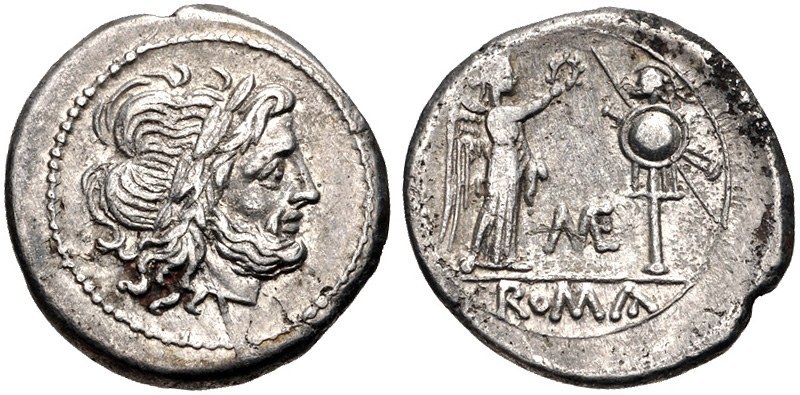
Silver Roman Republican victoriatus of the late 3rd–2nd century BC, with the laureate head of Jupiter and a Victory crowning a trophy above ROMA.
- Country
- Roman
- Denomination
- Victoriatus
- Metal
- Silver
Got a coin like this?
Identify any coin from a photo, free.
Overview
The victoriatus is a silver coin of the Roman Republic, introduced around the time of the denarius reform in the late third century BC and struck into the second century BC. It takes its name from the figure of Victory on the reverse, and it was produced primarily as a trade coin, circulating heavily in northern Italy and in regions outside the core Roman silver economy. The example shown here is a hand-struck ancient piece of this type.
The obverse carries the laureate head of Jupiter facing right, rendered with the elaborate curled hair and beard characteristic of the god. The reverse shows Victory standing and crowning a trophy of captured arms with a wreath, with the inscription ROMA in the exergue below. Because these coins were struck by hand from individually engraved dies, each survivor varies in centering, flan shape, strike, and surface.
History & Background
The victoriatus appeared alongside the silver denarius during the coinage reforms of the later part of the Second Punic War, roughly the last decade of the third century BC. Unlike the denarius, which anchored the domestic Roman monetary system, the victoriatus was aimed largely at external and regional trade, and hoard evidence shows it circulating strongly in Cisalpine Gaul, southern Italy, and adjacent areas rather than at Rome itself.
The coin was struck at a lighter weight than the denarius and, in many issues, at a lower and more variable silver fineness, reflecting its role as a commercial rather than a full-standard state coin. It was issued in large quantities over several decades, with numerous anonymous and symbol-marked varieties, and a smaller half-victoriatus fraction was also produced.
By the second century BC the victoriatus was gradually phased out as the denarius system matured, and in later Roman usage the name survived mainly as an accounting term. Because so many were minted and buried in hoards during a turbulent era, the type survives today in reasonable numbers, though quality and silver content vary widely from piece to piece.
How to Identify
Look for a small, hand-struck silver coin roughly the diameter of a denarius but generally lighter, typically in the broad range of about 3 to 3.4 grams for full-weight early issues, with later pieces often lighter and of paler, less pure silver. The flan is frequently slightly irregular or oval, which is normal for ancient hammered coinage.
The defining diagnostic is the reverse: Victory, winged and standing, crowning a trophy of captured arms with a wreath, and the word ROMA in the exergue beneath. The obverse shows the laureate head of Jupiter facing right, with distinctive curled hair and a beard. Some issues carry a small control symbol, monogram, or letters in the reverse field that identify a particular series or moneyer; note any such mark, but the Jupiter head paired with the Victory-and-trophy reverse is what confirms the denomination.
Expect variation in centering, strike sharpness, and legend placement from one coin to the next. Genuine examples show the toning and honest wear of ancient silver, and many victoriati appear somewhat dull or grayish because of their lower or uneven silver fineness compared with the denarius.
Value & Collectibility
Values depend heavily on condition, strike, silver quality, and eye appeal. Common, well-worn or off-center victoriati generally trade in the modest tens of dollars, while attractive, well-centered examples with a clear Jupiter portrait and a sharp Victory-and-trophy reverse bring meaningfully more, often into the low or mid hundreds of dollars.
Exceptional pieces with strong detail, pleasing toning, and documented provenance can sell for higher sums at specialist ancient-coin auctions, and scarcer symbol-marked or half-victoriatus varieties may carry premiums. Damaged, cleaned, holed, or heavily corroded coins sell for much less. Because the market moves and each ancient coin is unique, treat any single figure as a data point rather than a fixed price.
Provenance and authentication add value: coins with collection histories and, where relevant, export documentation are generally more desirable than anonymous pieces of equal grade.
Frequently asked questions
Why is it called a victoriatus?
The coin is named for the figure of Victory on the reverse, shown crowning a trophy of captured arms with a wreath. That victory imagery, paired with the ROMA inscription, gives the denomination its name.
Whose head is on the front of the coin?
The obverse shows the laureate head of Jupiter facing right, identifiable by the elaborate curled hair and beard. It is a divine portrait rather than a specific ruler.
How is a victoriatus different from a denarius?
The victoriatus was a lighter trade coin struck alongside the denarius, often at lower and more variable silver fineness. It circulated mainly in regional and external trade, especially in northern Italy, rather than as the core domestic silver coin.
How old is a Roman victoriatus?
Victoriati were struck from around the end of the third century BC into the second century BC, making a typical example over two thousand years old.
Is it made of real silver?
Yes, though the silver is often less pure and more variable than that of the denarius. Many victoriati look grayish or dull because of their lower fineness, and rare ancient plated counterfeits also exist.
Roman Victoriatus guides
In-depth guides for identifying, valuing, and collecting Roman Victoriatus.
Other coins you may enjoy
Tetradrachm of Ptolemy XII
80-51 BC
Tetradrachm of Ptolemy I
305-283 BC
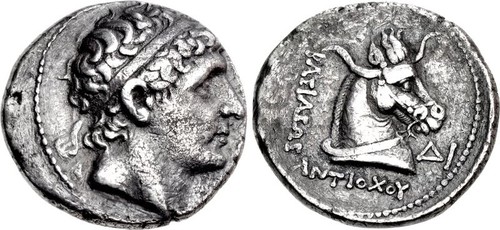
Tetradrachm of Antiochos I Soter
281-261 BC
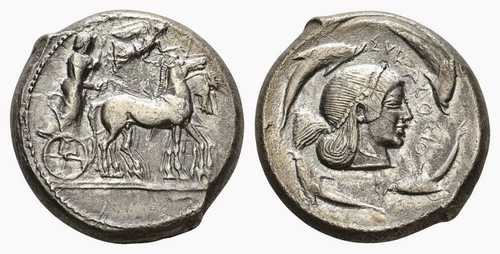
Syracuse Tetradrachm
c. 5th-4th century BC (Classical period)
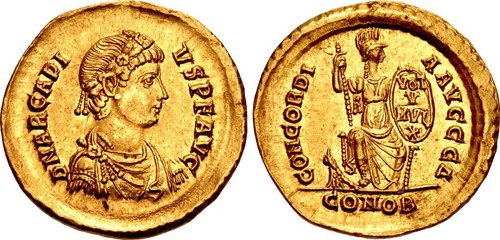
Solidus of Arcadius
AD 395-402
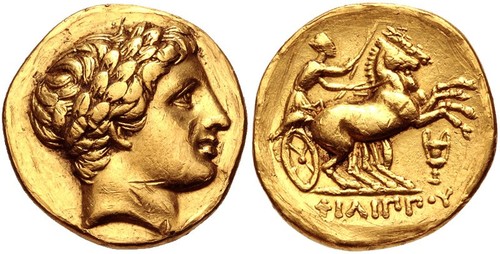
Philip III Gold Stater
323-317 BC
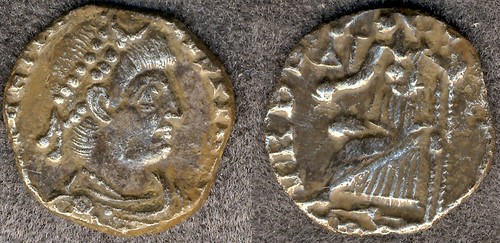
Siliqua of Gratian
AD 367-383
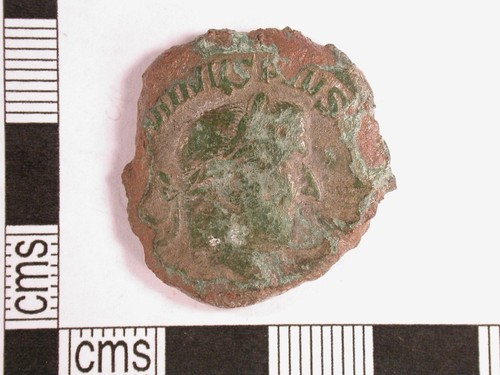
Sestertius of Maximinus Thrax
235-238 AD
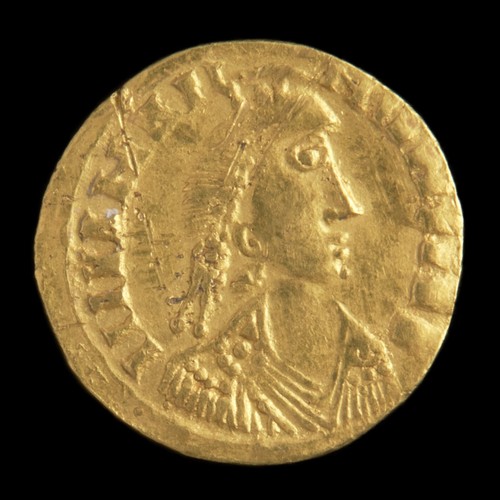
Solidus of Valentinian III
AD 425-455
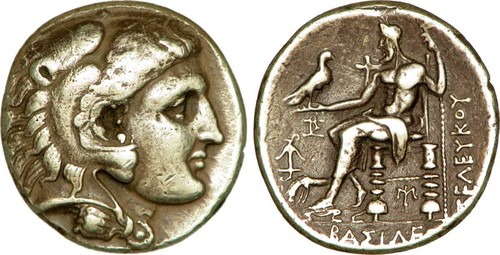
Seleucus I Nicator Tetradrachm
Late 4th-3rd century BC
Nummus of Magnentius
AD 350-353
Follis of Galerius
AD 308-310