
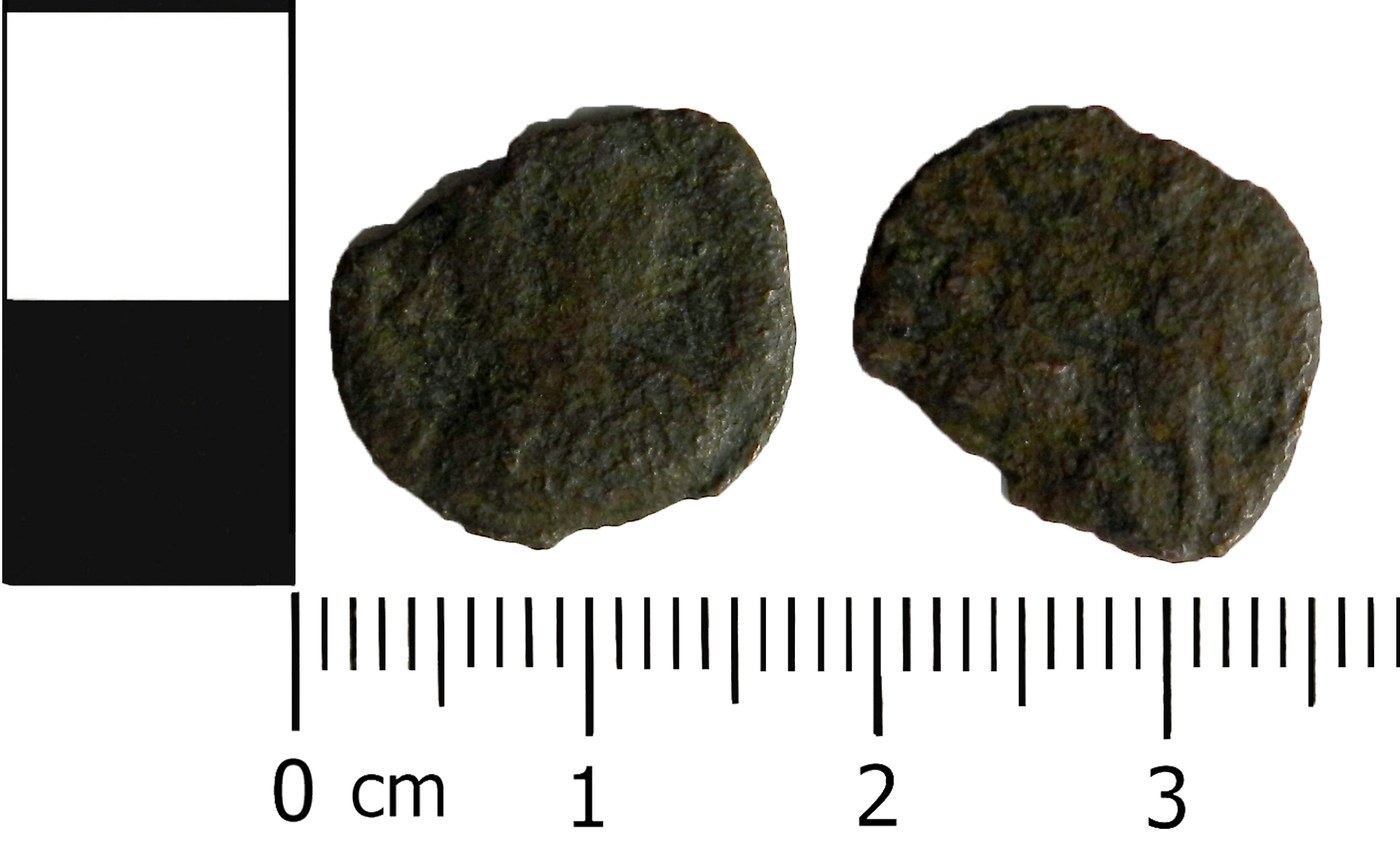
Roman Centenionalis
A small fourth-century Roman bronze coin, part of the reformed low-value currency struck across the empire's mints during a period of frequent monetary change.
- Country
- Roman Empire
- Denomination
- Centenionalis
- Metal
- Bronze
Got a coin like this?
Identify any coin from a photo, free.
Overview
The centenionalis is a low-value Roman bronze coin of the fourth century AD. The name appears in late Roman law and is applied by modern scholars to certain reformed bronze denominations of the period, though matching the ancient term precisely to surviving coins remains uncertain. Because of this, numismatists often describe these pieces by size using the neutral labels AE2, AE3, and AE4 rather than by an exact denomination name.
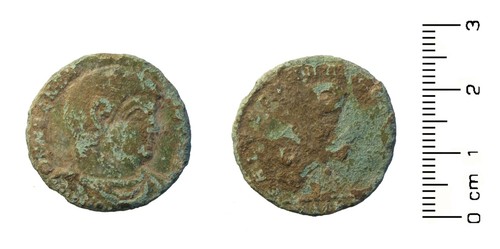
The example shown here is a worn fourth-century bronze with a heavily circulated imperial portrait on the obverse and a reverse whose details are no longer legible. This kind of survival is extremely common: base-metal coins of this era were produced in enormous quantities, circulated hard, and often reach collectors with soft or effaced surfaces.
As a group, these coins represent the everyday money of the later Roman Empire, used across the Mediterranean world during a century of repeated currency reforms, civil wars, and religious change. They are among the most widely available of all ancient coins.
History & Background
The fourth century was a period of near-constant monetary experimentation. Following the reforms begun under Diocletian and continued by Constantine the Great and his successors, the Roman state repeatedly retariffed, renamed, and resized its bronze coinage in an effort to stabilize prices and stretch limited silver and copper. The term "centenionalis" appears in imperial legislation of this era, and modern scholars associate it with one or more of these reformed bronze pieces, even though the exact coin the law describes cannot be pinned down with certainty.
Throughout the century, bronze coins were struck at a network of imperial mints stretching from Britain and Gaul to the Balkans, Asia Minor, and the Levant. Common reverse themes of the period include military and dynastic imagery, standing figures, and slogans celebrating the restoration of the state or the emperor's victories. Because emperors changed frequently and mints operated across the whole empire, an immense variety of types was produced.
When a coin's portrait and reverse are worn smooth, as on this piece, it can rarely be attributed to a single emperor or year. It can still be securely placed in the fourth century by its module, fabric, and style, which is why cataloguers treat such coins as representative examples of late Roman bronze rather than as issues of a named ruler.
How to Identify
Identify the coin first by size and metal. Fourth-century bronzes are small, typically ranging from roughly 15 to 25 mm in diameter and only a few grams in weight, struck in bronze or a copper alloy that often shows a brown, green, or earthen patina from burial. The example here sits comfortably within this range and shows the honey-to-earth toning typical of excavated late Roman bronze.
The obverse carries an imperial portrait, usually a bust facing right with a Latin legend running around the edge. On well-preserved coins that legend names the emperor and his titles; on a heavily worn coin like this one the lettering is reduced to faint traces, so the specific ruler cannot be read. The reverse would normally show a standing figure, military scene, wreath, or inscription, but here it is worn to the point of illegibility.
Because so much detail is lost, attribution stops at the level of "fourth-century Roman bronze." That identification rests on the coin's small module, its base-metal fabric and patina, the right-facing draped-and-cuirassed portrait style, and the overall late Roman workmanship rather than on any readable legend or datable reverse type.
Value & Collectibility
Worn, unattributed fourth-century Roman bronzes are among the most affordable of all ancient coins. Common examples in this condition typically trade for only a few dollars to the low tens of dollars, and they are frequently sold in bulk lots of dozens or hundreds of uncleaned or partly cleaned coins.
Value rises sharply with legibility and eye appeal. A coin whose emperor and reverse type can be clearly read, with a sharp portrait and an attractive patina, is worth far more than a smooth, unidentifiable piece. Scarcer rulers, unusual mints, and desirable reverse types can lift individual coins well beyond the common range.
The figures here are general context, not appraisals. As identified, this particular coin is a modest, entry-level ancient rather than a rarity, valued chiefly as an authentic and inexpensive artifact of the later Roman Empire.
Frequently asked questions
What exactly is a centenionalis?
It is a low-value Roman bronze coin of the fourth century AD. The name comes from late Roman law, and scholars apply it to certain reformed bronzes of the era, though the ancient term cannot be matched to surviving coins with full certainty.
Why can't this coin be attributed to a specific emperor?
Its portrait and reverse are heavily worn, so the legends and reverse type are no longer legible. Without readable lettering, it can be dated to the fourth century by size, fabric, and style, but not tied to a single ruler.
Is a worn bronze like this worth much?
Generally no. Smooth, unidentifiable fourth-century bronzes are very common and inexpensive, often sold in bulk. Value increases when the emperor and reverse can be clearly identified.
Why do collectors also call these AE2, AE3, or AE4?
Because the ancient denomination names are uncertain, numismatists use neutral size labels. AE stands for the Latin aes (bronze), and the number indicates the coin's diameter band from largest to smallest.
Roman Centenionalis guides
In-depth guides for identifying, valuing, and collecting Roman Centenionalis.
Other coins you may enjoy
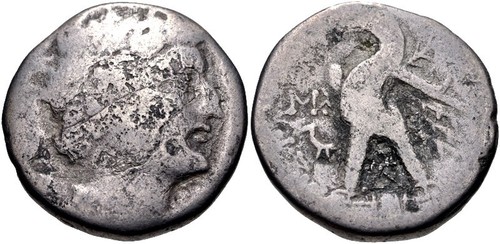
Tetradrachm of Ptolemy XII
80-51 BC
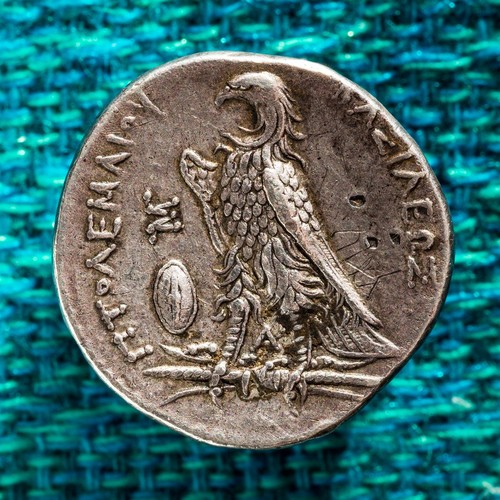
Tetradrachm of Ptolemy I
305-283 BC
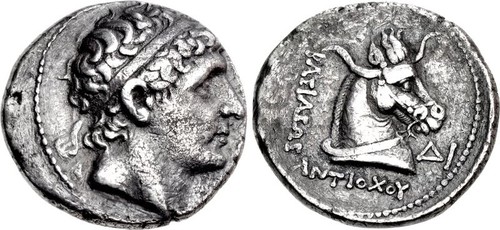
Tetradrachm of Antiochos I Soter
281-261 BC
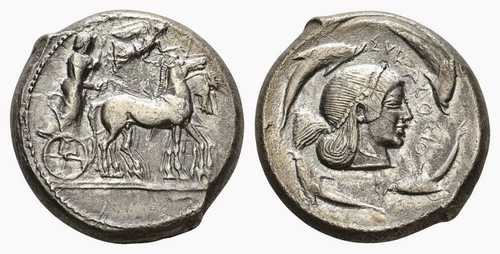
Syracuse Tetradrachm
c. 5th-4th century BC (Classical period)
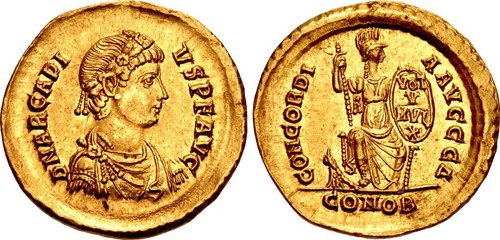
Solidus of Arcadius
AD 395-402
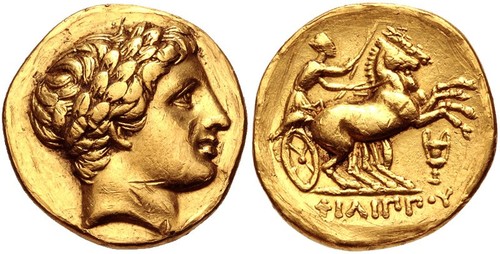
Philip III Gold Stater
323-317 BC
Siliqua of Gratian
AD 367-383
Sestertius of Maximinus Thrax
235-238 AD
Solidus of Valentinian III
AD 425-455
Seleucus I Nicator Tetradrachm
Late 4th-3rd century BC
Nummus of Magnentius
AD 350-353
Follis of Galerius
AD 308-310