
How to Identify the Roman Centenionalis
A collector's guide to recognizing a worn fourth-century Roman bronze by its size, patina, and portrait style when the legends can no longer be read.
Read the full Roman Centenionalis encyclopedia entry →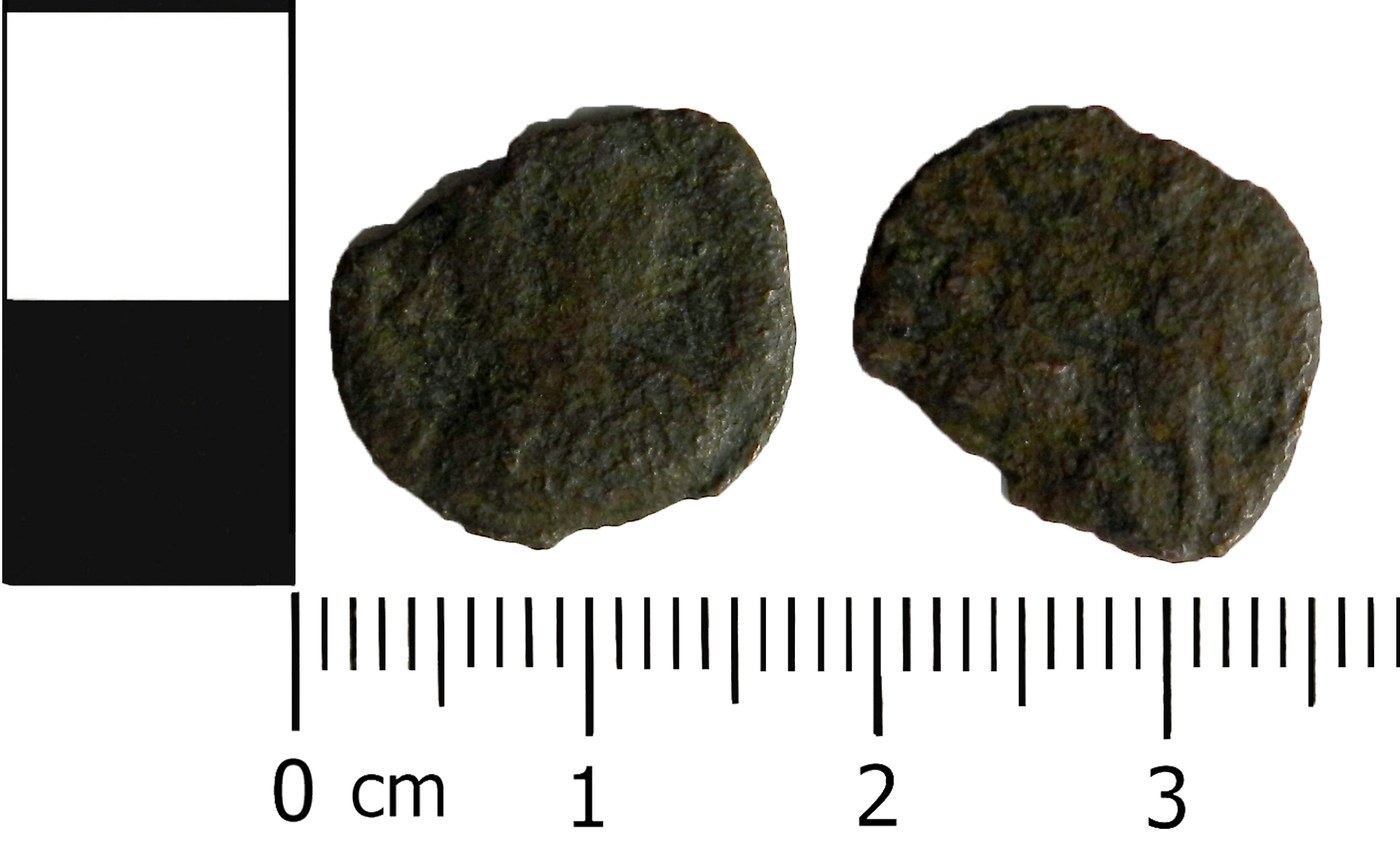
Begin with the physical coin rather than the lettering, because on worn late Roman bronzes the legends are often gone. Measure the diameter and note the metal: fourth-century bronzes are small, usually about 15 to 25 mm across and only a few grams, struck in bronze or copper alloy. A genuine ancient will show a hard, integral patina, brown, green, or earthen in tone, that is part of the metal rather than a painted-on coating. The piece here fits that profile, with an earthen-to-honey patina and a small module typical of the period.
Look at the obverse portrait style even when the legend is illegible. Late Roman emperors are almost always shown as a right-facing bust, frequently draped and cuirassed, sometimes diademed or laureate, with a blunt, stylized late-antique treatment of the hair and features. That style, combined with the small size, is enough to place a coin in the fourth century. If any legend survives, it runs clockwise around the edge in Latin and begins with the emperor's name and titles; read whatever letters remain, as even a few can narrow the ruler.
The reverse is where attribution normally happens, so examine it under raking light. Common fourth-century themes include a standing soldier or emperor, two figures flanking a standard, a helmeted figure spearing a fallen horseman, a wreath enclosing an inscription, or a personification such as Victory. A mint mark in the exergue, the small panel beneath the main design, identifies the mint with abbreviations and control letters. On a coin worn to illegibility, as this one is, none of that can be recovered, and the honest identification stops at "fourth-century Roman bronze."
Watch for look-alikes and authenticity issues. Later Roman bronzes of the same century vary widely in size, and the reformed denominations were themselves resized more than once, so module alone will not fix an exact denomination. Cast copies, tourist fakes, and modern reproductions exist; warning signs include a seam around the edge, a soft or bubbly surface, a suspiciously smooth uniform "patina," and weight or thickness outside the normal range. Beware of coins offered with an unrealistically precise attribution when the surfaces are clearly too worn to support it.
For a worn, unidentifiable piece the practical goal is confirmation rather than pinpoint attribution: verify that it is a genuine ancient bronze of the right size, fabric, and style. If you want a specific emperor and mint, seek a better-preserved example whose legend and reverse can actually be read, or consult a specialist in late Roman bronze coinage.
Frequently asked questions
How do I know this is fourth-century and not another period?
Judge by size, fabric, and portrait style. A small bronze of roughly 15 to 25 mm with a right-facing, blunt late-antique imperial bust and an integral earthen patina points to the fourth century even when the legends are worn away.
Where should I look for the mint mark?
Check the exergue, the small panel below the main reverse design. Late Roman bronzes carry abbreviated mint marks and control letters there. On a coin this worn the exergue is usually unreadable, so the mint cannot be recovered.
How can I tell a genuine ancient from a cast fake?
Genuine coins have hand-struck fabric and a hard, integral patina. Watch for a raised seam around the rim, a grainy or bubbly surface, a uniform painted-looking coating, and weights outside the few-gram norm, all of which suggest a cast copy.
Should I clean a worn coin like this to see more detail?
Be cautious. Aggressive cleaning can strip the patina and destroy what little surface detail remains, lowering both value and legibility. If a coin matters to you, leave cleaning and conservation to someone experienced with ancient bronze.