
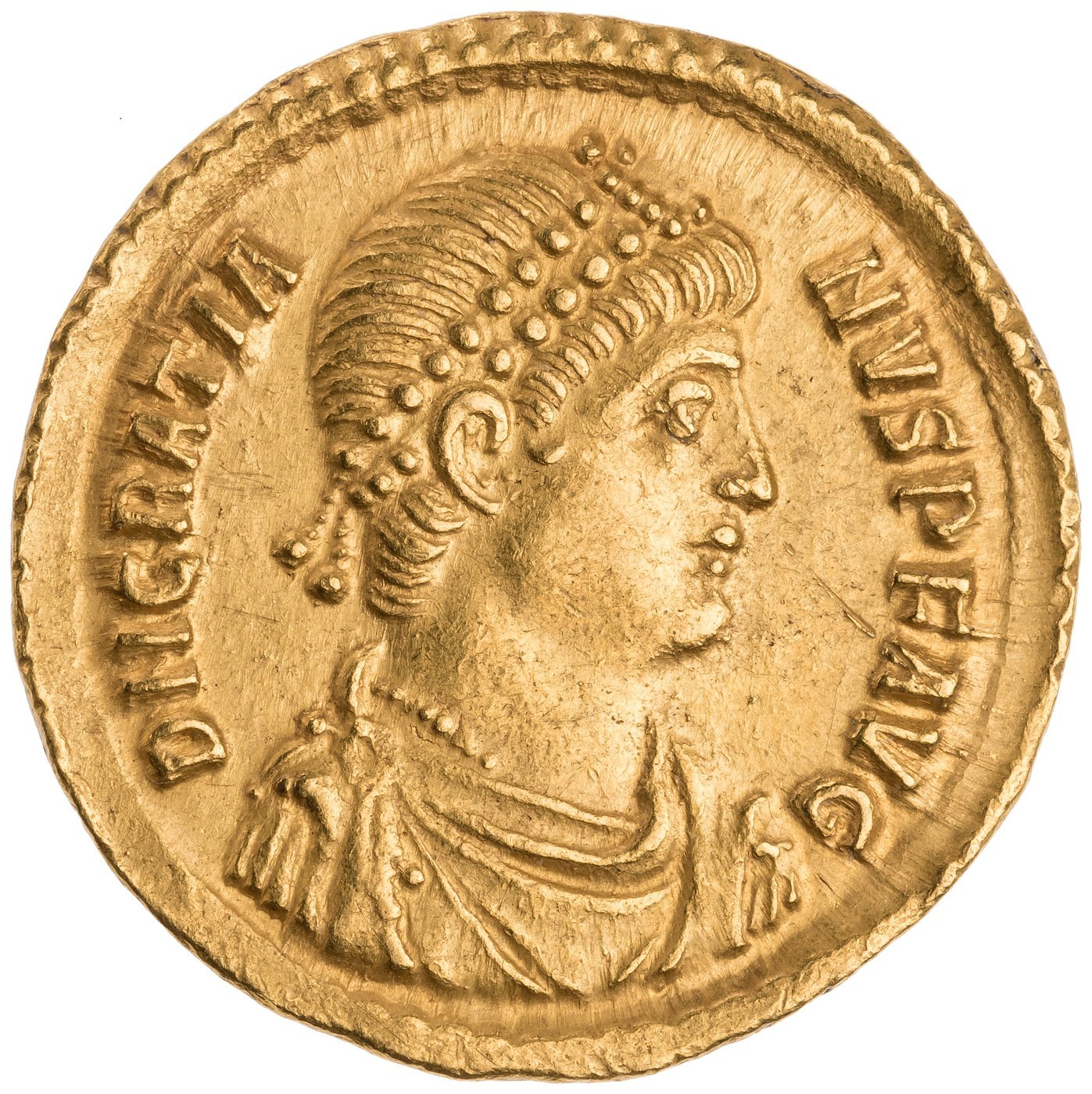
Solidus of Gratian
Late Roman gold solidus of Emperor Gratian (r. 367–383 CE), showing his curly-haired, diademed, draped and cuirassed portrait.
- Country
- Roman Empire
- Denomination
- Solidus
- Metal
- Gold
Got a coin like this?
Identify any coin from a photo, free.
Overview
The solidus of Gratian is a late Roman gold coin struck during the reign of the western emperor Gratian, who ruled from 367 to 383 CE. The solidus was the standard high-value gold denomination of the later Roman Empire, introduced under Constantine the Great and struck to a consistent weight of roughly 4.5 grams of nearly pure gold. This example is known from an obverse showing the emperor's portrait.
The obverse presents Gratian as a youthful ruler with distinctive curly hair, wearing a pearl or rosette diadem and shown draped and cuirassed in the standard imperial fashion. A surrounding Latin legend gives his name and titles, typically opening with D N GRATIANVS (Dominus Noster Gratianus, "Our Lord Gratian") and continuing with imperial titulature such as P F AVG. The reverse of a Gratian solidus, not visible in an obverse-only image, would normally carry an imperial or victory type together with a mint mark.
History & Background
Gratian became emperor as a boy, elevated by his father Valentinian I in 367 CE, and ruled the western portion of the Roman Empire until he was killed in 383 CE during the revolt of Magnus Maximus. His reign fell in a turbulent late-fourth-century period marked by pressure on the Rhine and Danube frontiers, the disastrous Roman defeat at Adrianople in 378, and Gratian's own promotion of the eastern general Theodosius I to the imperial college.
The solidus was the backbone of the late Roman gold coinage. First established by Constantine in the early fourth century at 72 coins to the Roman pound, it held its weight and purity remarkably well and became the trusted gold standard of the Mediterranean world for centuries. Emperors used the solidus to pay soldiers, reward officials, and conduct large transactions, and its imagery was a vehicle for imperial propaganda.
Under Gratian, solidi were issued from several imperial mints across the empire. Because gold coins were carefully controlled and periodically recalled or reminted, surviving solidi of any single short-reigning emperor are far scarcer than the base-metal coinage of the same period.
How to Identify
A genuine solidus of Gratian is a small, thin gold coin about 20–21 mm in diameter and close to 4.5 grams in weight, struck in high-purity gold with a warm yellow color. The fabric is typically broad and flat compared with earlier, thicker aurei.
The defining feature is the obverse portrait: a youthful, curly-haired bust of Gratian facing right, wearing a pearl diadem and shown draped and cuirassed. The legend around the portrait names the emperor, usually beginning D N GRATIANVS P F AVG. Spelling and title abbreviations follow standard late Roman forms, and the beading around the rim frames the design.
The reverse, absent from an obverse-only photograph, is essential for pinning down the exact issue and mint. Common Gratian reverse types include seated or standing figures with victory or imperial themes and legends such as VICTORIA AVGG or similar, accompanied by an exergual mint mark identifying the striking city. Matching both sides against a reference such as the Roman Imperial Coinage (RIC) catalogue is the reliable way to confirm the precise type.
Value & Collectibility
Genuine gold solidi of Gratian are valuable ancient coins. Because they are struck in nearly pure gold and survive in relatively small numbers, even worn or common-type examples generally trade in the hundreds to low thousands of US dollars, with the exact figure depending heavily on condition, centering, and eye appeal.
Sharper, well-centered pieces with clear portraits, desirable reverse types, or scarce mints can bring substantially more at specialist auctions. Provenance, surface quality, and whether the coin has been mounted, cleaned, or tooled all strongly affect price.
Because of the high intrinsic and collector value, this coin type is frequently forged and reproduced. Any solidus offered for sale should be weighed and measured, examined by an expert, and ideally accompanied by a documented provenance before a firm value is assigned.
Frequently asked questions
Who was Gratian?
Gratian was a Roman emperor who ruled the western empire from 367 to 383 CE. Elevated as a boy by his father Valentinian I, he reigned during a turbulent late-fourth-century period and was killed in 383 during the revolt of Magnus Maximus.
What is a solidus?
The solidus was the standard gold coin of the later Roman Empire, introduced by Constantine the Great. It was struck at about 4.5 grams of nearly pure gold and served as the trusted high-value currency for paying soldiers and officials.
How can I tell it is Gratian and not another emperor?
The obverse legend names him, typically reading D N GRATIANVS P F AVG. The portrait shows a youthful, curly-haired ruler wearing a pearl diadem, draped and cuirassed. Confirming the legend is the surest way to attribute the coin.
Is a solidus of Gratian valuable?
Yes. As a nearly pure gold coin surviving in limited numbers, it generally trades from the hundreds into the thousands of dollars depending on condition, type, and mint. Because of that value, forgeries are common and expert authentication is important.
Solidus of Gratian guides
In-depth guides for identifying, valuing, and collecting Solidus of Gratian.
Other coins you may enjoy
Tetradrachm of Ptolemy XII
80-51 BC
Tetradrachm of Ptolemy I
305-283 BC
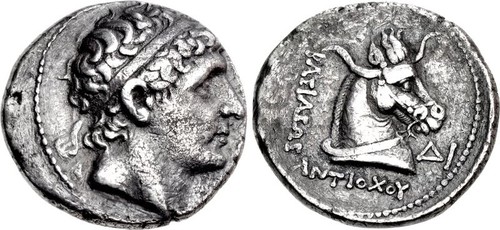
Tetradrachm of Antiochos I Soter
281-261 BC
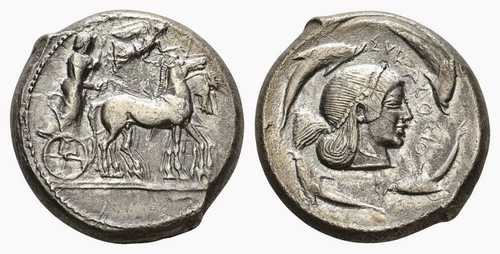
Syracuse Tetradrachm
c. 5th-4th century BC (Classical period)
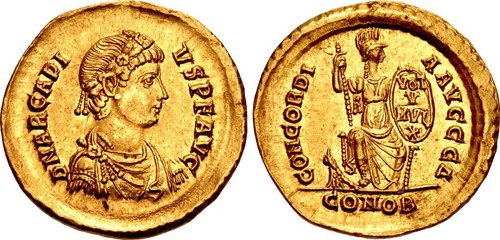
Solidus of Arcadius
AD 395-402
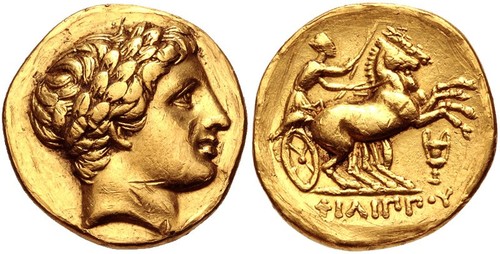
Philip III Gold Stater
323-317 BC
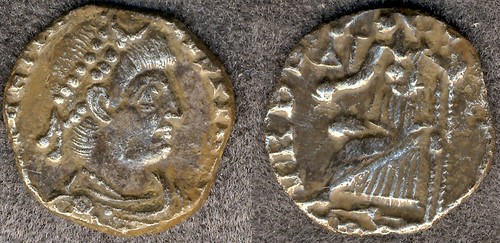
Siliqua of Gratian
AD 367-383
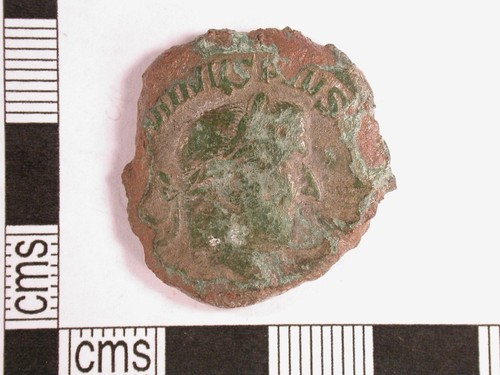
Sestertius of Maximinus Thrax
235-238 AD
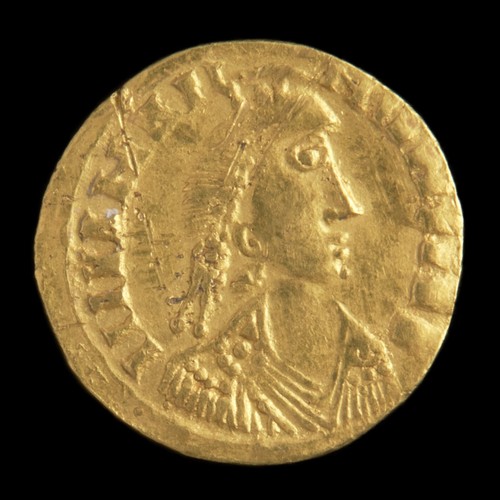
Solidus of Valentinian III
AD 425-455
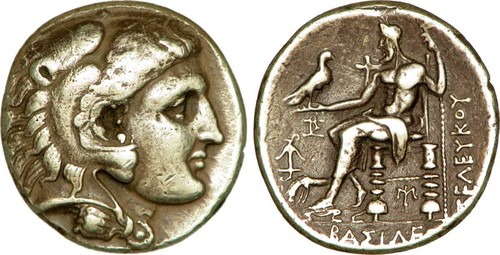
Seleucus I Nicator Tetradrachm
Late 4th-3rd century BC
Nummus of Magnentius
AD 350-353
Follis of Galerius
AD 308-310