
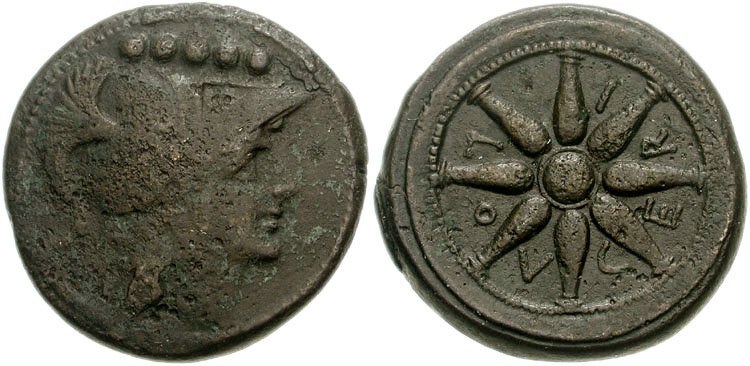
Quincunx of Luceria
A cast bronze quincunx of Luceria in Apulia (3rd century BC), showing a female head and a five-point floral or star device marking five unciae.
- Country
- Luceria (Italic)
- Denomination
- Quincunx
- Metal
- Bronze
Got a coin like this?
Identify any coin from a photo, free.
Overview
The quincunx was a bronze fractional denomination struck and cast in the Roman Republican period, valued at five unciae, or five-twelfths of the as. This example comes from Luceria, an important mint town in Apulia in southeastern Italy, active during the 3rd century BC. The name itself points to the value: a quincunx equaled five twelfths, and the coin's reverse device is a cluster of five elements arranged as a flower or star.
The piece shown here has a female head facing right on the obverse, commonly identified as a helmeted head of Roma, and a five-petaled floral or star pattern on the reverse. That five-part symbol is the coin's signature: the five petals or points are the pictorial statement of the denomination, echoing the five unciae the coin represented. As a heavy bronze piece from the transition between purely cast aes grave and later struck bronze, it is a tangible artifact of how central Italy monetized in the era of Rome's expansion.
History & Background
Luceria (modern Lucera) was a Latin colony established in Apulia in the early 3rd century BC and became one of the mints producing bronze coinage tied to the Roman system of the as and its uncial fractions. During this period the Romans and their allied Italic communities used a duodecimal bronze system in which the as was divided into twelve unciae, with named fractions such as the semis (six), triens (four), quadrans (three), sextans (two), uncia (one), and the quincunx (five).
The quincunx was a comparatively unusual and short-lived denomination, and Luceria is among the mints associated with its production in the 3rd century BC. Coins of this town appear both in cast aes grave form and, later, in lighter struck bronze as the Roman weight standard was progressively reduced during the strains of the Punic Wars. Exact mintage figures do not survive for ancient coinages, so the type is known only from the surviving specimens catalogued in numismatic references.
Over the 3rd century BC the heavy libral and reduced bronze standards gave way to lighter issues, and denominations like the quincunx were eventually abandoned. The type therefore belongs to a relatively narrow window in the middle Republic, before Rome standardized its silver and bronze coinage in the later part of the century.
How to Identify
The defining feature is the reverse device of five elements arranged as a flower or star. On this coin the reverse shows a five-petaled floral or star pattern, which visually encodes the denomination: five for the five unciae of a quincunx. On many quincunx types the value is additionally marked by five pellets or dots, so look for groups of five in the design.
The obverse carries a female head facing right, here identified as a head of Roma. The coin is bronze, thick and heavy relative to its diameter, with the somewhat irregular flan and surfaces typical of ancient cast and early struck bronze. Expect a green or brown patina and often uneven wear rather than the crisp edges of a modern minted coin.
Because this is an ancient bronze, there is no date on the coin; its 3rd-century BC dating comes from style, standard, and the mint attribution to Luceria rather than any inscribed year. A mint signature or the town's name may appear in Latin letters on some Lucerian pieces, but the five-part reverse combined with the female head is the primary diagnostic.
Value & Collectibility
Ancient Roman Republican bronze fractions vary widely in value depending on type, condition, and surface quality. A quincunx of Luceria is a scarcer denomination than the common as or semis, and well-preserved examples with clear detail and attractive patina are sought by collectors of Republican and Italic bronze.
Worn or corroded pieces with weak detail generally sit at the lower end of the market, while specimens with sharp devices, a clean green or brown patina, and full legends command higher prices. Because named fractional denominations like the quincunx are less frequently offered than mainstream Republican bronze, condition and eye appeal drive most of the difference in price.
As with all ancient coins, value is best judged against recent auction results for the same mint and denomination, and provenance can matter for higher-grade pieces. There are no fixed catalog prices that hold across the market, so ranges rather than exact figures are the honest guide.
Frequently asked questions
What does the name quincunx mean?
It refers to the value: a quincunx was worth five unciae, or five-twelfths of the Roman as. The five-part flower or star on the reverse pictorially marks that value of five.
Where was this coin made?
It is attributed to Luceria, a mint town in Apulia in southeastern Italy (modern Lucera), which produced bronze coinage within the Roman uncial system during the 3rd century BC.
Who is the head on the obverse?
The female head facing right is commonly identified as Roma. On this piece it appears on the obverse, paired with the five-petaled floral or star device on the reverse.
How old is a quincunx of Luceria?
It dates to the 3rd century BC, the era of the middle Roman Republic and the Punic Wars. Ancient coins carry no year, so the dating comes from style, weight standard, and mint attribution.
Why are there five petals or points?
The five elements encode the denomination. A quincunx equals five unciae, so the design uses a cluster of five petals, points, or pellets as a visual mark of its value.
Quincunx of Luceria guides
In-depth guides for identifying, valuing, and collecting Quincunx of Luceria.
Other coins you may enjoy
Tetradrachm of Ptolemy XII
80-51 BC
Tetradrachm of Ptolemy I
305-283 BC
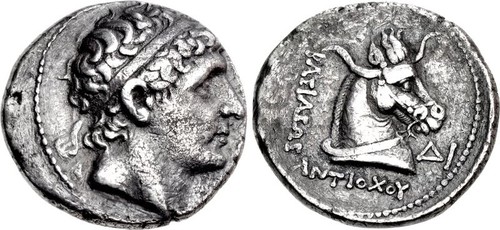
Tetradrachm of Antiochos I Soter
281-261 BC
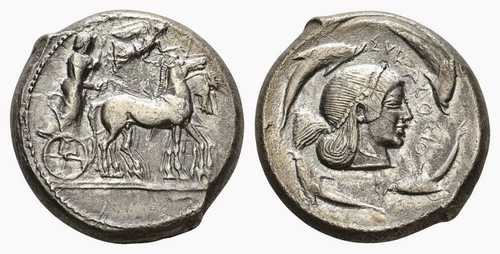
Syracuse Tetradrachm
c. 5th-4th century BC (Classical period)
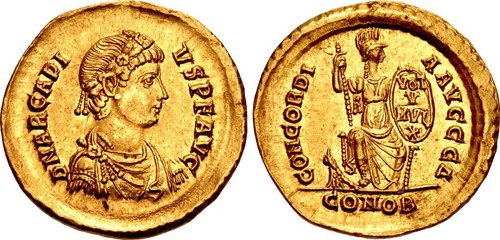
Solidus of Arcadius
AD 395-402
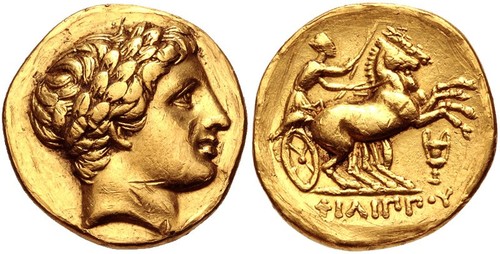
Philip III Gold Stater
323-317 BC
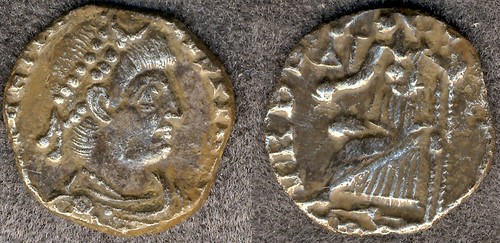
Siliqua of Gratian
AD 367-383
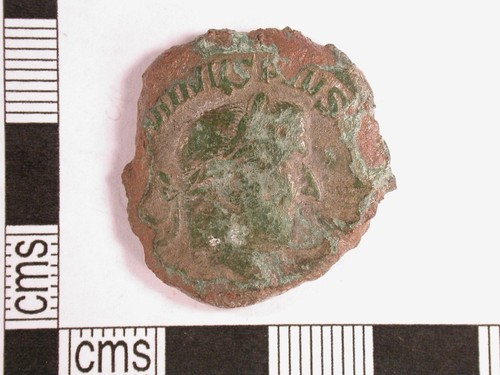
Sestertius of Maximinus Thrax
235-238 AD
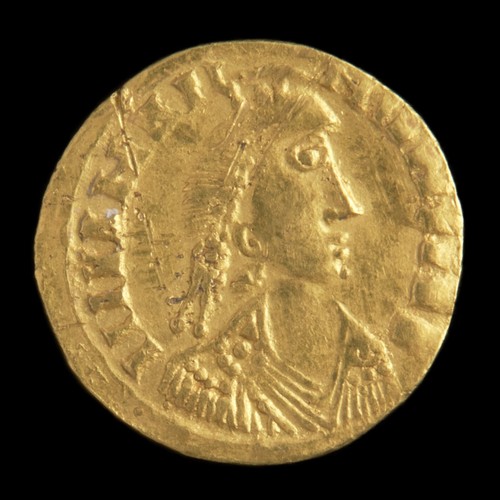
Solidus of Valentinian III
AD 425-455
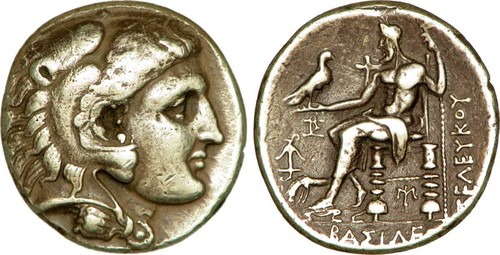
Seleucus I Nicator Tetradrachm
Late 4th-3rd century BC
Nummus of Magnentius
AD 350-353
Follis of Galerius
AD 308-310