
Coin Encyclopedia
Search and identify coins from around the world — with country, denomination, metal, mint, history, and how to tell them apart.
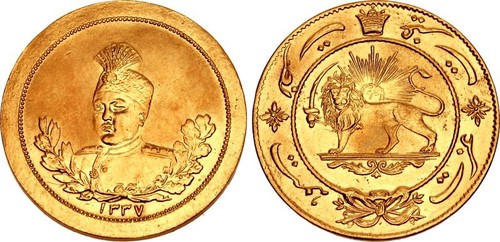
Qajar 5 Tomans Commemorative
A late Qajar gold 5 Tomans of Persia showing Ahmad Shah Qajar in a laurel wreath and the national Lion emblem, dated 1299.
Persia / Iran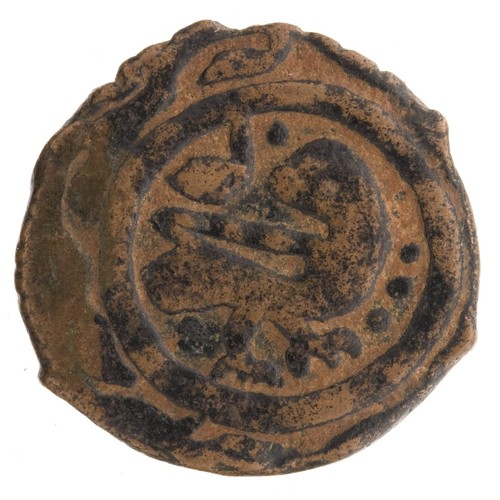
Copper Fals of as-Salih Salih
A hand-struck medieval Islamic copper fals attributed to as-Salih Salih, covered on both faces in Arabic calligraphy with no portrait or figural imagery.
Islamic (Medieval)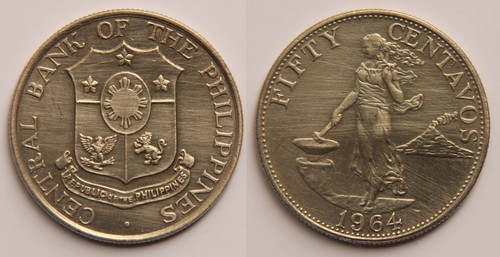
Philippines 50 Centavos
A 1960s Philippine 50-centavos coin in copper-nickel, its obverse showing an allegorical woman with a torch and its reverse the national coat of arms.
Southeast Asia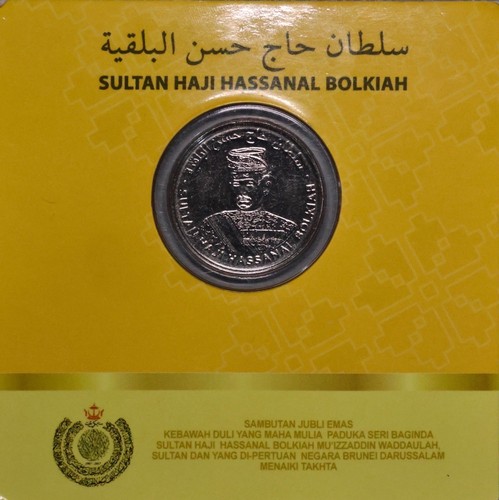
Brunei Golden Jubilee 50 Cents
A copper-nickel 50-cent coin from Brunei's 2017 Golden Jubilee, showing a palm-leaf design with Arabic text and a reverse with the value and a floral motif.
Southeast Asia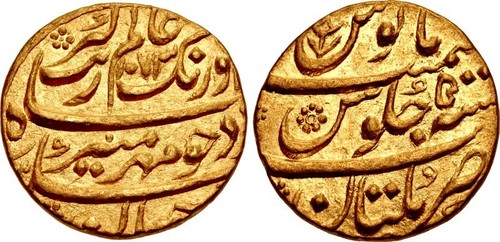
Gold Mohur of Aurangzeb
A hand-struck gold mohur of Mughal emperor Aurangzeb Alamgir, bearing Persian couplets and a mint name such as Multan.
Mughal India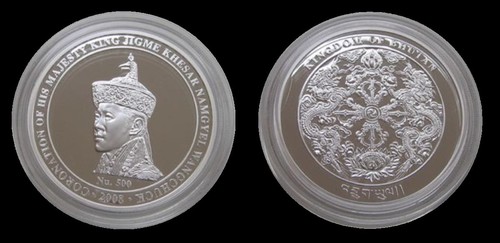
Bhutan 500 Ngultrum Commemorative
Modern Bhutanese silver commemorative dated 2008, with a portrait of King Jigme Khesar Namgyel Wangchuck and an ornate dragon-and-mythical-creature reverse.
Himalayan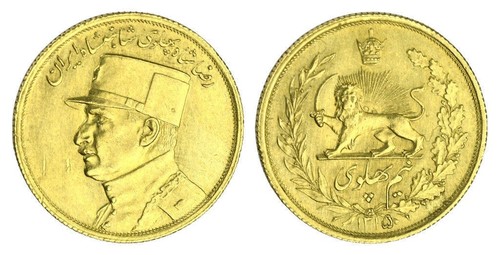
Half Pahlavi Gold Coin
A small Iranian gold coin worth half a Pahlavi, showing Reza Shah in a military cap on one side and the Lion and Sun with a crown on the other.
Persia / Iran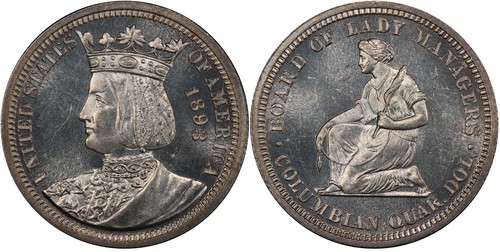
Isabella Quarter
The 1893 Isabella Quarter is the only U.S. commemorative quarter dollar, made for the Columbian Exposition's Board of Lady Managers.
Classic Commemorative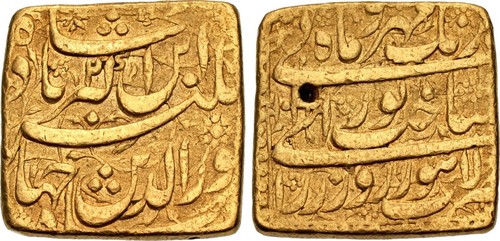
Gold Square Mohur of Jahangir
A square gold mohur of the Mughal emperor Jahangir, bearing Persian calligraphy, the Lahore mint, and regnal-year dating.
Mughal India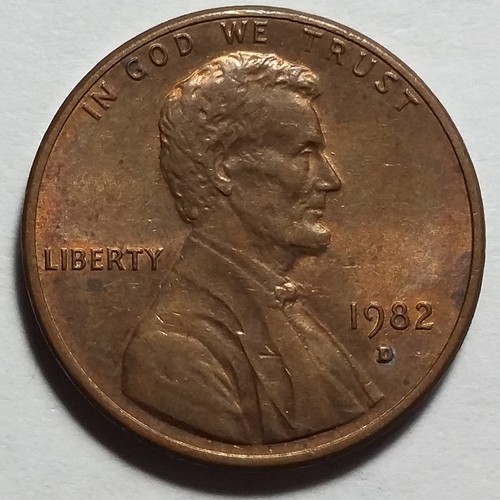
Lincoln Memorial Cent
U.S. one-cent piece struck 1959–2008 with Lincoln's profile and a Memorial reverse; 1982 is the split year between bronze and copper-plated zinc.
Small Cent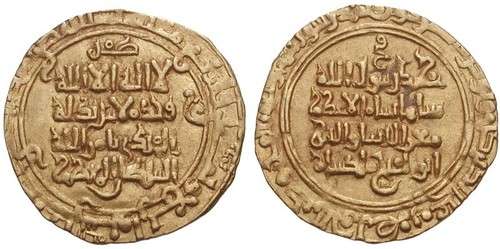
Gold Dinar of Malik Shah I
A hand-struck Seljuk gold dinar naming Malik Shah I (r. 1072–1092), covered in Arabic inscriptions with the ruler's titles and genealogy and an ornamental cartouche.
Islamic (Medieval)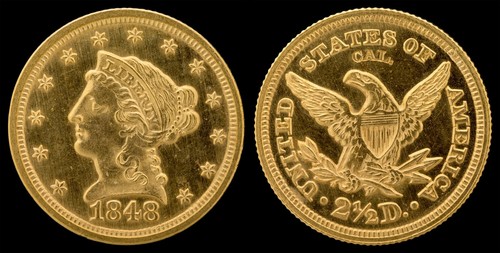
Liberty Head Quarter Eagle
U.S. $2.50 gold coin struck 1840–1907, with a coronet-crowned Liberty head obverse and a shield-breasted eagle reverse marked "2½ D."
Quarter Eagle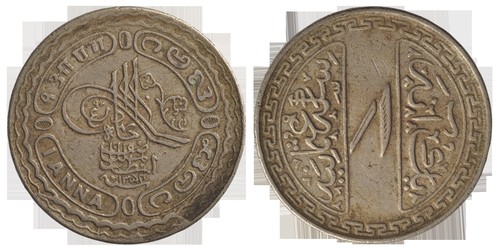
Hyderabad One Anna
A copper-nickel 1-anna coin of Hyderabad State under Nizam Osman Ali Khan, with Urdu inscriptions and floral borders, dated AH 1354 (c. 1935).
Princely & Presidency States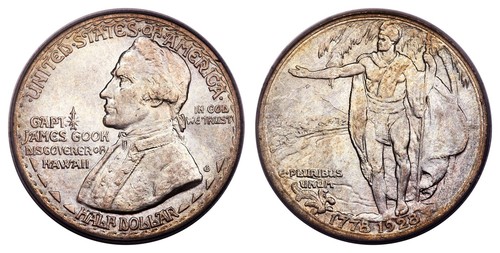
Hawaiian Sesquicentennial Half Dollar
A scarce 1928 U.S. silver commemorative half dollar marking 150 years since Captain James Cook's arrival in the Hawaiian Islands.
Classic Commemorative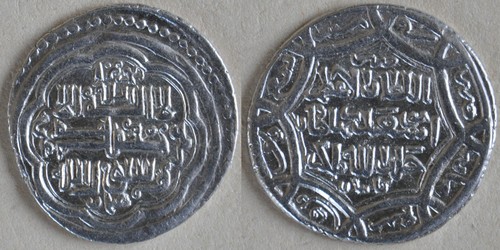
Ilkhanid Dirham of Abu Said
A hand-struck Mongol Ilkhanate silver dirham of Abu Sa'id Bahadur Khan, with the ruler's titles set in a cartouche and religious inscriptions in concentric bands.
Islamic (Medieval)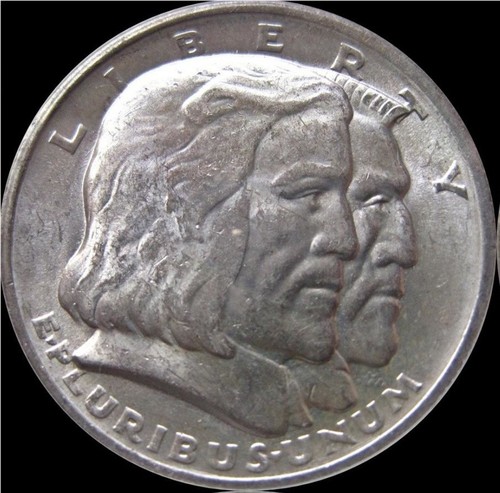
Long Island Tercentenary Half Dollar
A 1936 U.S. silver half dollar marking 300 years of settlement on Long Island, with accolated settler and Native American heads and a Dutch sailing ship.
Classic Commemorative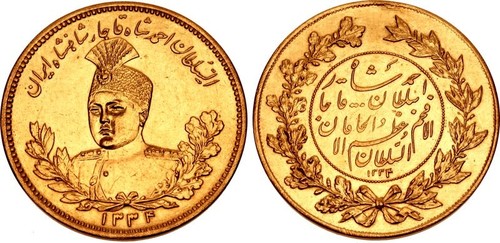
Gold Toman of Ahmad Shah Qajar
A Qajar-era gold toman bearing the portrait bust and tall headdress of Ahmad Shah, with Persian legends, date and mint, and a wreathed calligraphic reverse.
Persia / Iran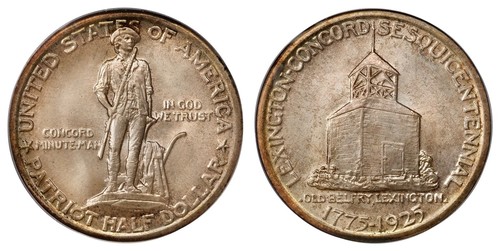
Lexington-Concord Sesquicentennial Half Dollar
A 1925 U.S. silver commemorative half dollar marking the 150th anniversary of the battles of Lexington and Concord, showing the Concord Minuteman and the Old Belfry.
Classic Commemorative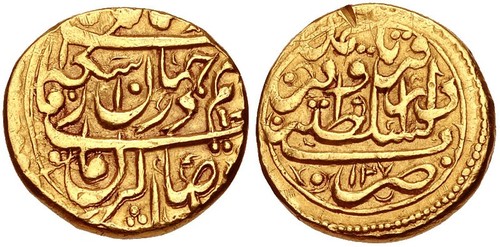
Gold Toman of Agha Mohammad Khan Qajar
A gold toman of Agha Mohammad Khan, founder of the Qajar dynasty, struck at Qazvin in AH 1206–1207 (1792–1793), covered in Persian calligraphy with no portrait.
Persia / Iran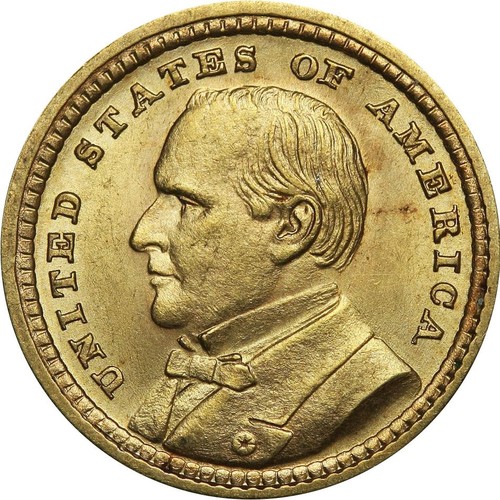
Louisiana Purchase Exposition Dollar (Jefferson)
An 1903 U.S. commemorative gold dollar honoring the Louisiana Purchase, featuring Thomas Jefferson's left-facing profile and struck for the 1904 St. Louis World's Fair.
Classic Commemorative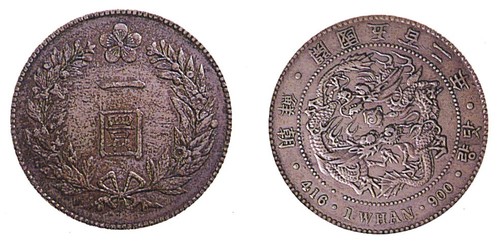
1 Hwan
A late-Joseon Korean bronze coin of one hwan, carrying a chrysanthemum-and-cartouche obverse and a traditional dragon motif with East Asian characters on the reverse.
Historic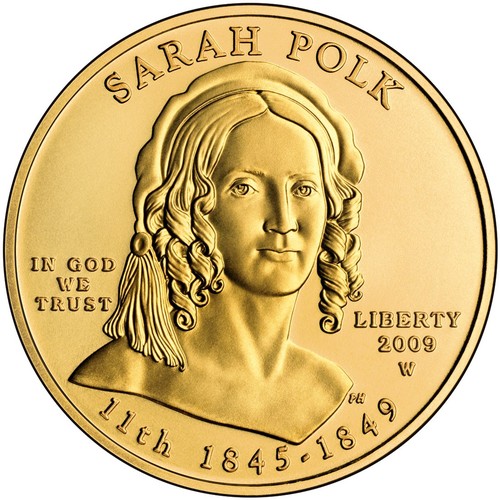
First Spouse Gold Coin (Alice Paul)
A 2012 half-ounce 24-karat gold coin from the U.S. Mint's First Spouse series honoring suffragist Alice Paul and the woman-suffrage movement.
Commemorative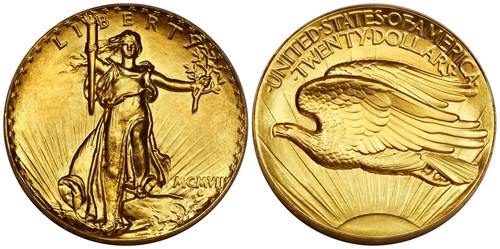
Ultra High Relief Double Eagle
Augustus Saint-Gaudens' 1907 $20 gold pattern struck in sculptural ultra high relief, with striding Liberty and a soaring eagle.
Gold Type Coin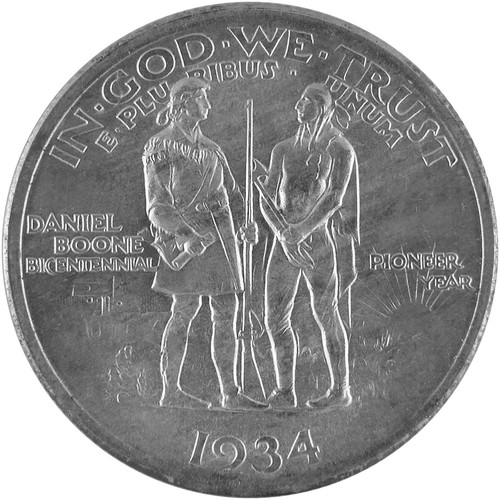
Daniel Boone Bicentennial Half Dollar
A 90% silver U.S. classic commemorative struck 1934–1938 for Daniel Boone's bicentennial, showing his portrait and a frontier scene with Chief Black Fish.
Classic Commemorative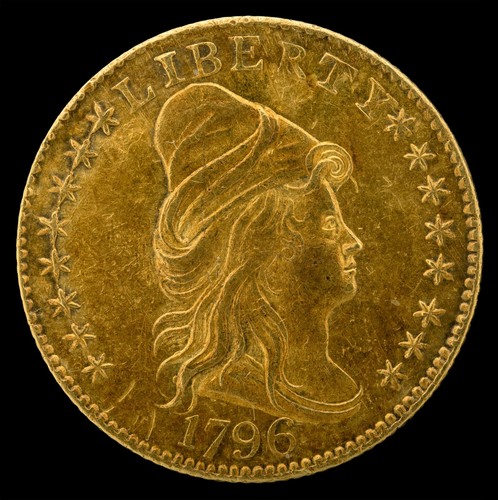
Turban Head Quarter Eagle
First U.S. $2.50 gold coin (1796), designed by Robert Scot; Liberty in a soft cap facing right with a heraldic eagle reverse. Extremely rare.
United States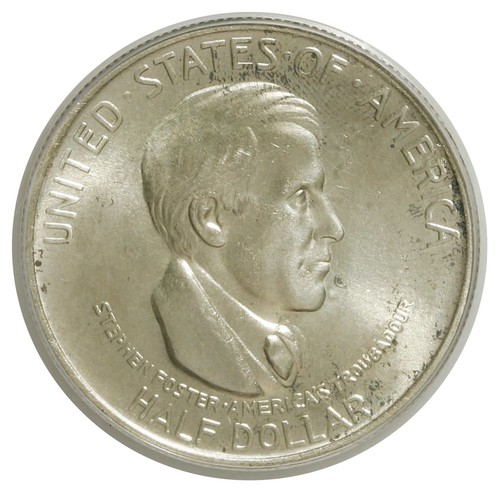
Cincinnati Music Center Half Dollar
A 1936 U.S. silver half dollar honoring Cincinnati as a music center, with composer Stephen Foster on the obverse and an allegorical figure with a lyre on the reverse.
Classic Commemorative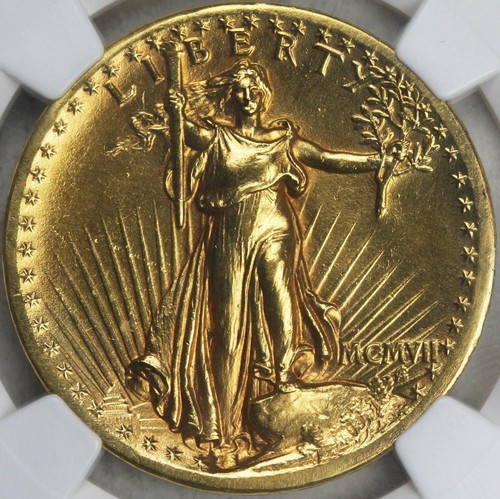
Saint-Gaudens Double Eagle
United States $20 gold coin (1907–1933) designed by Augustus Saint-Gaudens, showing a striding Liberty with torch and olive branch before a radiant sun.
Gold Type Coin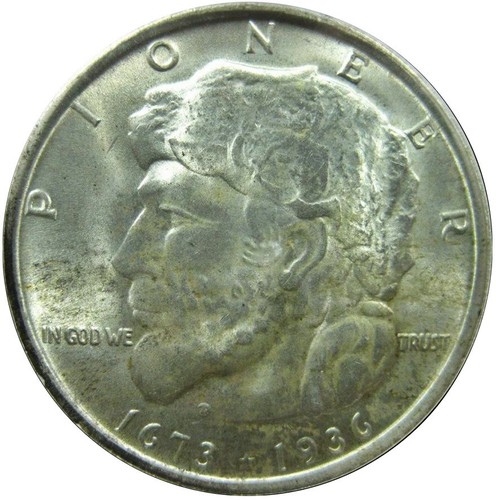
Elgin Illinois Centennial Half Dollar
A 1936 U.S. silver half dollar marking the centennial of Elgin, Illinois, with a bearded pioneer head and a pioneer-family memorial group on the reverse.
Classic Commemorative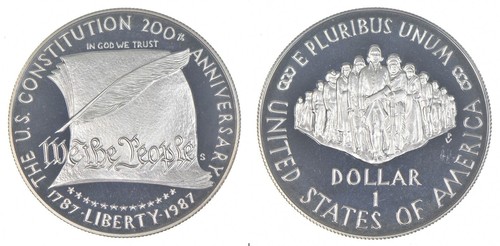
U.S. Constitution Bicentennial Silver Dollar
A 1987 U.S. Mint 90% silver commemorative dollar marking the 200th anniversary of the Constitution, with a quill-pen obverse.
Modern Commemorative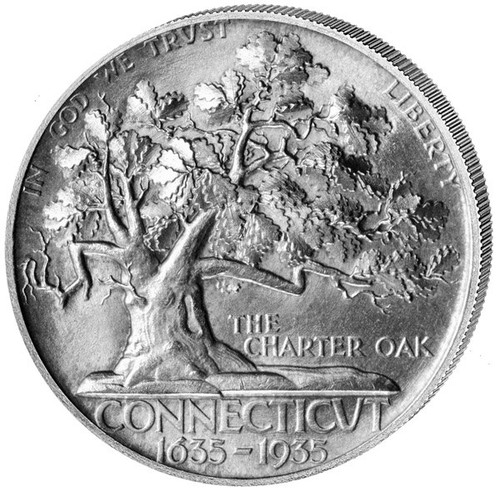
Connecticut Tercentennial Half Dollar
A 1935 U.S. silver half dollar marking 300 years of Connecticut, with a standing eagle on the obverse and the storied Charter Oak on the reverse.
Classic Commemorative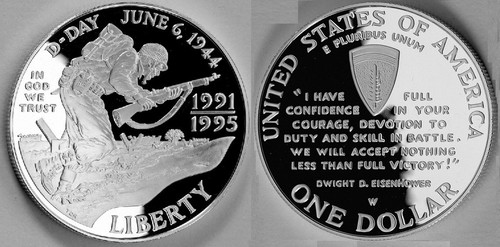
World War II 50th Anniversary Silver Dollar
A 1993 U.S. 90% silver dollar in the World War II 50th Anniversary program, showing a D-Day infantryman and a heraldic eagle with an Eisenhower quote.
Modern Commemorative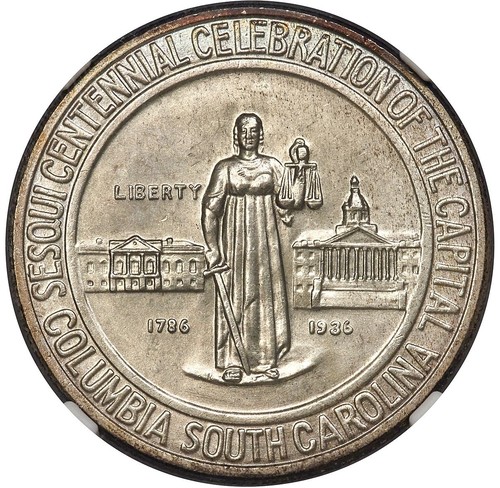
Columbia South Carolina Sesquicentennial Half Dollar
A 1936 U.S. silver half dollar marking 150 years of Columbia as South Carolina's capital; Justice with scales between two statehouses, palmetto reverse.
Classic Commemorative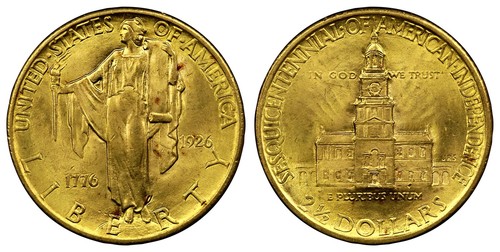
Sesquicentennial of American Independence Quarter Eagle
A 1926 U.S. commemorative $2.50 gold coin marking 150 years of American independence, with Liberty holding a torch and scroll and Independence Hall on the reverse.
Classic Commemorative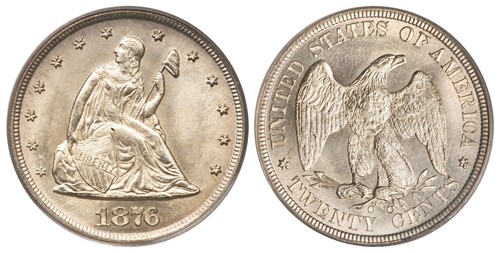
Twenty Cent Piece
A short-lived U.S. silver coin worth twenty cents, showing a seated Liberty and a soaring eagle, struck only from 1875 to 1878.
Twenty Cent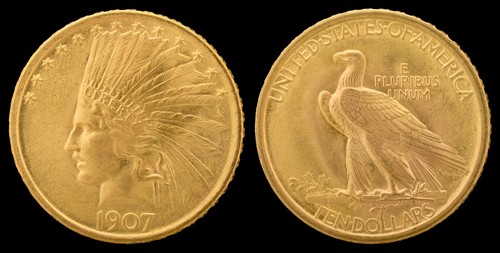
Indian Head Eagle
U.S. $10 gold eagle struck 1907–1933, designed by Augustus Saint-Gaudens, with a feathered-headdress Liberty and a standing eagle reverse.
Eagle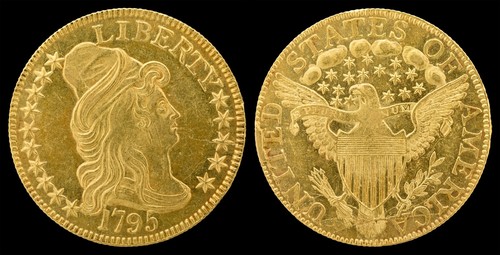
Turban Head Half Eagle
First U.S. gold $5 coin, 1795: Liberty in a soft cap facing right, with a heraldic shield-breasted eagle reverse struck in 22-karat gold.
Half Eagle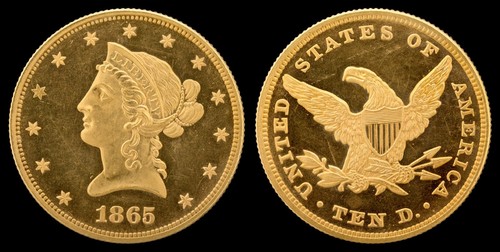
Liberty Head Eagle
A United States $10 gold coin struck 1838-1907, with Christian Gobrecht's coronet-crowned Liberty head and a shielded eagle. The example shown is dated 1839.
Eagle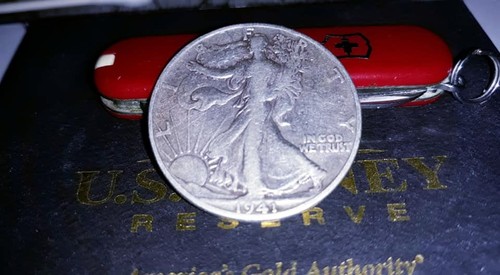
Walking Liberty Half Dollar
A classic U.S. silver half dollar struck 1916–1947, showing Liberty striding toward the sunrise on the obverse and a perched eagle on the reverse.
Half Dollar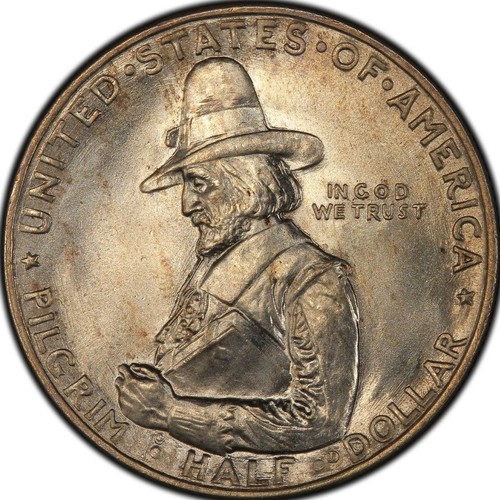
Pilgrim Tercentenary Half Dollar
A 1920-1921 U.S. silver commemorative half dollar marking 300 years since the Pilgrims' landing, with a Pilgrim figure and the Mayflower.
Classic Commemorative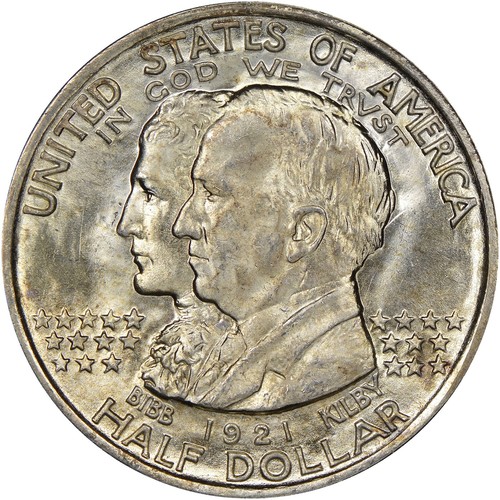
Alabama Centennial Half Dollar
A 1921 U.S. silver half dollar marking a century of Alabama statehood, with jugate governor busts and a state eagle; issued in plain and scarcer 2×2 varieties.
Classic Commemorative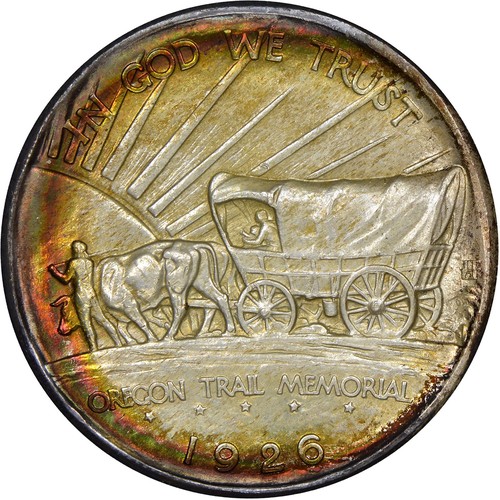
Oregon Trail Memorial Half Dollar
A U.S. silver commemorative half dollar first issued in 1926, famed for its westbound covered wagon and standing Native American designs.
Classic Commemorative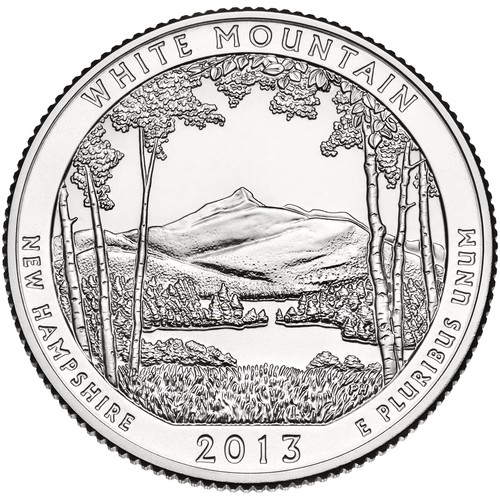
White Mountain Quarter
2013 America the Beautiful quarter for White Mountain National Forest (NH), showing Mount Chocorua and birch trees over Chocorua Lake.
Quarter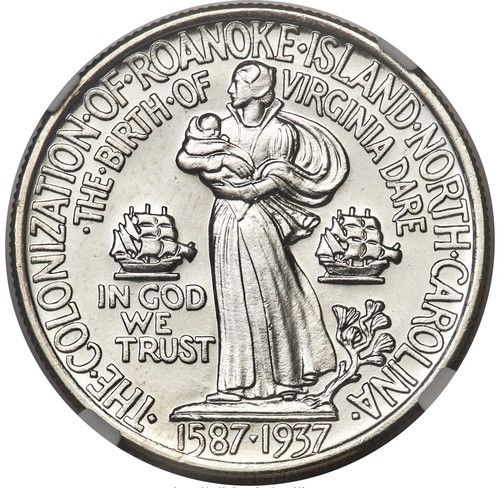
Roanoke Island Half Dollar
A 1937 U.S. silver half dollar marking 350 years since the Roanoke Island colony and the birth of Virginia Dare, with Sir Walter Raleigh and a sailing ship.
Classic Commemorative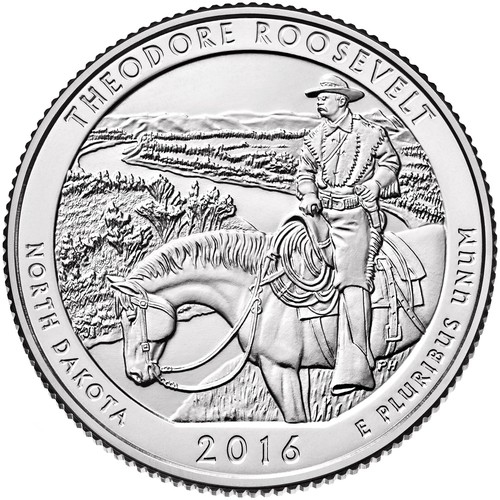
Theodore Roosevelt Quarter
U.S. 25-cent America the Beautiful quarter for 2016, showing a young Theodore Roosevelt on horseback with the inscription THEODORE ROOSEVELT / NORTH DAKOTA.
Quarter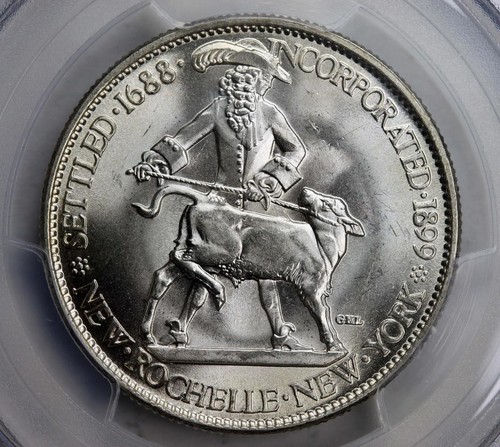
New Rochelle Half Dollar
A 1938 U.S. silver half dollar marking the 250th anniversary of New Rochelle, New York, with a Huguenot founder leading a fatted calf and a fleur-de-lis reverse.
Classic Commemorative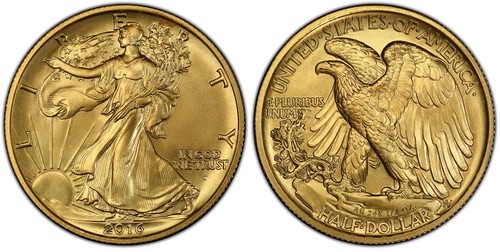
Walking Liberty Half Dollar Centennial Gold
A 2016-W gold collector coin marking the centennial of the 1916 Walking Liberty half dollar, struck in 1/2 oz of 24-karat gold at West Point.
Half Dollar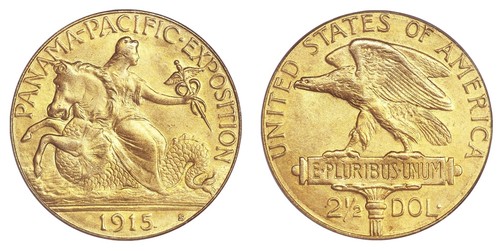
Panama-Pacific Exposition Quarter Eagle
A 1915 gold $2.50 commemorative for San Francisco's Panama-Pacific Exposition, showing Columbia astride a hippocamp and an eagle on the reverse.
Classic Commemorative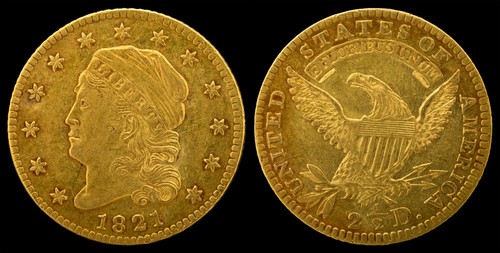
Capped Head Quarter Eagle
A rare early U.S. $2.50 gold coin struck 1821–1834, showing a left-facing capped Liberty head amid stars and a heraldic eagle with shield and E PLURIBUS UNUM.
United States