
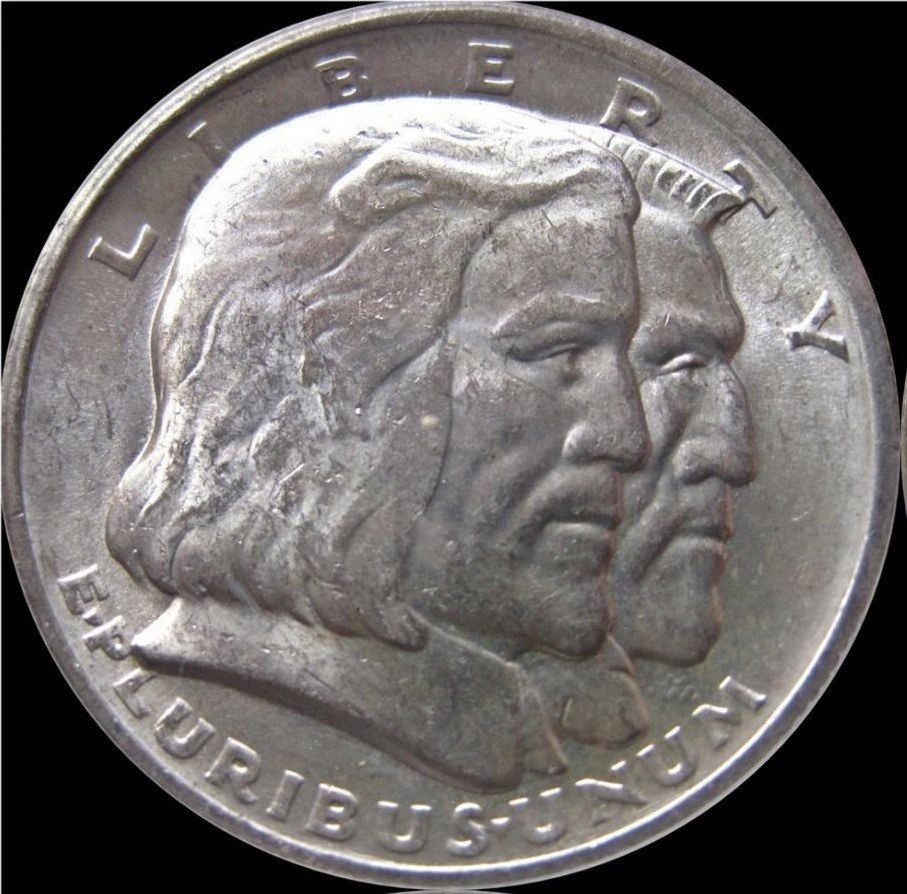
Long Island Tercentenary Half Dollar
A 1936 U.S. silver half dollar marking 300 years of settlement on Long Island, with accolated settler and Native American heads and a Dutch sailing ship.
- Country
- United States
- Denomination
- 50¢
- Metal
- Silver
Got a coin like this?
Identify any coin from a photo, free.
Overview
The Long Island Tercentenary Half Dollar is a United States silver commemorative fifty-cent piece struck in 1936 to mark the three-hundredth anniversary of the first European settlement on Long Island, New York. It belongs to the "classic" commemorative series that ran from 1892 to 1954, in which special half dollars were authorized by Congress to honor an event and sold to the public at a premium above face value.
The obverse carries the conjoined (accolated) profile heads of a bearded Dutch settler and an Algonquian Native American, with LIBERTY above and E PLURIBUS UNUM below. The reverse depicts a three-masted Dutch sailing ship over stylized waves, encircled by UNITED STATES OF AMERICA · HALF · DOLLAR, with IN GOD WE TRUST on a banner and the date 1936 above the wording LONG ISLAND TERCENTENARY.
Struck in the standard 90% silver alloy of a regular half dollar, it was never meant for circulation. Today it is collected as one of the more affordable and available issues in the classic commemorative half dollar set.
History & Background
Congress authorized the coin to commemorate the tercentenary of the first white settlement on Long Island, traditionally dated to 1636, when Dutch colonists established a foothold in the region. The issue was promoted by the Long Island Tercentenary Committee, which distributed the coins to the public at a premium to help fund and publicize the anniversary celebration.
The designs are the work of Howard Kenneth Weinman, son of sculptor Adolph A. Weinman, who had created the Walking Liberty half dollar and the "Mercury" dime. The younger Weinman used the accolated heads of a settler and a Native American to symbolize the meeting of the two peoples, and the Dutch vessel on the reverse to evoke the arrival of the early colonists by sea.
The coins were struck only at the Philadelphia Mint in 1936. Fewer than 100,000 pieces were released to the public, with a portion of those struck later returned to the Mint and melted, leaving a net distribution on the order of roughly 80,000 coins — a relatively generous figure by classic commemorative standards, which is part of why the issue remains attainable today.
How to Identify
Identify the type by its two distinctive designs. The obverse shows two overlapping right-facing heads — a long-haired, bearded Dutch settler in front and an Algonquian Native American behind — with LIBERTY curving across the top and E PLURIBUS UNUM along the lower border. The paired heads are the fastest way to recognize the coin.
The reverse is dominated by a three-masted Dutch sailing ship riding stylized waves, with the legend UNITED STATES OF AMERICA · HALF · DOLLAR around the rim, IN GOD WE TRUST on a small banner, and the prominent date 1936 above the words LONG ISLAND TERCENTENARY at the bottom. That LONG ISLAND TERCENTENARY inscription is the definitive identifier.
The coin is a standard-size half dollar: about 30.6 mm in diameter, roughly 12.5 grams, struck in 90% silver with a reeded edge. It was made only in 1936 and only at Philadelphia, so a genuine example carries no mint mark.
Value & Collectibility
As a classic silver commemorative, the Long Island Tercentenary Half Dollar is worth well above its face value and its silver content, but it is one of the more affordable issues in the series because a comparatively large number survive.
Circulated and lightly worn examples typically trade from around the low-to-mid tens of dollars, with attractive uncirculated coins often ranging from the middle tens into the low hundreds. Fully struck, high-grade pieces with original surfaces bring the strongest prices. Condition, eye appeal, toning, and third-party grade all strongly influence value.
Because prices move with the collector market and depend heavily on grade, any specific example should be checked against recent auction results and current price guides rather than a single fixed figure.
Frequently asked questions
What does the Long Island Tercentenary Half Dollar commemorate?
It marks the 300th anniversary of the first European (Dutch) settlement on Long Island, New York, traditionally dated to 1636. The coin was issued in 1936 to fund and publicize the anniversary celebration.
Who is pictured on the obverse?
The obverse shows the conjoined profile heads of a bearded Dutch settler in front and an Algonquian Native American behind, symbolizing the meeting of the two peoples on Long Island.
Who designed the coin?
Howard Kenneth Weinman, son of Adolph A. Weinman — the sculptor of the Walking Liberty half dollar and the "Mercury" dime — designed both sides of the Long Island Tercentenary half dollar.
Is it made of silver?
Yes. Like a regular U.S. half dollar of the era, it is struck in 90% silver with 10% copper, about 12.5 grams and 30.6 mm across, with a reeded edge.
Does it have a mint mark?
No. The coins were struck only at the Philadelphia Mint in 1936, so genuine examples carry no mint mark.
Long Island Tercentenary Half Dollar guides
In-depth guides for identifying, valuing, and collecting Long Island Tercentenary Half Dollar.
Other coins you may enjoy
Isabella Quarter
1893
Hawaiian Sesquicentennial Half Dollar
1928
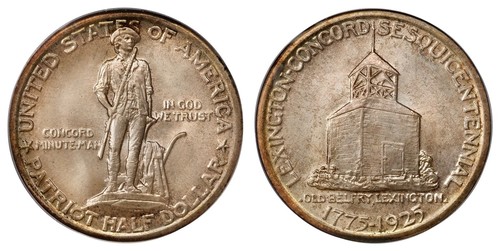
Lexington-Concord Sesquicentennial Half Dollar
1925
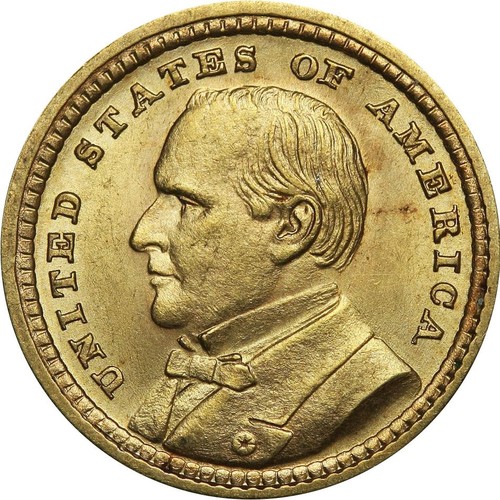
Louisiana Purchase Exposition Dollar (Jefferson)
1903
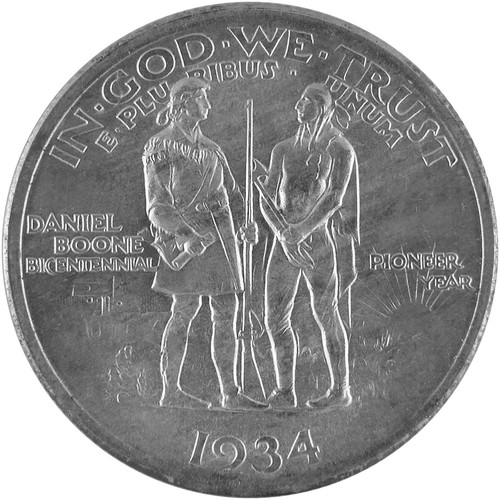
Daniel Boone Bicentennial Half Dollar
1934–1938
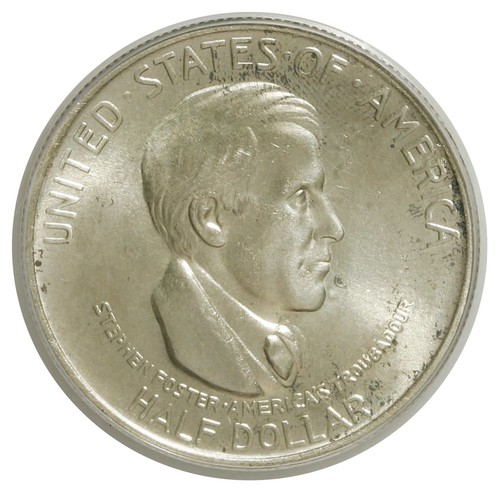
Cincinnati Music Center Half Dollar
1936
Elgin Illinois Centennial Half Dollar
1936
Connecticut Tercentennial Half Dollar
1935
Columbia South Carolina Sesquicentennial Half Dollar
1936
Sesquicentennial of American Independence Quarter Eagle
1926
Pilgrim Tercentenary Half Dollar
1920-1921
Alabama Centennial Half Dollar
1921