
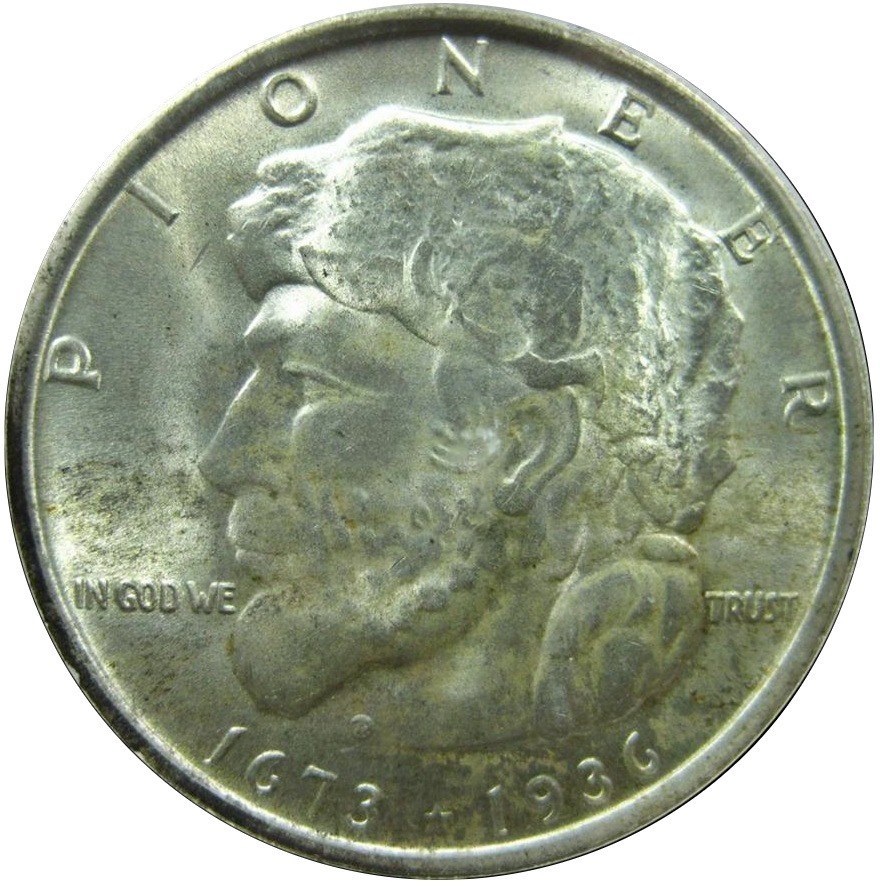
Elgin Illinois Centennial Half Dollar
A 1936 U.S. silver half dollar marking the centennial of Elgin, Illinois, with a bearded pioneer head and a pioneer-family memorial group on the reverse.
- Country
- United States
- Denomination
- 50¢
- Metal
- Silver
Got a coin like this?
Identify any coin from a photo, free.
Overview
The Elgin, Illinois Centennial Half Dollar is a United States silver commemorative fifty-cent piece struck in 1936 to mark the one-hundredth anniversary of the founding of Elgin, Illinois. It belongs to the "classic" commemorative series that ran from 1892 to 1954, in which special half dollars were authorized by Congress to honor an event and sold at a premium above face value to raise funds.
The coin was designed by Elgin sculptor Trygve Rovelstad, whose initials appear on the coin. The obverse carries the head of a bearded pioneer in profile, and the reverse depicts a group of pioneers — a family with a rifleman — based on Rovelstad's design for a Pioneer Memorial statue. Sale proceeds were intended to help fund that memorial.
Struck in the standard 90% silver alloy of a regular half dollar, it was never meant for circulation. Today it is collected as part of the classic commemorative half dollar set and is prized for its bold pioneer imagery and its connection to a single 1936 Philadelphia issue.
History & Background
Congress authorized a commemorative half dollar in 1936 to help mark the centennial of Elgin, Illinois, a city northwest of Chicago that had been settled in the mid-1830s. Like other issues in the classic commemorative program, the coins were sold to collectors and the public at a premium, with proceeds tied to a civic cause — in this case, the construction of a Pioneer Memorial in Elgin.
The designs are the work of Trygve Rovelstad, a local sculptor who had long championed the memorial project. The obverse shows the head of a bearded pioneer, and the reverse renders the pioneer family group he intended to cast in bronze. The obverse also bears the dual dates 1673 and 1936; the 1673 date has long puzzled collectors, as it does not correspond to Elgin's own founding, and it is generally read as a broad nod to the era of North American pioneering rather than a specific local anniversary.
The issue was struck only at the Philadelphia Mint in 1936. A relatively small number were coined for distribution — on the order of twenty thousand pieces reached collectors, with a portion of the original authorization returned and melted. As a one-year, one-mint type with modest distribution, it is a discrete and popular target for commemorative collectors.
How to Identify
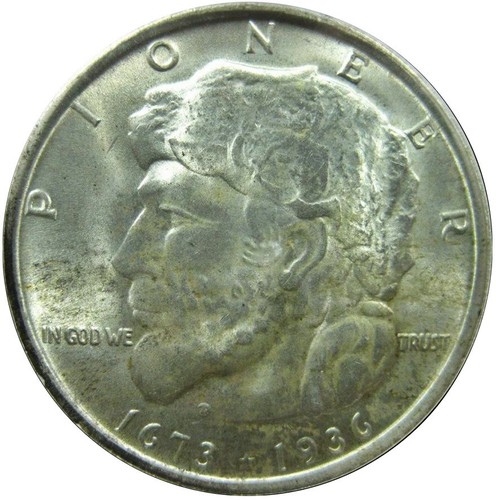
Identify the type by its distinctive pioneer imagery and lettering. The obverse shows a single bearded male head in profile — a pioneer, not a specific named individual — accompanied by the dual dates 1673 and 1936. The bust is sometimes misread by imaging tools as a portrait of a named person, but the design is an idealized pioneer. "LIBERTY" and the national mottoes appear as required on U.S. coinage.
The reverse depicts a group of pioneer figures — a man holding a rifle with a family beside him — with lettering naming Elgin and identifying the commemorative purpose, along with the denomination. This memorial-group reverse is unlike any circulating half dollar of the period and is the surest identifier of the type.
The coin is a standard-size half dollar: about 30.6 mm in diameter, roughly 12.5 grams, struck in 90% silver with a reeded edge. It was made only in 1936 and only at Philadelphia, so a genuine example carries no mint mark. The designer's initials appear on the coin as a further point of confirmation.
Value & Collectibility
As a classic silver commemorative, the Elgin Illinois Centennial Half Dollar is worth well above its fifty-cent face value and its silver melt value. Because most surviving examples were sold to collectors and saved, the type is usually found in uncirculated condition rather than worn.
Typical uncirculated examples generally trade from around the low couple hundred dollars into higher figures as grade and eye appeal improve; superb, high-grade pieces with original surfaces bring the strongest prices, while cleaned or impaired coins sell for less. Toning, luster, and third-party grade all meaningfully affect value.
Because prices track the collector market and depend heavily on grade, any specific example should be checked against recent auction results and current price guides rather than a single fixed figure.
Frequently asked questions
What does the Elgin Illinois Centennial Half Dollar commemorate?
It marks the 100th anniversary of the founding of Elgin, Illinois. Proceeds from its sale were intended to help fund a Pioneer Memorial statue in the city.
Who is pictured on the obverse?
The obverse shows the head of a bearded pioneer — an idealized figure rather than a specific named person. It was designed by Elgin sculptor Trygve Rovelstad.
Why does the coin show the date 1673?
The obverse bears both 1673 and 1936. The 1673 date does not match Elgin's own founding and is generally understood as a general reference to the pioneer era rather than a specific local anniversary.
Is it made of silver?
Yes. Like a regular U.S. half dollar of the era, it is struck in 90% silver with 10% copper, about 12.5 grams and 30.6 mm across, with a reeded edge.
Does it have a mint mark?
No. The coins were struck only at the Philadelphia Mint in 1936, so genuine examples carry no mint mark.
Elgin Illinois Centennial Half Dollar guides
In-depth guides for identifying, valuing, and collecting Elgin Illinois Centennial Half Dollar.
Other coins you may enjoy
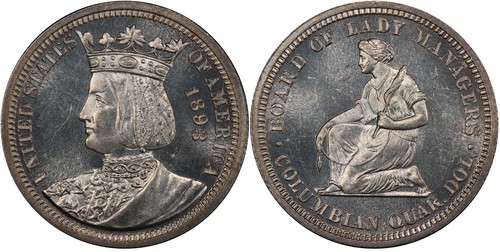
Isabella Quarter
1893
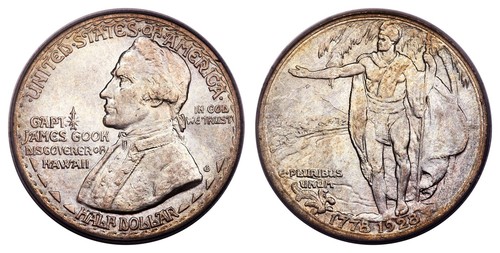
Hawaiian Sesquicentennial Half Dollar
1928
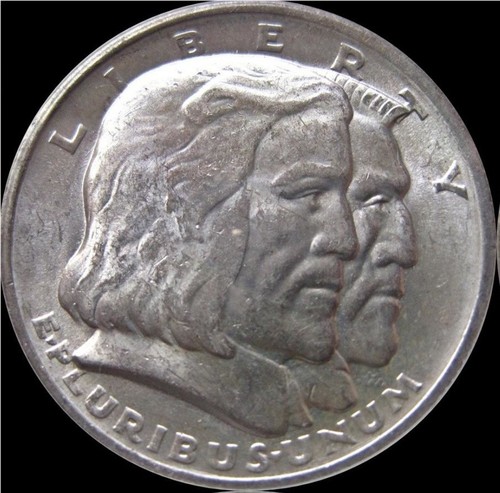
Long Island Tercentenary Half Dollar
1936
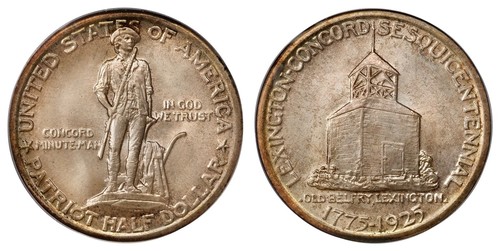
Lexington-Concord Sesquicentennial Half Dollar
1925
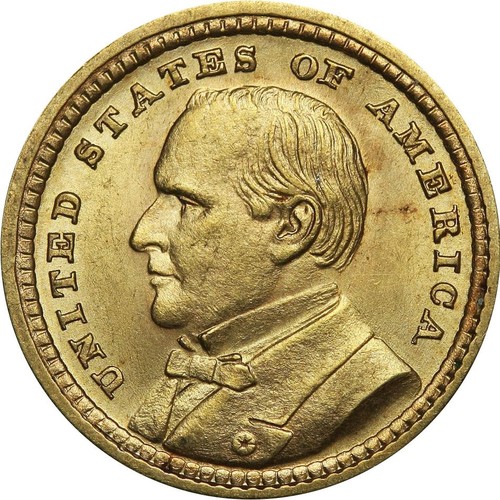
Louisiana Purchase Exposition Dollar (Jefferson)
1903
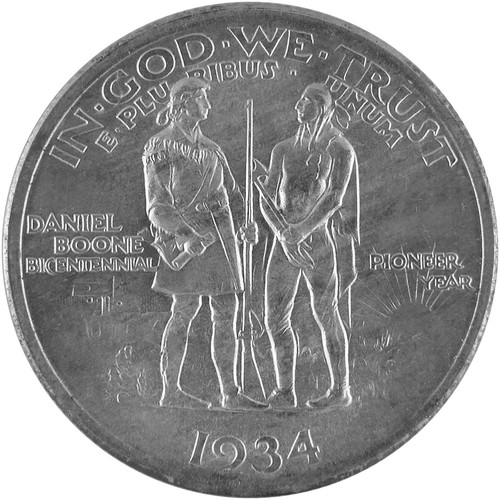
Daniel Boone Bicentennial Half Dollar
1934–1938
Cincinnati Music Center Half Dollar
1936
Connecticut Tercentennial Half Dollar
1935
Columbia South Carolina Sesquicentennial Half Dollar
1936
Sesquicentennial of American Independence Quarter Eagle
1926
Pilgrim Tercentenary Half Dollar
1920-1921
Alabama Centennial Half Dollar
1921