
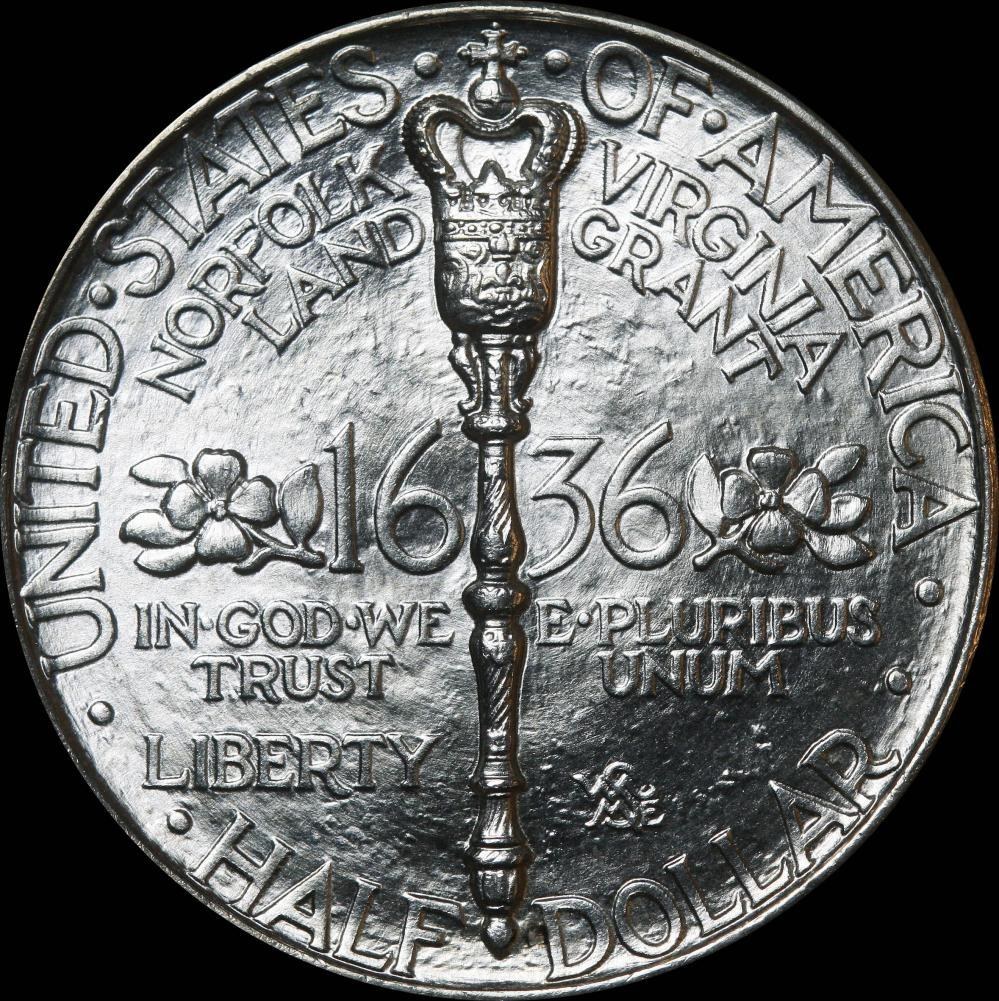
Norfolk Bicentennial Half Dollar
A 1936 U.S. silver half dollar honoring Norfolk, Virginia, with the city's Royal Mace on the reverse and dates 1636-1936; a low-mintage classic commemorative.
- Country
- United States
- Denomination
- 50¢
- Metal
- Silver
Got a coin like this?
Identify any coin from a photo, free.
Overview
The Norfolk Bicentennial Half Dollar is a United States silver commemorative fifty-cent piece struck in 1936 to mark milestones in the history of Norfolk, Virginia. It belongs to the "classic" commemorative series (1892-1954), in which Congress authorized special half dollars honoring an event or anniversary that were sold to the public at a premium above face value.
The reverse, seen on this coin, depicts the Royal Mace of Norfolk — an ornamental ceremonial scepter topped with a crown and surrounded by floral and scroll designs — flanked by the anniversary dates 1636 and 1936. The obverse carries a rendering of the seal of the City of Norfolk, which features a three-masted sailing ship. The design is the work of the husband-and-wife sculptors William Marks Simpson and Marjorie Emory Simpson.
Struck in the standard 90% silver alloy of a regular half dollar, the coin was never meant for circulation. It is collected today as part of the classic commemorative half dollar set and is notable for its relatively low net mintage, which keeps it in steady demand among collectors of the series.
History & Background
Legislation authorized a commemorative half dollar tied to Norfolk's long history, reflecting both the 1636 land grant that established Lower Norfolk County and the 1736 charter that made Norfolk a borough — the "bicentennial" of that borough status falling in 1936. The coins were sold at a premium to benefit the local anniversary celebration, following the fundraising pattern common to the classic commemorative program.
The designs were prepared by William Marks Simpson, a Baltimore sculptor, working with his wife Marjorie Emory Simpson. The reverse showcases the Royal Mace of Norfolk, a silver ceremonial mace historically associated with the city, rendered with a crown and ornamental floral detail and bracketed by the dates 1636-1936. The obverse adapts the city seal, centered on a three-masted merchant ship.
Production took place at the Philadelphia Mint in 1936. Although tens of thousands of pieces were struck, only a portion were sold to the public and the substantial unsold remainder was returned to the Mint and melted, leaving a net distribution in the mid five figures. That comparatively modest surviving mintage, combined with the fact that most sold coins were preserved in high grade, defines how the type is collected today.
How to Identify
Identify the type by its dates and its distinctive designs. The reverse — the side shown here — displays the Royal Mace of Norfolk as an upright ornamental scepter topped by a crown, framed by floral and scroll ornament, with the anniversary dates 1636 and 1936 in the field. This crowned-mace motif is unlike anything on a circulating U.S. half dollar and is the surest single identifier of the type.
The obverse, not visible in this image, shows the seal of the City of Norfolk, dominated by a three-masted sailing ship, together with lettering naming Norfolk, Virginia. The coin is a standard-size half dollar: about 30.6 mm in diameter, roughly 12.5 grams, struck in 90% silver with a reeded edge. It was made only in 1936 and only at Philadelphia, so a genuine example carries no mint mark.
Because it is a commemorative rather than a circulating issue, the reverse bears no eagle and does not resemble the Walking Liberty half dollars of the same era. The crowned mace, the floral ornament, and the 1636-1936 dates together confirm the identification.
Value & Collectibility
As a low-mintage classic silver commemorative, the Norfolk Bicentennial Half Dollar trades well above its face value and its silver content. Because most of the coins that were sold went to collectors and were saved carefully, surviving examples are often found in high, well-preserved grades.
Uncirculated examples typically bring figures in the low-to-mid hundreds of dollars, with premium, high-grade, and exceptionally well-struck pieces selling for more; problem-free coins with original surfaces command the strongest prices. Because so many were preserved in mint state, genuinely circulated examples are less common than pristine ones.
Values move with the collector market and depend heavily on grade, eye appeal, and third-party certification, so any specific coin should be checked against recent auction results and current price guides rather than a single fixed figure.
Frequently asked questions
What does the Norfolk Bicentennial Half Dollar commemorate?
It honors the history of Norfolk, Virginia, marking the 1636 land grant that established Lower Norfolk County and the borough charter that made Norfolk a town, with the anniversary dates 1636-1936 shown on the reverse.
What is shown on the reverse?
The reverse depicts the Royal Mace of Norfolk — an ornamental ceremonial scepter topped by a crown and surrounded by floral and scroll designs — flanked by the dates 1636 and 1936.
What is on the obverse?
The obverse shows the seal of the City of Norfolk, which features a three-masted sailing ship, along with lettering naming Norfolk, Virginia.
Is it made of silver?
Yes. Like a regular U.S. half dollar of the era, it is struck in 90% silver with 10% copper, about 12.5 grams and 30.6 mm across, with a reeded edge.
Does it have a mint mark?
No. The coins were struck only at the Philadelphia Mint in 1936, so genuine examples carry no mint mark.
Norfolk Bicentennial Half Dollar guides
In-depth guides for identifying, valuing, and collecting Norfolk Bicentennial Half Dollar.
Other coins you may enjoy
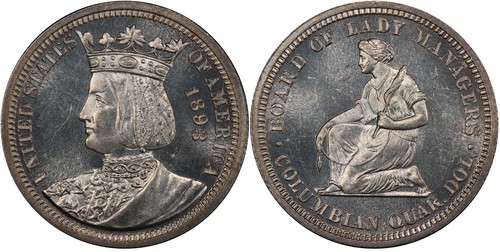
Isabella Quarter
1893
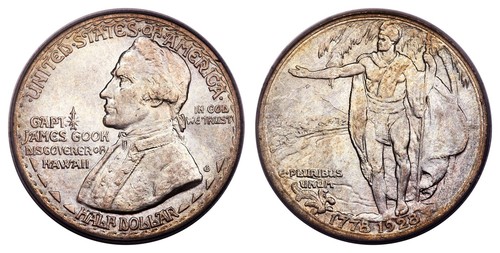
Hawaiian Sesquicentennial Half Dollar
1928
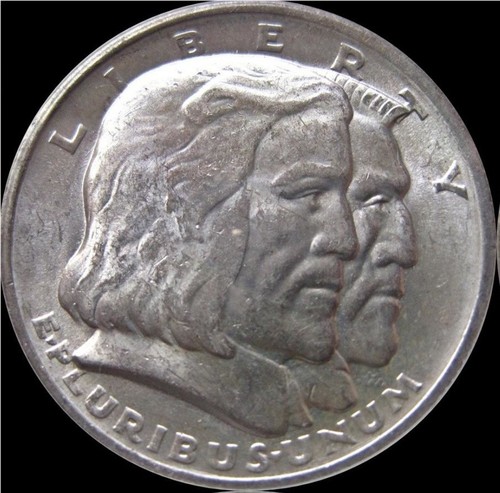
Long Island Tercentenary Half Dollar
1936
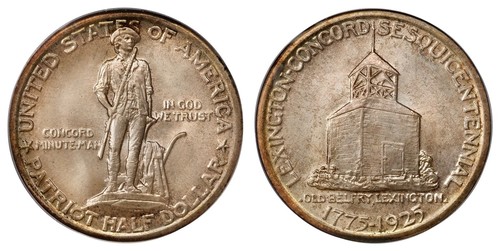
Lexington-Concord Sesquicentennial Half Dollar
1925
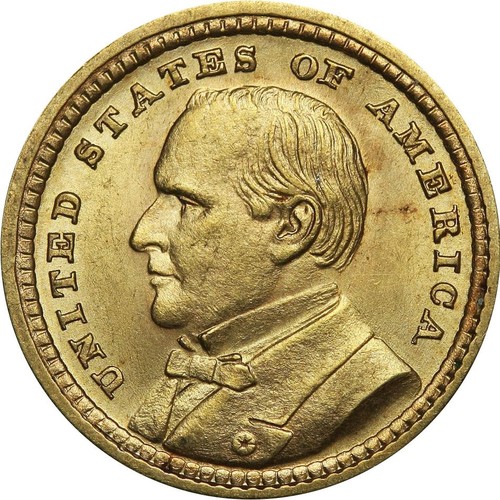
Louisiana Purchase Exposition Dollar (Jefferson)
1903
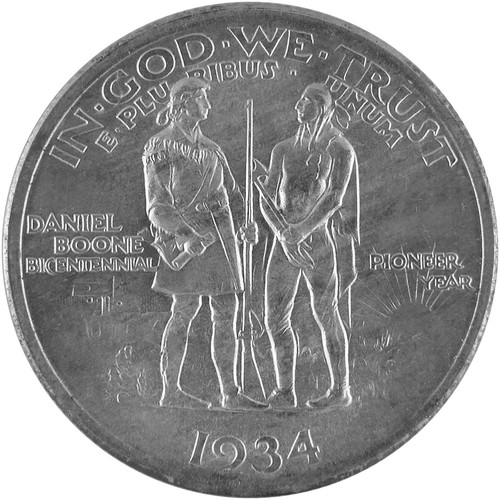
Daniel Boone Bicentennial Half Dollar
1934–1938
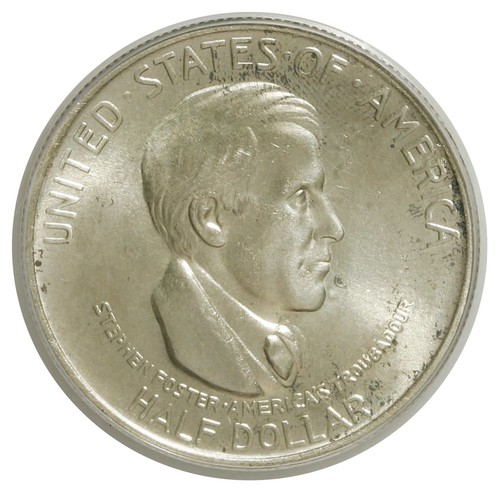
Cincinnati Music Center Half Dollar
1936
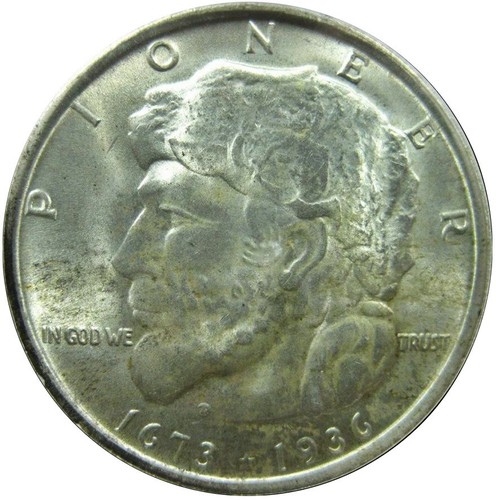
Elgin Illinois Centennial Half Dollar
1936
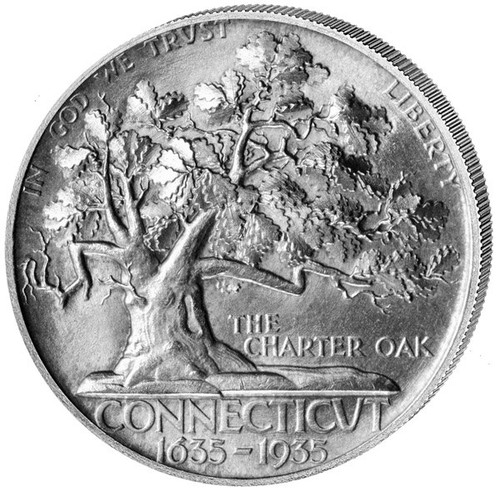
Connecticut Tercentennial Half Dollar
1935
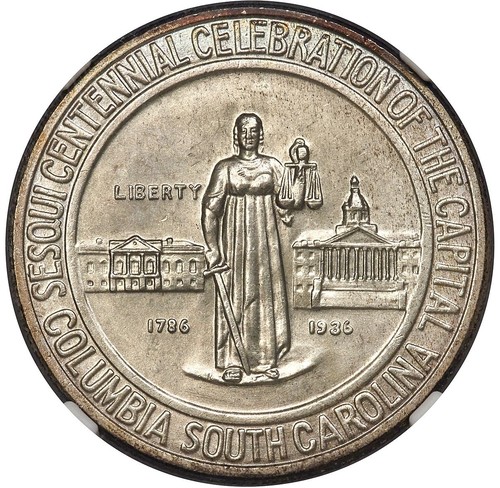
Columbia South Carolina Sesquicentennial Half Dollar
1936
Sesquicentennial of American Independence Quarter Eagle
1926
Pilgrim Tercentenary Half Dollar
1920-1921