
Oregon Trail Memorial Half Dollar
A U.S. silver commemorative half dollar first issued in 1926, famed for its westbound covered wagon and standing Native American designs.
- Country
- United States
- Denomination
- 50¢
- Metal
- Silver
Got a coin like this?
Identify any coin from a photo, free.
Overview
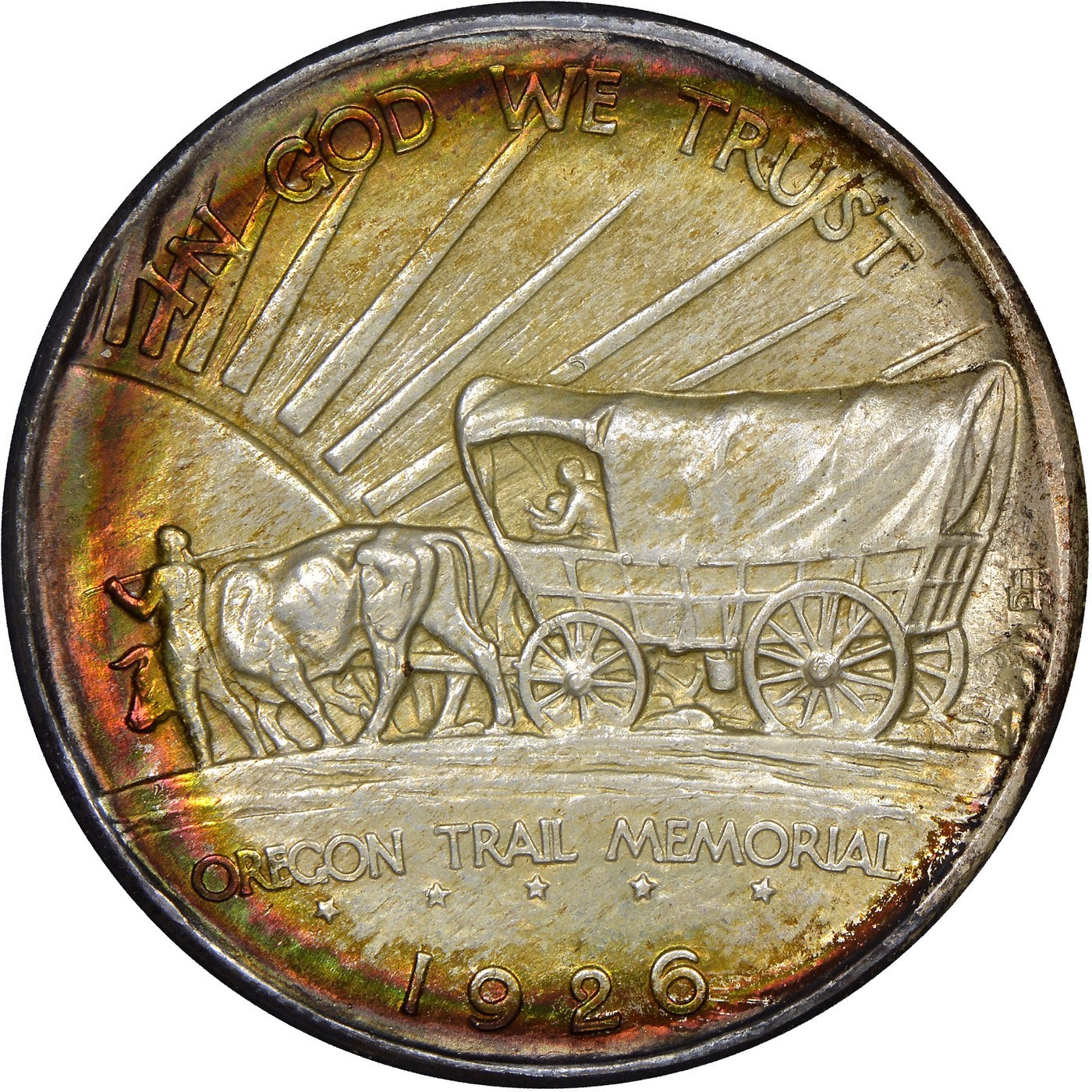
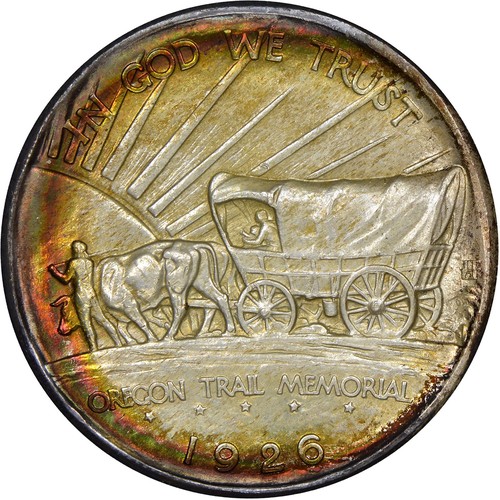
The Oregon Trail Memorial Half Dollar is a United States 50-cent silver commemorative coin first struck in 1926 to honor the pioneers who traveled the Oregon Trail. The photographed side shows the reverse: a covered wagon drawn by a team of oxen with a pioneer figure, moving westward, encircled by the inscription 'OREGON TRAIL MEMORIAL' and dated 1926.
Widely regarded as one of the most beautiful of all American coins, it was designed by the husband-and-wife sculptors James Earle Fraser and Laura Gardin Fraser. The opposite (obverse) side, not shown in these photos, carries a standing Native American with an outstretched arm set against a map of the United States, with the word 'AMERICA' overhead.
Although it is dated 1926, the design was reused for well over a decade. The same type was struck intermittently from 1926 through 1939 at three mints, making it one of the longest-running classic U.S. commemorative series.
History & Background
The coin was authorized by Congress in 1926 and promoted by the Oregon Trail Memorial Association, an organization tied to the aging pioneer and trail advocate Ezra Meeker. Proceeds from selling the coins above face value were meant to fund monuments and markers along the historic emigrant route to the Pacific Northwest.
Rather than being made in a single year, the type was reissued year after year in small batches to keep the fundraising program alive. Coins were struck in 1926, 1928, 1933, 1934, 1936, 1937, 1938 and 1939, at the Philadelphia, San Francisco and Denver mints, though not every date appeared at every mint. The prolonged, low-mintage releases eventually drew criticism from collectors who felt the series was being milked, and such complaints contributed to reforms of the U.S. commemorative program.
The design itself is celebrated. James Earle Fraser, who also created the Buffalo nickel, and Laura Gardin Fraser produced imagery that captures the westward migration in a clean, dramatic style that has remained popular with collectors ever since.
How to Identify
Identify this type by its two distinctive designs. The reverse, seen in the photos, shows a covered (Conestoga-style) wagon pulled by a team of oxen with a pioneer, driving toward a setting sun, wrapped by the legend 'OREGON TRAIL MEMORIAL' and the date. The obverse, not pictured, depicts a standing Native American in front of an outline map of the United States, arm extended toward the viewer, with 'UNITED STATES OF AMERICA' and 'HALF DOLLAR' among the inscriptions.
The coin is a standard silver half dollar in size: about 30.6 mm in diameter, roughly 12.5 grams, struck in .900 fine silver (90% silver, 10% copper) with a reeded edge. Its look and feel match a regular Walking Liberty–era half dollar, but the commemorative designs make it unmistakable.
Mint marks, when present, appear on the reverse (wagon) side near the ground line; a coin with no mint mark was struck at Philadelphia, an 'S' indicates San Francisco, and a 'D' indicates Denver. The 1926 piece in these photos is either the no-mint-mark Philadelphia issue or the 1926-S from San Francisco depending on the mark.
Value & Collectibility
As a 90% silver half dollar the coin always carries a base of silver bullion value, but genuine examples trade well above melt because of collector demand. Most surviving pieces were saved in high grade, so even common dates typically sell for a few hundred dollars in uncirculated condition, with exact figures depending on grade and eye appeal.
Value varies a great deal by date and mint mark. Higher-mintage early issues such as 1926 are the most affordable, while several late, very low-mintage dates from the late 1930s command a strong premium and can reach four figures in top grades. Condition, originality and professional grading all move the price substantially.
Because values shift with the silver market and with collector demand, any specific coin should be checked against a current price guide and recent auction results. Confirming the exact date, mint mark and grade is essential before assigning a value.
Frequently asked questions
What is on the reverse of the Oregon Trail Memorial Half Dollar?
The reverse shows a covered wagon pulled by a team of oxen with a pioneer figure, heading west, surrounded by the inscription 'OREGON TRAIL MEMORIAL' and the date. This is the side shown in the photographs.
Is it made of silver?
Yes. It is a standard U.S. half dollar struck in .900 fine silver (90% silver, 10% copper), weighing about 12.5 grams and measuring roughly 30.6 mm across, with a reeded edge.
Why is my coin dated 1926 if the series ran into the 1930s?
The Oregon Trail type was reissued for years to keep raising funds for trail monuments. Coins were struck from 1926 through 1939, and each carries its own year, so a 1926 date simply marks a first-year example.
Where is the mint mark?
The mint mark, when present, is on the reverse (wagon) side near the ground. No mark means Philadelphia, 'S' means San Francisco, and 'D' means Denver.
Who designed the coin?
It was designed by the sculptors James Earle Fraser and Laura Gardin Fraser. James Earle Fraser also created the Buffalo (Indian Head) nickel, and the pair are credited with one of the most admired designs in U.S. coinage.
Oregon Trail Memorial Half Dollar guides
In-depth guides for identifying, valuing, and collecting Oregon Trail Memorial Half Dollar.
Other coins you may enjoy
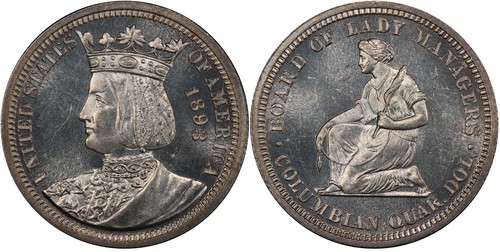
Isabella Quarter
1893
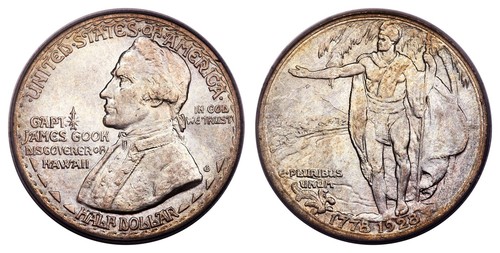
Hawaiian Sesquicentennial Half Dollar
1928
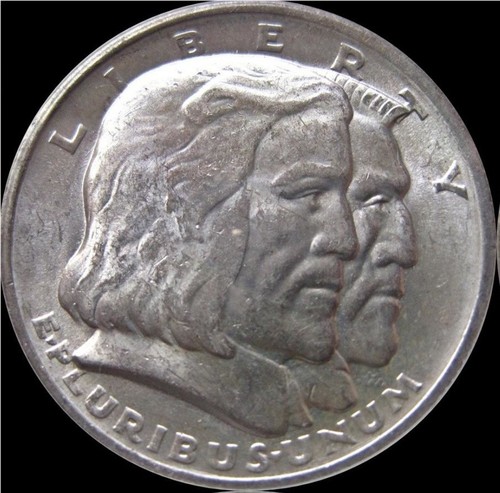
Long Island Tercentenary Half Dollar
1936
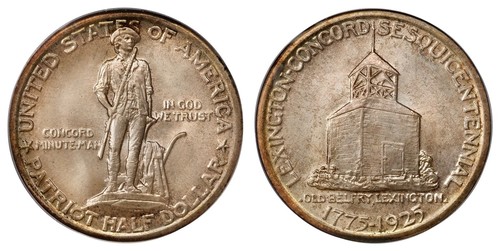
Lexington-Concord Sesquicentennial Half Dollar
1925
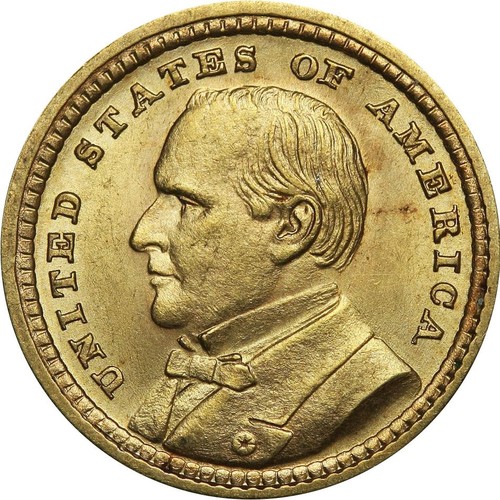
Louisiana Purchase Exposition Dollar (Jefferson)
1903
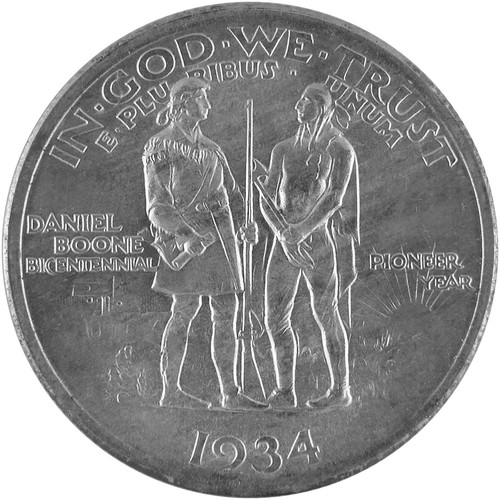
Daniel Boone Bicentennial Half Dollar
1934–1938
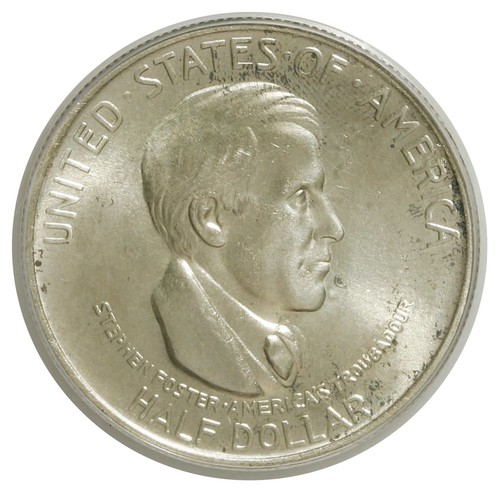
Cincinnati Music Center Half Dollar
1936
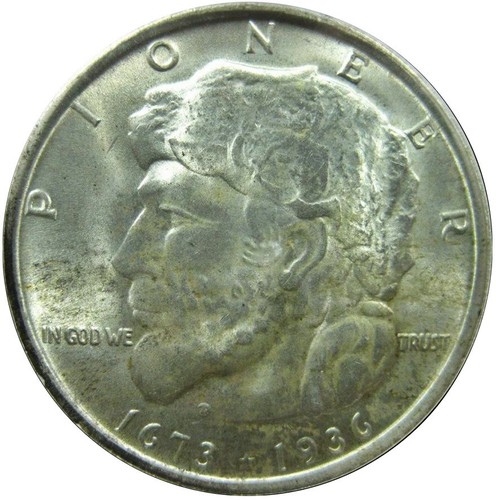
Elgin Illinois Centennial Half Dollar
1936
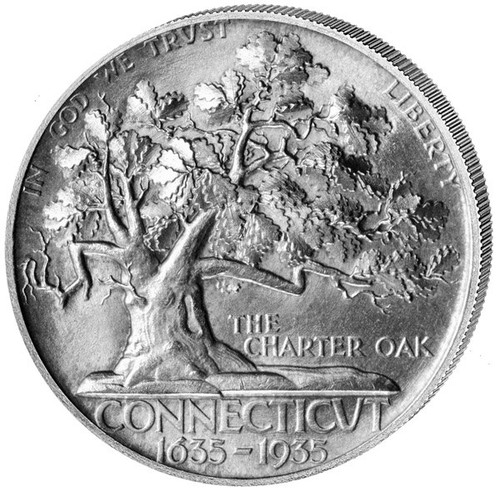
Connecticut Tercentennial Half Dollar
1935
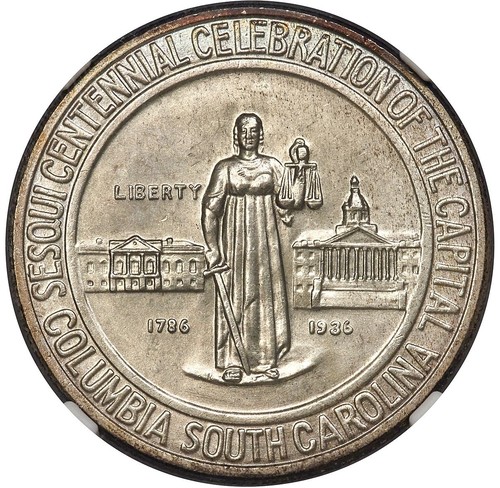
Columbia South Carolina Sesquicentennial Half Dollar
1936
Sesquicentennial of American Independence Quarter Eagle
1926
Pilgrim Tercentenary Half Dollar
1920-1921