
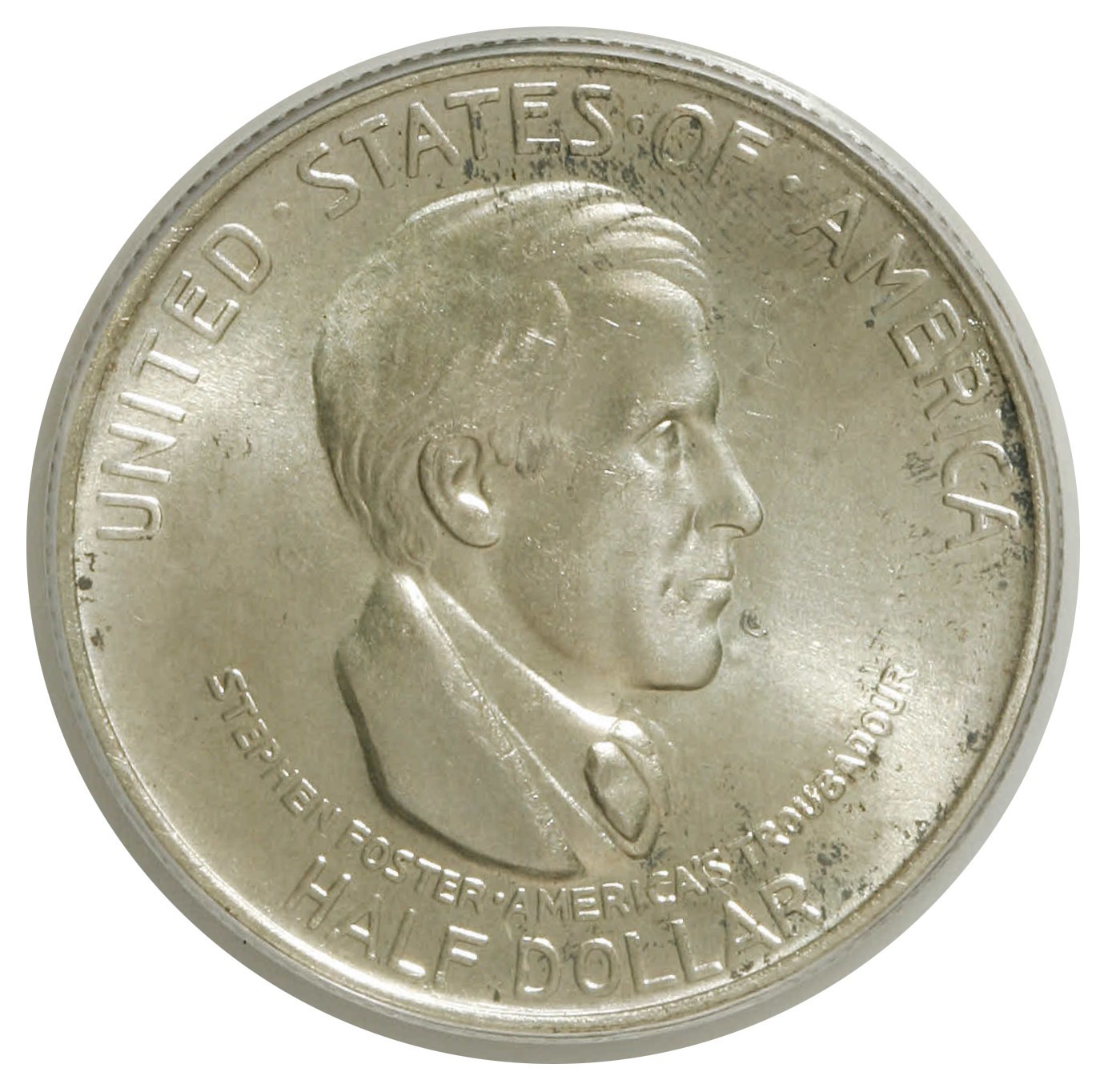
Cincinnati Music Center Half Dollar
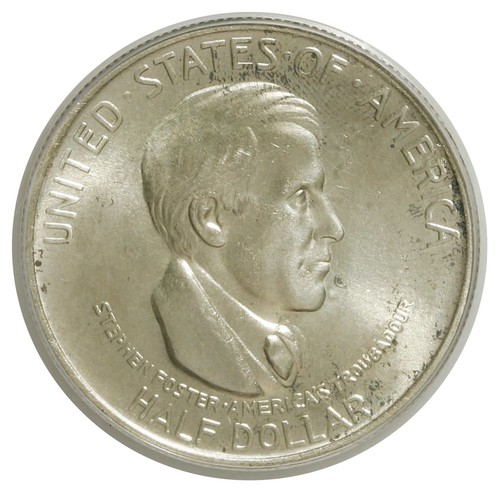
A 1936 U.S. silver half dollar honoring Cincinnati as a music center, with composer Stephen Foster on the obverse and an allegorical figure with a lyre on the reverse.
- Country
- United States
- Denomination
- 50¢
- Metal
- Silver
Got a coin like this?
Identify any coin from a photo, free.
Overview
The Cincinnati Music Center Half Dollar is a United States silver commemorative fifty-cent piece dated 1936, issued to honor Cincinnati, Ohio, as a center of American music. It belongs to the "classic" commemorative series that ran from 1892 to 1954, in which Congress authorized special half dollars tied to an event or anniversary and sold them to collectors at a premium.
The obverse presents a right-facing portrait of the American songwriter Stephen Foster, labeled "America's Troubadour." The reverse shows an allegorical seated female figure, often identified with Terpsichore, the Greek muse of dance and song, holding a lyre with scrolls at her side. Both designs are the work of sculptor Constance Ortmayer.
Struck in the standard 90% silver alloy of a circulating half dollar, the coin was never meant for everyday use. It was distributed as a three-coin set with one piece from each of the Philadelphia, Denver, and San Francisco mints, and today it is collected as part of the classic commemorative series and remembered as one of the era's more controversial promotional issues.
History & Background
Congress authorized the Cincinnati commemorative in 1936, nominally to mark the city's standing as a center of music "fifty years" earlier — a justification widely regarded, then and now, as artificial, since 1886 held no particular musical significance for the city. The program was driven largely by a single promoter who controlled distribution, and it became a frequently cited example of the abuses that plagued the 1936 commemorative boom.
The coins were struck at three mints — Philadelphia, Denver, and San Francisco — and sold only as matched three-piece sets rather than as individual coins. Total mintage was small, on the order of a few thousand sets, with only about five thousand pieces released from each mint, making the issue scarce from the outset. The limited supply and set-only distribution pushed prices sharply upward soon after release.
The designs were modeled by Constance Ortmayer of Washington, D.C. Placing Stephen Foster — composer of songs such as "Oh! Susanna" and "My Old Kentucky Home" — on the obverse gave the coin a genuine musical figure, even as the Cincinnati anniversary it commemorated remained tenuous. The issue is often grouped with other over-promoted 1936 commemoratives whose excesses helped prompt reform of the commemorative program.
How to Identify
Identify the type by its two distinctive designs. The obverse carries a right-facing portrait bust of Stephen Foster with the inscription identifying him as "America's Troubadour," along with wording tying the coin to Cincinnati and music. The reverse shows a seated allegorical woman holding a lyre, with scrolls beside her, representing music and dance.
The coin is a standard-size half dollar: about 30.6 mm in diameter, roughly 12.5 grams, struck in 90% silver with a reeded edge and dated 1936. Because it was issued as a three-mint set, examples exist with a "D" (Denver) or "S" (San Francisco) mint mark, or with no mint mark for the Philadelphia striking; the mark, when present, appears on the reverse.
The Foster portrait and the lyre-bearing muse are unlike any circulating half dollar of the period, such as the Walking Liberty, so the figural music theme is the surest identifier. Complete original sets contain one coin of each mint.
Value & Collectibility
As a scarce classic silver commemorative, the Cincinnati Music Center Half Dollar trades far above its face value and silver content. Because only a few thousand of each mint were made, all three coins are desirable, and complete original three-coin sets are especially sought after.
Individual pieces in collector grades typically bring figures ranging from the low hundreds of dollars into the high hundreds or more, with well-preserved uncirculated examples and matched sets commanding the strongest premiums. The San Francisco and Denver strikings, condition, eye appeal, original surfaces, and third-party grade all influence price.
Because values shift with the collector market and depend heavily on grade and whether a coin is part of an intact set, any specific example should be checked against recent auction results and current price guides rather than a single fixed figure.
Frequently asked questions
What does the Cincinnati Music Center Half Dollar commemorate?
It was issued in 1936 to honor Cincinnati, Ohio, as a center of American music. The anniversary it cited was widely seen as contrived, and the coin is often noted as one of the more questionable commemorative issues of the era.
Who is on the obverse of the coin?
The obverse shows a right-facing portrait of composer Stephen Foster, labeled "America's Troubadour." Foster wrote many well-known 19th-century American songs.
What is on the reverse?
The reverse depicts a seated allegorical female figure, often identified as Terpsichore, the muse of dance and song, holding a lyre with scrolls at her side.
How was the coin sold?
It was distributed only as a matched three-coin set containing one piece each from the Philadelphia, Denver, and San Francisco mints, not as single coins. Total mintage was small, only a few thousand sets.
Is it made of silver?
Yes. Like a regular half dollar of the time, it is struck in 90% silver with 10% copper, about 12.5 grams and 30.6 mm across, with a reeded edge.
Cincinnati Music Center Half Dollar guides
In-depth guides for identifying, valuing, and collecting Cincinnati Music Center Half Dollar.
Other coins you may enjoy
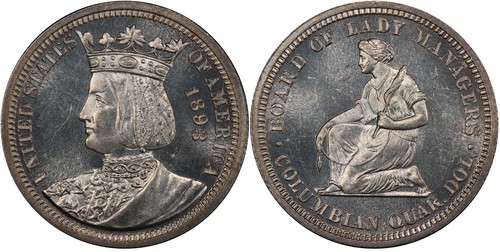
Isabella Quarter
1893
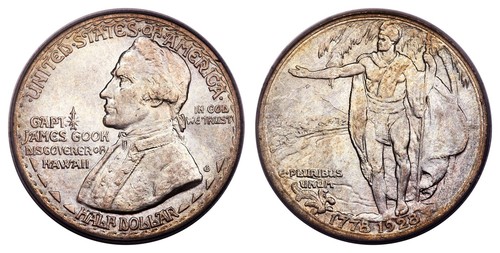
Hawaiian Sesquicentennial Half Dollar
1928
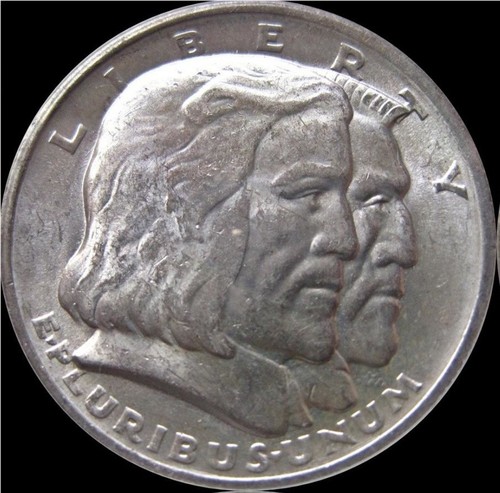
Long Island Tercentenary Half Dollar
1936
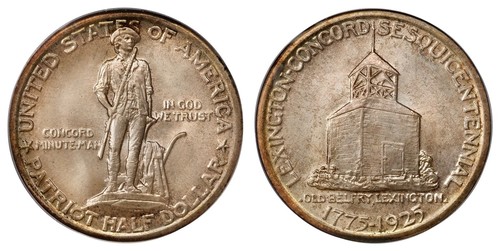
Lexington-Concord Sesquicentennial Half Dollar
1925
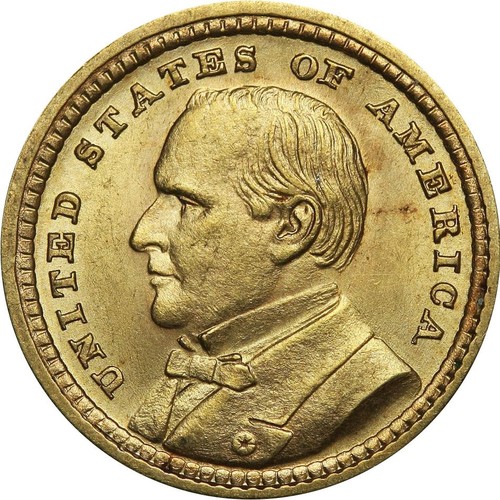
Louisiana Purchase Exposition Dollar (Jefferson)
1903
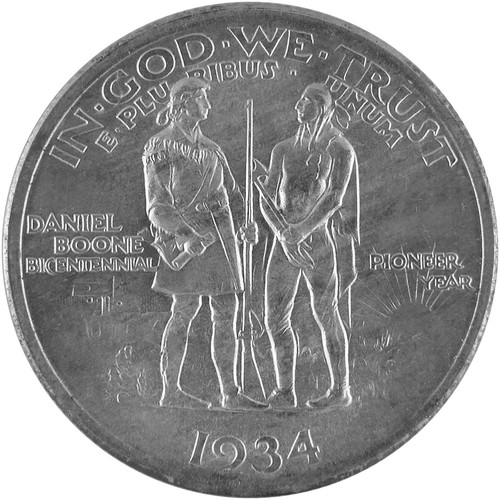
Daniel Boone Bicentennial Half Dollar
1934–1938
Elgin Illinois Centennial Half Dollar
1936
Connecticut Tercentennial Half Dollar
1935
Columbia South Carolina Sesquicentennial Half Dollar
1936
Sesquicentennial of American Independence Quarter Eagle
1926
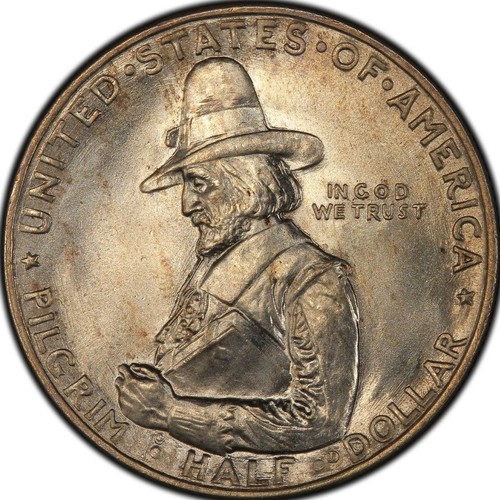
Pilgrim Tercentenary Half Dollar
1920-1921
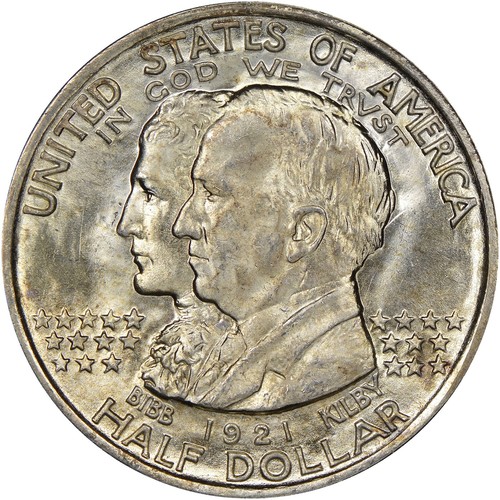
Alabama Centennial Half Dollar
1921