
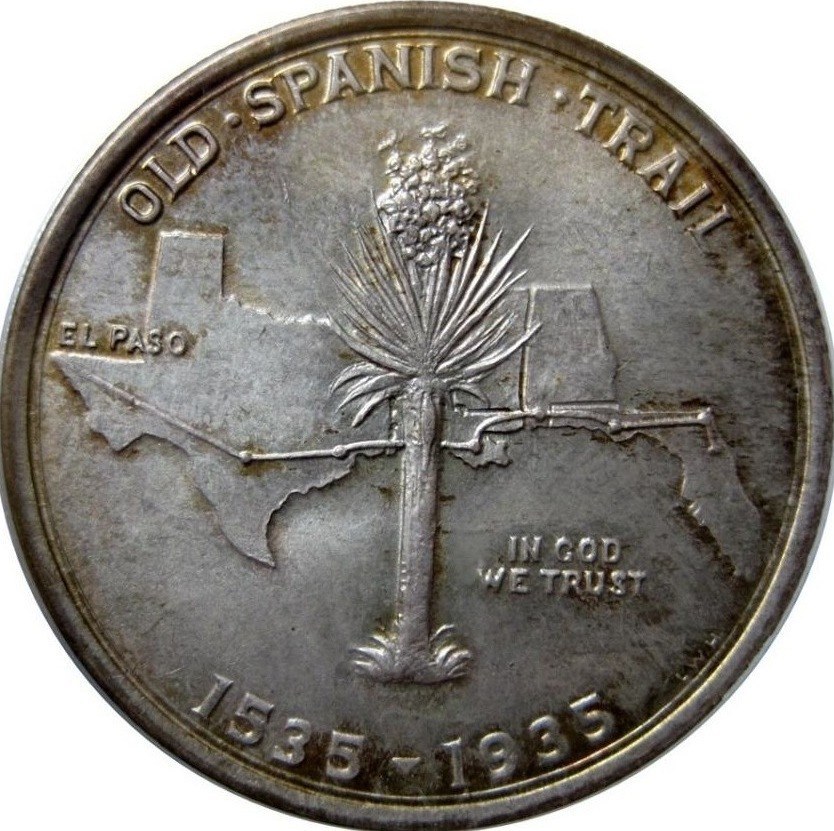
Old Spanish Trail Half Dollar
A 1935 U.S. silver commemorative half dollar marking 400 years of the Old Spanish Trail, with a longhorn cow's head punning on explorer Cabeza de Vaca.
- Country
- United States
- Denomination
- 50¢
- Metal
- Silver
Got a coin like this?
Identify any coin from a photo, free.
Overview
The Old Spanish Trail Half Dollar is a classic United States commemorative fifty-cent piece issued in 1935 to mark the four-hundredth anniversary of the early Spanish overland travels associated with Álvar Núñez Cabeza de Vaca and the historic route later called the Old Spanish Trail. It was struck in the same 90% silver alloy and half-dollar size as regular coinage of the era but sold to collectors and the public at a premium rather than released into circulation.
The coin is best known for its striking main device: the head of a longhorn steer or cow shown facing the viewer. The choice is a deliberate visual pun, since the explorer's surname, Cabeza de Vaca, translates from Spanish as "head of a cow." The dates 1535 and 1935 flank the design to mark the anniversary. On the photographed example the cow's head appears together with HALF DOLLAR and the year 1935.
With an original mintage of only about ten thousand pieces, the Old Spanish Trail is one of the scarcer single-type issues in the classic commemorative series and a well-regarded key among collectors of the set.
History & Background
The commemorative honors the era of early Spanish exploration across the Gulf Coast and Southwest, tied to the 1535 anniversary date chosen by its promoters and to the transcontinental Old Spanish Trail highway movement of the early twentieth century. Congress authorized a single fifty-cent commemorative for the occasion, and the coins were distributed in 1935.
The project was organized by L. W. Hoffecker, an El Paso, Texas coin dealer, who conceived the design and oversaw its sale. The models were prepared by sculptor Edmund J. Senn. Hoffecker is often praised in numismatic literature for distributing the issue fairly and openly, in contrast to the speculative abuses that plagued several other commemoratives of the mid-1930s.
Only about ten thousand coins were struck, all at the Philadelphia Mint, and because they were sold responsibly rather than dumped or heavily melted, most survive today. The result is a genuinely low-mintage type that is nonetheless obtainable, which has kept it a steady favorite among commemorative collectors.
How to Identify
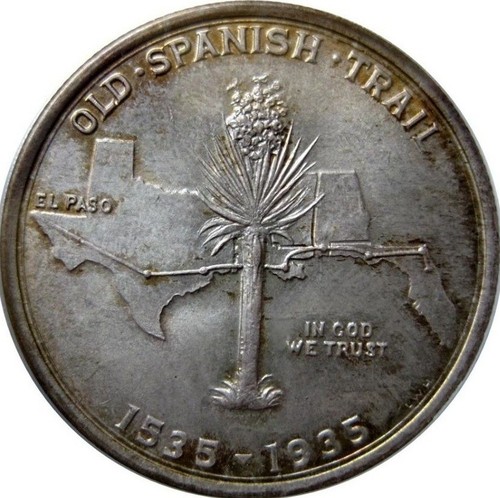
The defining feature is the frontal head of a longhorn cow or steer, the visual rebus for Cabeza de Vaca. This side carries the denomination HALF DOLLAR and the year 1935, along with the anniversary dates 1535 and 1935 and standard United States legends. The other side shows a yucca plant (Spanish bayonet) superimposed on a map of the southern United States, tracing the trail route between the Florida and Texas ends of the journey. Together the cow's head and the yucca-and-map are unique to this type.
Physically the coin follows standard U.S. half-dollar specifications: 90% silver and 10% copper, about 12.5 grams, and roughly 30.6 mm in diameter, with a reeded edge. The metal shows the neutral gray-white tone of coin silver, often with light golden or iridescent toning on well-kept pieces.
All genuine examples are dated 1935 and were struck at the Philadelphia Mint, so the coin carries no mint mark. The absence of a mint mark is normal for this issue and is not a warning sign.
Value & Collectibility
The Old Spanish Trail is one of the more valuable single-type classic commemoratives because of its small original mintage of roughly ten thousand coins. Even circulated or lower-grade examples typically command a substantial premium — often several hundred dollars — well above the coin's silver content, and prices climb steadily with grade.
Because most of the mintage survives and the type was distributed carefully, choice uncirculated pieces are available but never cheap. Attractive MS-63 to MS-65 coins trade for meaningful multiples of the entry-level price, while premium gems, strong original luster, and pleasing toning add further premiums.
As with any scarcer commemorative, condition, eye appeal, and authentication drive value. For any specific coin, check recent auction results and dealer listings for the matching certified grade, since prices vary widely with quality and market demand.
Frequently asked questions
What does the Old Spanish Trail Half Dollar commemorate?
It marks the four-hundredth anniversary of early Spanish overland exploration associated with Cabeza de Vaca and the historic Old Spanish Trail route, using the anniversary dates 1535 and 1935. The coins were issued in 1935 and sold at a premium.
Why is there a cow's head on the coin?
It is a visual pun. The explorer Álvar Núñez Cabeza de Vaca's surname means "head of a cow" in Spanish, so the designer used a frontal longhorn cow or steer head as a rebus for his name.
Who designed the coin?
It was conceived and promoted by El Paso coin dealer L. W. Hoffecker, with the models prepared by sculptor Edmund J. Senn. Hoffecker is remembered for distributing the issue fairly compared with other commemoratives of the era.
Is the coin rare?
Its original mintage was only about ten thousand pieces, making it one of the scarcer single-type classic commemoratives. However, most examples survived, so it is obtainable — just at a significant premium.
Does it have a mint mark?
No. All genuine examples were struck at the Philadelphia Mint and carry no mint mark, so its absence is normal and not a sign of a problem.
Old Spanish Trail Half Dollar guides
In-depth guides for identifying, valuing, and collecting Old Spanish Trail Half Dollar.
Other coins you may enjoy
Isabella Quarter
1893
Hawaiian Sesquicentennial Half Dollar
1928
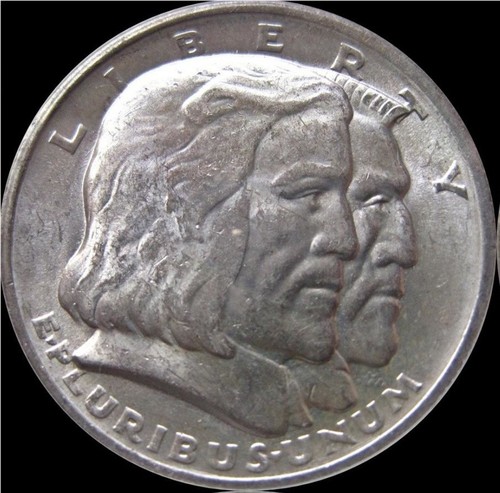
Long Island Tercentenary Half Dollar
1936
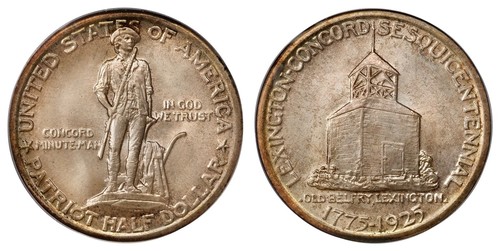
Lexington-Concord Sesquicentennial Half Dollar
1925
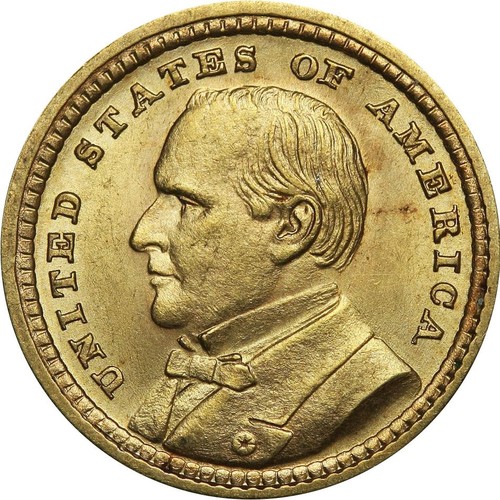
Louisiana Purchase Exposition Dollar (Jefferson)
1903
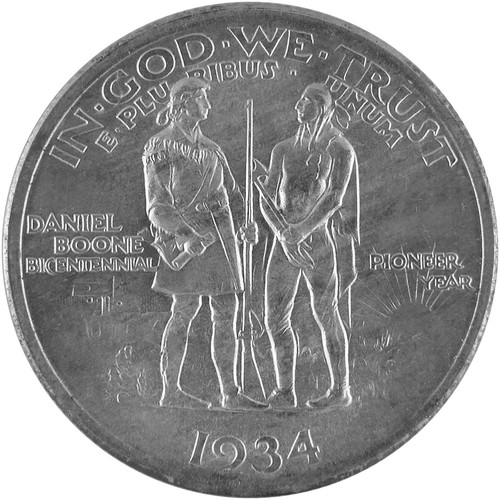
Daniel Boone Bicentennial Half Dollar
1934–1938
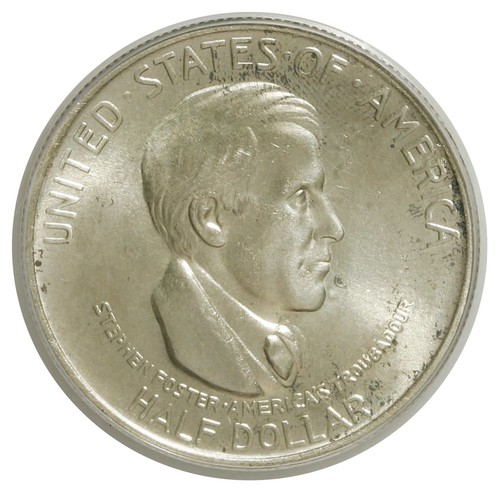
Cincinnati Music Center Half Dollar
1936
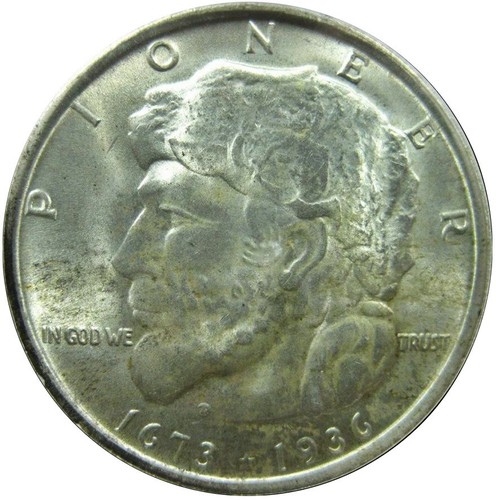
Elgin Illinois Centennial Half Dollar
1936
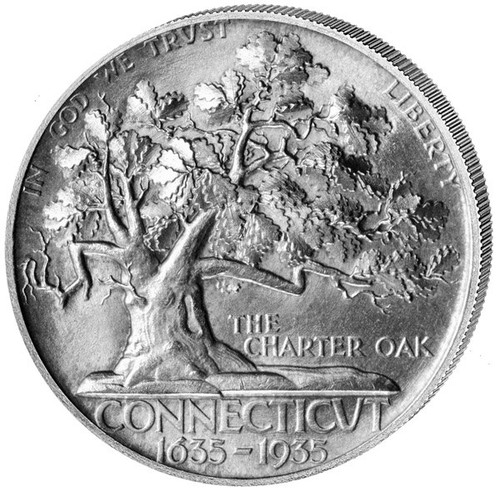
Connecticut Tercentennial Half Dollar
1935
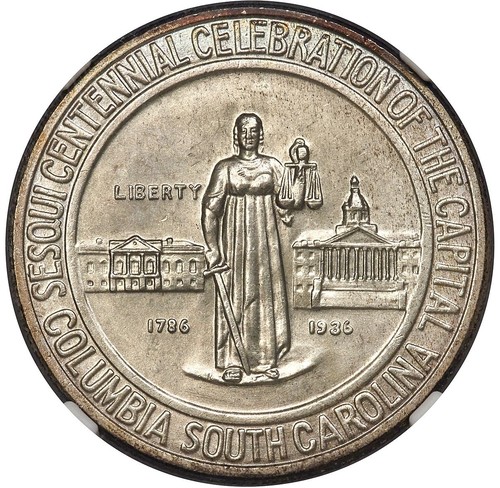
Columbia South Carolina Sesquicentennial Half Dollar
1936
Sesquicentennial of American Independence Quarter Eagle
1926
Pilgrim Tercentenary Half Dollar
1920-1921