
Panama-Pacific Exposition Dollar
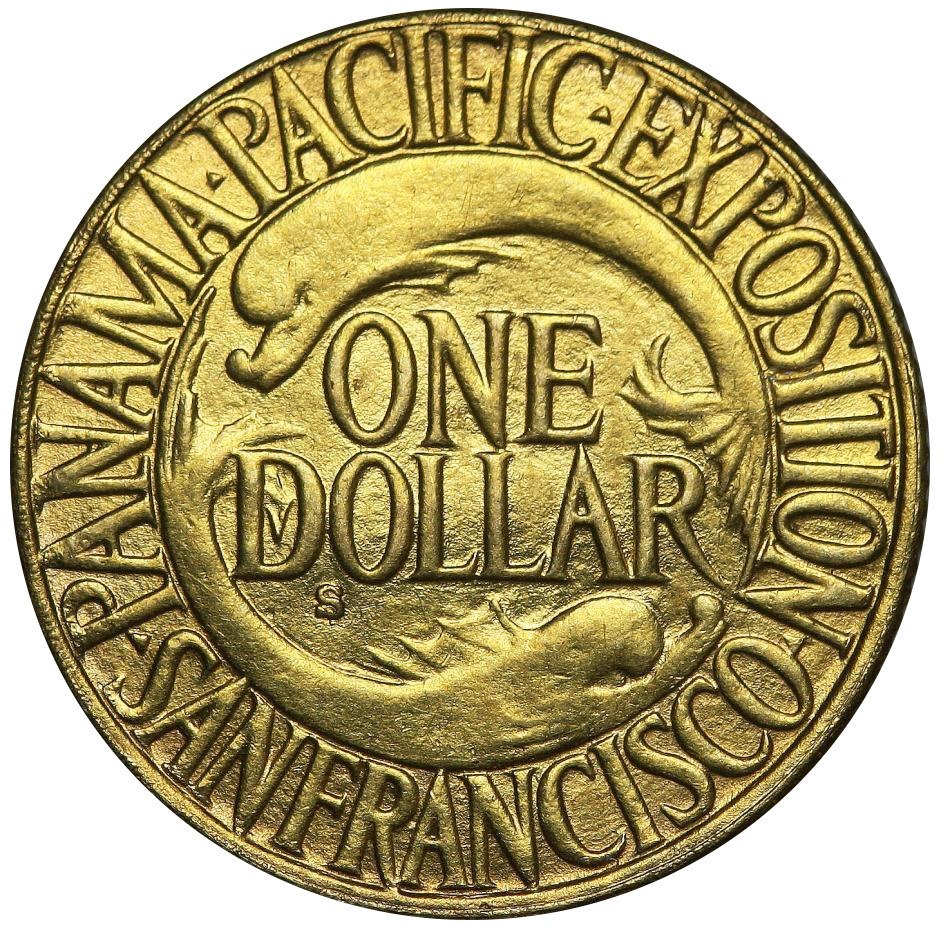
An 1915 U.S. gold dollar struck for the Panama-Pacific International Exposition, showing a canal laborer and two dolphins encircling the denomination.
- Country
- United States
- Denomination
- $1
- Metal
- Gold
Got a coin like this?
Identify any coin from a photo, free.
Overview
The Panama-Pacific Exposition Dollar is a classic-era United States commemorative gold coin, struck in 1915 to mark the Panama-Pacific International Exposition held in San Francisco. It is a genuine one-dollar gold piece, small and thin, and was produced at the San Francisco Mint. The photographed example is dated 1915, the only year the type was issued.
The coin was part of a five-piece Panama-Pacific commemorative program that also included a silver half dollar, a $2.50 gold quarter eagle, and two large $50 gold pieces in round and octagonal formats. Among these, the gold dollar was the smallest and least expensive gold issue, which made it the most widely purchased of the exposition's gold coins.
As a commemorative rather than a circulating coin, it was sold to collectors and fair-goers rather than paid out in commerce. Its combination of genuine gold content, a limited one-year mintage, and an appealing canal-era theme has kept it a staple of U.S. commemorative collecting.
History & Background
The Panama-Pacific International Exposition celebrated the completion of the Panama Canal and San Francisco's recovery from the 1906 earthquake. Congress authorized a set of commemorative coins for the fair, and the gold dollar was struck at the San Francisco Mint in 1915. The design is credited to sculptor Charles Keck.
The obverse portrays the head of a man wearing a cap, generally described as a Panama Canal laborer, symbolizing the workers who built the canal. The reverse shows two dolphins encircling the denomination, the dolphins representing the Atlantic and Pacific oceans joined by the new waterway. Both motifs tie the coin directly to the canal achievement the exposition honored.
Although tens of thousands of gold dollars were authorized and struck, sales fell short of expectations and a large portion of the coins were later melted. The net number distributed to the public ended up in the vicinity of fifteen thousand pieces, making surviving examples genuinely scarce compared with modern commemoratives.
How to Identify
Look for a small, thin gold coin dated 1915. The obverse shows a capped male head in profile — a stylized canal laborer — with lettering around the rim. The reverse displays two dolphins curving around the central inscription of the denomination and date, with a small S mint mark for San Francisco. Together, the dolphins-and-denomination reverse and the capped-worker obverse are the type's defining diagnostics.
The coin is struck in the traditional U.S. gold alloy of 90% gold and 10% copper. It is tiny, roughly 15 millimeters across and weighing under two grams, similar in size to the regular Liberty Head and Indian Head gold dollars of the era. Its warm yellow color and small planchet are immediate visual cues.
Because the type was issued only in 1915 and only at San Francisco, any authentic example will carry that date and the S mint mark. Note that some references and casual descriptions mention an eagle on the reverse; the Panama-Pacific gold dollar's reverse actually features dolphins, so an eagle motif would indicate a different coin or a misidentification.
Value & Collectibility
The Panama-Pacific Exposition Dollar is a scarce classic commemorative with real numismatic value well above its tiny gold content. Because only around fifteen thousand were distributed, even well-worn or lightly circulated examples command significant collector premiums, and prices rise sharply with grade and eye appeal.
Circulated and lower uncirculated pieces typically trade in the low-to-mid four-figure range, while high-grade, professionally certified mint-state examples can reach substantially higher levels. Original packaging, strong luster, and a clean, mark-free surface all add to desirability and price.
Because of its value and popularity, this coin is a target for counterfeits and alterations. For any purchase, current market prices should be checked against recent auction records and dealer listings, and higher-value examples are best bought certified by a major grading service such as PCGS or NGC.
Frequently asked questions
What is the Panama-Pacific Exposition Dollar?
It is a United States commemorative gold dollar struck in 1915 for the Panama-Pacific International Exposition in San Francisco, celebrating the completion of the Panama Canal.
Is it made of real gold?
Yes. Like other classic U.S. gold coins, it is struck in an alloy of 90% gold and 10% copper. It is a very small coin, however, so its actual gold content is modest.
What is on the front and back?
The obverse shows the head of a capped canal laborer. The reverse shows two dolphins encircling the denomination and date, symbolizing the Atlantic and Pacific oceans joined by the canal.
How many were made?
Many were struck but a large number were melted after sales fell short. The net quantity distributed to the public was roughly fifteen thousand coins, making it genuinely scarce today.
Is it valuable?
Yes. As a scarce one-year classic commemorative, it carries strong collector value well above its gold content, with prices ranging from the low four figures up to much higher for top-grade certified examples.
Panama-Pacific Exposition Dollar guides
In-depth guides for identifying, valuing, and collecting Panama-Pacific Exposition Dollar.
Other coins you may enjoy
Isabella Quarter
1893
Hawaiian Sesquicentennial Half Dollar
1928
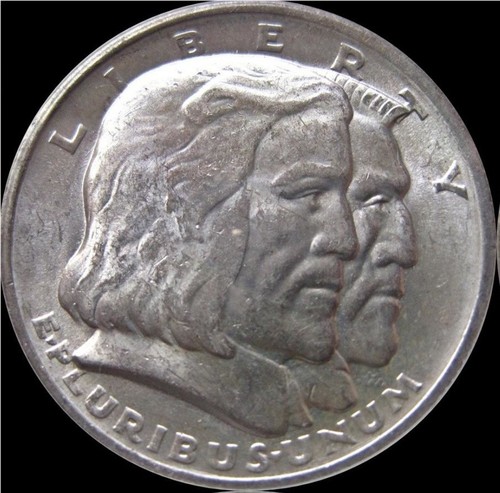
Long Island Tercentenary Half Dollar
1936
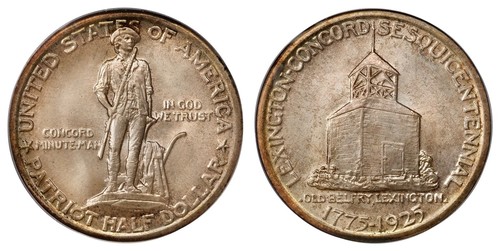
Lexington-Concord Sesquicentennial Half Dollar
1925
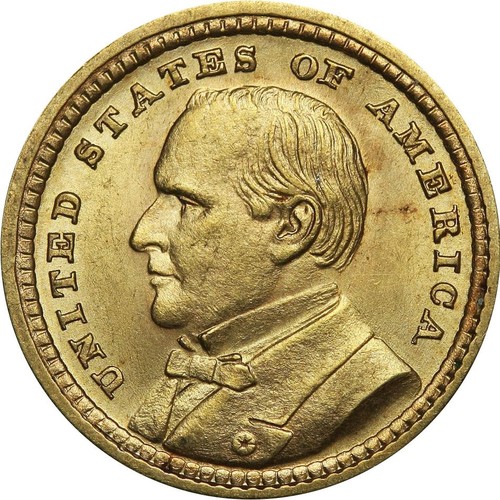
Louisiana Purchase Exposition Dollar (Jefferson)
1903
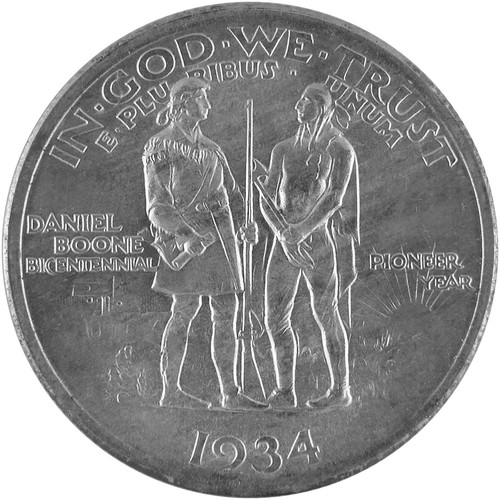
Daniel Boone Bicentennial Half Dollar
1934–1938
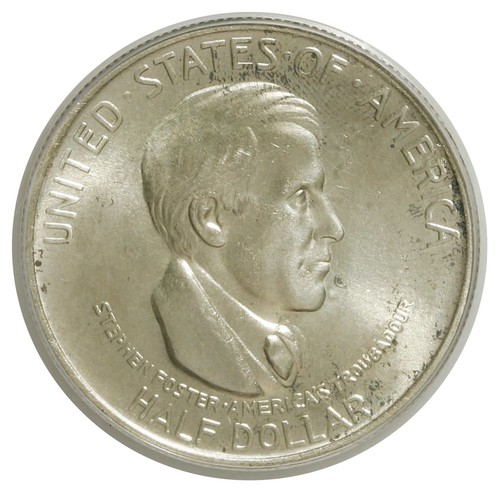
Cincinnati Music Center Half Dollar
1936
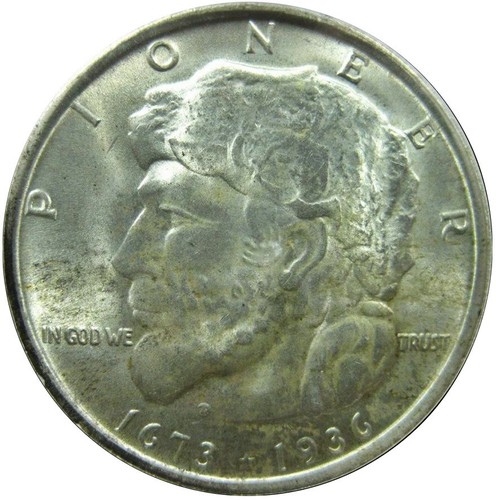
Elgin Illinois Centennial Half Dollar
1936
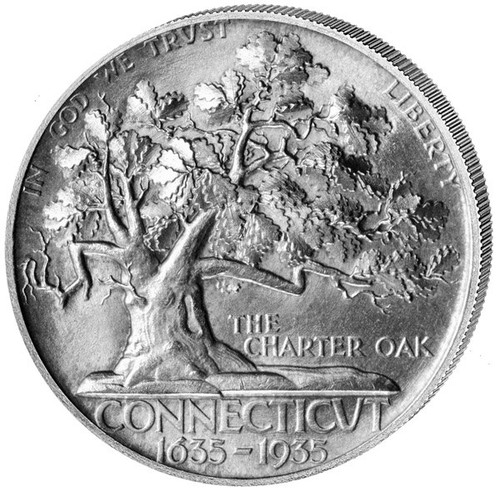
Connecticut Tercentennial Half Dollar
1935
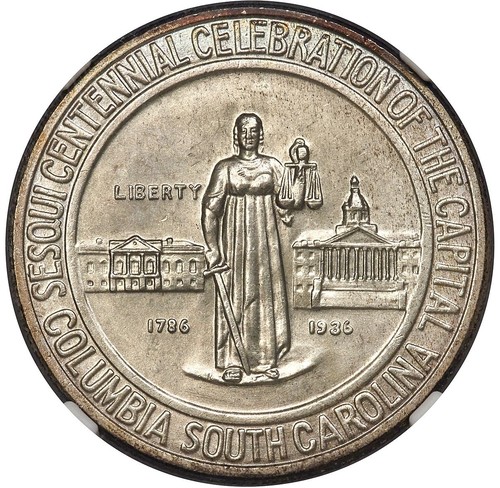
Columbia South Carolina Sesquicentennial Half Dollar
1936
Sesquicentennial of American Independence Quarter Eagle
1926
Pilgrim Tercentenary Half Dollar
1920-1921