
How to Identify the Panama-Pacific Exposition Dollar
A collector's checklist for confirming a genuine 1915-S Panama-Pacific gold dollar — designs, date, mint mark, size, and authentication cautions.
Read the full Panama-Pacific Exposition Dollar encyclopedia entry →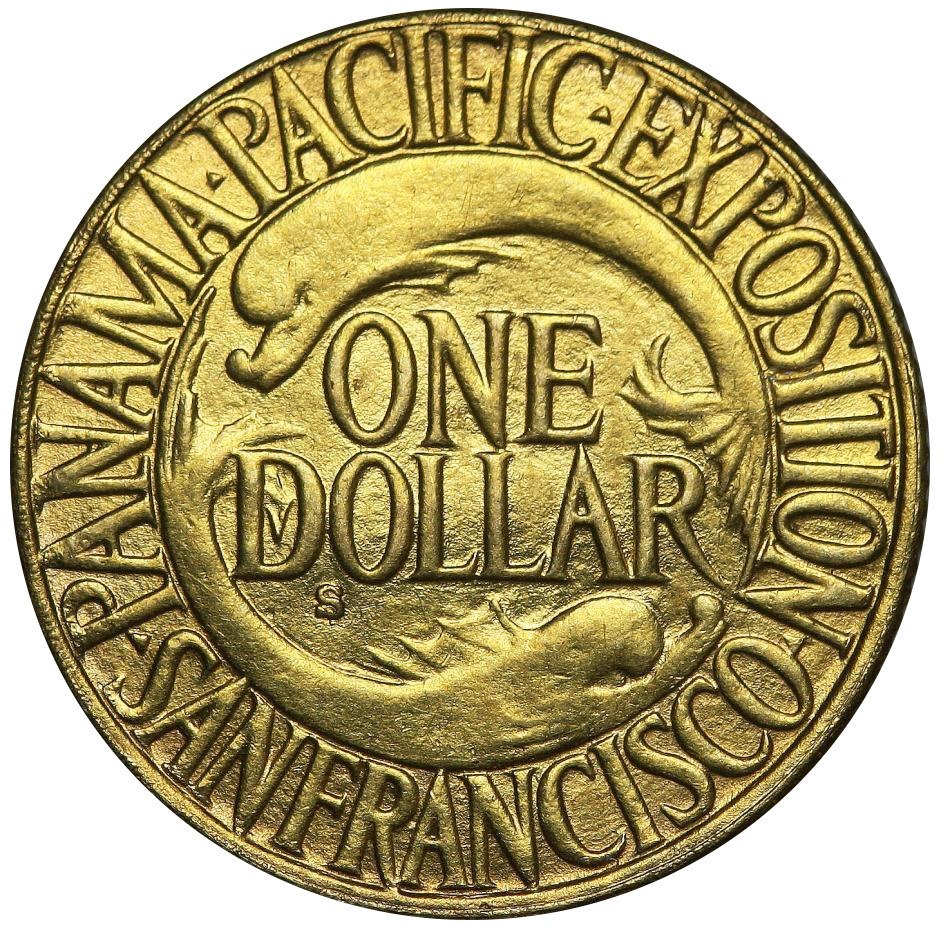
Begin with the date and size. A genuine Panama-Pacific Exposition Dollar is always dated 1915 and is a very small, thin gold coin about 15 millimeters in diameter — close to the size of a regular period gold dollar. If the coin is large, or carries any date other than 1915, it is not this type.
Study the two designs, which are the surest confirmation. The obverse shows a male head in profile wearing a cap, representing a Panama Canal laborer. The reverse is distinctive: two dolphins curve around the central denomination and date. Look for the small S mint mark on the reverse, marking production at the San Francisco Mint. The dolphin reverse is the single most reliable diagnostic — this coin does not depict an eagle, despite occasional loose descriptions, so an eagle would point to a different U.S. gold piece.
Confirm the metal and physical specifications. The coin is struck in 90% gold, 10% copper, giving it a warm yellow tone, and it weighs under two grams. Its diminutive planchet means fine detail is packed into a small area; genuine strikes show crisp, well-defined lettering and design elements despite the size.
Be alert to look-alikes and fakes. Because this is a valuable, low-mintage commemorative, it is frequently counterfeited or faked from cast copies, and altered or added mint marks are a known risk. Compare the weight, diameter, and design sharpness against reference specifications, and treat soft detail, seams, incorrect weight, or a suspiciously flawless surface as warning signs.
For any meaningful purchase, rely on authentication rather than eye appeal. High-value examples should be certified by a major grading service such as PCGS or NGC, and buyers should verify the coin against recent auction records for the same grade before paying a premium.
Frequently asked questions
How do I know I have the gold dollar and not another Panama-Pacific coin?
The set also included a silver half dollar, a $2.50 quarter eagle, and two large $50 pieces. The gold dollar is the smallest gold coin, about 15 mm, with a capped laborer obverse and a two-dolphin reverse.
Where is the mint mark?
All genuine examples were struck at San Francisco in 1915 and carry an S mint mark on the reverse. There is no Philadelphia or other-mint version of this type.
The reverse has dolphins, not an eagle — is mine wrong?
No. Dolphins are correct for this coin; they represent the Atlantic and Pacific oceans joined by the canal. A coin with an eagle reverse is a different issue, not the Panama-Pacific gold dollar.
How can I be sure a high-value example is authentic?
Check weight, diameter, and design sharpness against published specifications, watch for added or altered mint marks, and for any significant coin buy examples certified by PCGS or NGC.