
How to Identify the Cincinnati Music Center Half Dollar
A collector's checklist for confirming a 1936 Cincinnati Music Center half dollar — the Foster portrait, lyre reverse, silver specs, mint marks, and cautions.
Read the full Cincinnati Music Center Half Dollar encyclopedia entry →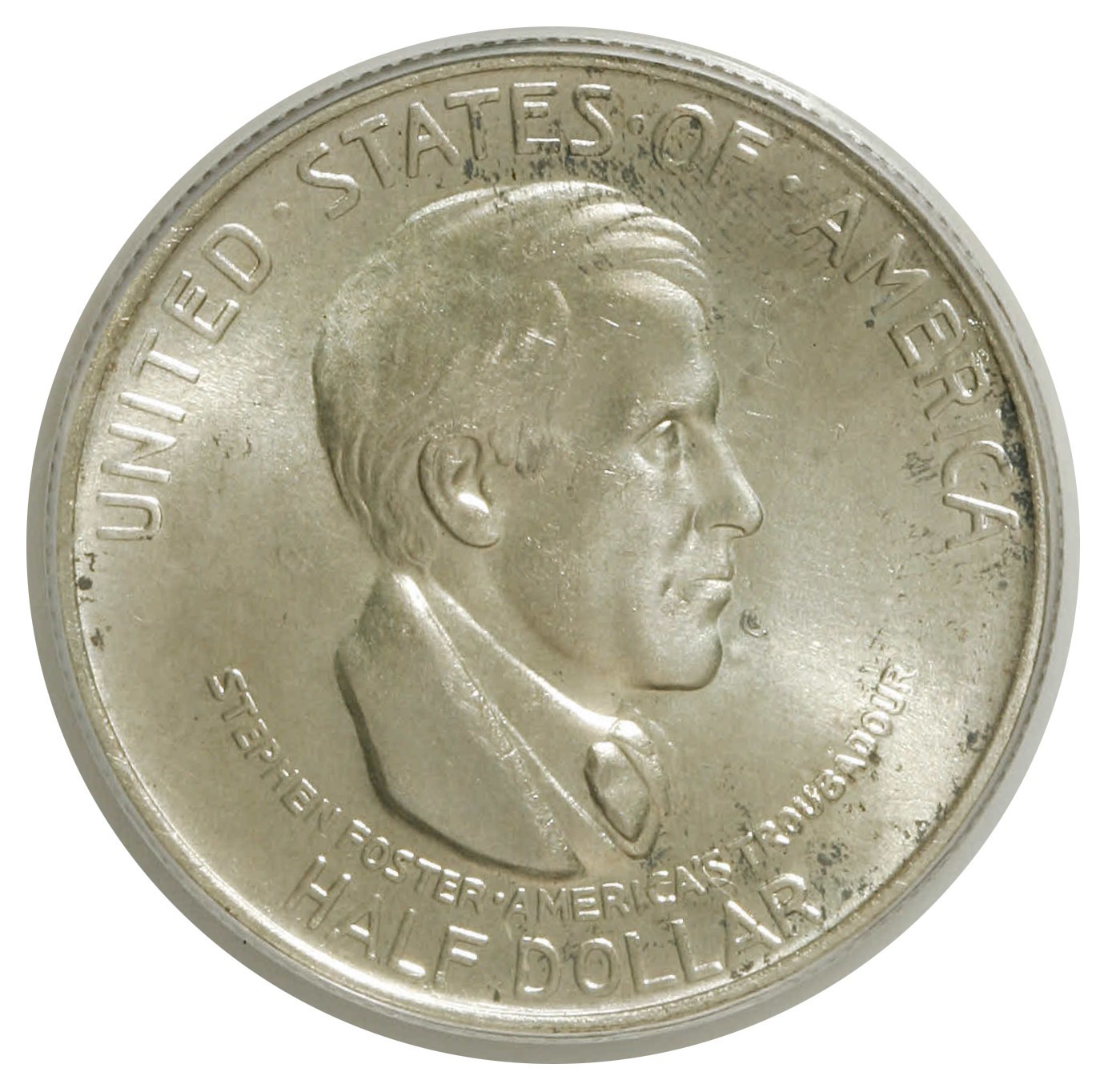
Start with the obverse portrait and its inscription. A genuine Cincinnati Music Center Half Dollar shows a right-facing bust of Stephen Foster identified as "America's Troubadour," along with lettering tying the coin to Cincinnati and to music. This named-composer portrait is the quickest way to separate the coin from the Walking Liberty half dollar of the same period, which shows a striding full-length Liberty rather than a portrait head.
Check the reverse for the seated muse. The design shows an allegorical woman — associated with Terpsichore, the muse of dance and song — holding a lyre, with scrolls at her side. This figural music theme, paired with the Foster obverse, is unlike any circulating U.S. coin and is the surest confirmation of the type.
Verify the physical specifications. The coin is a standard half dollar: roughly 30.6 mm in diameter, about 12.5 grams, struck in 90% silver with a reeded edge and dated 1936. A calibrated scale and calipers help here; a piece off in weight, diameter, or edge reeding for a silver half dollar is a warning sign.
Check the mint mark, which sits on the reverse. Because the issue was sold as a three-mint set, a genuine example may carry a "D" (Denver) or "S" (San Francisco) mark, or none for the Philadelphia striking. All are dated 1936; a Cincinnati commemorative bearing any other date should be treated as suspect. Confirming which mint a coin represents matters when assembling or valuing a complete set.
Be cautious with authentication, since scarce, high-value commemoratives are targets for counterfeits and altered mint marks. Watch for added or reworked mint marks, tooling, mushy or doubled lettering, incorrect weight, or a color that does not match 90% silver. For any meaningful purchase, especially higher grades or full sets, rely on reputable dealers and third-party grading (PCGS, NGC) rather than eye appeal alone.
Frequently asked questions
How do I tell this coin from an ordinary 1936 half dollar?
The commemorative shows a portrait of Stephen Foster on the obverse and a seated muse with a lyre on the reverse, not the Walking Liberty design. Its named-composer and music theme are unlike any circulating half dollar of the era.
Where is the mint mark and which ones exist?
When present, the mint mark is on the reverse. Because the issue was a three-mint set, examples exist with a D (Denver) or S (San Francisco) mark, or with no mark for Philadelphia. All are dated 1936.
What should a genuine example weigh and measure?
About 12.5 grams and roughly 30.6 mm in diameter, in 90% silver with a reeded edge. Figures that don't match a standard silver half dollar are a counterfeit warning sign.
Why should I be careful buying one?
The coin is scarce and valuable, which makes it a target for counterfeits and altered mint marks. Buy from reputable dealers and favor coins certified by PCGS or NGC, especially for high grades or complete sets.