
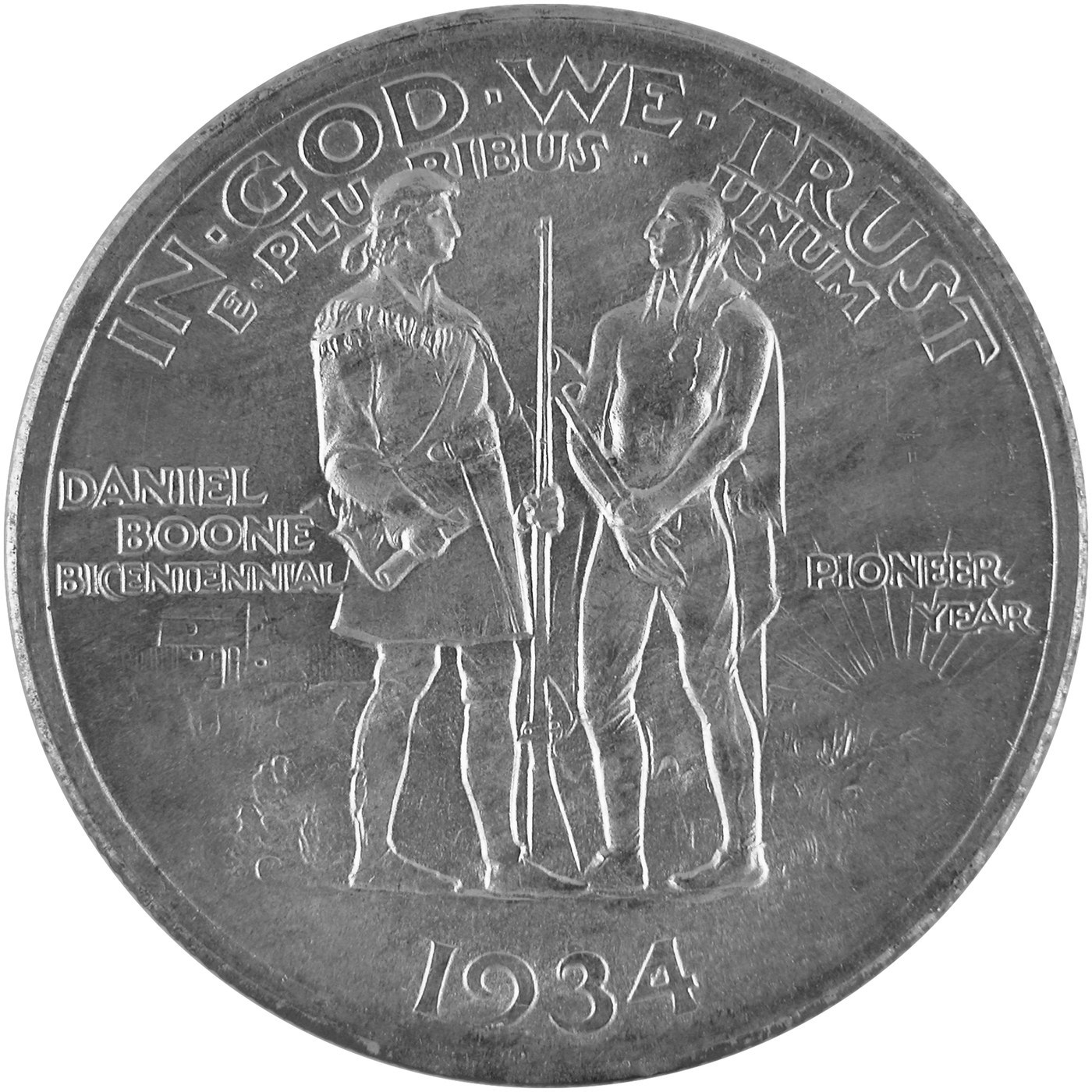
Daniel Boone Bicentennial Half Dollar
A 90% silver U.S. classic commemorative struck 1934–1938 for Daniel Boone's bicentennial, showing his portrait and a frontier scene with Chief Black Fish.
- Country
- United States
- Denomination
- 50¢
- Metal
- Silver
Got a coin like this?
Identify any coin from a photo, free.
Overview
The Daniel Boone Bicentennial Half Dollar is a United States classic silver commemorative honoring the 200th anniversary of the birth of frontiersman Daniel Boone. Designed by Augustus Lukeman, it was struck across several years, from 1934 through 1938. The photographed piece is dated 1934, the first year of issue and the year the coin marks as the bicentennial "pioneer year."
One side carries a portrait bust of Daniel Boone; the accompanying frontier side depicts Boone standing with Chief Black Fish, a Shawnee leader, and bears the legend "PIONEER YEAR" with the date 1934. Like all U.S. half dollars of the era, it is struck in 90% silver and carries the "HALF DOLLAR" denomination and "IN GOD WE TRUST."
The Boone series is remembered as much for its production history as for its design. It was issued over multiple years and at multiple mints in small quantities, a practice that later drew criticism for pressuring collectors to buy many near-identical coins to complete a set.
History & Background
The coin commemorates the bicentennial of Daniel Boone's 1734 birth, celebrated in 1934. Boone was one of America's most famous frontiersmen and pathfinders, closely associated with the settlement of Kentucky, and the commemorative was promoted by the Daniel Boone Bicentennial Commission. Sculptor Augustus Lukeman created both the portrait side and the two-figure frontier scene.
Although the bicentennial fell in 1934, Congress authorized continued production, and the halves were struck from 1934 through 1938 at Philadelphia, Denver, and San Francisco. Beginning with the 1935 coins, a small "1934" date was added to the design to keep the bicentennial year present on later strikings; this produced the well-known small-date varieties and multiplied the number of distinct issues a collector needed.
With low mintages spread across years and mints, the series became a frequently cited example of commemorative-coin abuse in the 1930s. Complaints about such practices contributed to the eventual winding down of the classic commemorative program.
How to Identify
Identify the type by its subjects and legends. One side shows a portrait bust of Daniel Boone with "LIBERTY," "IN GOD WE TRUST," "UNITED STATES OF AMERICA," and "HALF DOLLAR." The frontier side—the one visible in the photograph—depicts Daniel Boone standing beside Chief Black Fish, a Shawnee leader, and is inscribed "PIONEER YEAR" with the date 1934 along with wording tying the coin to the Boone bicentennial.
The piece has the standard classic-commemorative half-dollar specifications: 90% silver with 10% copper, about 30.6 mm in diameter, roughly 12.5 grams, with a reeded edge. The silver alloy gives it the same bright, slightly warm tone as circulating U.S. silver halves of the period.
Mint marks, when present, appear on the frontier side as a small "D" (Denver) or "S" (San Francisco); Philadelphia strikings carry no mint mark. On 1935 and later issues a small "1934" also appears in the field, distinguishing them from the original 1934 coins that lack this added date.
Value & Collectibility
As a 90% silver commemorative, every Boone half is worth at least its silver content, but nearly all trade well above melt for their collector interest. Common issues—including the 1934 Philadelphia coin—typically sell in the low-to-mid hundreds of dollars in the uncirculated grades in which most survive, with exact prices depending heavily on grade and eye appeal.
The series' value is uneven. The low-mintage branch-mint issues, particularly certain 1935 and 1938 Denver and San Francisco strikings, command substantially higher prices, and complete date-and-mint sets can be worth much more than a single common coin. Small-date varieties add further collectible distinctions.
Because condition drives price so strongly, and because altered or added mint marks exist, value estimates for any specific coin should be based on its grade, variety, and authentication. Check recent auction results and reputable price guides rather than relying on a single figure.
Frequently asked questions
What is the Daniel Boone Bicentennial Half Dollar?
It is a U.S. classic silver commemorative half dollar marking the 200th anniversary of Daniel Boone's 1734 birth. It was struck in 90% silver from 1934 through 1938 and designed by Augustus Lukeman.
Who is the second figure on the coin with Boone?
The frontier side shows Daniel Boone standing with Chief Black Fish, a Shawnee leader. This scene appears alongside the "PIONEER YEAR" legend and the date 1934.
Why is 1934 on coins struck in later years?
1934 was the bicentennial "pioneer year." Coins struck from 1935 onward added a small "1934" to the design to keep the bicentennial year present, creating the small-date varieties collectors distinguish today.
Is it made of real silver?
Yes. Like other U.S. half dollars of the era, it is struck in 90% silver and 10% copper, weighs about 12.5 grams, and measures roughly 30.6 mm across.
Why is the Boone series considered controversial?
It was issued over several years and at multiple mints in small numbers, which critics said forced collectors to buy many similar coins to complete a set. It became a leading example of 1930s commemorative-coin abuse.
Daniel Boone Bicentennial Half Dollar guides
In-depth guides for identifying, valuing, and collecting Daniel Boone Bicentennial Half Dollar.
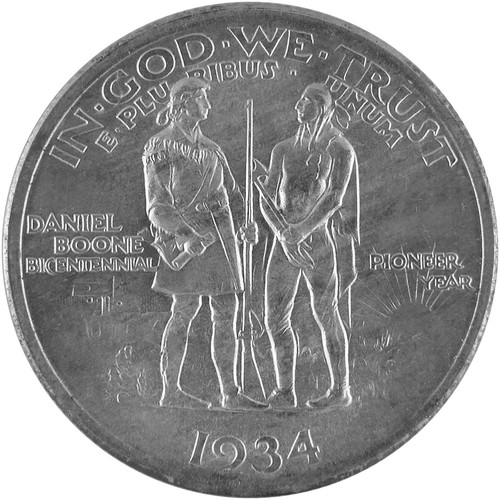
Other coins you may enjoy
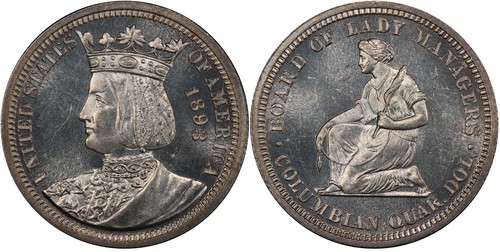
Isabella Quarter
1893
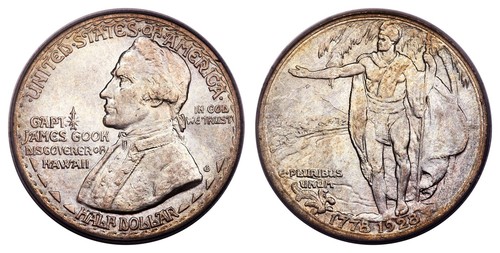
Hawaiian Sesquicentennial Half Dollar
1928
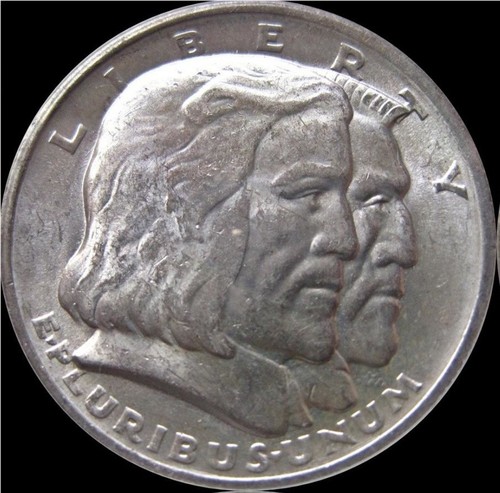
Long Island Tercentenary Half Dollar
1936
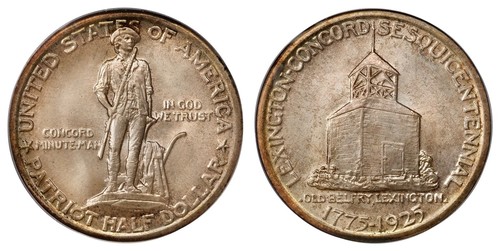
Lexington-Concord Sesquicentennial Half Dollar
1925
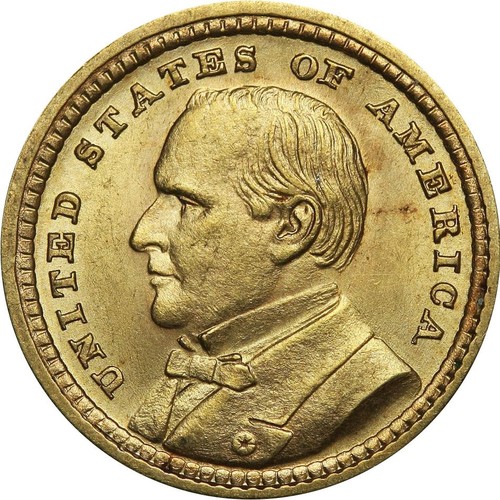
Louisiana Purchase Exposition Dollar (Jefferson)
1903
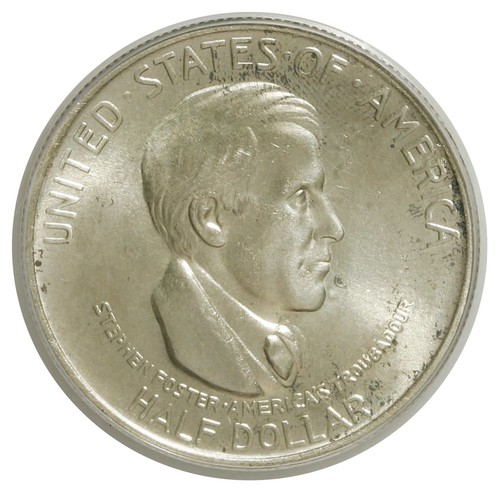
Cincinnati Music Center Half Dollar
1936
Elgin Illinois Centennial Half Dollar
1936
Connecticut Tercentennial Half Dollar
1935
Columbia South Carolina Sesquicentennial Half Dollar
1936
Sesquicentennial of American Independence Quarter Eagle
1926
Pilgrim Tercentenary Half Dollar
1920-1921
Alabama Centennial Half Dollar
1921