
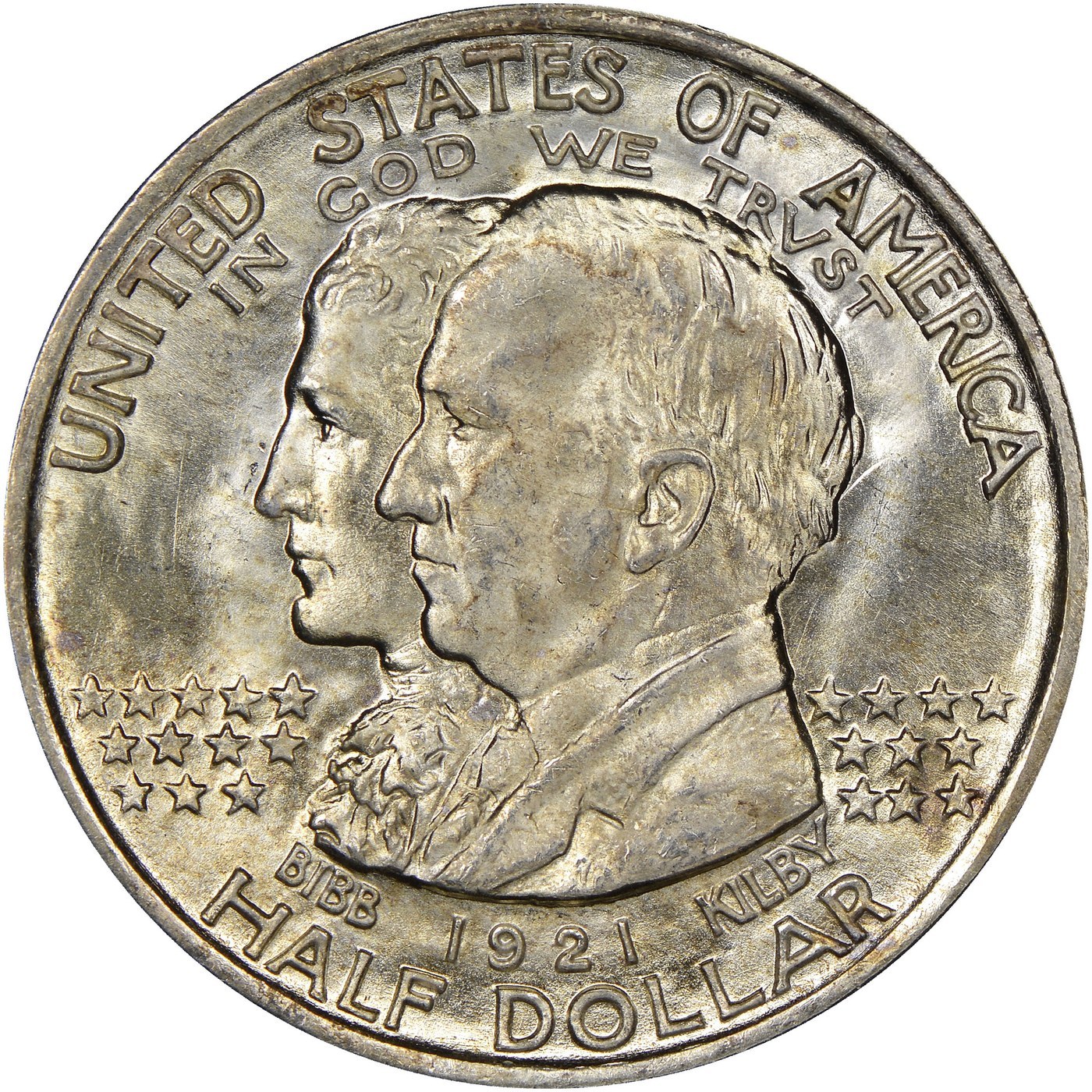
Alabama Centennial Half Dollar
A 1921 U.S. silver half dollar marking a century of Alabama statehood, with jugate governor busts and a state eagle; issued in plain and scarcer 2×2 varieties.
- Country
- United States
- Denomination
- 50¢
- Metal
- Silver
Got a coin like this?
Identify any coin from a photo, free.
Overview
The Alabama Centennial Half Dollar is a United States silver commemorative fifty-cent piece struck in 1921 to mark the one-hundredth anniversary of Alabama's admission to the Union in 1819. It belongs to the long "classic" commemorative series that ran from 1892 to 1954, in which special half dollars were authorized by Congress to honor an event and sold at a premium to raise funds.
Designed by sculptor Laura Gardin Fraser, the obverse carries conjoined (jugate) profile busts of two Alabama governors, and the reverse shows an eagle adapted from the state's heraldry. The coin was produced in two forms: a plain variety and a scarcer variety bearing a small "2×2" and a St. Andrew's cross in the obverse field, referring to Alabama as the 22nd state.
Struck in the standard 90% silver alloy of a regular half dollar, it was never intended for circulation. Today it is collected as part of the classic commemorative half dollar set and is valued for its history, design, and the relative scarcity of the 2×2 variety.
History & Background
Congress authorized a commemorative half dollar for Alabama's statehood centennial, and although the anniversary fell in 1919, production delays meant the coins were not struck until 1921. They were sold at a premium above face value, with proceeds tied to the centennial celebration, following the fundraising model used throughout the classic commemorative program.
The design is the work of Laura Gardin Fraser, one of the most accomplished American medallic sculptors of the era. The obverse pairs William Wyatt Bibb, Alabama's first governor, with Thomas E. Kilby, the governor serving at the time the coin was made. Placing a living person on a United States coin was highly unusual, and Kilby is generally cited as the first living individual so honored on a U.S. coin.
Two varieties were produced. The first bore a small St. Andrew's cross flanked by the numerals "2" and "2" (the "2×2" variety) in the obverse field, a nod to Alabama's rank as the 22nd state; a later, plain variety omitted this device. Total distribution was modest — on the order of tens of thousands of coins across both varieties combined — with the 2×2 variety struck in much smaller numbers, making it the scarcer and more sought-after of the two.
How to Identify
Identify the type by its inscriptions and design. The obverse shows two overlapping right-facing portrait busts — the two Alabama governors — with lettering identifying the Alabama centennial and the anniversary dates. On the 2×2 variety a tiny St. Andrew's cross with a "2" on each side appears in the field to the right of the busts; the plain variety lacks this mark, and the presence or absence of the 2×2 is the key diagnostic separating the two.
The reverse depicts an eagle taken from Alabama's state emblem, perched with a banner and shield and accompanied by state and centennial lettering. The coin is a standard-size half dollar: about 30.6 mm in diameter, roughly 12.5 grams, struck in 90% silver with a reeded edge. It was made only in 1921 and only at Philadelphia, so a genuine example carries no mint mark.
Because it is a commemorative rather than a circulating coin, the reverse does not resemble the Walking Liberty or Barber half dollars of the period; the governor portraits and Alabama-specific lettering are the surest identifiers.
Value & Collectibility
As a classic silver commemorative, the Alabama Centennial Half Dollar is worth well above its face value and its silver content. The plain variety is the more common of the two, while the 2×2 variety commands a meaningful premium because far fewer were made.
Circulated and lightly worn plain examples typically trade in the low-to-mid tens of dollars up into the low hundreds, with well-preserved uncirculated coins bringing more; the 2×2 variety and high-grade, sharply struck pieces sell for considerably higher figures. Condition, eye appeal, original surfaces, and third-party grade all strongly affect price.
Because values move with the collector market and the coin's grade and variety, any specific example should be checked against recent auction results and current price guides rather than a single fixed figure.
Frequently asked questions
What does the Alabama Centennial Half Dollar commemorate?
It marks the 100th anniversary of Alabama becoming a U.S. state in 1819. Although the centennial was in 1919, the coins were not actually struck until 1921 due to delays.
Who is pictured on the coin?
The obverse shows conjoined busts of two Alabama governors: William Wyatt Bibb, the first governor, and Thomas E. Kilby, governor when the coin was made. Kilby is often cited as the first living person on a U.S. coin.
What is the 2×2 variety?
It is the version with a small St. Andrew's cross flanked by the numerals 2 and 2 in the obverse field, referencing Alabama as the 22nd state. It was made in smaller numbers and is scarcer than the plain variety.
Is it made of silver?
Yes. Like a regular U.S. half dollar of the era, it is struck in 90% silver with 10% copper, about 12.5 grams and 30.6 mm across, with a reeded edge.
Does it have a mint mark?
No. The coins were struck only at the Philadelphia Mint in 1921, so genuine examples carry no mint mark.
Alabama Centennial Half Dollar guides
In-depth guides for identifying, valuing, and collecting Alabama Centennial Half Dollar.
Other coins you may enjoy
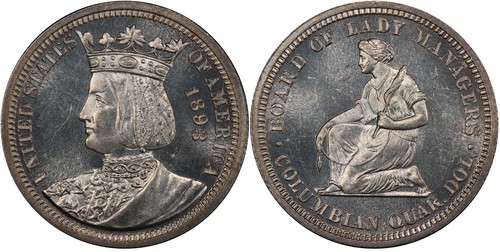
Isabella Quarter
1893
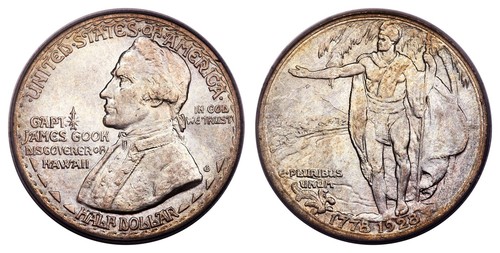
Hawaiian Sesquicentennial Half Dollar
1928
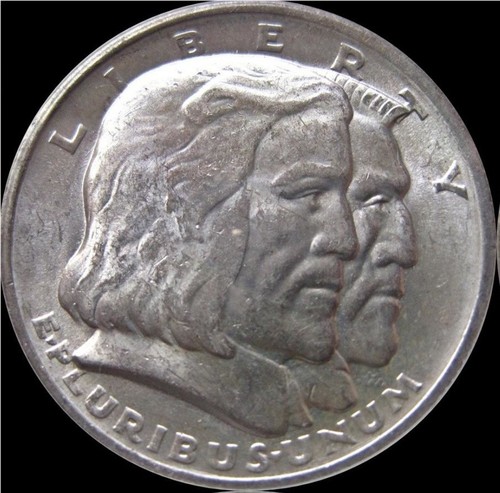
Long Island Tercentenary Half Dollar
1936
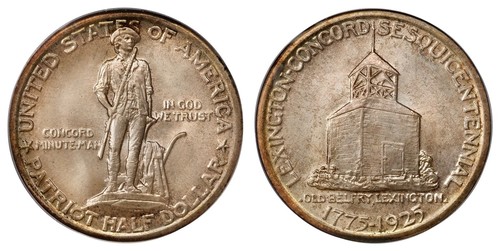
Lexington-Concord Sesquicentennial Half Dollar
1925
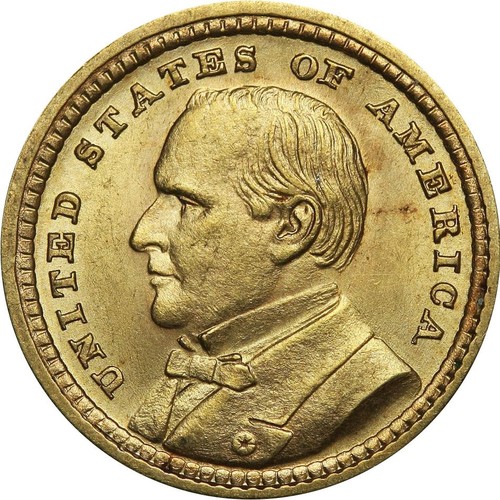
Louisiana Purchase Exposition Dollar (Jefferson)
1903
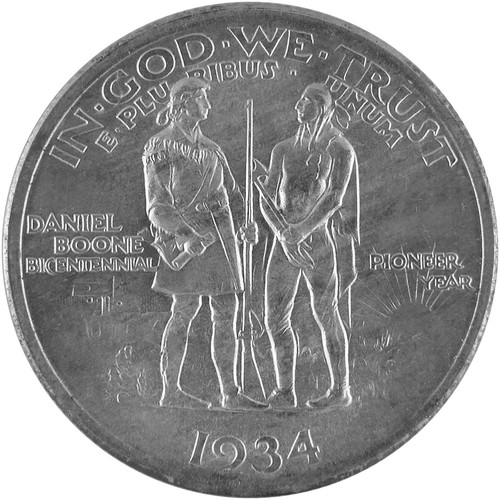
Daniel Boone Bicentennial Half Dollar
1934–1938
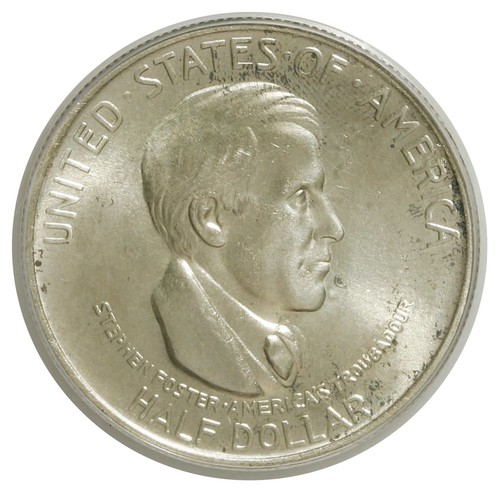
Cincinnati Music Center Half Dollar
1936
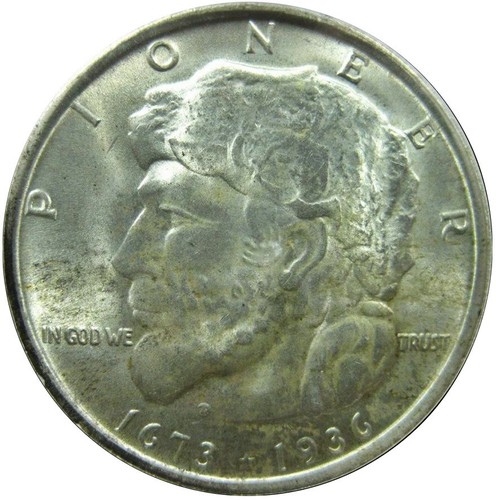
Elgin Illinois Centennial Half Dollar
1936
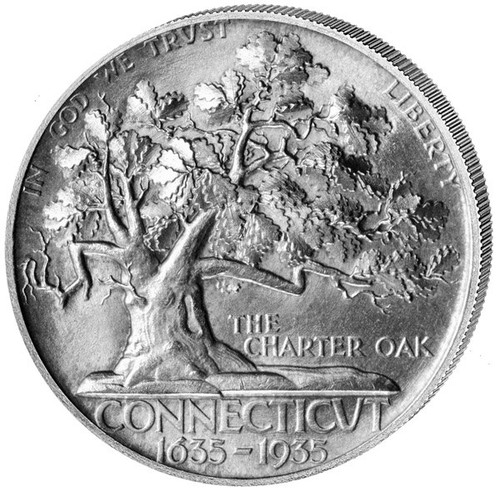
Connecticut Tercentennial Half Dollar
1935
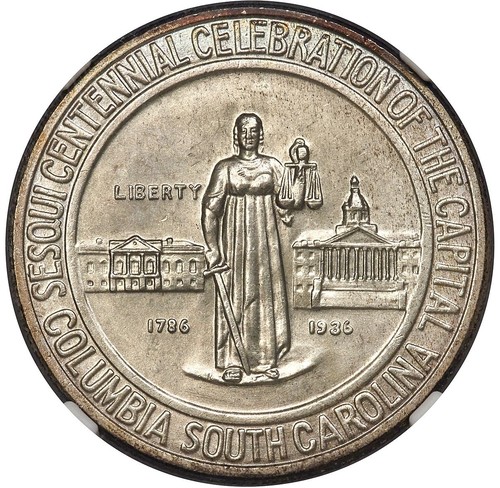
Columbia South Carolina Sesquicentennial Half Dollar
1936
Sesquicentennial of American Independence Quarter Eagle
1926
Pilgrim Tercentenary Half Dollar
1920-1921