
Louisiana Purchase Exposition Dollar (Jefferson)
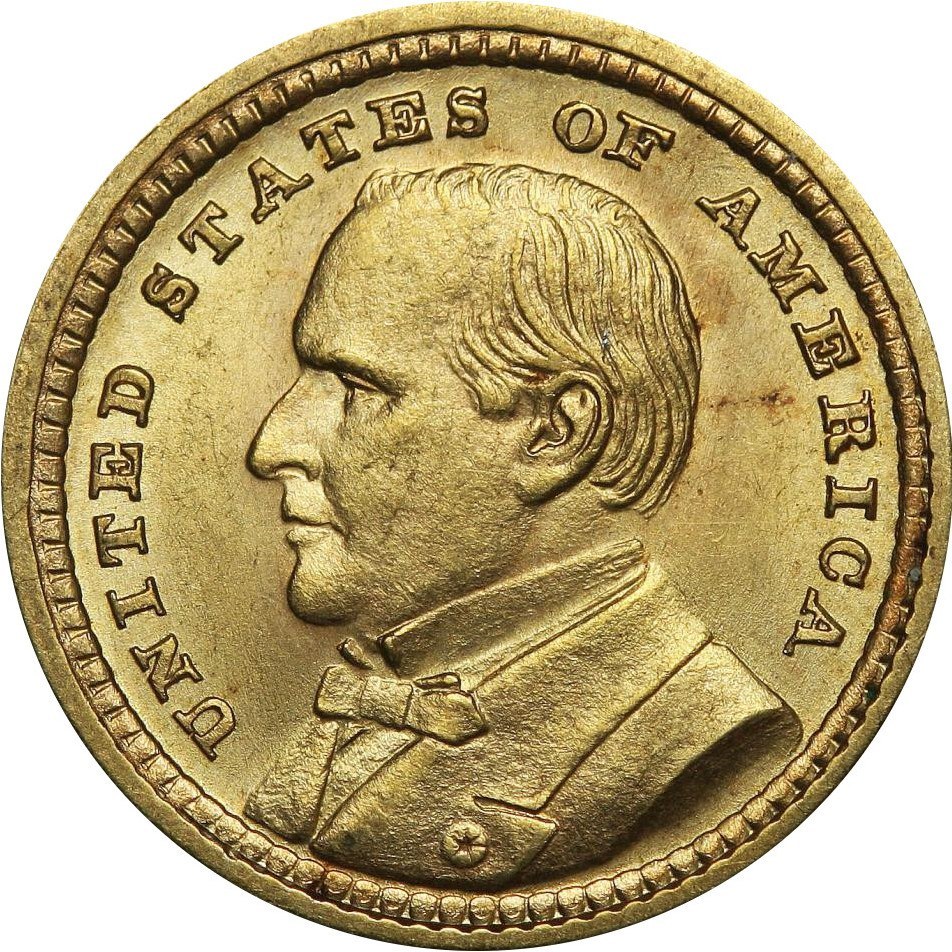
An 1903 U.S. commemorative gold dollar honoring the Louisiana Purchase, featuring Thomas Jefferson's left-facing profile and struck for the 1904 St. Louis World's Fair.
- Country
- United States
- Denomination
- $1
- Metal
- Gold
Got a coin like this?
Identify any coin from a photo, free.
Overview
The Louisiana Purchase Exposition Dollar (Jefferson) is a small United States commemorative gold dollar issued in 1903 to mark the centennial of the 1803 Louisiana Purchase and to raise funds for the 1904 Louisiana Purchase Exposition, the World's Fair held in St. Louis. The photographed example shows Thomas Jefferson in left-facing profile surrounded by UNITED STATES OF AMERICA, with the Louisiana Purchase date of 1803 tied to the coin's commemorative theme.
This is one of two portrait varieties issued for the same event; the companion coin carries a portrait of President William McKinley instead of Jefferson. Both were designed by U.S. Mint Chief Engraver Charles E. Barber and struck in .900 fine gold at the Philadelphia Mint. Together they count among the very first commemorative gold coins produced by the United States.
Because it is a classic commemorative rather than a circulating issue, the coin was sold to fairgoers and collectors above face value. It is prized today for its early date, small size, gold content, and its place at the start of the U.S. commemorative gold series.
History & Background
The Louisiana Purchase of 1803 doubled the size of the young United States, and its centennial was celebrated with a grand World's Fair in St. Louis. Congress authorized commemorative gold dollars to help finance the exposition, and the U.S. Mint struck two portrait types in 1903: one honoring Thomas Jefferson, who arranged the purchase, and one honoring the recently assassinated President William McKinley.
Charles E. Barber designed both coins, giving each a presidential profile on the obverse and a shared commemorative reverse referencing the Louisiana Purchase Exposition. Numismatist and promoter Farran Zerbe organized their sale to the public at a premium over the one-dollar face value. Demand fell short of the large authorized quantities, and a great many unsold coins were later returned to the Mint and melted, leaving a modest net distribution for each type.
These pieces hold a notable place in numismatic history as among the earliest United States commemorative coins and the first commemorative gold dollars, predating the long run of classic commemoratives that followed in the twentieth century.
How to Identify
Identify the Jefferson variety by its obverse portrait: Thomas Jefferson in left-facing profile, encircled by the legend UNITED STATES OF AMERICA. The design ties to the 1803 Louisiana Purchase, and the coin belongs to the commemorative reverse shared with its McKinley companion, which names the LOUISIANA PURCHASE EXPOSITION. If the profile is McKinley rather than Jefferson, it is the sister variety, not this coin.
The coin is physically tiny — a gold dollar roughly 15 mm across, much smaller than a modern cent, and struck in .900 fine gold, giving it a warm yellow tone and a light weight of well under two grams. It carries no mint mark, as production took place at the Philadelphia Mint.
The key distinction to make in hand is Jefferson versus McKinley, since the two Louisiana Purchase gold dollars are otherwise closely related. Confirm the portrait, the UNITED STATES OF AMERICA legend, the small gold-dollar format, and the Louisiana Purchase Exposition commemorative context before attributing the piece.
Value & Collectibility
As a scarce early commemorative struck in gold, the Louisiana Purchase Exposition Dollar (Jefferson) trades well above its one-dollar face value and above its small gold content. Its worth is driven mainly by collector demand, condition, and eye appeal rather than by melt value alone.
Circulated and cleaned examples generally bring the lower end of the market, while original, well-struck uncirculated pieces command more, and high-grade certified gems can sell for substantial premiums. Because the net surviving population is limited, quality and originality matter a great deal to price.
Exact values shift with the collector market and the price of gold, and the Jefferson and McKinley types are valued separately. For any specific coin, compare recent auction results and dealer listings for the matching variety and grade, and treat professional certification as important for higher-value examples.
Frequently asked questions
What does the Louisiana Purchase Exposition Dollar commemorate?
It marks the 1803 Louisiana Purchase and was issued to help fund the 1904 Louisiana Purchase Exposition, the World's Fair held in St. Louis. This variety features a portrait of Thomas Jefferson, who arranged the purchase.
How is the Jefferson type different from the McKinley type?
Both are 1903 Louisiana Purchase gold dollars with the same commemorative theme, but the obverse portrait differs. This coin shows Thomas Jefferson in left-facing profile; the companion coin shows President William McKinley.
Is this coin made of real gold?
Yes. It is a commemorative gold dollar struck in .900 fine gold at the Philadelphia Mint. It is very small, roughly 15 mm across and light in weight, so its gold content is modest.
Why is it worth so much more than one dollar?
It is a scarce early U.S. commemorative in gold, and many were melted when unsold, leaving a limited surviving population. Collector demand, condition, and its historical significance push values well above face and melt value.
Louisiana Purchase Exposition Dollar (Jefferson) guides
In-depth guides for identifying, valuing, and collecting Louisiana Purchase Exposition Dollar (Jefferson).
Other coins you may enjoy
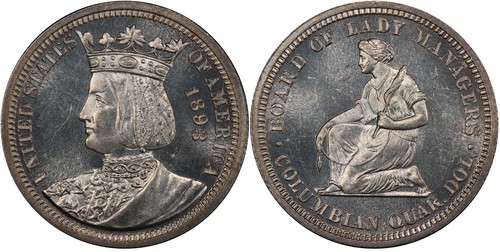
Isabella Quarter
1893
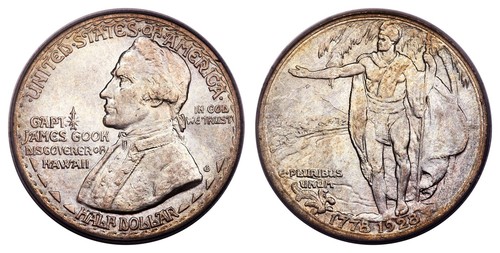
Hawaiian Sesquicentennial Half Dollar
1928
Long Island Tercentenary Half Dollar
1936
Lexington-Concord Sesquicentennial Half Dollar
1925
Daniel Boone Bicentennial Half Dollar
1934–1938
Cincinnati Music Center Half Dollar
1936
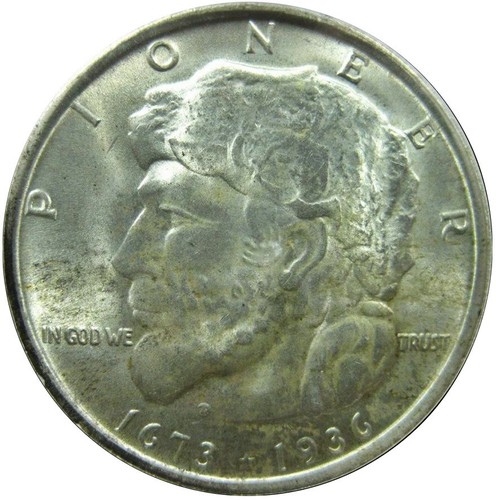
Elgin Illinois Centennial Half Dollar
1936
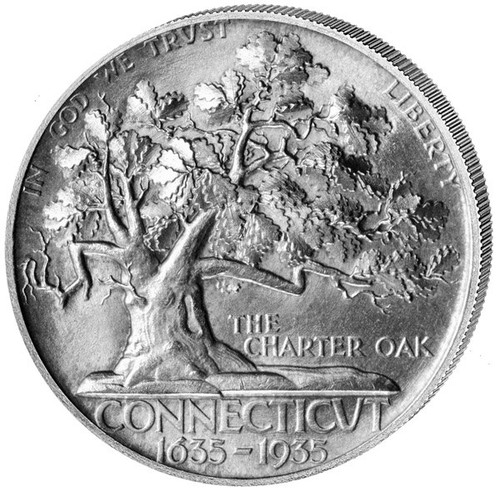
Connecticut Tercentennial Half Dollar
1935
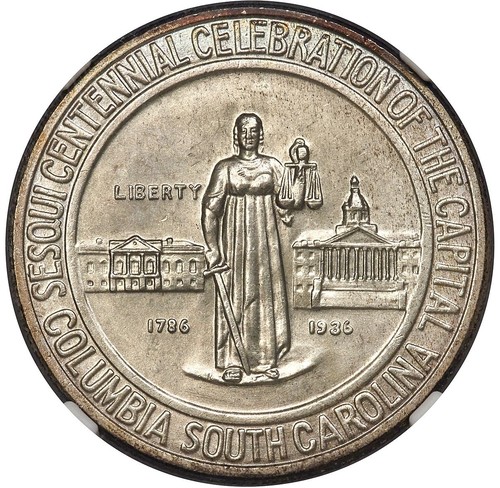
Columbia South Carolina Sesquicentennial Half Dollar
1936
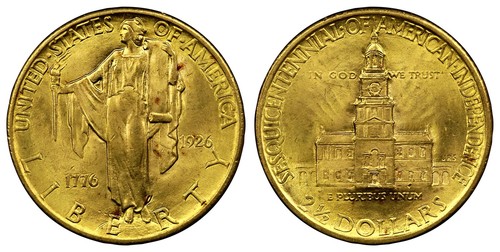
Sesquicentennial of American Independence Quarter Eagle
1926
Pilgrim Tercentenary Half Dollar
1920-1921
Alabama Centennial Half Dollar
1921