
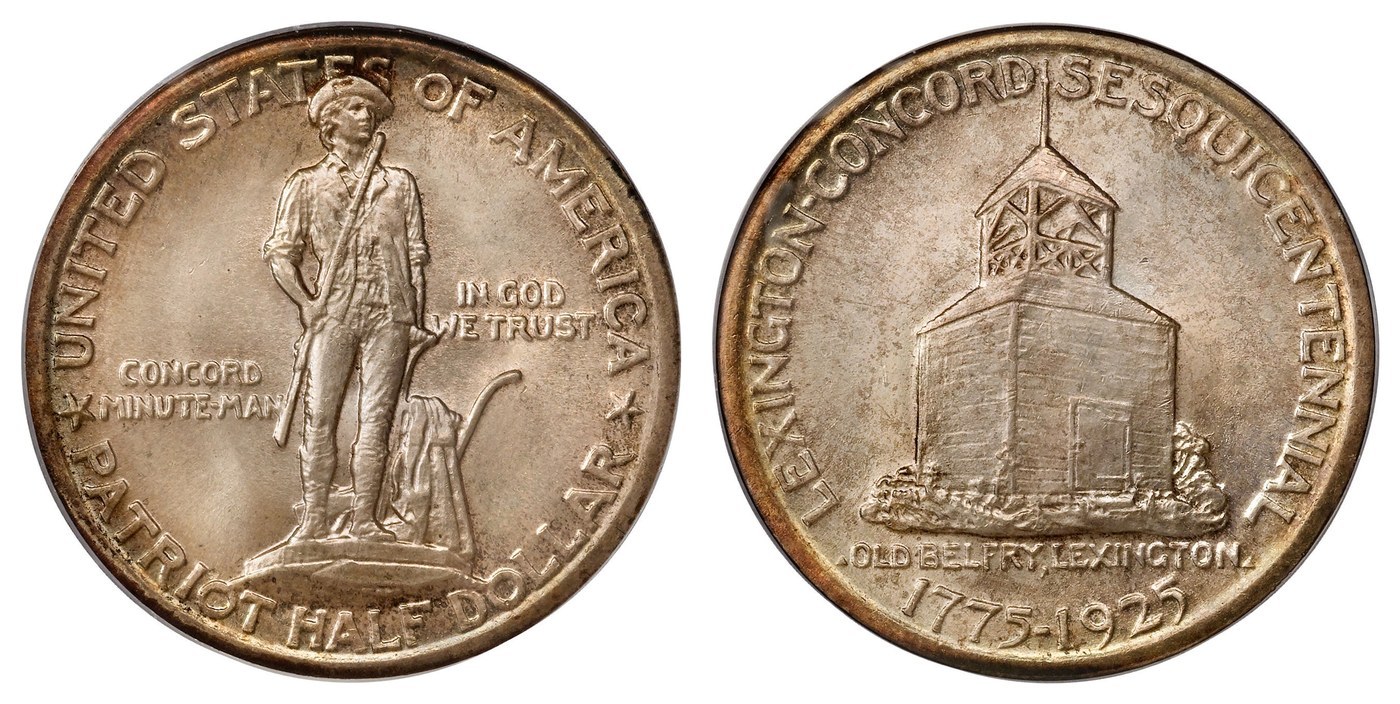
Lexington-Concord Sesquicentennial Half Dollar
A 1925 U.S. silver commemorative half dollar marking the 150th anniversary of the battles of Lexington and Concord, showing the Concord Minuteman and the Old Belfry.
- Country
- United States
- Denomination
- 50¢
- Metal
- Silver
Got a coin like this?
Identify any coin from a photo, free.
Overview
The Lexington-Concord Sesquicentennial Half Dollar is a United States silver commemorative fifty-cent piece issued in 1925 to mark the 150th anniversary of the opening battles of the American Revolution, fought at Lexington and Concord, Massachusetts, in 1775. The obverse depicts the famous Concord Minuteman statue, a standing farmer-soldier holding a rifle, while the reverse shows the Old Belfry at Lexington with the dates 1775 and 1925.
Like other classic U.S. commemorative half dollars of the era, it was struck as a legal-tender coin but distributed as a keepsake and fundraiser rather than for general circulation. It is a single-year type, produced only in 1925 and only at the Philadelphia Mint, so it carries no mint mark.
The coin is 90% silver and the same diameter as a standard Liberty Walking or Barber half dollar, but its patriotic Revolutionary War imagery makes it easy to distinguish from circulating half dollars of the period.
History & Background
Congress authorized the coin as part of the nationwide sesquicentennial celebration of the American Revolution. The 1925 anniversary of the April 19, 1775 clashes at Lexington and Concord, the "shot heard round the world," was commemorated with public ceremonies in Massachusetts, and the half dollar was sold to help fund those observances.
The designs draw directly on the region's Revolutionary heritage. The obverse reproduces Daniel Chester French's celebrated Minute Man statue that stands at the Old North Bridge in Concord, and the reverse depicts the Old Belfry at Lexington, whose bell was said to have summoned the militia. The coins were sold to the public, often in a distinctive wooden shipping box, at a premium above face value.
The issue was a one-year commemorative, produced in a single relatively large mintage for the series before the program ended. Surviving examples were widely saved as souvenirs, which helps explain why the type remains obtainable today.
How to Identify
Identify the type from its two scenes and inscriptions. The obverse shows the standing Concord Minuteman with a rifle, modeled on Daniel Chester French's statue, with UNITED STATES OF AMERICA and the motto around him. The reverse depicts the Old Belfry tower at Lexington, inscribed with wording referencing the Lexington-Concord sesquicentennial and the anniversary dates 1775 and 1925.
The coin is a 90% silver half dollar of standard size, about 30.6 mm in diameter and roughly 12.5 grams, with a reeded edge. The only date arrangement is the paired 1775–1925, which identifies it unambiguously as the sesquicentennial issue rather than a circulating half dollar.
There is no mint mark, because the entire issue was struck at Philadelphia. Do not expect a D or S; its absence is correct for this type.
Value & Collectibility
As a classic silver commemorative, the Lexington-Concord half dollar is valued as a collectible well above its silver content, but it is one of the more affordable and available types in the series because a comparatively large number were struck and saved. Circulated and lower-grade uncirculated examples are among the more modestly priced classic commemoratives.
Value rises with condition. Well-struck, fully lustrous uncirculated coins, and pieces certified in high Mint State grades by services such as PCGS or NGC, command significant premiums over average examples. Original wooden shipping boxes, when present, can add collector interest.
Because prices move with the coin market and the silver price, any specific figure should be checked against recent auction results and current dealer listings for the matching grade.
Frequently asked questions
What does the Lexington-Concord half dollar commemorate?
It marks the 150th anniversary (sesquicentennial) of the battles of Lexington and Concord in April 1775, the opening fights of the American Revolution. It was issued in 1925 as part of the anniversary celebrations.
Who is the figure on the obverse?
The standing rifleman is the Concord Minuteman, based on Daniel Chester French's Minute Man statue at the Old North Bridge in Concord, Massachusetts, symbolizing the citizen-soldiers of 1775.
What is the building on the reverse?
The reverse shows the Old Belfry at Lexington, the bell tower associated with summoning the local militia, along with the anniversary dates 1775 and 1925.
Does it have a mint mark?
No. The coin was struck only at the Philadelphia Mint in 1925, so it carries no mint mark. A missing mint mark is normal and expected for this type.
Is it made of silver?
Yes. It is a 90% silver half dollar, the same size and metal standard as circulating U.S. half dollars of the 1920s, but issued as a commemorative rather than for general circulation.
Lexington-Concord Sesquicentennial Half Dollar guides
In-depth guides for identifying, valuing, and collecting Lexington-Concord Sesquicentennial Half Dollar.
Other coins you may enjoy
Isabella Quarter
1893
Hawaiian Sesquicentennial Half Dollar
1928
Long Island Tercentenary Half Dollar
1936
Louisiana Purchase Exposition Dollar (Jefferson)
1903
Daniel Boone Bicentennial Half Dollar
1934–1938
Cincinnati Music Center Half Dollar
1936
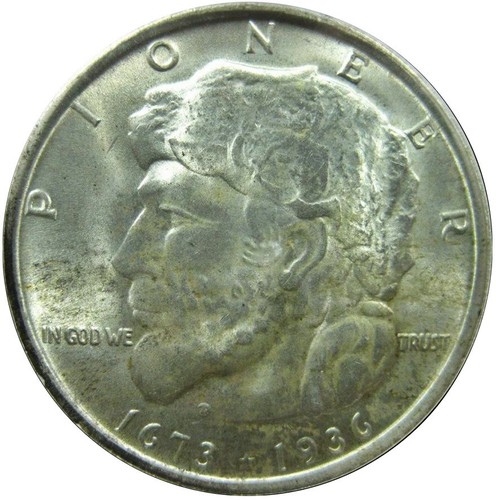
Elgin Illinois Centennial Half Dollar
1936
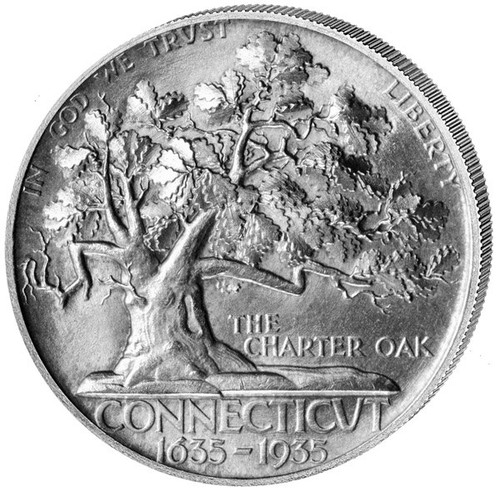
Connecticut Tercentennial Half Dollar
1935
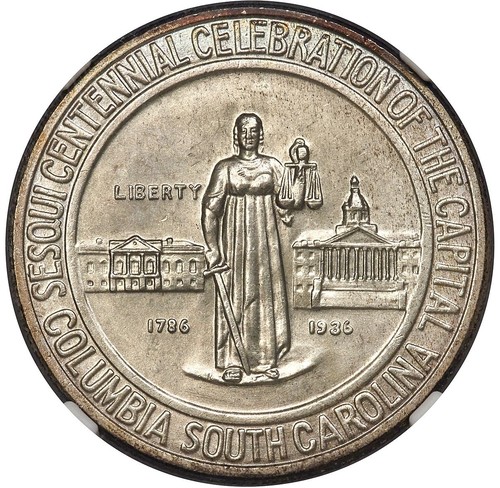
Columbia South Carolina Sesquicentennial Half Dollar
1936
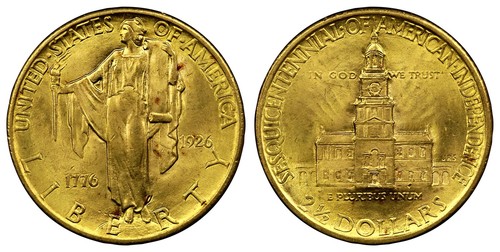
Sesquicentennial of American Independence Quarter Eagle
1926
Pilgrim Tercentenary Half Dollar
1920-1921
Alabama Centennial Half Dollar
1921