Saint-Gaudens Double Eagle
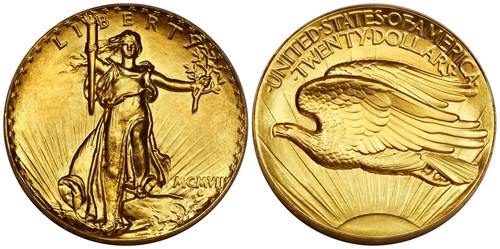
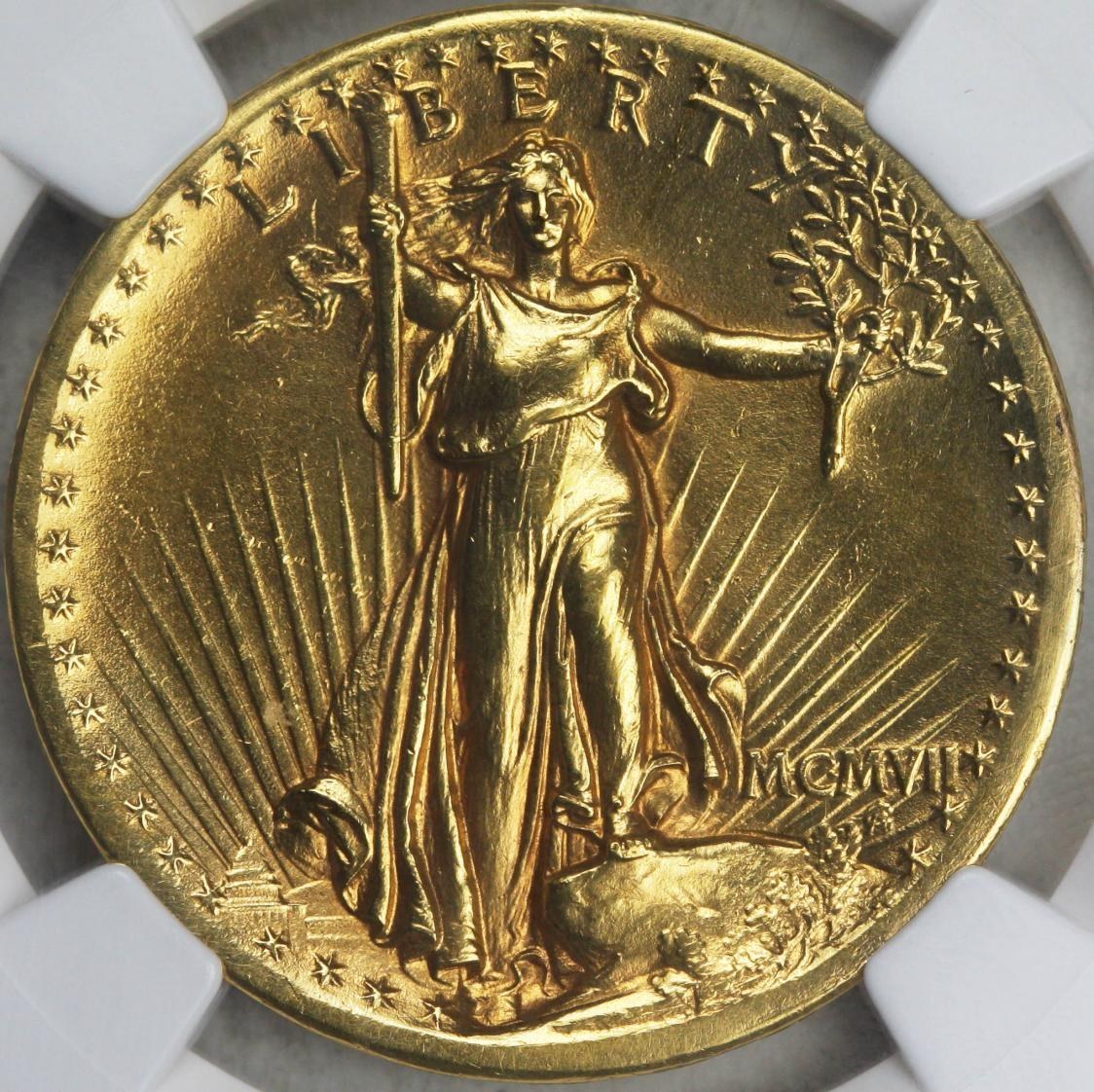
United States $20 gold coin (1907–1933) designed by Augustus Saint-Gaudens, showing a striding Liberty with torch and olive branch before a radiant sun.
- Country
- United States
- Denomination
- $20
- Metal
- 90% Gold, 10% Copper
Got a coin like this?
Identify any coin from a photo, free.
Overview
The Saint-Gaudens Double Eagle is a United States $20 gold coin struck from 1907 to 1933. It is widely regarded as one of the most beautiful designs in American coinage, created by sculptor Augustus Saint-Gaudens at the request of President Theodore Roosevelt. The obverse shows Liberty striding forward holding a torch and an olive branch, backed by radiating rays of a rising sun.
Each coin is struck in .900 fine gold and contains just under one troy ounce of gold. Because of its size, metal content, and artistry, the type is a cornerstone of classic U.S. gold collecting and remains a popular way to hold physical gold in a historic form.
History & Background
President Theodore Roosevelt admired ancient Greek high-relief coinage and pushed for a more artistic national coinage, personally recruiting Augustus Saint-Gaudens to redesign the double eagle. The earliest 1907 coins were struck in dramatic high relief — including the celebrated MCMVII High Relief pieces that date the year in Roman numerals — but the deep relief was impractical for mass production. The design was quickly flattened to a standard low relief with Arabic numerals for regular issue.
The motto "IN GOD WE TRUST" was absent from the first 1907 and early 1908 coins, reportedly reflecting Roosevelt's view that using the phrase on money was inappropriate; Congress mandated its restoration, and it appears on the reverse from 1908 onward. Production continued through 1933, but the series ended abruptly with the Great Depression and the 1933 recall of gold coinage. Vast numbers were melted, and the 1933 issue was famously never released for general circulation.
How to Identify
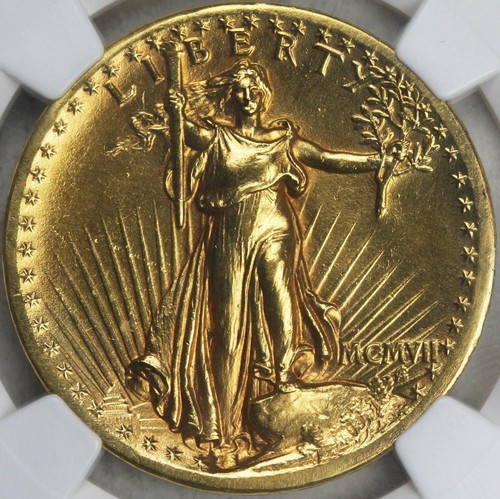
The obverse depicts a full-length figure of Liberty striding toward the viewer, holding a lit torch in her right hand and an olive branch in her left, with the U.S. Capitol at the lower left and sunrays radiating behind her — the radiating lines and torch are the quickest visual confirmation of the type. "LIBERTY" arcs across the top, with stars around the border and the date at the lower right. The reverse shows an eagle in flight above a rising sun, with "UNITED STATES OF AMERICA" and "TWENTY DOLLARS" above.
The coin measures about 34 mm in diameter and weighs roughly 33.4 grams in .900 fine gold, with a distinctive lettered edge reading "E PLURIBUS UNUM" separated by stars (not a reeded edge). Coins from 1907 and early 1908 lack the motto "IN GOD WE TRUST" on the reverse; later dates include it below the sun. Mint marks, when present, appear on the obverse just above the date.
Value & Collectibility
As a nearly one-ounce gold coin, common-date Saint-Gaudens Double Eagles carry a baseline value tied closely to the current gold price, with a modest collector premium in circulated and typical uncirculated grades. Widely available dates from the 1920s are the most affordable entry points to the type.
Semi-key dates, early low-mintage issues, and the famous 1907 High Relief (MCMVII) coins trade for substantial premiums, and top-grade or rare examples can reach five and six figures at auction. The 1933 issue is a special legal and historical case worth many millions. Because gold prices and grade drive value dramatically, always confirm date, mint mark, and authenticated grade before assigning a figure.
Frequently asked questions
Is the Saint-Gaudens Double Eagle made of real gold?
Yes. It is struck in .900 fine gold (90% gold, 10% copper for durability) and contains just under one troy ounce of gold, giving it strong intrinsic bullion value in addition to any collector premium.
Why do some coins show the date in Roman numerals like MCMVII?
The earliest 1907 high-relief coins used Roman numerals (MCMVII = 1907) as part of Saint-Gaudens's artistic vision. These High Relief pieces were hard to mass-produce and were soon replaced by low-relief coins with standard Arabic numeral dates.
Why is 'IN GOD WE TRUST' missing on some examples?
The 1907 and early 1908 coins were issued without the motto, reportedly at President Roosevelt's preference. Congress required its return, so the motto appears on the reverse of coins from 1908 onward.
What is the difference between a Double Eagle and an Eagle?
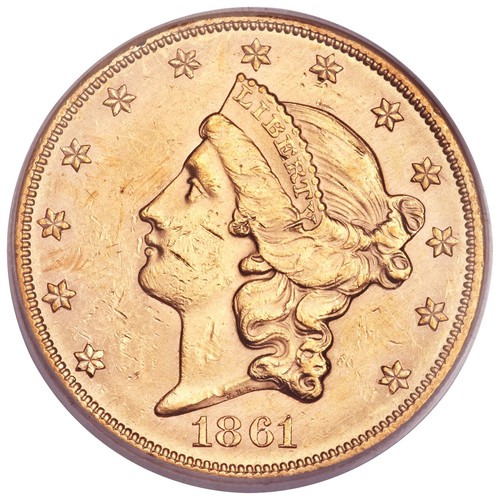
In U.S. gold coinage, an 'eagle' was the $10 gold piece, so a 'double eagle' is the $20 denomination — twice the value. The Saint-Gaudens design is one of two main double eagle types, following the earlier Liberty Head double eagle.
Saint-Gaudens Double Eagle guides
In-depth guides for identifying, valuing, and collecting Saint-Gaudens Double Eagle.
Saint-Gaudens Double Eagle identified by the community
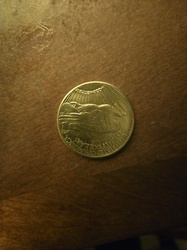
Real coins identified with Coin Identifier.