How to Identify the Saint-Gaudens Double Eagle
A visual guide to identifying a Saint-Gaudens $20 gold Double Eagle (1907–1933) by its striding Liberty obverse, flying eagle reverse, lettered edge, and size.
Read the full Saint-Gaudens Double Eagle encyclopedia entry →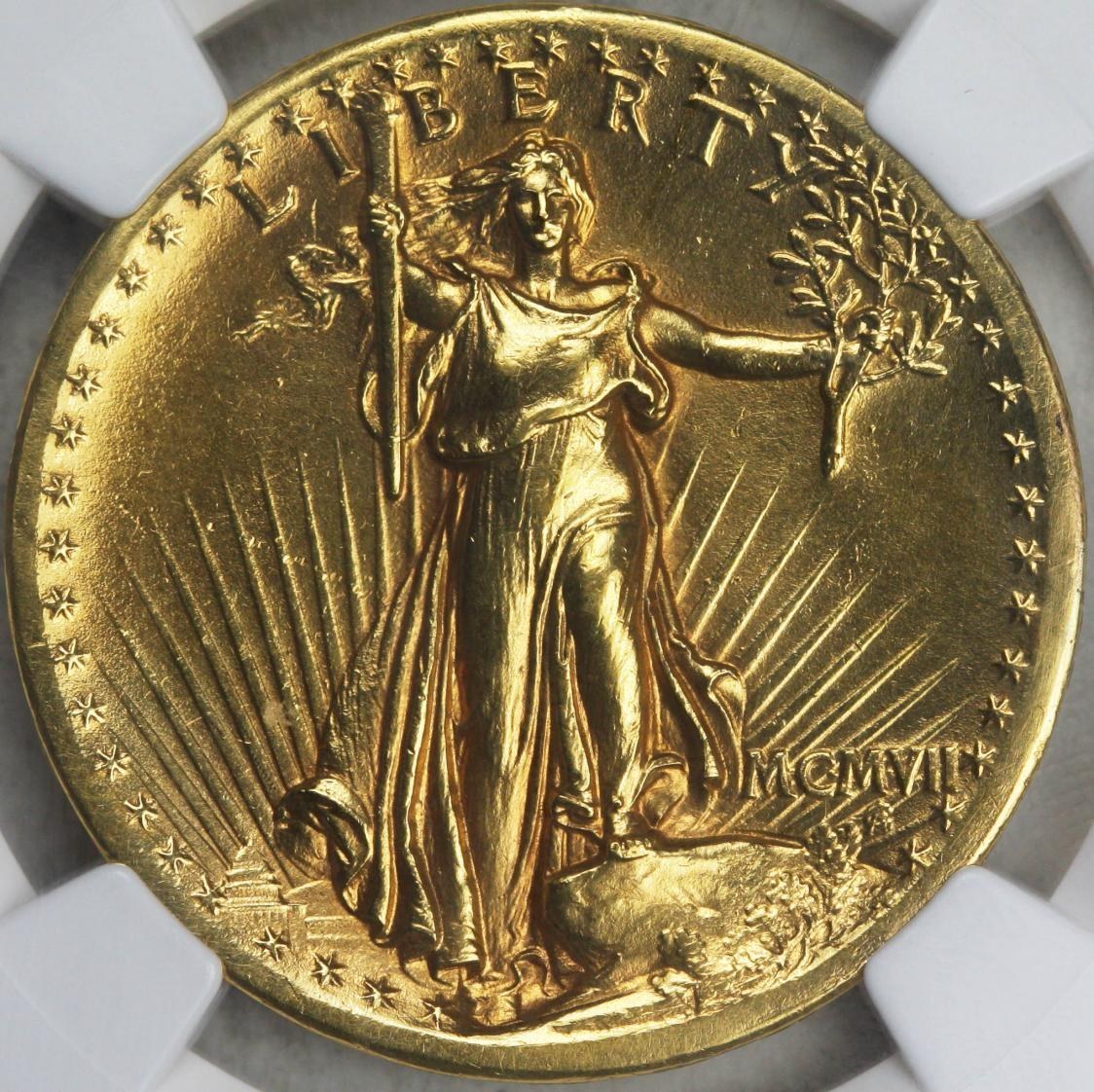
What It Is
The Saint-Gaudens Double Eagle is a United States $20 gold coin produced from 1907 to 1933, designed by sculptor Augustus Saint-Gaudens. It is a large, heavy gold piece and one of the most recognized classic U.S. coins, so correct identification hinges on a few consistent diagnostics rather than the date alone.
Obverse (Front)
Look for a full-length Liberty striding directly toward you, holding a torch aloft in one hand and an olive branch in the other. Behind her, rays from a rising sun fan out across the field, and the Capitol dome sits at the lower left. "LIBERTY" arcs across the top, stars ring the border, and the date is at the lower right — either in Arabic numerals or, on the rare 1907 High Relief pieces, in Roman numerals (MCMVII). The torch and radiating rays are the fastest confirmation of the type.
Reverse (Back)
The reverse shows an eagle in flight over a sunburst, with "UNITED STATES OF AMERICA" and "TWENTY DOLLARS" above. Coins from 1908 onward add "IN GOD WE TRUST" below the sun; its absence points to a 1907 or early-1908 striking. (Note: photos of a given example may show only the obverse, so use edge and dimensions to help confirm.)
Size, Weight, Metal, and Edge
Expect a diameter near 34 mm and a weight of about 33.4 grams in .900 fine gold; the coin has real heft and a rich yellow-gold color. A key authentication feature is the lettered edge reading "E PLURIBUS UNUM" with raised stars — not the reeded (grooved) edge found on many silver coins. An incorrect edge, off weight, or wrong diameter is an immediate red flag.
Look-Alikes and Authentication Cautions
Do not confuse this type with the earlier Liberty Head Double Eagle, which shows a Liberty head profile rather than a standing figure, or with modern American Gold Eagle bullion coins, which reuse the striding Liberty motif but are dated recently, carry different inscriptions, and are struck to different specifications. Counterfeits and gold-plated copies exist because of the coin's value; verify weight, diameter, edge lettering, and design sharpness, and for any significant purchase rely on third-party authentication and grading rather than appearance alone.
Frequently asked questions
How can I tell a Saint-Gaudens Double Eagle from a modern American Gold Eagle?
Both use a striding Liberty, but the classic Double Eagle is dated 1907–1933 and reads 'TWENTY DOLLARS.' Modern Gold Eagle bullion coins carry recent dates, different inscriptions and weight markings, and are struck to different specifications.
What edge should the coin have?
It has a lettered edge reading 'E PLURIBUS UNUM' with raised stars, not a reeded (grooved) edge. Checking the edge is a useful quick authenticity test alongside weight and diameter.
How do I distinguish the High Relief 1907 from a regular strike?
High Relief 1907 coins show a much deeper, sculptural relief and date the year in Roman numerals (MCMVII). Regular low-relief coins are flatter and use Arabic numerals. High Relief pieces are scarce and valuable, so seek authentication.
Where is the mint mark located?
When present, the mint mark appears on the obverse just above the date. Coins struck at Philadelphia carry no mint mark; branch-mint issues may show a small D or S.
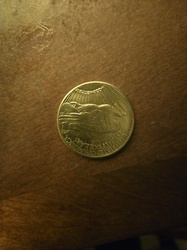
Saint-Gaudens Double Eagle identified by the community
Recent Saint-Gaudens Double Eagle coins identified with Coin Identifier.