Liberty Head Eagle
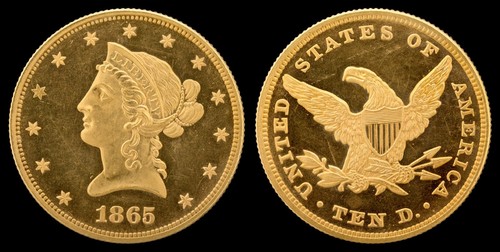
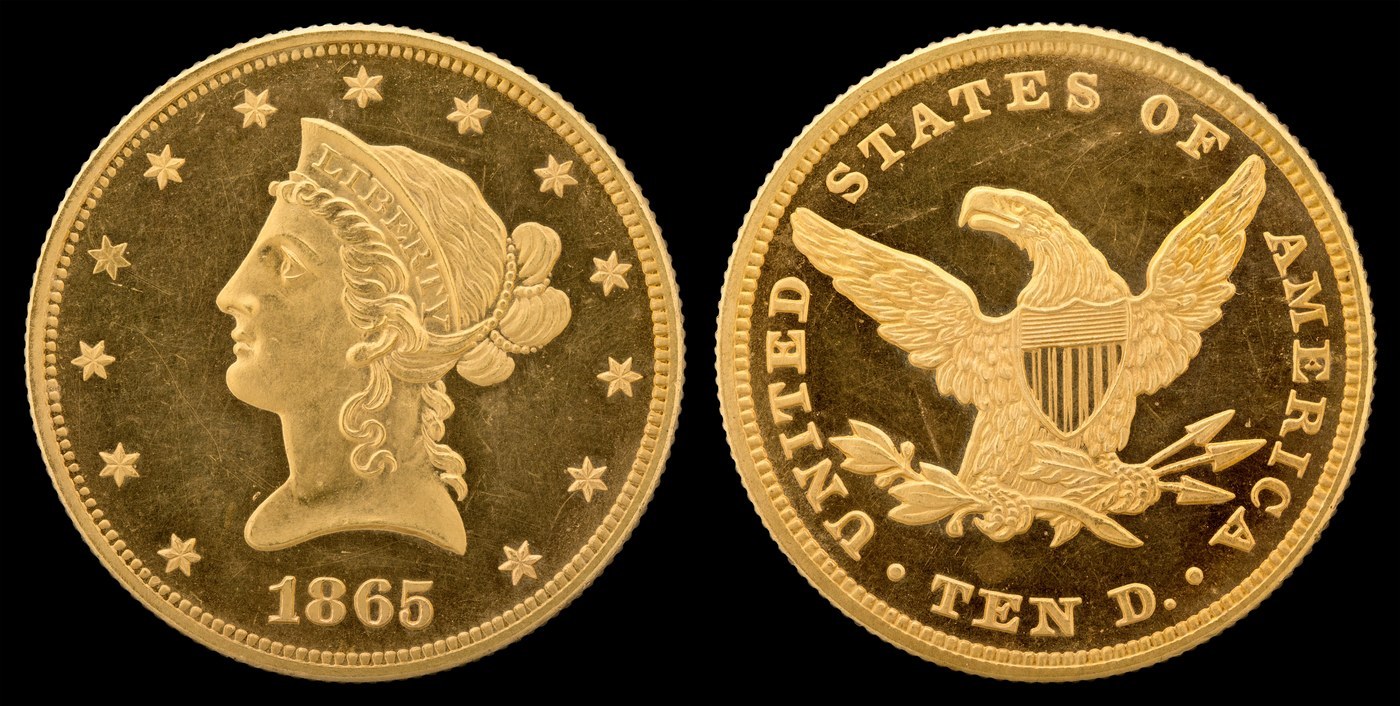
A United States $10 gold coin struck 1838-1907, with Christian Gobrecht's coronet-crowned Liberty head and a shielded eagle. The example shown is dated 1839.
- Country
- United States
- Denomination
- 10 dollars
- Metal
- 90% Gold, balance Copper
Got a coin like this?
Identify any coin from a photo, free.
Overview
The Liberty Head Eagle is a United States ten-dollar gold coin produced from 1838 to 1907. The obverse shows Liberty facing left wearing a coronet inscribed "LIBERTY," encircled by stars, and the reverse depicts an eagle with a Union shield on its breast. The coin shown here is dated 1839, one of the earliest years of the long-running type.
Also known as the Coronet Head Eagle, it was the largest regularly circulating U.S. gold denomination for much of the 19th century. The design ran for seven decades with only modest changes, making it one of the workhorse gold coins of the era and a cornerstone of the American gold series.
History & Background
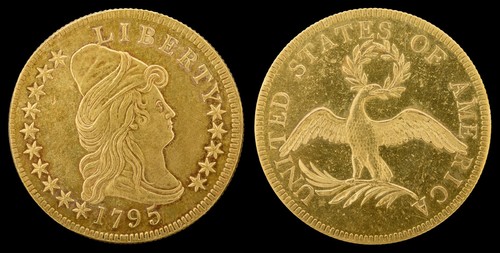
Mint engraver Christian Gobrecht created the Liberty Head design, which replaced the earlier Capped Head eagle. Regular production of the ten-dollar eagle had been suspended since 1804, and the denomination returned in 1838 with Gobrecht's new coronet portrait. Early issues of 1838 and 1839 show slight portrait differences before the design settled into its long-standing form around 1840.
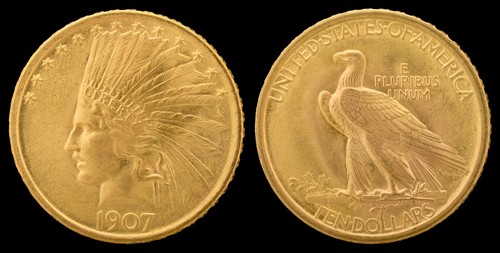
The type divides into two major groups. "No Motto" coins were struck from 1838 through 1866 without a religious inscription on the reverse. Beginning in 1866, the motto "IN GOD WE TRUST" was added on a scroll above the eagle, and "With Motto" coins continued through 1907. As an 1839-dated piece, the coin here belongs to the early No Motto group. The series ended in 1907 when it was replaced by the Indian Head eagle.
How to Identify
The obverse shows Liberty facing left in a coronet band lettered "LIBERTY," with hair tied in a bun, thirteen stars around the border, and the date below. The reverse displays an eagle with a Union shield on its chest, clutching an olive branch and arrows, with "UNITED STATES OF AMERICA" around the top and the denomination "TEN D." at the bottom. On coins from 1866 onward a ribbon reading "IN GOD WE TRUST" appears above the eagle; the 1839 example shown here has no such motto.
The eagle is a substantial gold coin roughly 27 mm in diameter, weighing about 16.7 grams and struck in 90% gold with a copper balance; the edge is reeded. Mint marks, when present, sit on the reverse beneath the eagle and include O (New Orleans), S (San Francisco), CC (Carson City), and D (Denver). Philadelphia coins, including the 1839 issue, carry no mint mark.
Value & Collectibility
Because it is a large gold coin, every Liberty Head Eagle carries significant bullion value from its gold content alone, and common later dates trade close to their metal value plus a modest premium. Values climb sharply for scarcer dates, early No Motto issues, low-mintage branch-mint coins, and well-preserved higher grades.
Early-date coins such as the 1839 shown here are generally scarcer and more sought after than common turn-of-the-century issues, and can command strong premiums over gold value depending on grade and eye appeal. Prices vary widely with date, mint mark, condition, and market conditions, so specific values should be confirmed against current listings. Cleaning, mount marks, and rim damage reduce value, and valuable dates are worth authenticating before purchase.
Frequently asked questions
What years was the Liberty Head Eagle made?
The type was struck from 1838 through 1907. The coin shown here is dated 1839, placing it among the earliest years of the series.
What is the Liberty Head Eagle made of?
It is a ten-dollar gold coin of 90% gold with a copper balance, weighing about 16.7 grams and measuring roughly 27 mm across, with a reeded edge.
Why do some have 'IN GOD WE TRUST' and others don't?
The motto was added above the eagle starting in 1866. Coins from 1838 to 1866, including the 1839 example, are 'No Motto' and lack that inscription.
Where is the mint mark?
On the reverse below the eagle, if present. Philadelphia coins like the 1839 issue have none; branch mints used O, S, CC, or D.
Is a Liberty Head Eagle valuable?
At minimum it carries the value of its gold. Scarcer dates, early No Motto issues, and high grades—such as an early 1839—can bring substantial premiums over bullion.
Liberty Head Eagle guides
In-depth guides for identifying, valuing, and collecting Liberty Head Eagle.