
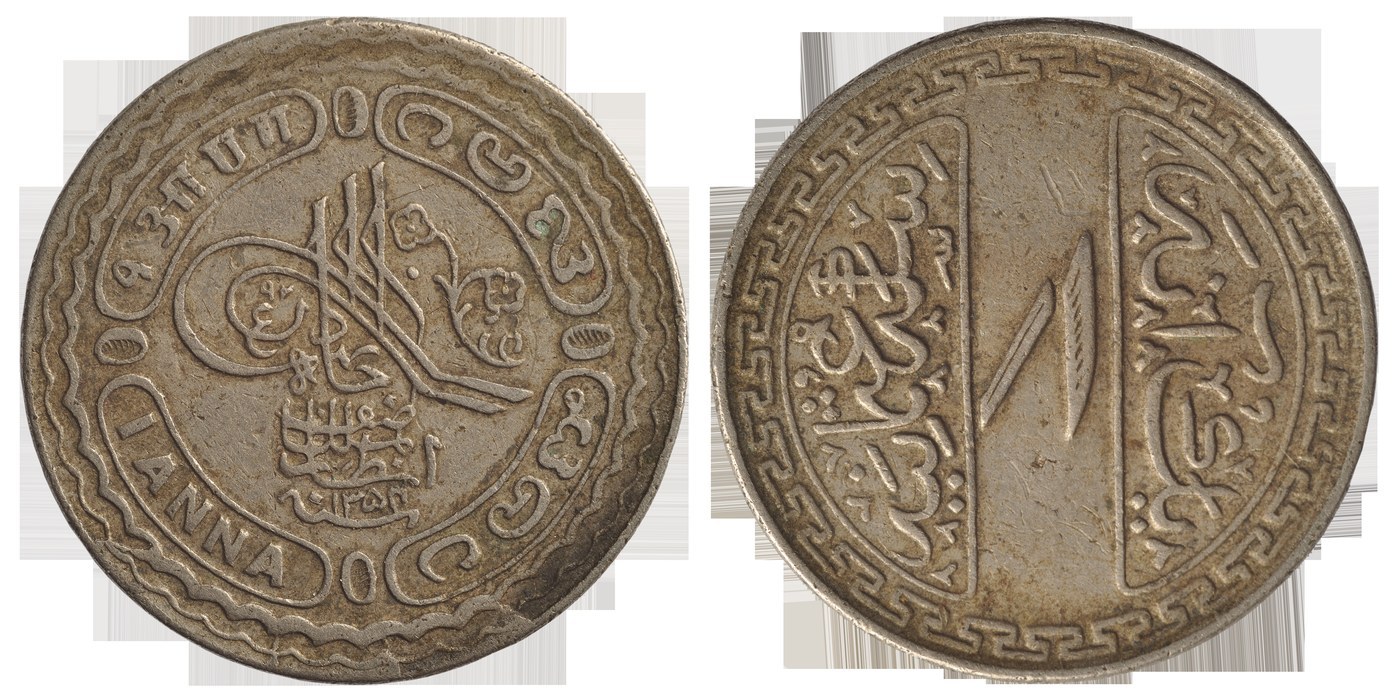
Hyderabad One Anna
A copper-nickel 1-anna coin of Hyderabad State under Nizam Osman Ali Khan, with Urdu inscriptions and floral borders, dated AH 1354 (c. 1935).
- Country
- India (Hyderabad State)
- Denomination
- 1 Anna
- Metal
- Copper-nickel
Got a coin like this?
Identify any coin from a photo, free.
Overview
The Hyderabad One Anna is a small copper-nickel coin issued by the princely state of Hyderabad, the largest of the Indian states, during the reign of its last Nizam, Mir Osman Ali Khan (Asaf Jah VII). The example shown is dated AH 1354, corresponding to about 1935 CE.
Unlike British Indian coinage of the same period, Hyderabad struck its own money on its own standard, the Hyderabadi (Osmania) rupee, of which the anna was a sixteenth. The obverse carries Arabic-script Urdu/Persian inscriptions within a floral border, including the ruler's name, while the reverse states the denomination alongside geometric ornament and script.
As a wholly inscriptional coin with no portrait, it reflects the aniconic tradition of Indo-Islamic coinage. It is one of the everyday small-change pieces that circulated within the state before Hyderabad's coinage was withdrawn following its integration into the Indian Union in 1948–1950.
History & Background
Hyderabad was a vast, semi-autonomous princely state in south-central India ruled by the Asaf Jahi dynasty of Nizams. Under British paramountcy it retained the right to mint its own coinage, and the Hyderabadi rupee circulated within the state alongside the British Indian rupee used across the wider subcontinent.
Mir Osman Ali Khan, the seventh and last Nizam, ruled from 1911 until Hyderabad's accession to India. His coinage was issued using the Islamic Hijri (AH) calendar and bore his name and titles in Arabic script rather than a royal portrait. Copper-nickel minor coins such as this one anna were produced in the 1930s and 1940s as durable, low-value change for daily commerce.
Hyderabad's separate currency did not long survive Indian independence. The state was integrated into the Indian Union in 1948, and its distinctive coinage was gradually demonetised around 1950 in favour of the unified Indian rupee, making Osmania issues a closed historical series.
How to Identify
This is a small coin struck in copper-nickel, a pale silvery-grey base-metal alloy rather than a precious metal, and it is typically only lightly magnetic or non-magnetic. Expect a modest diameter and weight consistent with a minor sub-rupee coin of the 1930s; exact figures vary by year and issue.
The surest identifier is the combination of Arabic-script legends and the AH date. The obverse bears Urdu/Persian inscriptions naming the ruler, framed by a floral or scrollwork border, and carries no human portrait. The reverse presents the denomination — the anna value — together with geometric patterning and script, and the Hijri year AH 1354 (about 1935 CE). Reading the AH date and the ruler's name distinguishes a genuine Osmania anna from British Indian annas of the same era, which use English lettering and often a royal effigy.
Because British India also issued one-anna coins in this period, the key diagnostic is the script and the absence of any English legend or monarch's bust. A Hyderabad anna speaks entirely in Arabic-script Urdu/Persian and dates itself by the Hijri calendar.
Value & Collectibility
Copper-nickel Hyderabad annas were struck as ordinary circulating small change, so most surviving examples are common and inexpensive. In average circulated condition they generally trade as modest collector pieces rather than rarities, with base-metal issues valued well below the state's silver and gold coinage.
Within the series, value is driven mainly by the exact year, die variety, and above all condition. Well-preserved coins with sharp inscriptions, full floral borders, and original surfaces command a premium over worn examples, and uncirculated pieces are naturally scarcer than heavily handled ones.
Because pricing depends on grade, specific date, and collector demand, the figures here are general context rather than fixed values. An accurate reading of the AH date and confirmation that the coin is a Hyderabad Osmania issue — not a British Indian anna — is the first step in placing it correctly in the market.
Frequently asked questions
What is a Hyderabad One Anna?
It is a copper-nickel minor coin worth one anna, or one-sixteenth of a Hyderabadi rupee, issued by the princely state of Hyderabad under its last Nizam, Mir Osman Ali Khan. The example shown is dated AH 1354, about 1935 CE.
Is this coin silver or valuable metal?
No. It is struck in copper-nickel, a base-metal alloy used for everyday small change. It was never a precious-metal coin, so its value comes from collector interest rather than metal content.
What does AH 1354 mean?
AH refers to the Islamic Hijri calendar used on Hyderabad's coinage. AH 1354 corresponds to roughly 1935 CE, placing the coin firmly in the reign of Nizam Osman Ali Khan.
How is it different from a British Indian one anna?
A Hyderabad anna is inscribed entirely in Arabic-script Urdu/Persian, dates itself by the Hijri calendar, and shows no royal portrait. British Indian annas of the era use English lettering and frequently a monarch's bust.
Are Hyderabad annas rare?
Most copper-nickel annas are common because they were everyday circulating coins. Condition, exact year, and die variety matter far more than scarcity for typical examples, though high-grade uncirculated pieces are less often seen.
Hyderabad One Anna guides
In-depth guides for identifying, valuing, and collecting Hyderabad One Anna.
Other coins you may enjoy
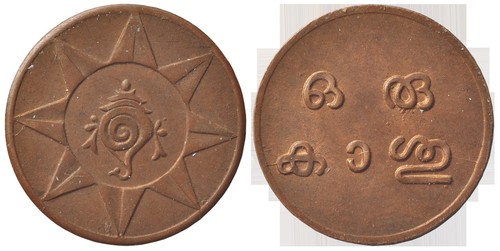
Travancore One Cash
Early 20th century
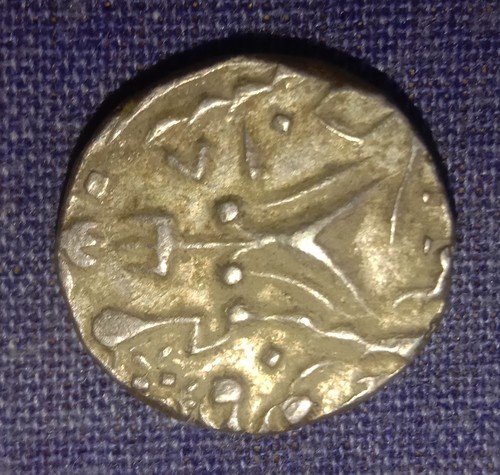
Silver Rupee of Bhopal State
c. 1806-1837 (name of Muhammad Akbar II)
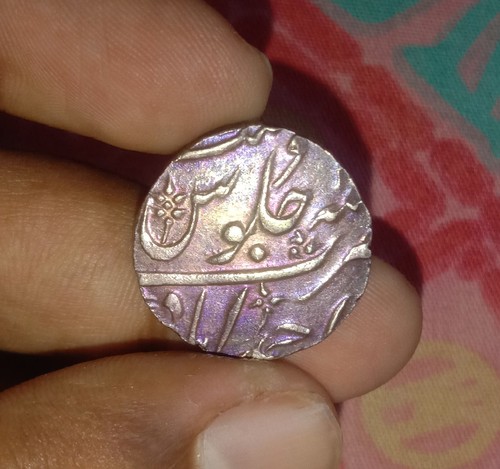
Silver Rupee of Bombay Presidency
c. 1806-1837 (Akbar II era)
Indian Paisa
c. 1820–1830
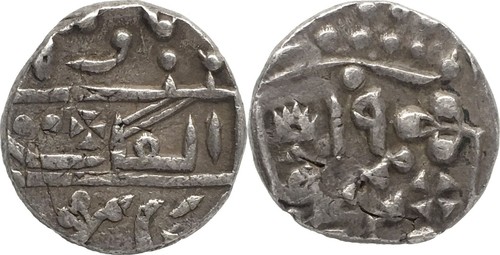
Kotah State Rupee
1858-1901
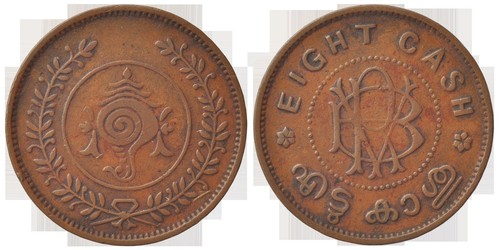
Travancore Eight Cash
Early 20th century
Travancore One Chuckram
Early 20th century
Mewar Chitrakut Half Rupee
circa VS 1985 (AD 1928)