
Travancore One Cash
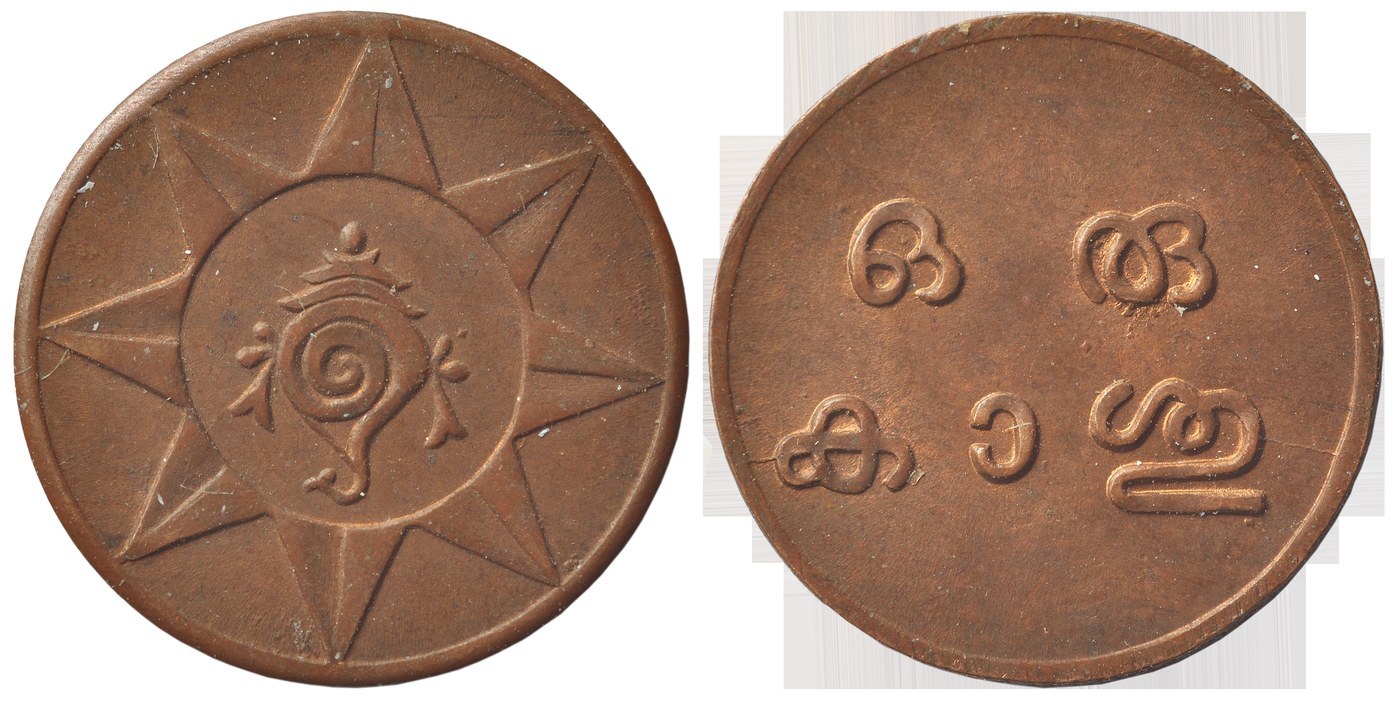
A tiny copper coin of the princely state of Travancore, carrying the state's conch-shell emblem on one side and its cash value in local script on the other.
- Country
- India (Travancore State)
- Denomination
- 1 Cash
- Metal
- Copper
Got a coin like this?
Identify any coin from a photo, free.
Overview
The Travancore One Cash is a very small copper coin issued by the princely state of Travancore, in the far south of the Indian subcontinent (in present-day Kerala). The cash was the smallest unit in the state's currency, and the one-cash piece is the base denomination of the series. The example shown carries the conch-shell emblem of Travancore, surrounded by rays and floral ornament, on the obverse, and the numeral of value written in local script on the reverse.
The conch (Malayalam shankhu) was the royal badge of the Travancore ruling house and appears across the state's coinage and insignia, which makes it the quickest way to recognise a coin of this state. Because the denomination is only a single cash, these are humble everyday coins that once circulated in large numbers in the local markets of the region.
As a low-value copper piece struck in quantity in the early 20th century, the one cash is one of the more commonly encountered coins of Travancore and a typical entry point for anyone collecting the coinage of the Indian princely states.
History & Background
Travancore (Thiruvithamkoor) was one of the larger princely states of British-era India, occupying the southern tip of the peninsula. Although it fell under British paramountcy, the state retained the right to strike its own coinage, and its rulers issued distinctive gold, silver and copper pieces down to the closing decades of princely rule. The cash denominations formed the base of the local copper coinage used for small daily transactions.
The Travancore money system was built on the cash and the chuckram: many cash made up a chuckram, and chuckrams in turn related to the fanam and larger units. Within that system the single cash was the smallest coin most people would handle. Copper cash pieces of this type were struck under the Maharajas who reigned into the early 20th century, a period when the state operated its own mint at the capital, Trivandrum.
These coins remained in use until the wider integration of the princely states into the new Indian union in the years around independence, after which the separate Travancore currency was withdrawn in favour of the national coinage. Surviving one-cash coins are therefore artefacts of a distinct regional monetary tradition that ended in the mid-20th century.
How to Identify
The Travancore One Cash is a small, thin copper coin, noticeably smaller and lighter than the anna and pice coins of British India that circulated in the same era. It is a modest base-metal piece, so expect a brown or reddish-brown surface, and, on well-used examples, softened detail and worn edges from long circulation.
The defining feature is the obverse conch-shell emblem, shown with radiating lines and floral or scroll ornament around it. The reverse carries the value in local script rather than in Latin numerals; on Travancore coins the denomination and any date are rendered in indigenous characters, which distinguishes them at once from the English-legend coinage of the British Indian authorities. There is no royal portrait — the design relies on the state emblem and script rather than an effigy.
To confirm an attribution, look for the combination of the conch emblem and a single-unit value in local script on a very small copper flan. The small size, the aniconic emblem-and-script design, and the absence of any English lettering together mark the coin out as a minor copper cash of Travancore rather than a coin of British India or of a neighbouring state.
Value & Collectibility
As a common, low-denomination copper coin struck in quantity, the Travancore One Cash is generally an inexpensive collector item. Ordinary circulated examples trade at modest sums, and the coin is valued more as an affordable, representative piece of princely-state coinage than as a scarce rarity.
Condition is the main driver of value within the type. Because these tiny coppers saw hard use, well-worn pieces with flat detail are the norm and command little premium, while coins that retain a sharp conch emblem, clear script and original surfaces are more desirable. Specific ruler, date and die variety can also matter to specialists collecting the series in depth.
Exact prices depend on grade, eye appeal and the demand of princely-state collectors, so figures here are general context rather than fixed values. For a coin of this kind, condition and clear legibility of the emblem and script are far more important to value than the denomination itself.
Frequently asked questions
What is a Travancore cash?
The cash was the smallest unit of currency in the princely state of Travancore in southern India. The one-cash coin is the base copper denomination, worth a fraction of a chuckram, the next unit up in the local money system.
What is the shell symbol on the coin?
It is a conch shell (Malayalam shankhu), the royal emblem of the Travancore ruling house. The conch appears across Travancore coinage and insignia and is the quickest way to recognise a coin of the state.
Is the Travancore One Cash made of copper?
Yes. It is a small base-metal copper coin, and genuine examples show a brown or reddish-brown surface. It is much smaller and lighter than the British Indian anna and pice coins of the same period.
Why is the writing not in English?
Travancore struck its own coinage as a princely state and used local script for the value and date rather than English. The absence of Latin lettering helps distinguish it from the English-legend coins of British India.
Is this a rare or valuable coin?
Most one-cash coppers are common and inexpensive, having been struck in large numbers for everyday use. Value comes mainly from condition, with sharp, well-preserved examples being the most desirable.
Travancore One Cash guides
In-depth guides for identifying, valuing, and collecting Travancore One Cash.
Other coins you may enjoy
Hyderabad One Anna
AH 1354 (c. 1935 CE); type of the 1930s–1940s
Silver Rupee of Bhopal State
c. 1806-1837 (name of Muhammad Akbar II)
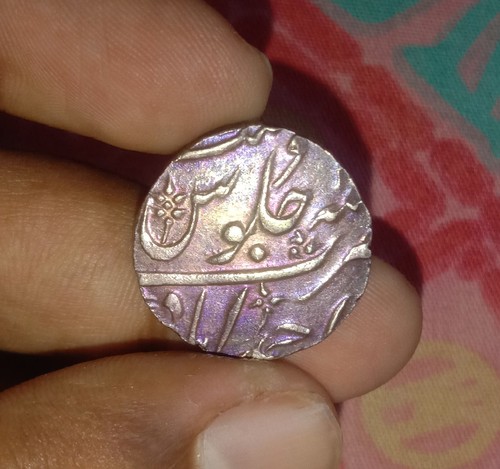
Silver Rupee of Bombay Presidency
c. 1806-1837 (Akbar II era)
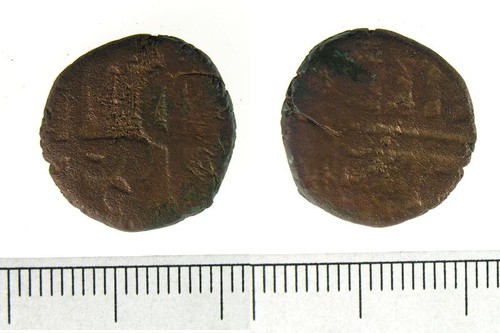
Indian Paisa
c. 1820–1830
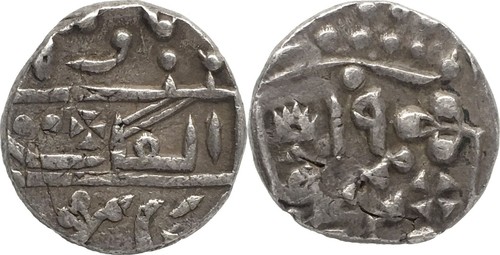
Kotah State Rupee
1858-1901
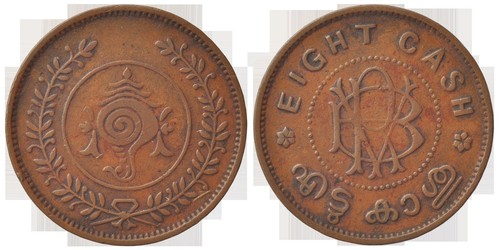
Travancore Eight Cash
Early 20th century
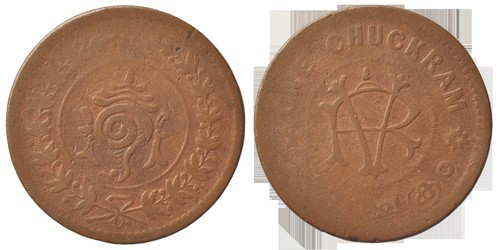
Travancore One Chuckram
Early 20th century
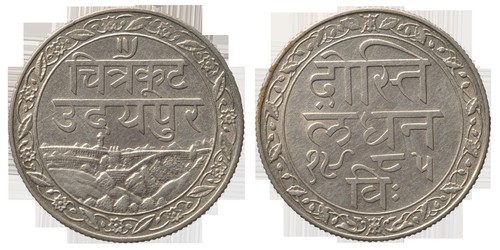
Mewar Chitrakut Half Rupee
circa VS 1985 (AD 1928)