
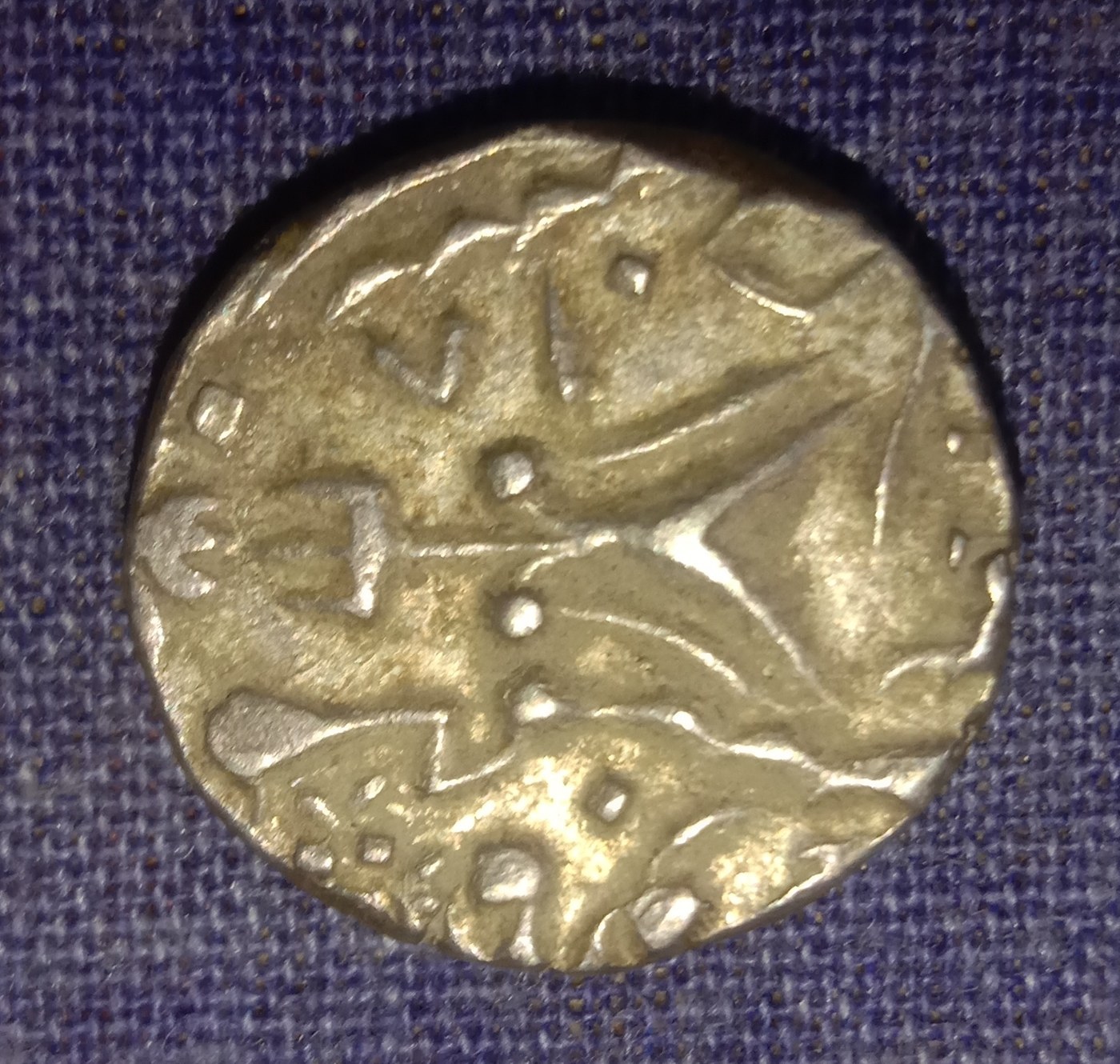
Silver Rupee of Bhopal State
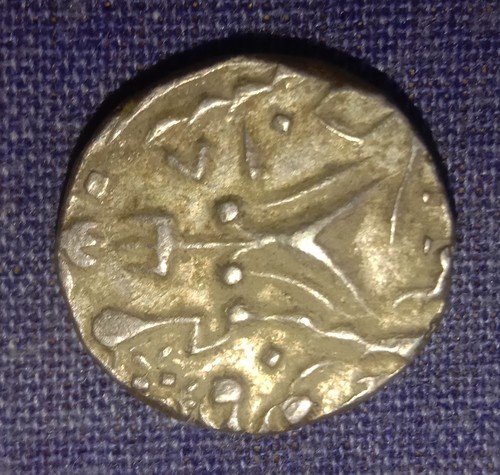
Silver rupee of the princely state of Bhopal, struck at the Daulatgarh mint in the name of Mughal emperor Muhammad Akbar II, marked by a trident symbol.
- Country
- India
- Denomination
- Rupee
- Metal
- Silver
Got a coin like this?
Identify any coin from a photo, free.
Overview
The Silver Rupee of Bhopal State is a hand-struck coin issued by the central Indian princely state of Bhopal. Like most late-Mughal-era state coinage, it bears the name and titles of the reigning Mughal emperor rather than the local ruler. The example shown carries the name of Muhammad Akbar II, the nominal Mughal suzerain, while the actual issuing authority was the Nawab of Bhopal.
The coin is a full silver rupee weighing roughly 11 grams and measuring around 19-22 mm across. Its Persian legends are typically crowded and only partially visible on any single strike, so the coin is usually identified by a combination of its mint name (Daulatgarh) and a distinctive trident symbol placed in the field.
History & Background
Bhopal was a Muslim-ruled princely state in central India, founded in the early 18th century by the Afghan soldier Dost Mohammad Khan and later governed by a line of Nawabs (including its famous female rulers, the Begums). As Mughal central power collapsed, states like Bhopal continued to strike coin in the Mughal emperor's name as a token of nominal allegiance, a practice that lent the currency legitimacy and acceptance across trade networks.
Muhammad Akbar II (Akbar Shah II) reigned as Mughal emperor from about 1806 to 1837. Rupees in his name were struck at Bhopal's mint, which used the poetic mint-name Daulatgarh ("abode of fortune/state"). Coinage of this style continued through the early 19th century, and frozen or continued dating in a former emperor's name was common among the states, so surviving pieces should be read as a coin type rather than proof of a single exact striking year.
How to Identify
Look first for the trident symbol, a diagnostic device of the Bhopal mint, here appearing horizontally in the field. The obverse carries the Persian regnal legend naming Muhammad Akbar II with imperial titles; the reverse names the mint, Daulatgarh, associated with Bhopal, usually with a regnal-year formula (julus).
The piece is a broad, thick silver rupee, hand-struck from dies so the flan is often slightly irregular and the full legend rarely fits on the planchet. Expect off-center lettering, uneven borders, and only part of the date or year visible. The metal is high-grade silver with the soft grey tone typical of hand-struck rupees.
Value & Collectibility
As a silver rupee, the coin carries a baseline value from its silver content (roughly 10-11 g of high-purity silver). Numismatic value depends on the clarity of the mint name, legibility of the emperor's name and year, and overall preservation.
Common, well-worn examples trade at modest premiums over bullion, while sharply struck coins with a clear trident, full Daulatgarh mint name, and legible legends command more from collectors of princely-state coinage. Rarer date/variety combinations and problem-free pieces sit at the top of the range. Because prices move with the silver market and with condition, treat any figure as a range rather than a fixed price and compare recent auction results for like examples.
Frequently asked questions
Why does the coin name a Mughal emperor instead of the Nawab of Bhopal?
Princely states routinely struck coin in the name of the Mughal emperor as a mark of nominal suzerainty. Bhopal issued this rupee in the name of Muhammad Akbar II even though the Nawab of Bhopal was the real issuing authority.
What is the trident symbol on the coin?
The trident is a distinctive mint device associated with Bhopal's coinage. On this example it appears horizontally in the field and is one of the quickest identifiers of the type.
What does 'Daulatgarh' mean?
Daulatgarh is the Persian mint-name used on Bhopal's rupees, meaning roughly 'abode of fortune/state.' Reading this mint name is central to attributing the coin to Bhopal.
How much silver does the rupee contain?
It is a full silver rupee, typically around 10-11 grams of high-grade silver, giving it a bullion floor beneath any collector premium.
Silver Rupee of Bhopal State guides
In-depth guides for identifying, valuing, and collecting Silver Rupee of Bhopal State.
Other coins you may enjoy
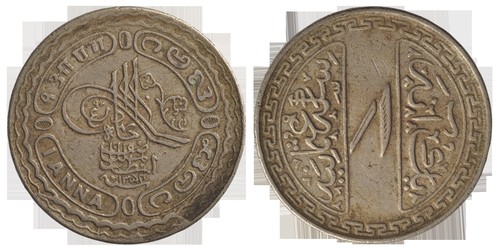
Hyderabad One Anna
AH 1354 (c. 1935 CE); type of the 1930s–1940s
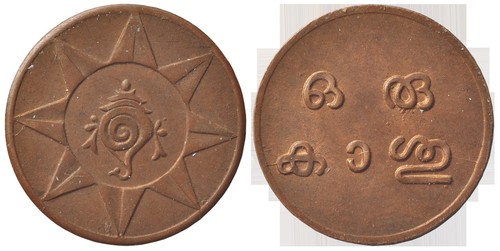
Travancore One Cash
Early 20th century
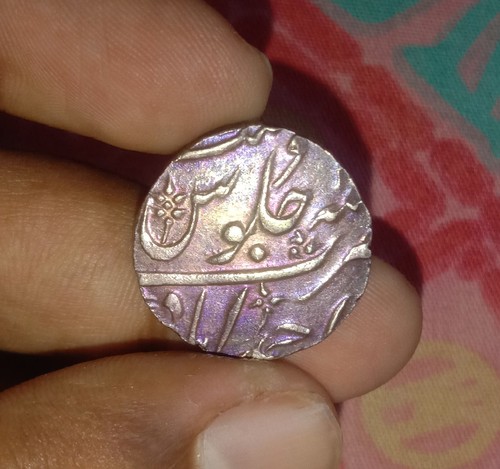
Silver Rupee of Bombay Presidency
c. 1806-1837 (Akbar II era)
Indian Paisa
c. 1820–1830
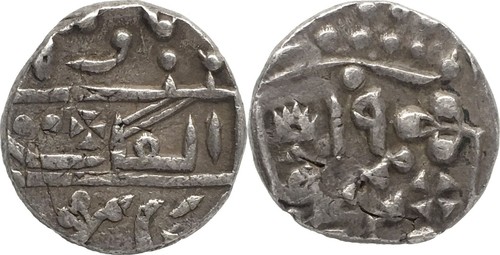
Kotah State Rupee
1858-1901
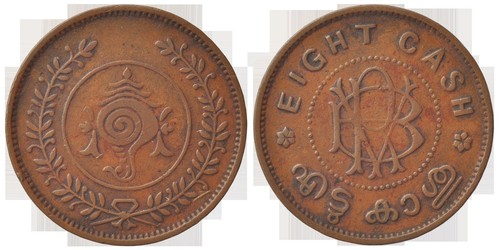
Travancore Eight Cash
Early 20th century
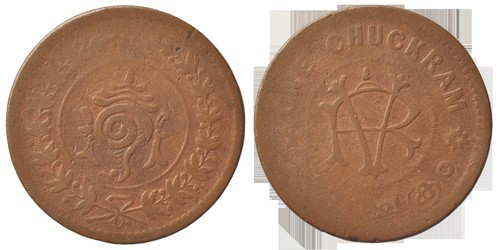
Travancore One Chuckram
Early 20th century
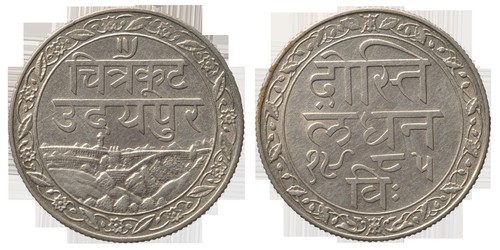
Mewar Chitrakut Half Rupee
circa VS 1985 (AD 1928)