
How to Identify the Silver Rupee of Bhopal State
A collector's checklist for attributing a Bhopal silver rupee: the trident symbol, the Daulatgarh mint name, Akbar II's legend, and authentication cautions.
Read the full Silver Rupee of Bhopal State encyclopedia entry →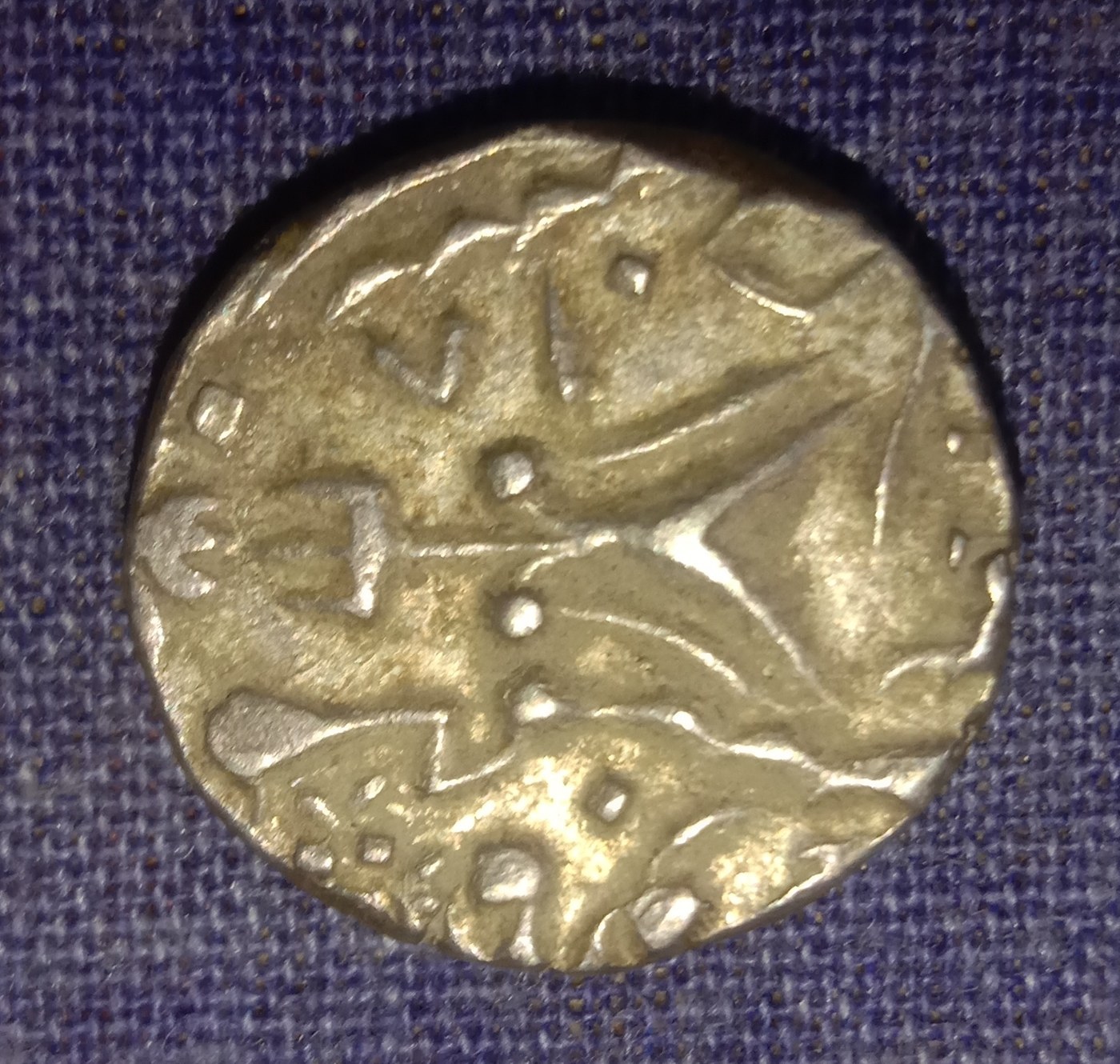
Start with the trident symbol, the single most useful diagnostic for this type. On the Bhopal rupee it sits in the field (horizontally on the example shown) and, together with the mint name, separates the coin from the many visually similar rupees of neighboring states. If you can find a clear trident, you are most of the way to the attribution.
Next read the two sides as a pair. The obverse carries the Persian regnal legend naming the Mughal emperor Muhammad Akbar II with his titles; the reverse carries the mint formula naming Daulatgarh (the Bhopal mint) usually with a regnal-year (julus) number. Because these are hand-struck dies larger than the flan, only part of each legend will land on any given coin, so try to reconstruct the wording from several key words rather than expecting a complete inscription.
Confirm the physical profile: a broad, fairly thick silver rupee of roughly 10-11 g and about 19-22 mm, with the soft grey luster of hand-struck silver. Weight and a genuine silver ring help rule out cast copies and base-metal fakes. Expect an irregular, sometimes slightly ragged flan, off-center strikes, and adjustment marks; a suspiciously perfect round planchet with crisp uniform borders is a red flag on a coin of this era.
Be careful with look-alikes. Many central and northern Indian states struck rupees in Akbar II's name from their own mints, so the emperor's name alone does not prove Bhopal, the mint name and the trident together do. Watch also for later restrikes, tourist-market casts, and tooled or re-engraved legends meant to sharpen a worn date. When value hinges on a specific reading, seek confirmation from a specialist in princely-state coinage or a reputable reference before paying a rarity premium.
Frequently asked questions
What is the fastest way to tell a Bhopal rupee from other Akbar II rupees?
Look for the trident symbol combined with the Daulatgarh mint name. Other states also struck rupees in Akbar II's name, so the mint name and the trident device, not the emperor's name, are what confirm Bhopal.
Part of the legend is missing. Can I still identify it?
Yes. These coins are struck from dies larger than the flan, so partial legends are normal. Identify from the trident, any legible portion of the Daulatgarh mint name, and the visible words of Akbar II's title rather than expecting a full inscription.
How do I check that the silver is genuine?
Weigh the coin (a full rupee is roughly 10-11 g) and check for the soft grey tone and clear ring of struck silver. Cast surfaces, seams, low weight, or a dull thud suggest a modern copy.
Should I clean the coin before identifying it?
No. Cleaning strips the toning collectors value and can obscure or damage the faint legends and the trident you need for attribution. Identify and photograph it as found.