
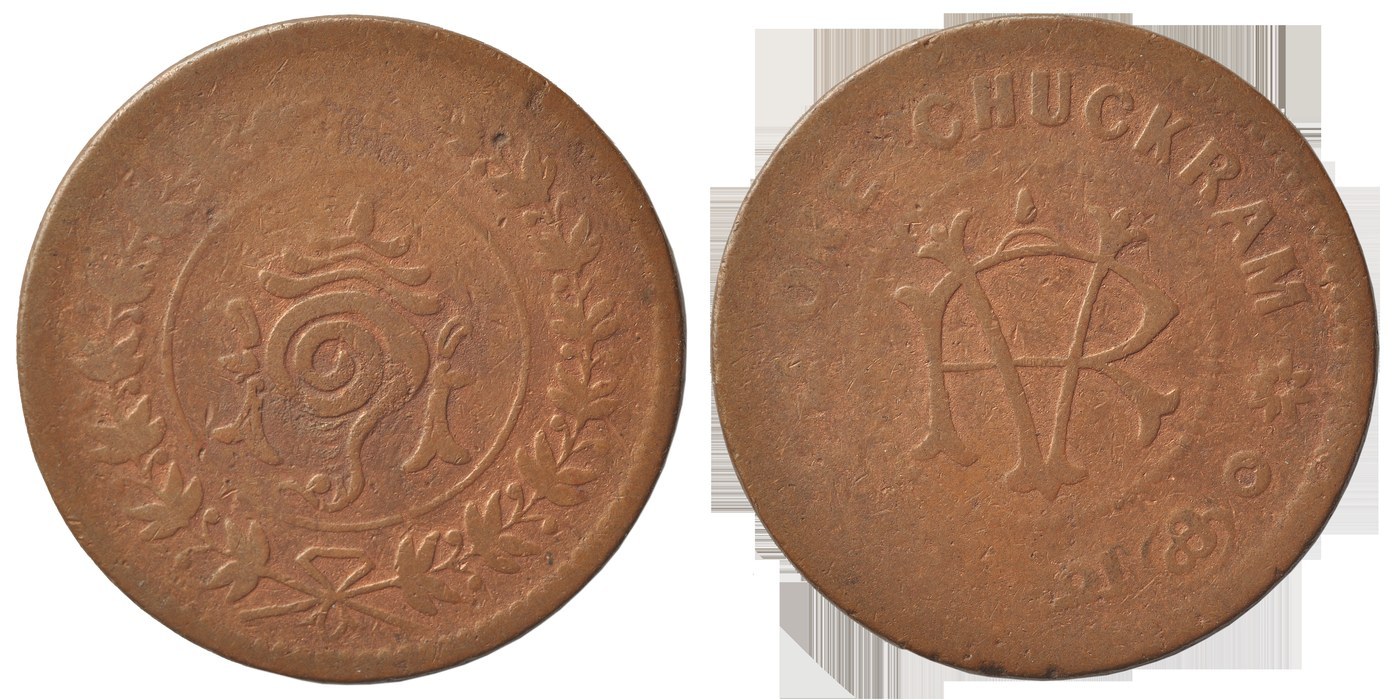
Travancore One Chuckram
Small copper one-chuckram coin of the princely state of Travancore, with the royal conch-shell emblem and a local-script denomination reverse.
- Country
- India (Travancore State)
- Denomination
- 1 Chuckram
- Metal
- Copper
Got a coin like this?
Identify any coin from a photo, free.
Overview
The Travancore One Chuckram is a small copper coin issued by the princely state of Travancore in southern India (a region of present-day Kerala and Tamil Nadu). The photographed piece shows the state's conch-shell emblem within decorative borders on one face, and a numeral denomination surrounded by local-script inscriptions on the other.
The chuckram (also spelled chakram) was a unit of Travancore's own money system, which the state maintained separately from British India's rupee-anna-pice coinage. As a low-value copper piece struck for everyday transactions, the one-chuckram coin circulated heavily and is a characteristic example of the independent coinage that princely states were permitted to issue.
History & Background
Travancore was a princely state that struck its own money throughout the 19th and early 20th centuries, retaining a distinct currency rather than adopting the British Indian rupee outright. Its accounting was based on cash and chuckrams, with a number of cash making one chuckram and a number of chuckrams equating to a rupee; the small copper chuckram sat near the bottom of this scale.
The conch shell (valampiri shankh) that appears on the coin is the enduring emblem of the Travancore royal house, and its use on the coinage signals the issuing authority of the maharajas who ruled the state. Coins of this early-20th-century type carry inscriptions in the local script rather than English legends, reflecting Travancore's status as a self-administering state with its own institutions and mint.
Travancore continued issuing its own coinage into the first half of the 20th century, before the state was integrated into independent India around 1949 and its separate currency was superseded by the common Indian coinage.
How to Identify
The clearest diagnostic is the conch-shell emblem, shown within a decorative border on the obverse; this shell is the badge of the Travancore royal house and immediately points to the state's coinage rather than a British India or Mughal issue. The reverse carries the denomination as a numeral together with local-script (Malayalam) inscriptions, without any English legend.
The coin is struck in copper, so genuine pieces show a brown to reddish-brown surface, and it is a small, thin flan in keeping with its low value. The absence of a royal portrait or English wording, combined with the conch and non-Latin script, distinguishes it at a glance from British Indian coppers of the same era. Because these were minor circulating coins, most survivors show honest wear.
Value & Collectibility
As a small circulating copper of a princely state, the Travancore one chuckram is generally modest in value. Well-worn examples typically trade in the low single digits to low tens of US dollars, with condition, sharpness of the conch emblem, and legibility of the script driving where a given coin falls in that range.
Cleaner pieces with even surfaces, strong detail, and original color command higher prices, and specialist collectors of Indian princely-state coinage pay premiums for scarcer dates or varieties. Corrosion, cleaning, and heavy pitting are common on old copper and reduce desirability. Treat any single figure as broad context and compare recent sales of coins in comparable grade rather than relying on one quoted price.
Frequently asked questions
What is a chuckram?
The chuckram (or chakram) was a unit of currency in the princely state of Travancore. It formed part of the state's own cash-and-chuckram money system, which was kept separate from British India's rupee-and-anna coinage.
What does the shell on the coin mean?
The conch shell is the royal emblem of Travancore. Its presence on the obverse identifies the coin as an issue of the Travancore state and its ruling maharajas.
Why are there no English words on the coin?
Travancore was a self-administering princely state that issued its own coinage with inscriptions in the local Malayalam script, rather than the English legends found on British Indian coins of the period.
What metal is the one chuckram made of?
This example is copper, showing a brown to reddish-brown surface. It is a small, thin coin consistent with its low denomination.
Is the Travancore one chuckram rare?
As a common circulating copper it is generally affordable and not scarce in worn grades, though well-preserved pieces with a sharp conch emblem and clear script are considerably harder to find.
Travancore One Chuckram guides
In-depth guides for identifying, valuing, and collecting Travancore One Chuckram.
Other coins you may enjoy
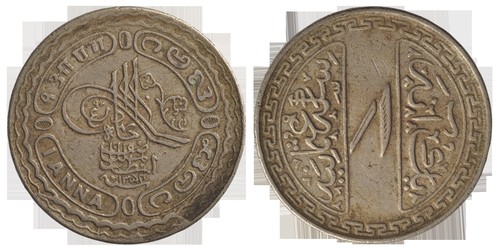
Hyderabad One Anna
AH 1354 (c. 1935 CE); type of the 1930s–1940s
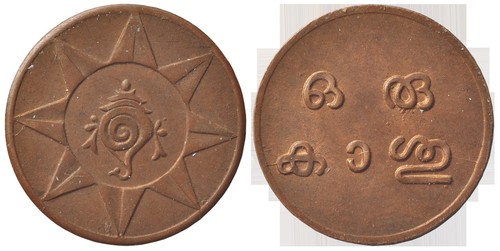
Travancore One Cash
Early 20th century
Silver Rupee of Bhopal State
c. 1806-1837 (name of Muhammad Akbar II)
Silver Rupee of Bombay Presidency
c. 1806-1837 (Akbar II era)
Indian Paisa
c. 1820–1830
Kotah State Rupee
1858-1901
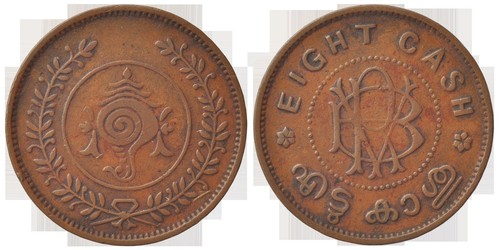
Travancore Eight Cash
Early 20th century
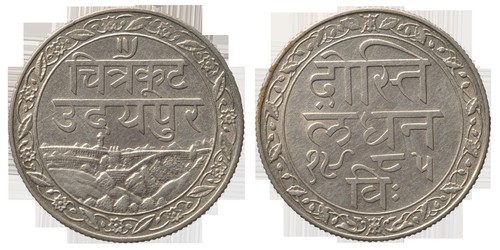
Mewar Chitrakut Half Rupee
circa VS 1985 (AD 1928)