
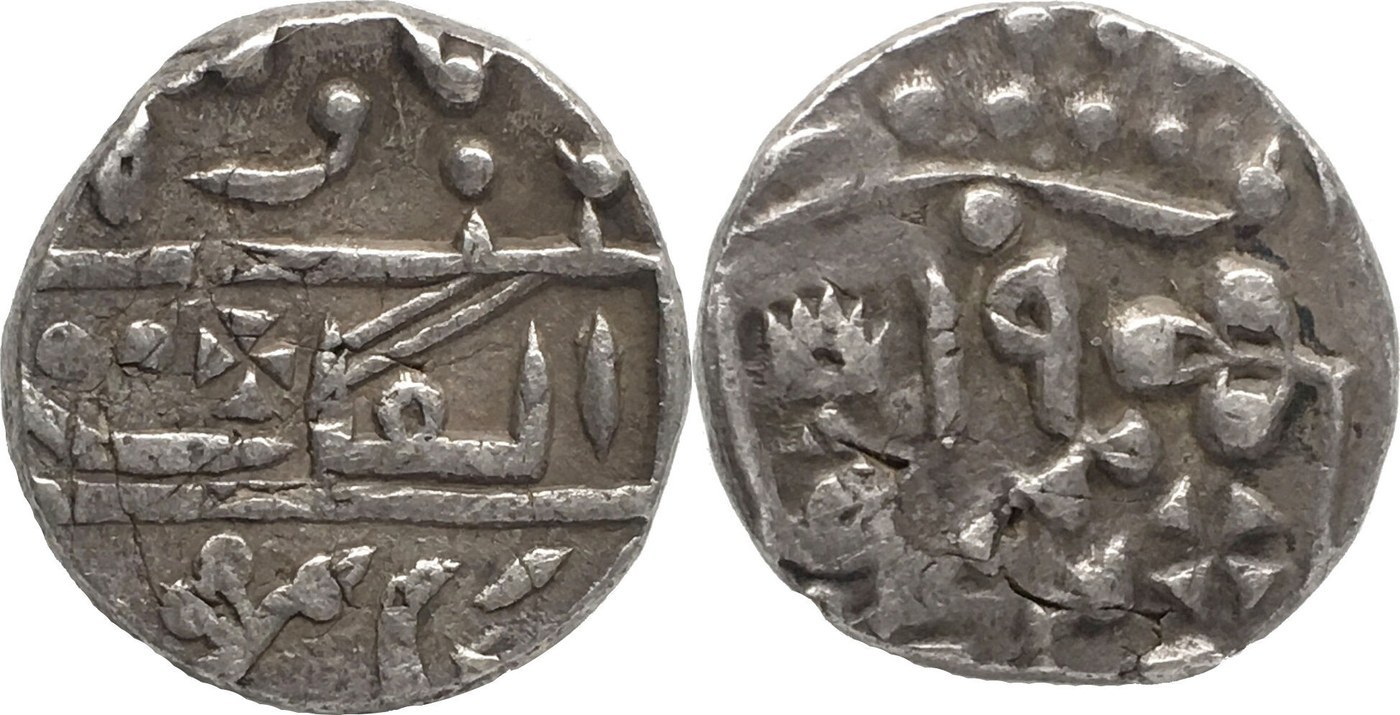
Kotah State Rupee
Silver rupee of the princely state of Kotah in Rajputana, struck with Persian and Devanagari legends and the state's katar-dagger emblem.
- Country
- India
- Denomination
- Rupee
- Metal
- Silver
Got a coin like this?
Identify any coin from a photo, free.
Overview
The Kotah State Rupee is a silver rupee issued by Kotah (also spelled Kota), a princely state of the Rajputana region in what is now the Indian state of Rajasthan. Like most Rajput state coinage of the period, it is aniconic: both faces carry only inscriptions and small symbols in Persian (Nastaliq) and Devanagari script, with no portrait. The example shown here is dated to the later 19th century, in the era of British paramountcy over the Indian states (roughly AD 1858-1901), and carries a regnal year marking (RY 19).
The defining feature of Kotah coinage is the katar, a distinctive Rajput push-dagger with an H-shaped grip, which appears as the state's emblem in the field of the design. This symbol, together with the mixed Persian and Devanagari legends, is what separates a Kotah rupee from the many other silver rupees circulating in northern and western India at the time.
History & Background
Kotah emerged as a separate princely state in the 17th century, carved out of the neighboring Hara Chauhan Rajput territory of Bundi, and it later became a state under British protection following treaties of the early 19th century. Throughout this period Kotah, like most Indian states, minted its own silver rupees for local circulation.
Following the widespread Mughal convention, Kotah rupees were long struck in the name of the reigning Mughal emperor at Delhi rather than in the name of the local ruler, with the state asserting its identity through a mint name and the katar emblem instead. Coins continued to be dated by the regnal year (RY, or 'julus' year) of the nominal sovereign and by the Hijri era, a practice that persisted on many Indian state rupees well into the era of British rule. The regnal-year notation seen on this coin (RY 19) reflects that older dating system carried forward into the second half of the 19th century.
After Indian independence in 1947 Kotah acceded to the Indian Union and its separate coinage ceased, leaving these rupees as artifacts of the princely-state monetary landscape.
How to Identify
Identify a Kotah rupee first by its all-inscription design combined with the katar symbol. Both obverse and reverse carry Persian legends, frequently accompanied by Devanagari letters or a symbol, and somewhere in the field you should find the small dagger (katar) that serves as the state's badge. There is no ruler's portrait.
The coin is struck in silver on a broad rupee flan and, in hand, has the heft and pale ring of a full-standard silver rupee, roughly in the region of 10 to 11.5 grams, though state rupees vary in exact standard. Because the dies were hand-cut and the coins hand-struck, expect off-center strikes, legends running off the flan, and considerable variation from coin to coin; this is normal and not a sign of a fake.
Attribution of the precise mint, date, and nominal sovereign requires reading the Persian legends and the regnal-year figure, so cataloguing a specific piece usually calls for a reference on Indian princely-state coinage or specialist help. The RY 19 marking on this example is part of that dating scheme rather than a Western calendar year.
Value & Collectibility
Kotah rupees are relatively available compared with rare Mughal gold, and ordinary circulated silver examples typically trade in the modest range of roughly a few tens of US dollars, moving higher for well-struck, fully legible, or scarcer date-and-mint combinations. Special presentation strikes known as nazarana rupees, made to a higher standard as ceremonial pieces, are much scarcer and command substantially more.
Condition, completeness of the legends, and clear visibility of the katar emblem drive value more than raw silver content. As with all hand-struck Indian rupees, prices should be treated as broad context rather than fixed figures; comparable auction and dealer records for the same type are the best guide, and third-party grading or expert attribution is worthwhile for higher-value or nazarana pieces.
Frequently asked questions
Where was the Kotah State Rupee made?
It was struck by the princely state of Kotah (Kota) in the Rajputana region of present-day Rajasthan, India, for local circulation under British paramountcy in the 19th century.
Does the coin show a king or queen's portrait?
No. Like most Rajput state coinage it is aniconic, carrying only Persian and Devanagari inscriptions plus the state's katar-dagger emblem, with no portrait.
What is the dagger symbol on the coin?
It is a katar, a Rajput push-dagger with an H-shaped grip that served as the emblem of Kotah state and is the key diagnostic distinguishing its rupees from other Indian silver rupees.
What does 'RY 19' mean on this rupee?
RY stands for regnal year (julus year), the number of years into the reign of the nominal sovereign in whose name the coin was struck. It is a traditional Indian dating notation, not a Western calendar year.
Why is it struck in the name of a Mughal emperor if it is a state coin?
Following long-standing convention, many Indian states including Kotah continued to strike rupees in the name of the Mughal emperor at Delhi, asserting their own identity through the mint name and the katar emblem rather than the local ruler's name.
Kotah State Rupee guides
In-depth guides for identifying, valuing, and collecting Kotah State Rupee.
Other coins you may enjoy
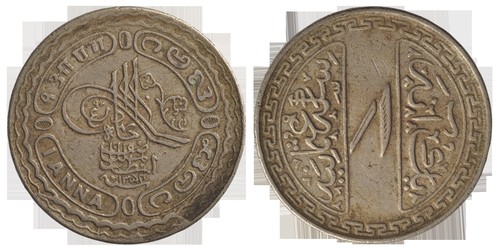
Hyderabad One Anna
AH 1354 (c. 1935 CE); type of the 1930s–1940s
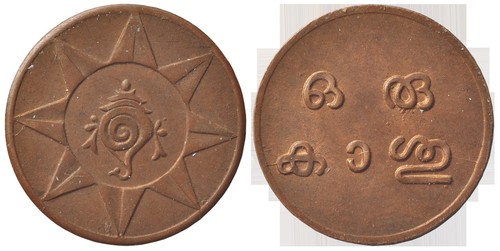
Travancore One Cash
Early 20th century
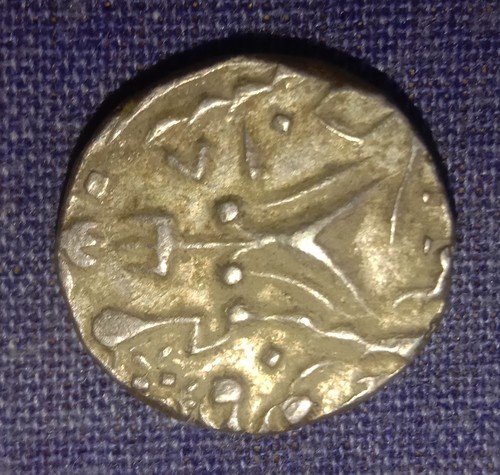
Silver Rupee of Bhopal State
c. 1806-1837 (name of Muhammad Akbar II)
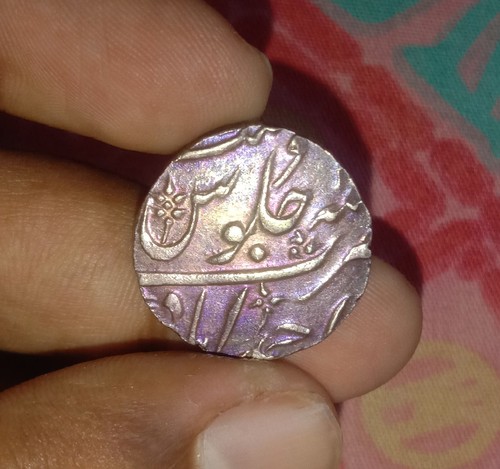
Silver Rupee of Bombay Presidency
c. 1806-1837 (Akbar II era)
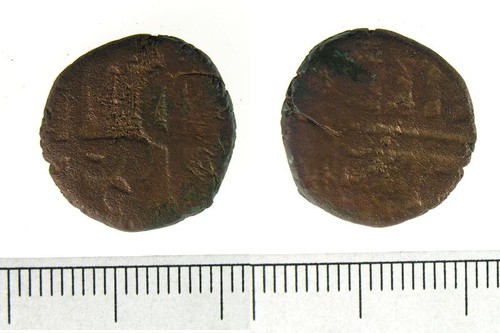
Indian Paisa
c. 1820–1830
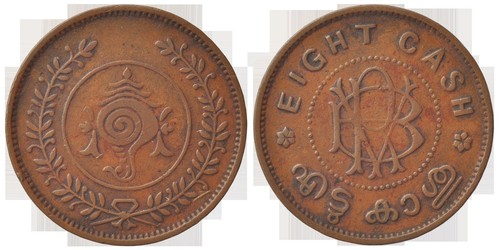
Travancore Eight Cash
Early 20th century
Travancore One Chuckram
Early 20th century
Mewar Chitrakut Half Rupee
circa VS 1985 (AD 1928)