
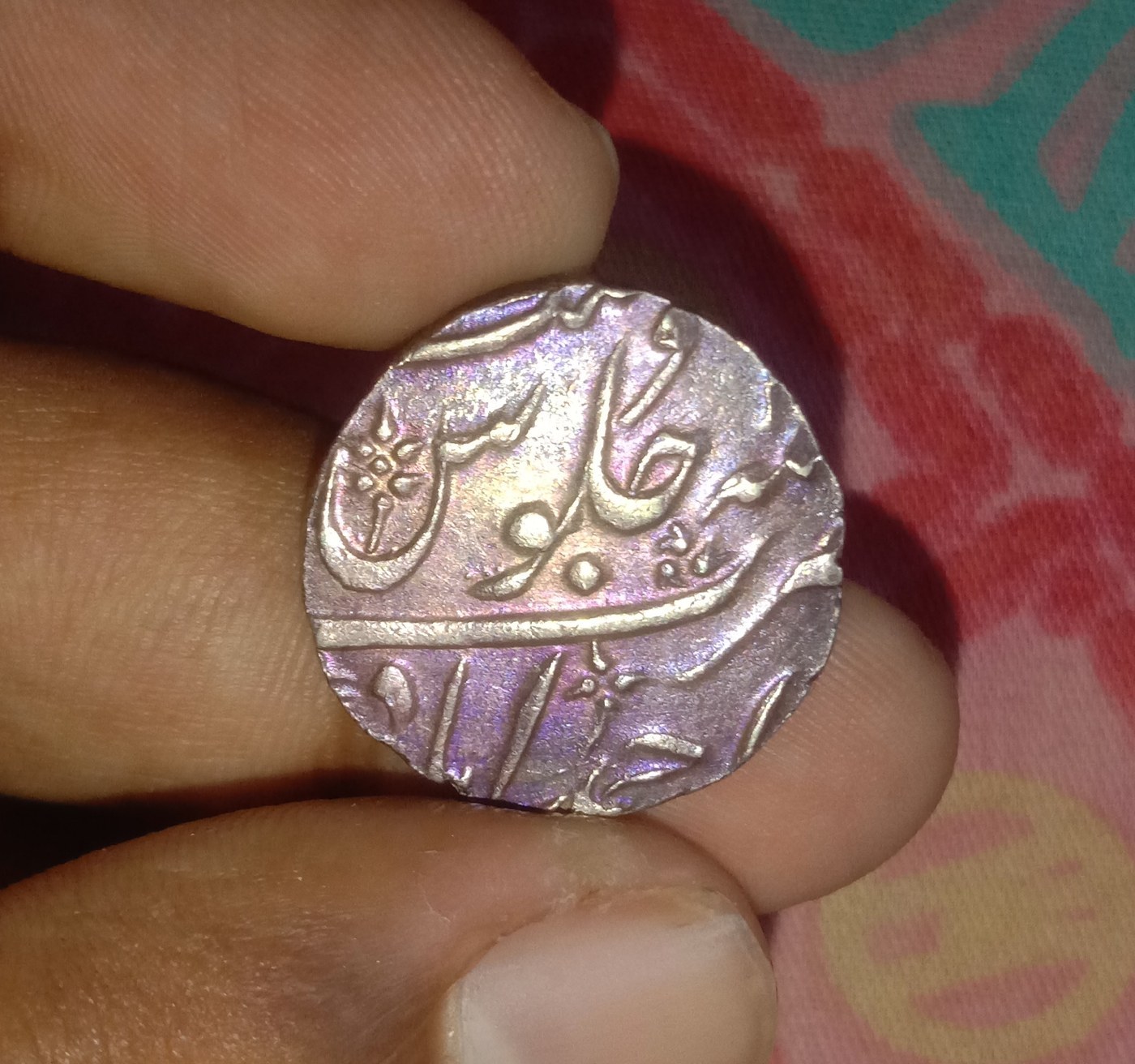
Silver Rupee of Bombay Presidency
British East India Company silver rupee struck at Bombay in the name of Mughal emperor Akbar II, bearing Persian legends.
- Country
- India
- Denomination
- Rupee
- Metal
- Silver
Got a coin like this?
Identify any coin from a photo, free.
Overview
The Silver Rupee of the Bombay Presidency is a British East India Company coin struck in silver and issued under the Company's Bombay administration. Although produced by a European trading power, it follows the Mughal monetary tradition: the legends are in Persian and invoke the reigning Mughal emperor, in this case Akbar II. The obverse carries the emperor's name and titles, while the reverse identifies the mint and regnal formula tied to the Bombay Presidency.
These rupees were the everyday high-value silver currency of the Company's western Indian territories. They circulated alongside the rupees of the Bengal and Madras Presidencies and the many independent princely-state issues, each with its own weight standard and design conventions.
History & Background
By the early nineteenth century the East India Company governed India through three regional presidencies—Bengal, Madras, and Bombay—each operating its own mints and issuing its own coinage. To gain acceptance in local markets, the Company continued the long-standing convention of striking rupees in the name of the Mughal emperor at Delhi, even as real political power had passed to the Company itself.
Akbar II reigned as titular Mughal emperor from 1806 to 1837 (roughly AH 1221-1253). Rupees issued in his name at Bombay-controlled mints belong to this window. Bombay Presidency silver includes both older hand-struck pieces and, from the 1820s-30s onward, more regular machine-struck issues as the Bombay mint modernized. The Presidency system was eventually superseded when the Company moved toward a uniform coinage in the 1830s, and the imperial-name convention ended after the Company's dissolution in 1858.
How to Identify
Look first at the script: genuine pieces carry flowing Persian (Arabic-script) inscriptions, not Latin lettering. The obverse names the Mughal emperor Akbar II with his regnal titles; the reverse gives the mint attribution and a regnal-year or accession formula linking the coin to the Bombay Presidency.
The standard is a full-weight silver rupee—typically in the region of 11.6 grams and roughly 24-30 mm across, though hand-struck flans vary in shape and centering. Many dies are larger than the flan, so parts of the legend are often off the edge, a normal feature of the type rather than a defect.
Because the Company frequently froze dates and regnal years to keep a trusted coin in production, the same year can appear on coins struck over many seasons. Attribution to Bombay (as opposed to Bengal, Madras, or a princely state) rests on the mint name, symbols, and stylistic details rather than on a Western date.
Value & Collectibility
Value depends heavily on type, strike quality, and preservation. Common well-worn circulated Company rupees in the name of Akbar II trade in modest collector price bands, while sharply struck examples, scarcer mint varieties, and problem-free high grades command meaningful premiums. Machine-struck presidency issues in choice condition are generally more sought after than heavily worn hand-struck pieces.
As with all silver rupees of this era, cleaning, edge damage, mount marks, and tooling reduce value. For a specific coin, compare against recent auction results for the matching mint and variety rather than relying on a single catalog figure, since attribution differences can move the price substantially.
Frequently asked questions
Why does a British East India Company coin name a Mughal emperor?
The Company struck rupees in the reigning emperor's name to make them trusted and acceptable in Indian markets, continuing Mughal monetary custom even though real authority had passed to the Company.
Who was Akbar II?
Akbar II was the titular Mughal emperor from 1806 to 1837. Rupees bearing his name at Bombay-controlled mints date to this period, though frozen regnal years mean the striking date can be later than the year shown.
Is the coin real silver?
Yes. The standard Bombay Presidency rupee was struck in high-grade silver at close to the traditional rupee weight of about 11.6 grams.
How is a Bombay rupee told apart from Bengal or Madras issues?
Attribution rests on the Persian mint name, mint symbols, and die style rather than on any Western lettering; each presidency used its own conventions on otherwise similar-looking coins.
Silver Rupee of Bombay Presidency guides
In-depth guides for identifying, valuing, and collecting Silver Rupee of Bombay Presidency.
Other coins you may enjoy
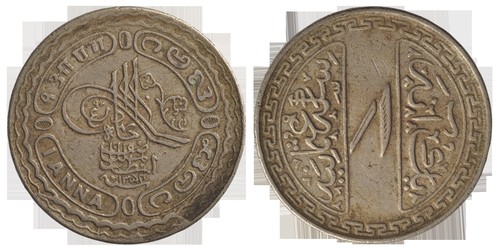
Hyderabad One Anna
AH 1354 (c. 1935 CE); type of the 1930s–1940s
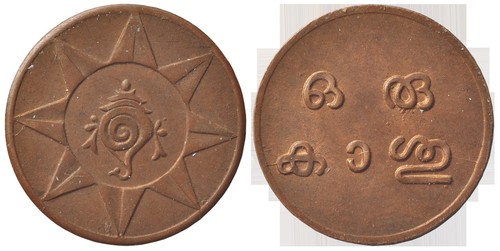
Travancore One Cash
Early 20th century
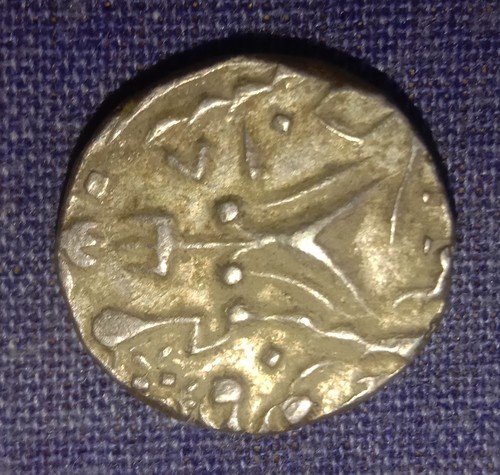
Silver Rupee of Bhopal State
c. 1806-1837 (name of Muhammad Akbar II)
Indian Paisa
c. 1820–1830
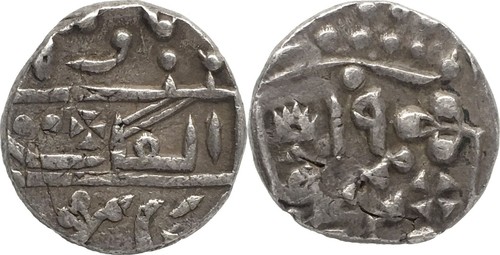
Kotah State Rupee
1858-1901
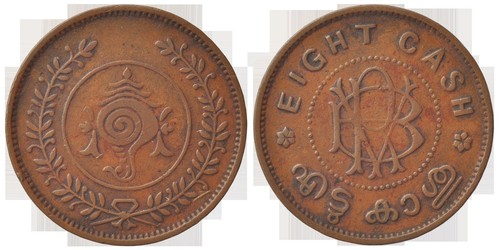
Travancore Eight Cash
Early 20th century
Travancore One Chuckram
Early 20th century
Mewar Chitrakut Half Rupee
circa VS 1985 (AD 1928)