
How to Identify the Travancore One Chuckram
A collector's guide to recognizing the Travancore copper chuckram by its conch-shell emblem, local-script reverse, size, and metal.
Read the full Travancore One Chuckram encyclopedia entry →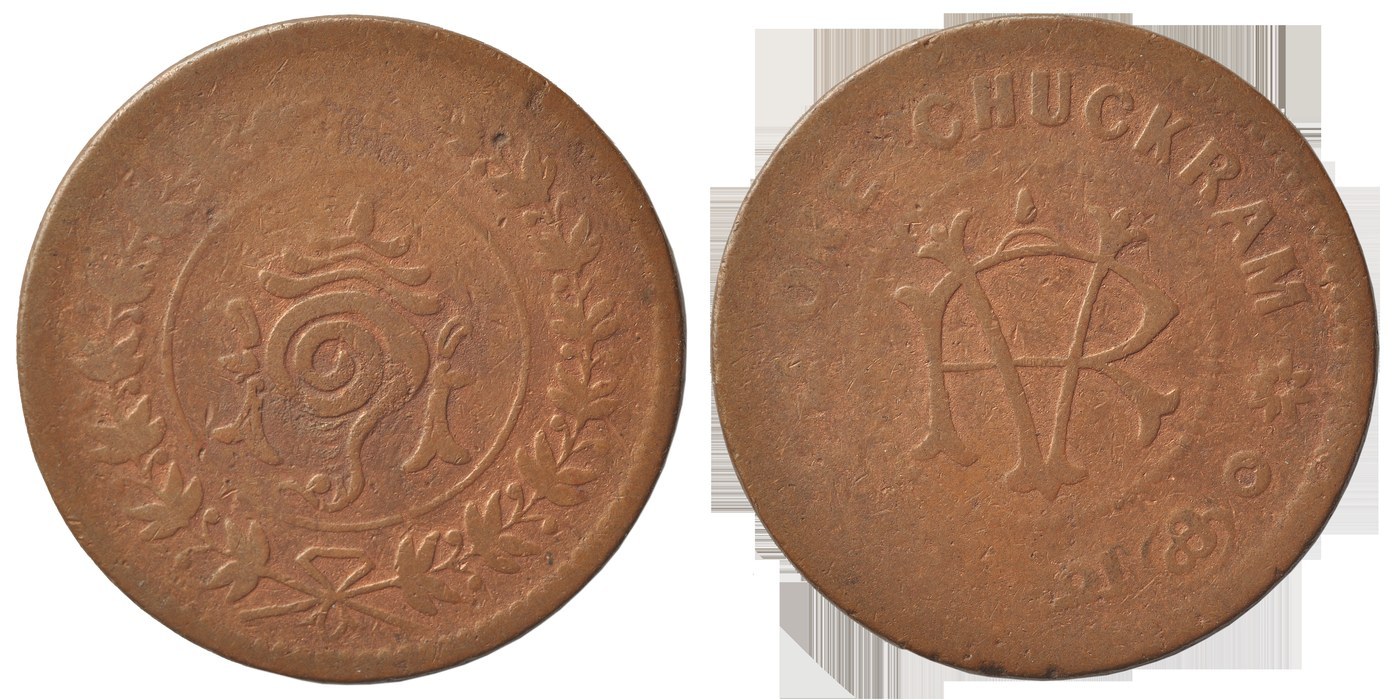
Start with the conch-shell emblem on the obverse, because it is the single most reliable identifier. The shell, framed by a decorative border, is the badge of the Travancore royal house, and seeing it tells you at once that the coin is a princely-state issue of Travancore rather than a British India, Mughal, or other regional piece. Trace the border details and the orientation of the shell, as these help separate types and dies for specialists.
Turn to the reverse and read the denomination. This face shows the value as a numeral accompanied by local-script (Malayalam) inscriptions, with no English wording. The combination of a non-Latin script and a numeric denomination, rather than a spelled-out English legend, is itself a strong confirmation that you are looking at Travancore coinage from the early 20th century.
Confirm the physical coin. It should be copper, presenting an honest brown to reddish-brown tone, and it is a small, thin, light flan suited to a minor denomination. A piece that is silvery, magnetic, or noticeably heavy is wrong for this type. Because these coins circulated widely, moderate even wear is normal and not, by itself, cause for concern.
Watch for look-alikes and cautions. Travancore struck several small copper denominations in related designs, so do not assume the value from size alone; read the numeral and script together. Cast reproductions and tourist copies of Indian coins exist, and warning signs include casting seams, soft or mushy detail in the conch and lettering, an incorrect weight, or an artificial 'aged' patina applied over fresh metal. Green corrosion and harsh cleaning are common on genuine old copper but lower both confidence and value, so favor coins with natural, undisturbed surfaces.
Frequently asked questions
How do I know it is Travancore and not British India?
Look for the conch-shell emblem and local Malayalam script with no English legend or royal portrait. British India coppers of the era carry English wording and often a monarch's name, so the conch and script settle it quickly.
How can I tell the chuckram from other Travancore coppers?
Read the numeral denomination and script on the reverse rather than judging by size, since the state issued several related small coppers. The value expressed on the coin is the reliable distinction.
What are the quickest signs of a fake?
Check that the coin is non-magnetic copper of appropriate small weight, look for casting seams or blurry soft detail in the conch and lettering that indicate a cast copy, and be wary of artificial patina over fresh-looking surfaces.
Does cleaning a corroded chuckram help its value?
No. Cleaning or stripping corrosion typically lowers a copper coin's value and raises authenticity doubts. Collectors prefer original, undisturbed brown surfaces even with honest wear.