
Roanoke Island Half Dollar
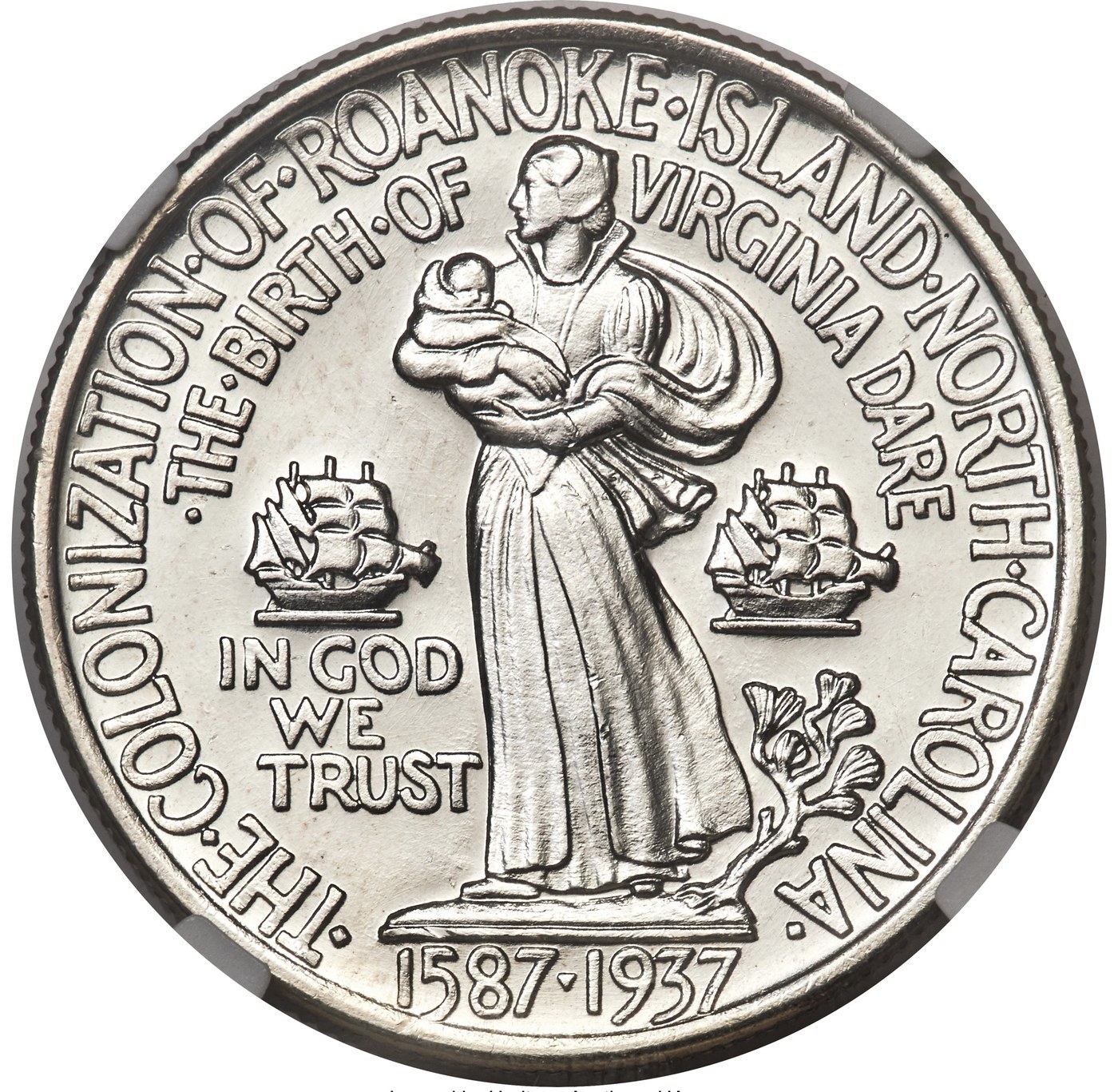
A 1937 U.S. silver half dollar marking 350 years since the Roanoke Island colony and the birth of Virginia Dare, with Sir Walter Raleigh and a sailing ship.
- Country
- United States
- Denomination
- 50¢
- Metal
- Silver
Got a coin like this?
Identify any coin from a photo, free.
Overview
The Roanoke Island Half Dollar is a United States silver commemorative fifty-cent piece struck in 1937 to mark the 350th anniversary of the attempted English colony on Roanoke Island, off present-day North Carolina, and the 1587 birth there of Virginia Dare, the first English child born in the Americas. It belongs to the "classic" commemorative series that ran from 1892 to 1954, in which Congress authorized special half dollars to honor an event and sold them at a premium to raise funds.
Designed by sculptor William Marks Simpson, the coin carries a portrait of Sir Walter Raleigh, the colony's sponsor, on one side, and on the other a figure of Eleanor Dare cradling her infant daughter Virginia, with a three-masted sailing ship at sea in the field. The ship visible in these photographs is the reverse motif, referring to the voyage that carried the colonists across the Atlantic.
Struck in the standard 90% silver alloy of a regular half dollar, it was never meant for circulation. Today it is collected as part of the classic commemorative half dollar set and valued for its history, its Simpson design, and its association with the "Lost Colony" story.
History & Background
Congress authorized a commemorative half dollar to accompany the 350th-anniversary celebration of the Roanoke colony, and the coins were struck in 1937 by the Philadelphia Mint. As with other issues in the program, they were distributed at a premium above face value, with proceeds tied to the anniversary commission that promoted the event.
The colony itself is remembered as the "Lost Colony": a group of English settlers established under Sir Walter Raleigh's charter on Roanoke Island in 1587, only to vanish without trace by the time a relief expedition returned in 1590. Among the settlers was Virginia Dare, granddaughter of Governor John White and, by tradition, the first child of English parents born in what would become the United States. The coin's imagery draws directly on these figures.
The design is the work of William Marks Simpson, a Baltimore sculptor who produced several commemorative coins of the 1930s. Distribution was modest by later standards — on the order of tens of thousands of coins — and the issue saw fewer of the multiple-mint, multiple-date practices that inflated some other 1930s commemoratives. A quantity was later returned unsold, so the net number reaching collectors was smaller than the amount originally minted.
How to Identify
Identify the type by its inscriptions and paired designs. One side shows a bust of Sir Walter Raleigh with lettering naming him, while the other depicts Eleanor Dare holding the infant Virginia Dare, accompanied by a small three-masted sailing ship at sea and wording referencing the Roanoke colony and the anniversary dates 1587 and 1937. The ship shown in these images is the reverse motif and is one of the quickest visual cues to the type.
The coin is a standard-size half dollar: about 30.6 mm in diameter, roughly 12.5 grams, struck in 90% silver with a reeded edge. It was made only in 1937 and only at the Philadelphia Mint, so a genuine example carries no mint mark.
Because it is a commemorative rather than a circulating coin, neither side resembles the Walking Liberty half dollar of the same period. The Raleigh portrait, the mother-and-child group, the sailing ship, and the Roanoke and Virginia Dare lettering are the surest identifiers.
Value & Collectibility
As a classic silver commemorative, the Roanoke Island Half Dollar is worth well above its face value and its silver content. It is one of the more available single-issue commemoratives of the 1930s, so it generally trades for less than the scarcer multi-coin sets, but it still carries a solid collector premium.
Problem-free examples commonly change hands in the mid-tens up into the low hundreds of dollars, with sharply struck, high-grade uncirculated pieces bringing more. Condition, original surfaces, eye appeal, and third-party grade all strongly affect the price a given coin realizes.
Because values move with the collector market and with a coin's grade, any specific example should be checked against recent auction results and current price guides rather than a single fixed figure.
Frequently asked questions
What does the Roanoke Island Half Dollar commemorate?
It marks the 350th anniversary of the 1587 English colony on Roanoke Island and the birth there of Virginia Dare, the first English child born in the Americas. The coins were struck in 1937.
Who and what is pictured on the coin?
One side shows Sir Walter Raleigh, who sponsored the colony. The other shows Eleanor Dare holding her infant daughter Virginia Dare, with a three-masted sailing ship at sea in the field.
What is the sailing ship on the coin?
The three-masted ship appears on the reverse and evokes the Atlantic voyage that carried the colonists to Roanoke. It sits in the field alongside the figure of Eleanor and Virginia Dare.
Is it made of silver?
Yes. Like a regular U.S. half dollar of the era, it is struck in 90% silver with 10% copper, about 12.5 grams and 30.6 mm across, with a reeded edge.
Does it have a mint mark?
No. The coins were struck only at the Philadelphia Mint in 1937, so genuine examples carry no mint mark.
Roanoke Island Half Dollar guides
In-depth guides for identifying, valuing, and collecting Roanoke Island Half Dollar.
Other coins you may enjoy
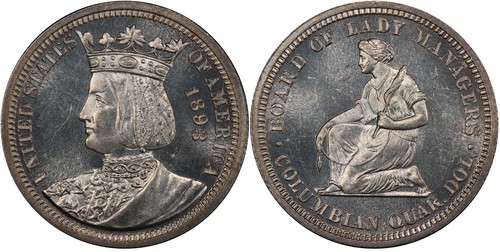
Isabella Quarter
1893
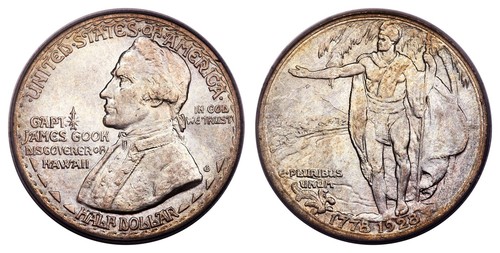
Hawaiian Sesquicentennial Half Dollar
1928
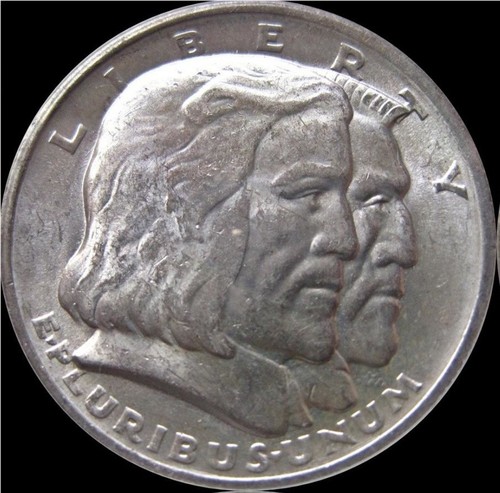
Long Island Tercentenary Half Dollar
1936
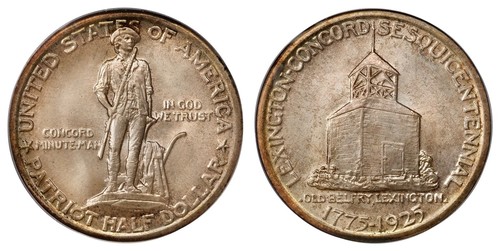
Lexington-Concord Sesquicentennial Half Dollar
1925
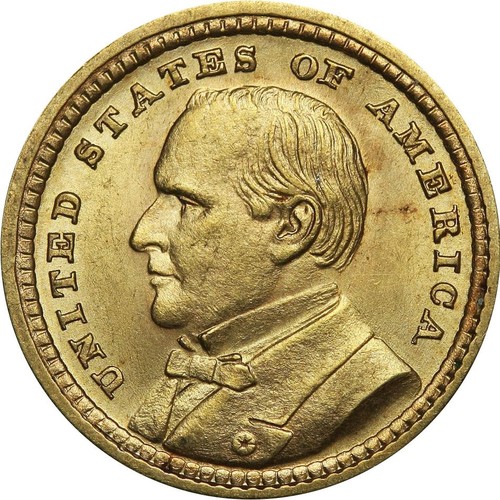
Louisiana Purchase Exposition Dollar (Jefferson)
1903
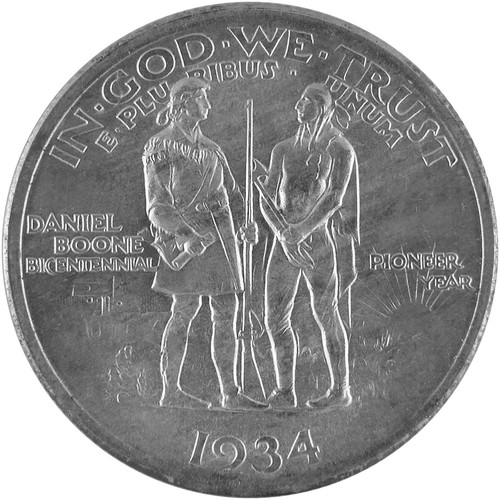
Daniel Boone Bicentennial Half Dollar
1934–1938
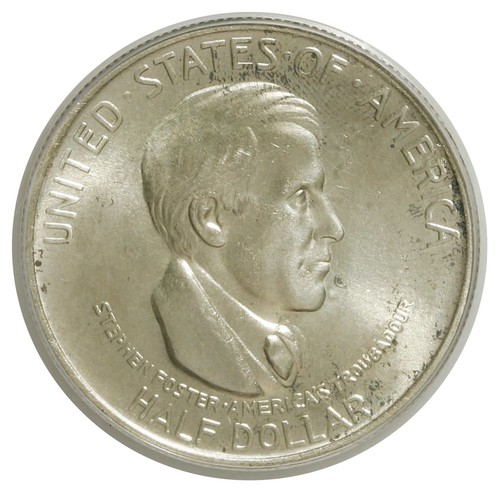
Cincinnati Music Center Half Dollar
1936
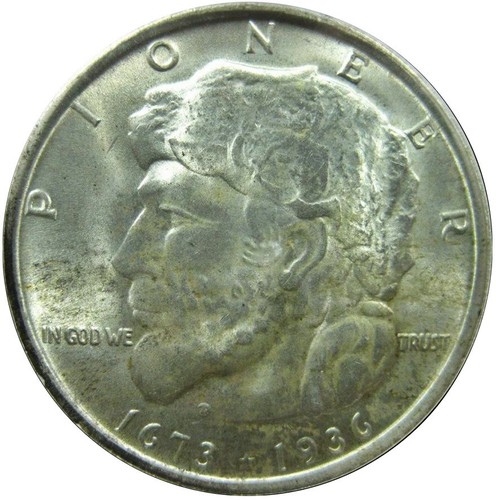
Elgin Illinois Centennial Half Dollar
1936
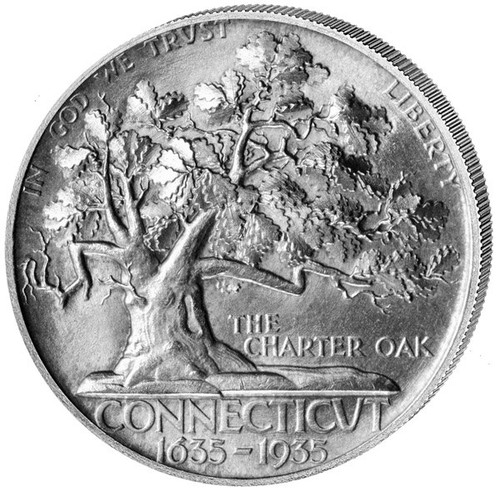
Connecticut Tercentennial Half Dollar
1935
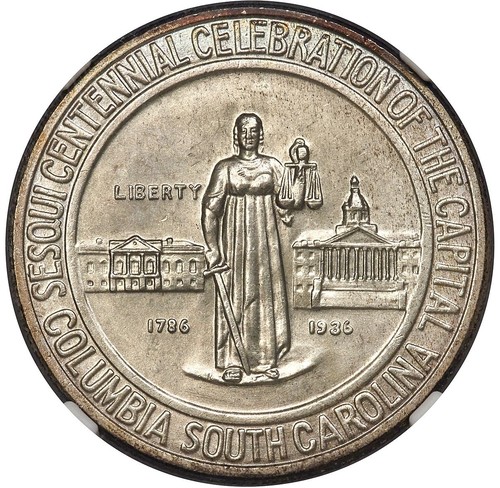
Columbia South Carolina Sesquicentennial Half Dollar
1936
Sesquicentennial of American Independence Quarter Eagle
1926
Pilgrim Tercentenary Half Dollar
1920-1921