Turban Head Quarter Eagle
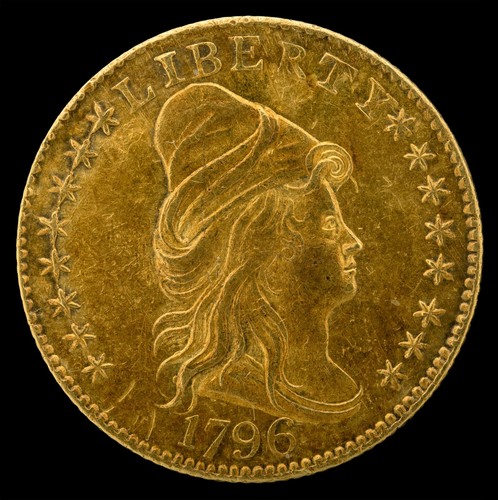
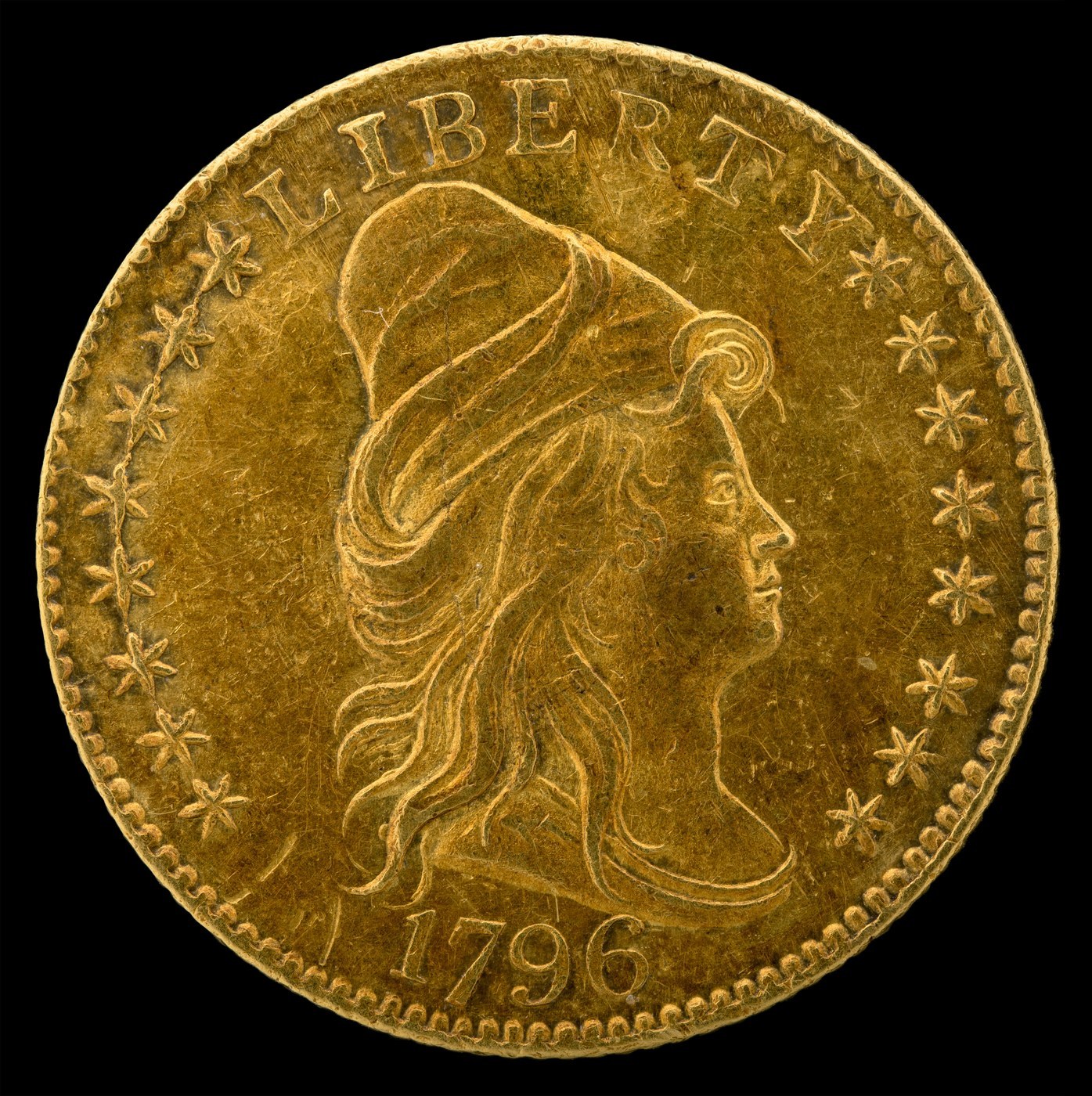
First U.S. $2.50 gold coin (1796), designed by Robert Scot; Liberty in a soft cap facing right with a heraldic eagle reverse. Extremely rare.
- Country
- United States
- Denomination
- 2.5 dollars
- Metal
- Gold
Got a coin like this?
Identify any coin from a photo, free.
Overview
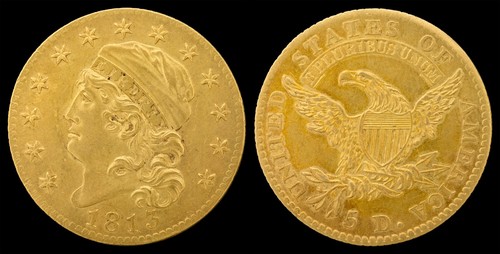
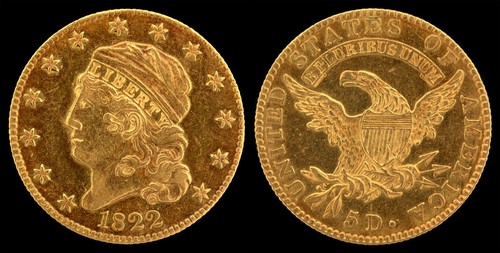
The Turban Head Quarter Eagle is the earliest United States quarter eagle, a $2.50 gold coin first struck in 1796 at the Philadelphia Mint. The design, by Chief Engraver Robert Scot, shows a right-facing bust of Liberty wearing a soft cloth cap; the folds of the cap were later nicknamed a "turban," though no turban was intended. Numismatists more properly call the series the Capped Bust to Right type. The reverse carries a heraldic eagle with a shield on its breast and the motto E PLURIBUS UNUM on a scroll.
The pictured coin is dated 1796 and matches this earliest type: Liberty facing right with the cap, and the shielded eagle with E PLURIBUS UNUM on the reverse. As the first year and first denomination of the U.S. quarter eagle, the 1796 issue is a landmark of early American coinage and one of the rarest and most prized regular-issue U.S. gold coins.
History & Background
Congress authorized the quarter eagle, worth two and a half dollars, in the Coinage Act of 1792, but the young Philadelphia Mint did not produce the denomination until 1796. That first year exists in two obverse styles: an initial variety with no stars around Liberty, and a later variety with stars added along the border. The no-stars 1796 quarter eagle is one of the most famous rarities in the entire U.S. series.
Robert Scot's Capped Bust to Right design was used on the quarter eagle from 1796 through 1807, after which John Reich's Capped Bust to Left ("Turban Head") type replaced it. Because gold coins of this era were struck in tiny numbers, saw heavy use, and were frequently melted when the metal value of the gold exceeded face value, surviving early quarter eagles are scarce across all dates, and 1796 examples in particular are highly sought after.
How to Identify
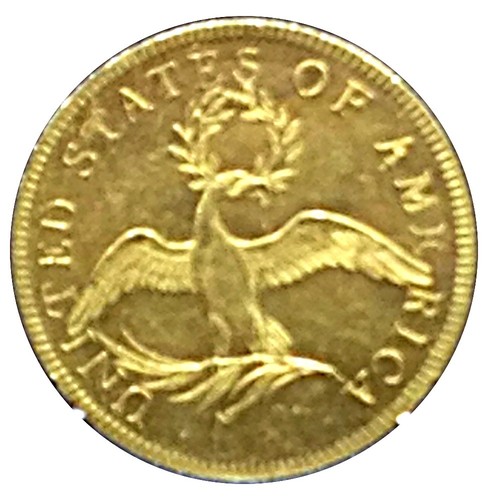
The obverse shows Liberty facing right wearing a soft, folded cap, with LIBERTY above and the date 1796 below; the earliest 1796 variety has a plain field with no stars, while a later 1796 variety adds stars along the border. The reverse depicts a heraldic (Great Seal-style) eagle with a shield on its breast, holding an olive branch and arrows, with a banner reading E PLURIBUS UNUM and the legend UNITED STATES OF AMERICA. There is no mint mark, as all pieces were struck at Philadelphia, and the denomination does not appear as a numeral on the coin.
The coin is small: roughly 20 mm in diameter and about 4.37 grams, struck in gold of approximately .9167 fineness (22 karat). Its gold color, small size, right-facing capped Liberty, and shielded eagle with E PLURIBUS UNUM together distinguish this first quarter eagle type from later U.S. gold coins.
Value & Collectibility
The 1796 Turban Head quarter eagle is a major rarity and a high-value coin. Original mintages were extremely small, and survivors are few, so genuine examples in any grade command large sums — typically well into the tens of thousands of dollars, and often into six figures for the scarce no-stars variety or for well-preserved pieces. Prices vary enormously with grade, variety, and eye appeal.
Because values are so high, this is a coin where authentication is essential. Counterfeits, altered dates, and cast copies exist, and even genuine pieces can be damaged, cleaned, or repaired in ways that sharply affect value. Any coin believed to be an 1796 quarter eagle should be evaluated and certified by a reputable third-party grading service before any sale or purchase; published figures should be treated as broad context rather than firm quotes.
Frequently asked questions
Is the Turban Head Quarter Eagle really wearing a turban?
No. Liberty wears a soft cloth cap, and the folds were later nicknamed a "turban." Collectors more accurately call the 1796–1807 type the Capped Bust to Right quarter eagle.
What is the denomination of this coin?
It is a quarter eagle, worth two and a half dollars ($2.50). The value is not printed on the coin as a numeral, which is normal for U.S. gold of this early period.
Does it have a mint mark?
No. All 1796 quarter eagles were struck at the Philadelphia Mint, which used no mint mark. A genuine example will have a blank field where a mint mark would otherwise appear.
How rare is the 1796 quarter eagle?
Very rare. It was the first year of the denomination, struck in tiny numbers, and many were later melted. The 1796 no-stars variety in particular is one of the most famous rarities in U.S. gold coinage.
How much is it worth?
Genuine examples are worth large sums — commonly tens of thousands of dollars and often six figures depending on variety and grade. Because of the value and the risk of fakes, always get professional certification before buying or selling.
Turban Head Quarter Eagle guides
In-depth guides for identifying, valuing, and collecting Turban Head Quarter Eagle.