Liberty Head Half Eagle
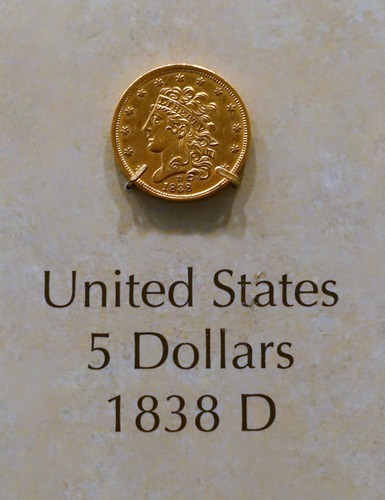
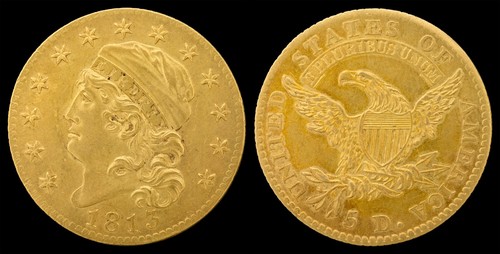
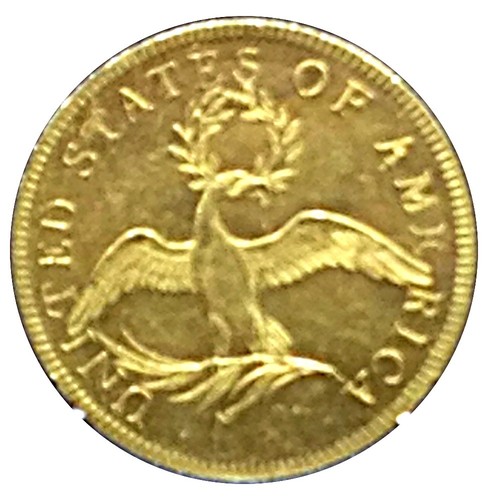
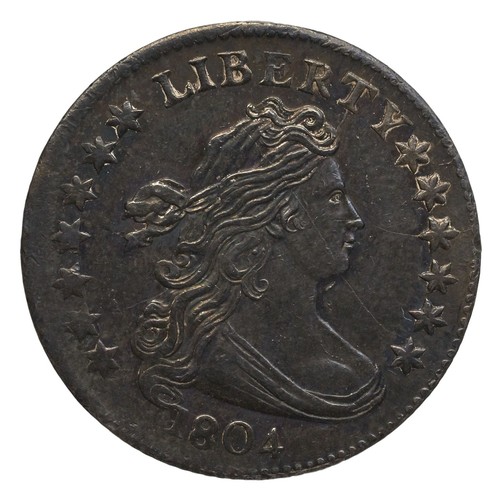
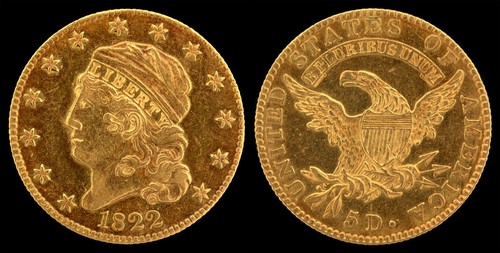
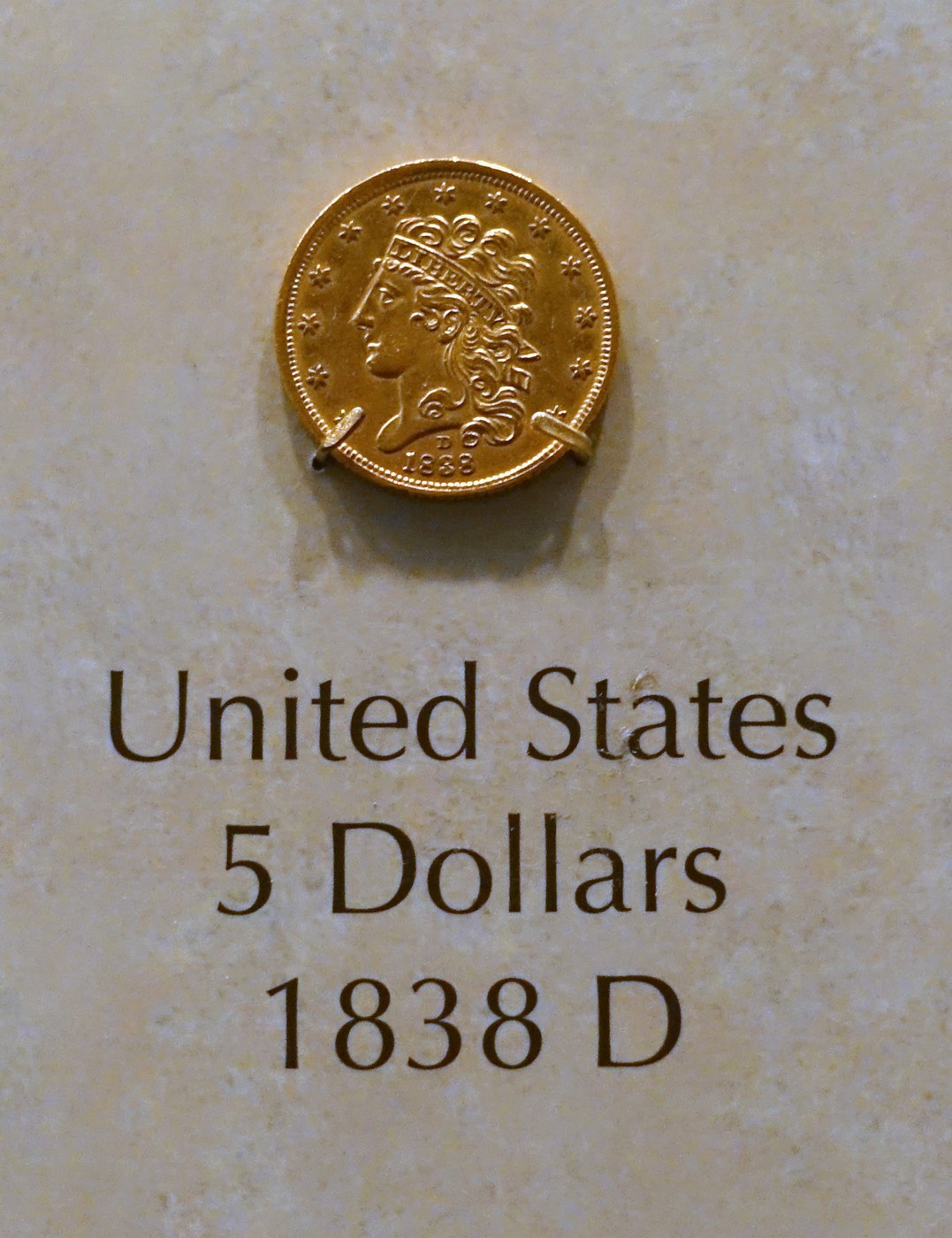
United States $5 gold coin with a left-facing Liberty head ringed by stars and a spread-winged eagle reverse; the pictured piece is dated 1838.
- Country
- United States
- Denomination
- 5 dollars
- Metal
- Gold (roughly 90% gold, balance copper/silver)
Got a coin like this?
Identify any coin from a photo, free.
Overview
The Liberty Head Half Eagle is a United States five-dollar gold coin. The example shown here is dated 1838 and displays a left-facing head of Liberty encircled by stars on the obverse and an eagle with spread wings on the reverse. An 1838 half eagle belongs to the Classic Head design phase of the series, struck from 1834 through 1838, which carries a plain Liberty head wearing a band lettered "LIBERTY" rather than a coronet.
Struck in gold, the half eagle was a substantial piece of money in the 1830s and circulated as a store of value rather than as everyday small change. The 1838 date is especially notable to collectors because it was the first year the U.S. Mint struck gold coins at its new Southern branch mints, making some 1838 half eagles among the earliest branch-mint gold in the country.
History & Background
The Classic Head half eagle was introduced in 1834 after Congress, through the Act of June 28, 1834, reduced the gold content of U.S. gold coins so they would no longer be worth more as metal than as money. Earlier half eagles had been hoarded and melted because their gold value exceeded face value; the new, slightly lighter standard was meant to keep the coins in circulation. To visually distinguish the reduced-weight coins, Mint engraver William Kneass adapted the "Classic Head" portrait of Liberty and the reverse dropped the earlier motto "E PLURIBUS UNUM."
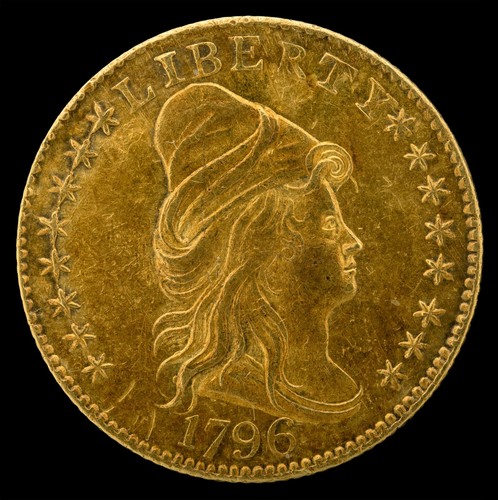
An 1838 half eagle is the final year of this short type. In 1838 the Mint began coining gold at the new branch mints in Charlotte, North Carolina and Dahlonega, Georgia, near the Southern gold fields, producing the first 1838-C and 1838-D half eagles with mint marks on the obverse. The following year, in 1839, the design was replaced by Christian Gobrecht's Coronet (Liberty Head) half eagle, in which Liberty wears a coronet inscribed "LIBERTY"; that long-running successor is what many collectors also call the "Liberty Head" half eagle and it continued until 1908.
How to Identify
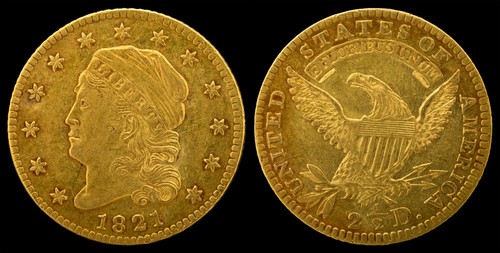
The obverse shows Liberty facing left, her hair tied back and secured by a band inscribed "LIBERTY," surrounded by thirteen stars with the date below. The reverse depicts an eagle with wings spread, a shield on its breast, holding an olive branch and arrows, with "UNITED STATES OF AMERICA" around the top and the denomination "5 D." below. Classic Head half eagles of this period do not carry a reverse motto.
This is a small but heavy gold coin, roughly 22.5 mm in diameter and about 8.3 grams, struck in an alloy that is approximately 90% gold (the fineness was adjusted slightly during the type). Philadelphia coins bear no mint mark. On the 1838 branch-mint issues the mint mark—"C" for Charlotte or "D" for Dahlonega—appears on the obverse, above the date, rather than on the reverse as on many later half eagles.
Value & Collectibility
Classic Head half eagles are scarce as a group, and even the more available Philadelphia dates trade well above their gold melt value because of collector demand for early U.S. gold. Worn but genuine examples are typically valued in the high hundreds to low thousands of dollars, with problem-free, better-grade coins bringing considerably more; actual prices move with the gold market and with grade.
The 1838 branch-mint coins are the keys of the date: 1838-C (Charlotte) and 1838-D (Dahlonega) are historically important as first-year Southern gold and command large premiums over the common Philadelphia issue. As with all early gold, cleaning, scratches, rim damage, mount marks, and altered surfaces sharply reduce value, and counterfeits exist, so grade, originality, and authentication matter as much as the date itself.
Frequently asked questions
What is a Liberty Head Half Eagle worth?
It is a $5 gold coin, so it always carries meaningful gold value, but Classic Head examples like an 1838 also carry a strong collector premium—commonly high hundreds to low thousands of dollars for genuine circulated pieces, and much more for the scarce 1838-C and 1838-D branch-mint coins.
Is the 1838 half eagle made of real gold?
Yes. It is a United States five-dollar gold coin struck in an alloy of roughly 90% gold, weighing about 8.3 grams and measuring around 22.5 mm across.
Why is 1838 an important date for this coin?
1838 was the final year of the Classic Head half eagle and the first year the U.S. Mint struck gold at its Charlotte and Dahlonega branch mints, so 1838-C and 1838-D half eagles are among the earliest Southern branch-mint gold coins.
Where is the mint mark on an 1838 half eagle?
Philadelphia coins have no mint mark. On the 1838 branch-mint issues the mint mark—"C" or "D"—is found on the obverse, above the date.
Is this the same as the later Liberty Head (Coronet) half eagle?
They are closely related but not identical. The 1838 coin is the Classic Head type (1834–1838) with a plain Liberty head and a "LIBERTY" band. In 1839 it was replaced by the Coronet design in which Liberty wears a coronet, which ran through 1908.
Liberty Head Half Eagle guides
In-depth guides for identifying, valuing, and collecting Liberty Head Half Eagle.