Draped Bust Large Cent
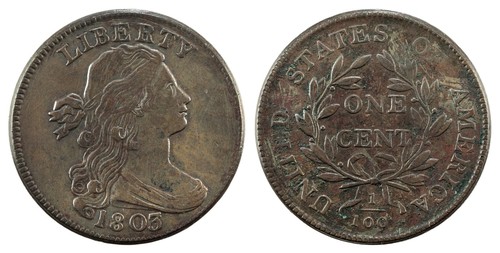
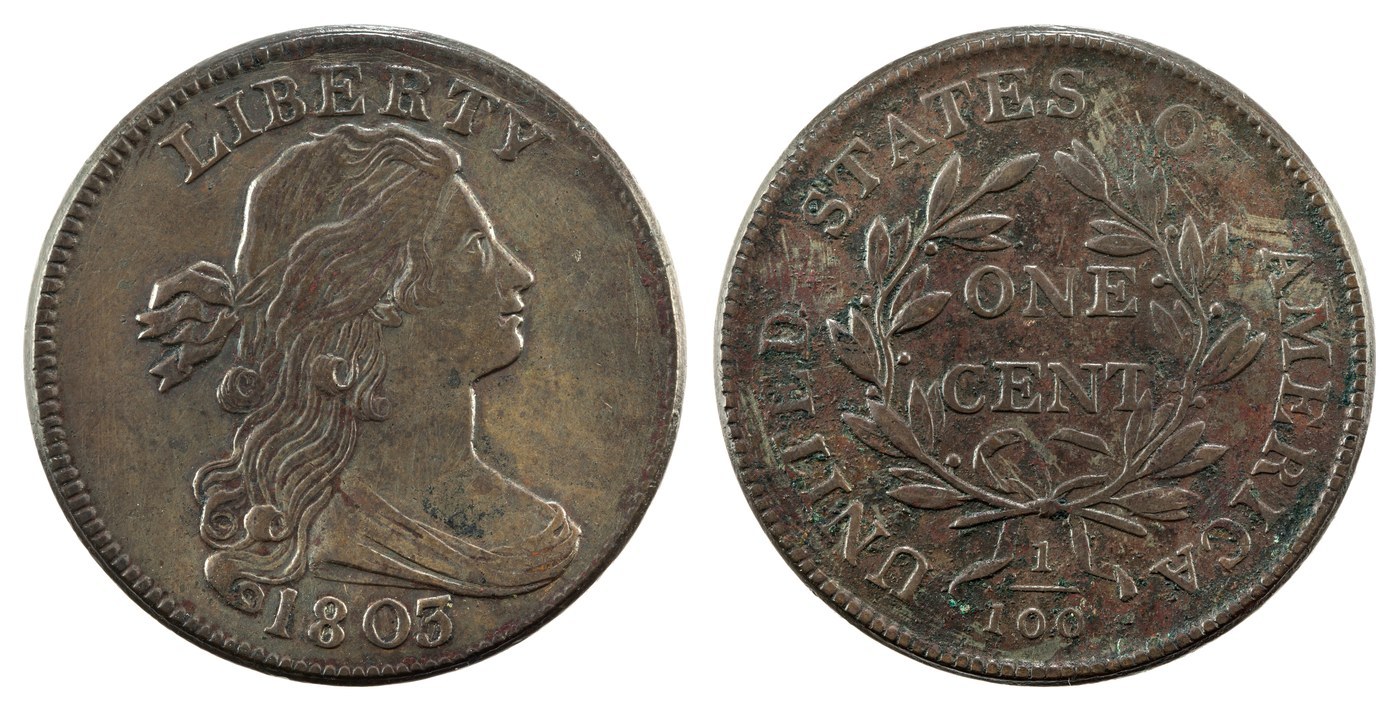
An early U.S. copper one-cent coin (1796–1807) showing a right-facing Liberty with flowing hair and drapery, larger and heavier than a modern cent.
- Country
- United States
- Denomination
- 1 Cent
- Metal
- Copper
Got a coin like this?
Identify any coin from a photo, free.
Overview
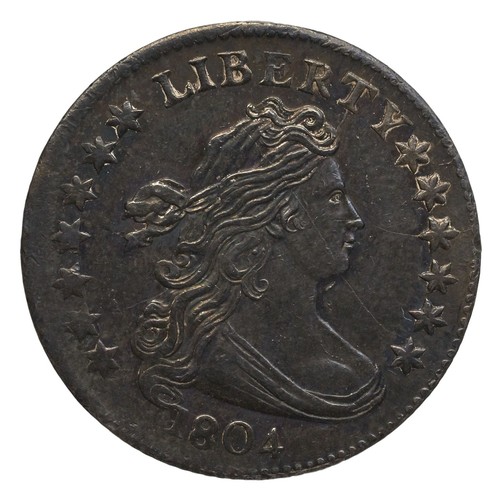
The Draped Bust Large Cent is one of the earliest United States one-cent coins, struck in pure copper from 1796 through 1807. It is a "large cent," meaning it is noticeably bigger and heavier than the small cent used today, roughly the diameter of a modern U.S. quarter or half dollar. The obverse shows a right-facing bust of Liberty with flowing hair and classical drapery across the shoulder, with the word "LIBERTY" above and the date below.
These cents circulated heavily in the early Republic and were handled constantly, so most surviving examples show real wear. Collectors prize the type for its hand-crafted early-federal character, and many are studied by die variety, since the coins were struck from individually engraved dies that show small differences from one to the next.
History & Background
The Draped Bust design replaced the earlier Flowing Hair and Liberty Cap cents and was introduced in 1796. The obverse portrait derives from a Gilbert Stuart drawing of Liberty, engraved for the Mint by Robert Scot. The design was used across several U.S. copper and silver denominations of the period, giving the coinage of these years a consistent look.
Large cents of this era were produced at the first U.S. Mint in Philadelphia, the only federal mint operating at the time, so the coins carry no mint mark. Copper planchets were often imported and coin production varied year to year with the supply of blanks and the demands of commerce. The Draped Bust cent continued until 1807, after which the Classic Head large cent took its place; the large-cent format itself lasted until 1857.
How to Identify
Look first at the portrait: a right-facing Liberty with loose, flowing hair and drapery gathered at the bust, with "LIBERTY" arched above the head and the four-digit date beneath. The observed example is dated 1797, which falls squarely within the 1796–1807 run of this type. The coin is solid copper with no mint mark.
The reverse (not shown on this example) carries a wreath tied with a bow, the words "ONE CENT" within the wreath, the fraction "1/100" below, and "UNITED STATES OF AMERICA" around the rim. The coin is large — about 29 mm across and near 10–11 grams — which immediately separates it from the much smaller modern cent. Genuine pieces usually show honest brown copper toning and circulation wear consistent with their age.
Value & Collectibility
Value depends heavily on date, die variety, and condition. Well-worn but identifiable Draped Bust cents are widely collected and typically trade in modest-to-moderate ranges, while sharp, problem-free examples and scarce varieties command substantial premiums. Certain rare dates and varieties from this series are among the most valuable early copper coins.
Because these coins are two centuries old and were made of soft copper, surface problems are common: corrosion, pitting, cleaning, and porosity all reduce value significantly. As with any early U.S. copper, a genuine coin with original surfaces and clear detail is worth far more than a damaged or altered one, and higher-value pieces are best confirmed by a professional grading service.
Frequently asked questions
Why is it called a "large cent"?
Early U.S. cents were struck on big copper planchets about 29 mm wide — close to the size of a modern quarter or half dollar. The term distinguishes them from the smaller cent introduced in 1857.
What years was the Draped Bust cent made?
It was struck from 1796 through 1807. The photographed coin is dated 1797, which is within that range.
Does it have a mint mark?
No. All Draped Bust large cents were made at the Philadelphia Mint, which used no mint mark in this era.
Is it made of pure copper?
Yes. Like other large cents of the period, it is essentially pure copper, with no silver or gold content, which is why worn examples often show brown toning.
Draped Bust Large Cent guides
In-depth guides for identifying, valuing, and collecting Draped Bust Large Cent.