
How to Identify the Draped Bust Large Cent
Diagnostic tips for the 1796–1807 U.S. copper cent: flowing-hair Liberty bust, large size, no mint mark, and the wreath reverse.
Read the full Draped Bust Large Cent encyclopedia entry →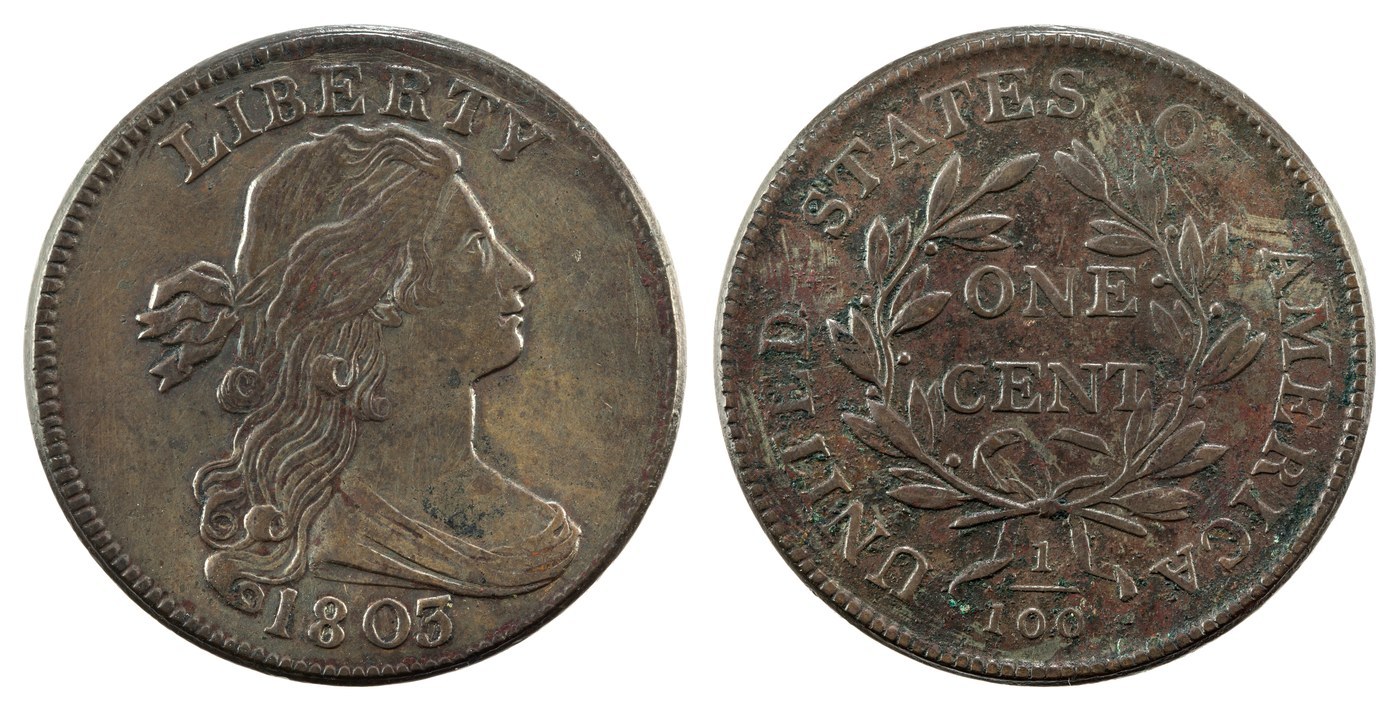
Start with the obverse portrait. The Draped Bust cent shows Liberty facing right with long, flowing hair and drapery across the shoulder, "LIBERTY" curved above the head, and the date below. If the hair is flowing (not tied in a ribbon or under a cap) and drapery is visible at the bust, you are likely looking at the Draped Bust type rather than the earlier Flowing Hair or Liberty Cap cents or the later Classic Head cent.
Confirm size and metal. This is a large cent: roughly 29 mm in diameter and about 10–11 grams of solid copper. That heft and width immediately rule out the modern small cent. There is no mint mark, since all examples were struck in Philadelphia. On the reverse, expect a wreath tied with a bow enclosing "ONE CENT," the fraction "1/100" beneath, and "UNITED STATES OF AMERICA" around the edge — a useful cross-check when the reverse is available.
Use the date and lettering to narrow the type. A date between 1796 and 1807 with this portrait indicates a Draped Bust cent; the observed coin reads 1797. Because the dies were hand-engraved, letter and star placement, date spacing, and small design details vary between varieties, which specialists use to attribute individual coins.
Be cautious about authenticity and surfaces. Early copper is heavily faked and frequently damaged. Watch for casting seams, unnatural sharpness on a supposedly worn coin, tooled or re-engraved details, added or altered dates, and heavy corrosion or cleaning that can mask problems. Genuine circulated examples show even, honest wear and natural brown copper color. For any coin that appears scarce or high-grade, seek confirmation from a reputable dealer or third-party grading service before assigning value.
Frequently asked questions
How can I tell a Draped Bust cent from a Classic Head cent?
The Draped Bust (1796–1807) shows Liberty with loose flowing hair and drapery. The Classic Head cent that followed (from 1808) shows Liberty wearing a headband inscribed "LIBERTY" with tighter, curlier hair.
What size and weight should it be?
About 29 mm in diameter and roughly 10–11 grams of copper — far larger and heavier than today's cent. A dramatically off measurement is a warning sign.
Are there mint marks or varieties to check?
There are no mint marks. However, many die varieties exist because dies were engraved by hand, so date spacing, star position, and lettering details help attribute a specific coin.
How do I spot a fake or altered coin?
Look for casting seams, tooling, altered dates, filed edges, and surfaces that are too sharp or heavily corroded. When in doubt, have it authenticated by a professional grading service.