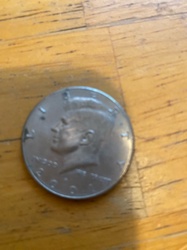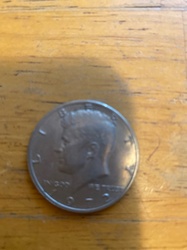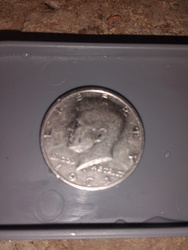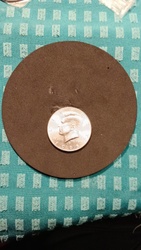
Kennedy Half Dollar
U.S. fifty-cent piece introduced in 1964 to honor President John F. Kennedy; the first-year 1964 coins were struck in 90% silver.
- Country
- United States
- Denomination
- 50 cents
- Metal
- 90% Silver, 10% Copper (1964 issue)
Got a coin like this?
Identify any coin from a photo, free.
Overview
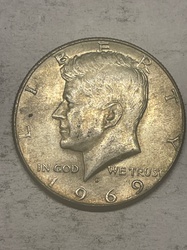
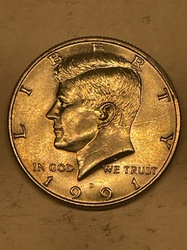
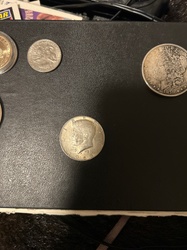
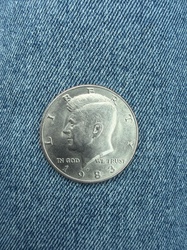
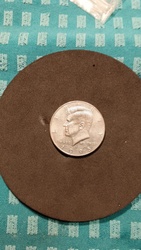
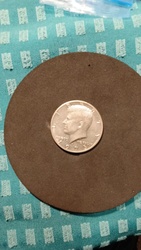
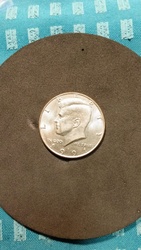
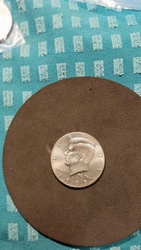
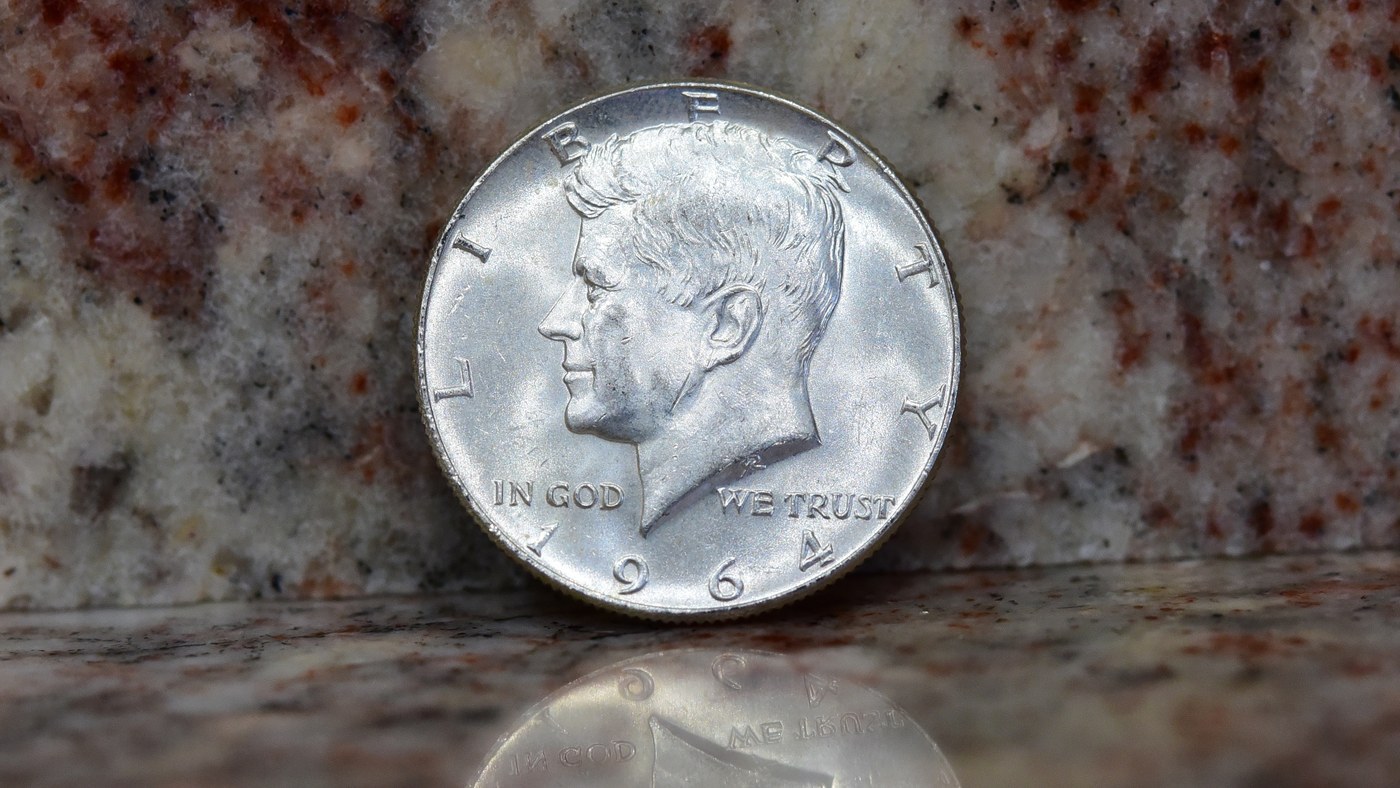
The Kennedy Half Dollar is a United States fifty-cent coin first struck in 1964 as a memorial to President John F. Kennedy, who had been assassinated in November 1963. The obverse carries Kennedy's left-profile portrait—shown here facing right within the frame—with "LIBERTY" around the top and "IN GOD WE TRUST" flanking the neck, and the date below. The reverse displays a heraldic Presidential eagle with a striped shield on its breast, holding an olive branch and arrows and ringed by a circle of stars.
The example pictured is a 1964-dated coin, the very first year of issue and the only year struck in the full 90% silver alloy. Because of the nation's mourning and the coin's silver content, the 1964 Kennedy half was saved heavily by the public, making it a familiar and widely collected modern silver coin.
History & Background
After President Kennedy's death in November 1963, the U.S. Mint moved quickly to place his likeness on a circulating coin. The half dollar was chosen so as not to displace living-memory designs already on other denominations. Chief Engraver Gilroy Roberts modeled the obverse portrait and Frank Gasparro prepared the Presidential-seal eagle reverse; both artists' initials appear in the design. Production of the 1964 coins began in early 1964.
The 1964 issue was struck in the traditional 90% silver, 10% copper alloy. Rising silver prices then forced a change: from 1965 through 1970 the half dollar was reduced to a 40% silver clad composition, and from 1971 onward circulating pieces were struck in copper-nickel clad with no silver at all. Because of this, a 1964 Kennedy half is distinct from every later date in both metal content and public appeal. Later collector issues have occasionally revived silver, but the 1964 coin remains the classic full-silver Kennedy half.
How to Identify
The obverse shows a bare-headed bust of John F. Kennedy in profile, with "LIBERTY" arching over the top of the head, "IN GOD WE TRUST" split to the left and right of the lower neck, and the year at the bottom. The reverse depicts a Presidential-seal eagle with a shield on its breast, an olive branch and arrows in its talons, a scroll reading "E PLURIBUS UNUM," and "UNITED STATES OF AMERICA" and "HALF DOLLAR" around a ring of stars.
A 1964 Kennedy half measures about 30.6 mm in diameter and weighs approximately 12.5 grams in its 90% silver composition. Silver coins have a solid light-gray edge with no copper stripe. On the 1964 issue the mint mark, when present, is a small "D" for Denver located on the reverse near the eagle's left leg (lower left of the eagle); Philadelphia coins of this year carry no mint mark. From 1968 onward the mint mark moved to the obverse above the date.
Value & Collectibility
As a 90% silver coin, a circulated 1964 Kennedy half dollar generally trades in line with its silver bullion content, which sets a moving floor on its value. Well-worn common examples are affordable and abundant because so many were saved in 1964. Uncirculated coins, proof strikings, and pieces with strong original luster or scarcer die varieties command higher premiums over melt.
Later dates behave differently: 1965–1970 halves contain only 40% silver, and 1971-and-later circulating coins contain none, so those carry little or no silver premium. Condition, eye appeal, and certification drive value at the higher end; cleaned, damaged, or heavily worn coins are worth less. For any coin claimed to be a rare variety or high grade, third-party authentication is recommended before paying a significant premium.
Frequently asked questions
Is a 1964 Kennedy Half Dollar silver?
Yes. The 1964 issue is the only year struck in 90% silver (10% copper). It weighs about 12.5 grams and its value is tied closely to silver content.
How do I tell a silver Kennedy half from a clad one?
Only 1964 coins are 90% silver; 1965–1970 are 40% silver; 1971 and later circulating coins are copper-nickel clad with no silver. Clad coins show a copper-colored stripe on the edge, while silver coins have a solid gray edge.
Where is the mint mark on a 1964 Kennedy half?
On the 1964 issue, a Denver coin has a small "D" on the reverse near the eagle's lower-left leg, while Philadelphia coins have no mint mark. From 1968 on, the mint mark is on the obverse above the date.
Why were so many 1964 Kennedy halves saved?
The coin was released amid national mourning for President Kennedy and contained 90% silver, so the public hoarded it as a keepsake and for its metal value. As a result, the date is common today.
Kennedy Half Dollar guides
In-depth guides for identifying, valuing, and collecting Kennedy Half Dollar.
Kennedy Half Dollar identified by the community
Real coins identified with Coin Identifier.