Capped Bust Eagle
The first United States gold ten-dollar coin, struck 1795–1804 with a capped Liberty bust and, in later years, a heraldic eagle bearing a shield and E PLURIBUS UNUM.
- Country
- United States
- Denomination
- Ten Dollars ($10)
- Metal
- Gold (.9167 fine)
Got a coin like this?
Identify any coin from a photo, free.
Overview
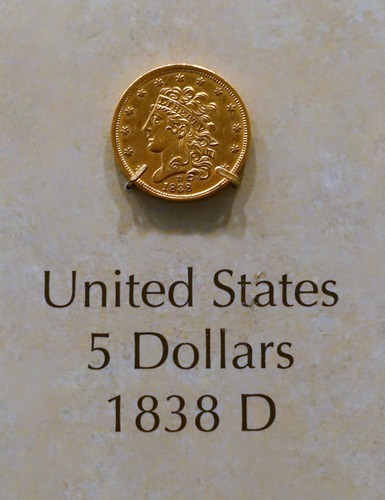
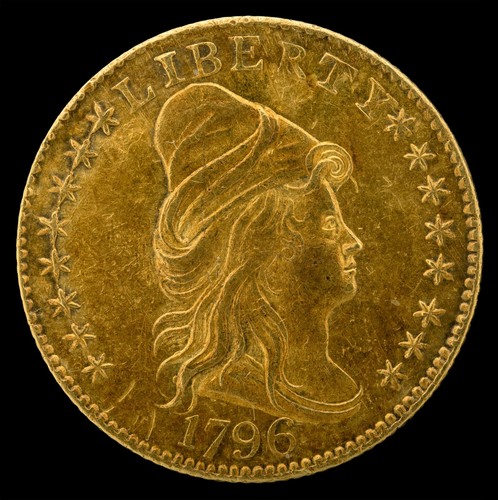
The Capped Bust Eagle is the earliest United States ten-dollar gold coin, first struck in 1795 and produced through 1804. It was the largest-denomination coin authorized under the Coinage Act of 1792 and represented the young Republic's flagship gold piece. The obverse shows a right-facing bust of Liberty wearing a soft cap, surrounded by stars, a design that also gives the type its "Turban Head" nickname.
Because these coins were struck in small quantities by hand-prepared dies during the Mint's first decade, surviving examples are scarce and highly prized. The type is a cornerstone of early American gold collecting, valued for both its historical status as a first-year issue and its hand-crafted, individually varied appearance.
History & Background
The ten-dollar gold coin, called an "eagle," was established by the Coinage Act of April 2, 1792, which set the denomination at 247.5 grains of pure gold and made it the highest-value coin in the new national system. Production began at the Philadelphia Mint in 1795, with dies engraved by Robert Scot, the Mint's first chief engraver.
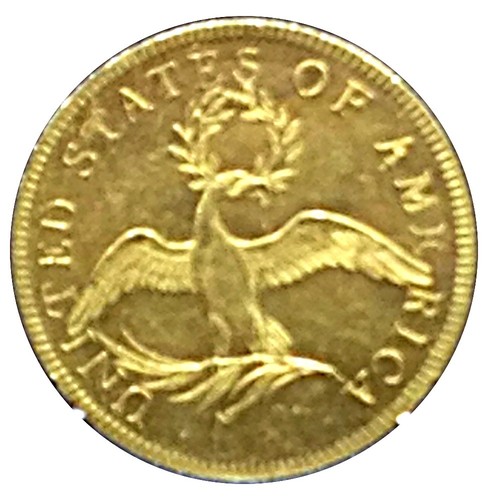
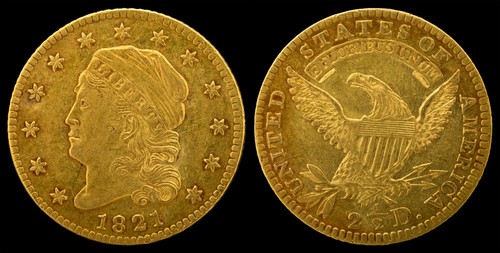
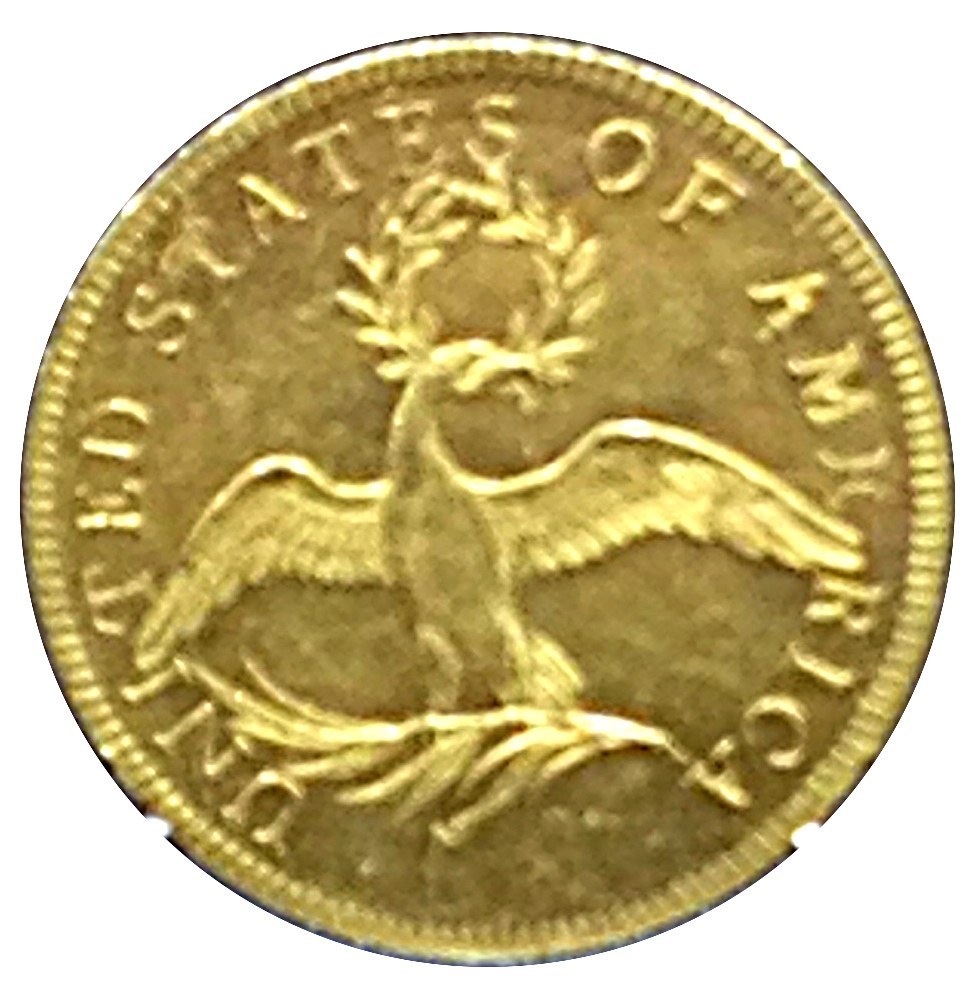
The series carries two distinct reverse designs. The earliest coins (1795–1797) use the "Small Eagle" reverse, showing a slender eagle perched on a palm branch and holding a wreath. Beginning in 1797, a "Heraldic" or "Large Eagle" reverse was introduced, depicting a spread-winged eagle with a shield on its breast, an olive branch and arrows in its talons, and the motto E PLURIBUS UNUM on a ribbon above. Rising gold prices led to the suspension of eagle coinage after 1804, and the denomination was not resumed until 1838.
How to Identify
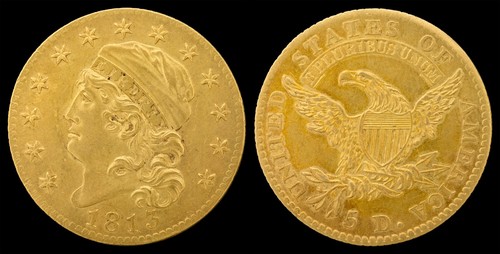
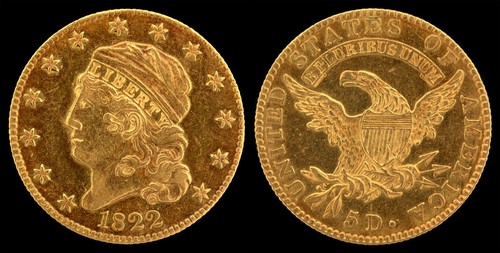
The obverse depicts Liberty facing right, wearing a loose cap, with stars along the border and the date below. The reverse exists in two forms: the early Small Eagle (perched eagle with wreath, 1795–1797) and the later Heraldic Eagle bearing a shield, olive branch, and the motto E PLURIBUS UNUM (1797–1804). The photographed reverse, with an eagle's spread wings, shield, olive branch, and E PLURIBUS UNUM, matches the heraldic-style layout; the number of leaves and stars can vary by die.
The coin measures roughly 33 mm in diameter and weighs about 17.5 grams, struck in gold of .9167 fineness with a reeded edge. There is no denomination or mint mark on the coin; all Capped Bust Eagles were struck at Philadelphia and simply read UNITED STATES OF AMERICA. Individual dies were cut by hand, so star counts, leaf counts, and letter placement differ between varieties, which specialists use to attribute specific issues.
Value & Collectibility
As scarce first-decade U.S. gold, Capped Bust Eagles are valuable across all grades. Even well-worn, problem-free examples typically trade in the mid four figures to five figures, while attractive higher-grade coins routinely reach well into five and six figures at auction. Prices depend heavily on date, reverse type, die variety, strike, and surface condition.
The 1795 first-year issues and the low-mintage 1798/7 and 1804 dates are especially sought after and command strong premiums. Because values are high and the coins are heavily collected, third-party grading and authentication are strongly recommended before any significant purchase.
Frequently asked questions
What is a Capped Bust Eagle?
It is the first United States ten-dollar gold coin, struck at the Philadelphia Mint from 1795 to 1804, featuring a capped bust of Liberty and an eagle reverse.
Why do some have a shield and E PLURIBUS UNUM and others don't?
The type has two reverses: the Small Eagle (1795–1797) with a perched eagle and wreath, and the later Heraldic Eagle (1797–1804) with a shield on the eagle's breast and the motto E PLURIBUS UNUM.
What is it made of?
It is struck in gold of .9167 fineness, weighs about 17.5 grams, and is roughly 33 mm in diameter with a reeded edge.
Does it have a mint mark?
No. Every Capped Bust Eagle was struck at the Philadelphia Mint and carries no mint mark.
Are Capped Bust Eagles rare?
Yes. They were produced in small numbers during the Mint's early years, so all dates are scarce and valuable, with certain issues being major rarities.
Capped Bust Eagle guides
In-depth guides for identifying, valuing, and collecting Capped Bust Eagle.