Draped Bust Dime
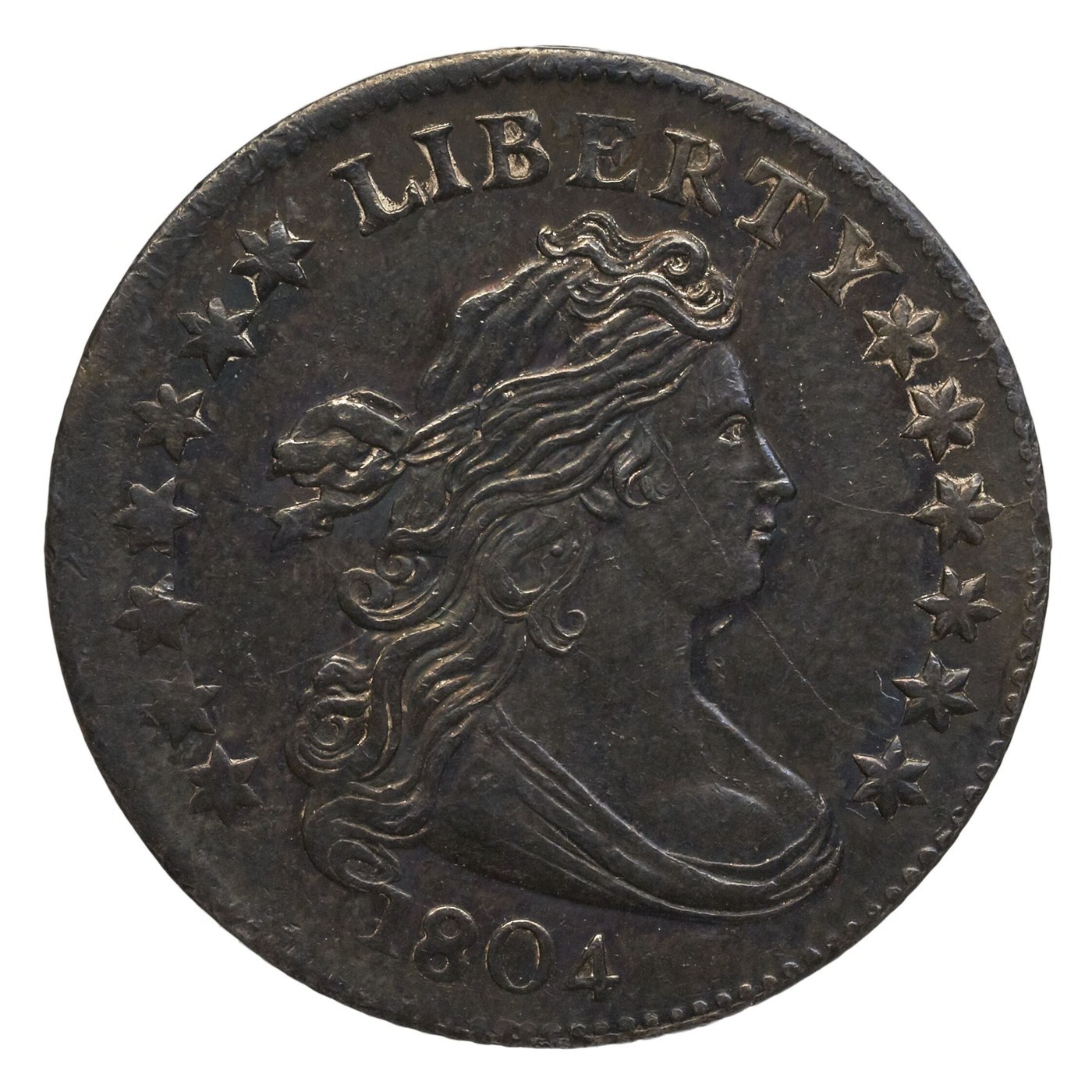
The first United States dime, struck in silver 1796–1807, with a draped Liberty and border stars on the obverse and an eagle on the reverse.
- Country
- United States
- Denomination
- 10 Cents
- Metal
- Silver
Got a coin like this?
Identify any coin from a photo, free.
Overview
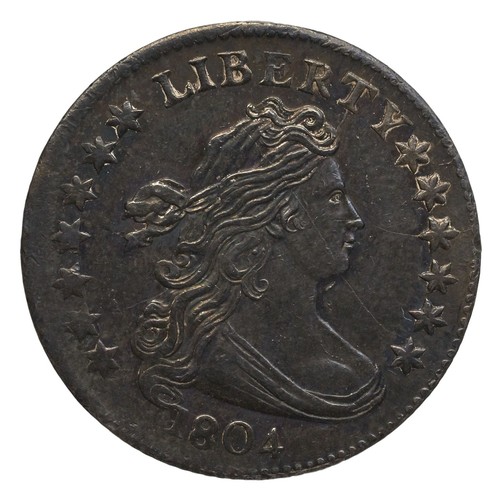
The Draped Bust Dime is the first ten-cent piece struck by the United States Mint, produced in silver from 1796 through 1807. The example shown here is dated 1796, the very first year of the denomination. Like all early U.S. dimes, it is a small silver coin that circulated as everyday money in the young republic.
The obverse carries a bust of Liberty with curled, flowing hair and drapery across the shoulder, ringed by stars, with LIBERTY above and the date below. The reverse, not visible on this coin, shows an eagle surrounded by UNITED STATES OF AMERICA. Notably, no mark of value or "10 CENTS" appears anywhere on the Draped Bust dime — the denomination had to be known by the coin's size and silver content.
History & Background
The Draped Bust design was introduced across U.S. silver coinage in the mid-1790s and reached the dime in 1796. The portrait is traditionally associated with a drawing by artist Gilbert Stuart, adapted by the Mint's engravers, and the same motif appeared on the half dime, quarter, half dollar, and dollar of the era.
The series divides into two reverse types. The first, used in 1796 and part of 1797, pairs Liberty with a small, delicate eagle perched within a wreath — the "Small Eagle" reverse seen on this first-year coin. From 1798 the reverse changed to a larger "Heraldic Eagle" with a shield, based on the Great Seal. All coins were struck by hand-operated presses at the Philadelphia Mint, so dies were cut individually and many die varieties exist. The type ended in 1807 and was followed by the Capped Bust dime in 1809.
How to Identify
Identify the obverse first: Liberty with long, curled hair and drapery at the neckline, surrounded by a ring of stars, with LIBERTY arched above and the date below — 1796 on this coin. The 1796 issue carries fifteen stars, one for each state in the Union at the time. The reverse (not shown here) bears an eagle within UNITED STATES OF AMERICA, either the small perched eagle of 1796–1797 or the heraldic shield-eagle of 1798 onward.
The coin is small and struck in silver — roughly 19 mm across and light in hand, with a reeded edge. There is no mint mark, because every dime of this period came from the Philadelphia Mint, and there is no numeral of value on either side. Most survivors show honest wear, with softened hair detail and gray, toned silver surfaces.
Value & Collectibility
The Draped Bust Dime is a scarce and desirable early type, and the 1796 first-year date shown here is among the most sought pieces in the series. Only a small mintage — on the order of tens of thousands — was struck in 1796, and genuine examples command strong collector premiums well above the value of their silver in essentially any grade.
Value turns on date, reverse type, die variety, and condition, so precise figures vary widely; a heavily worn, honest 1796 dime is a significant coin, while sharp, problem-free examples are rare and valuable. Because early silver of this scarcity is frequently counterfeited, cleaned, or altered, any suspected Draped Bust dime should be authenticated and graded by a reputable service before a value is assigned.
Frequently asked questions
Why is there no "10 CENTS" on this dime?
Early U.S. dimes carried no numeral of value. The Draped Bust dime was identified by its size and silver content, not by a stamped denomination, which only appeared on dimes in later designs.
Is the Draped Bust Dime made of silver?
Yes. It is a small silver coin, about 19 mm across, struck in the early U.S. silver standard of roughly 89% silver with the balance copper.
Does my 1796 dime have a mint mark?
No. Every dime of this era was struck at the Philadelphia Mint, which used no mint mark, so a genuine Draped Bust dime carries none.
How many stars should a 1796 dime have?
The 1796 dime has fifteen stars on the obverse, one for each state in the Union that year. Star counts changed on some later dates in the series.
Is a worn Draped Bust Dime still valuable?
Yes. As a scarce first-type early silver dime, even a worn 1796 example carries a substantial collector premium far above its silver value, though condition and variety strongly affect the price.
Draped Bust Dime guides
In-depth guides for identifying, valuing, and collecting Draped Bust Dime.