Capped Head Half Eagle
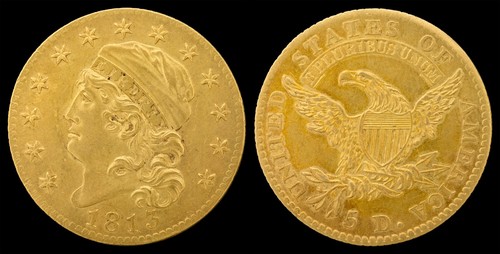
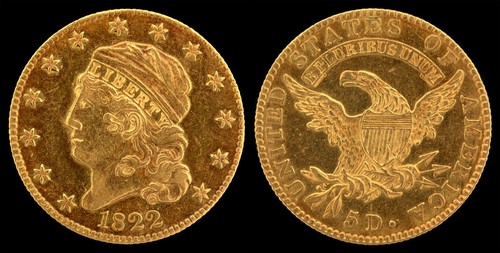
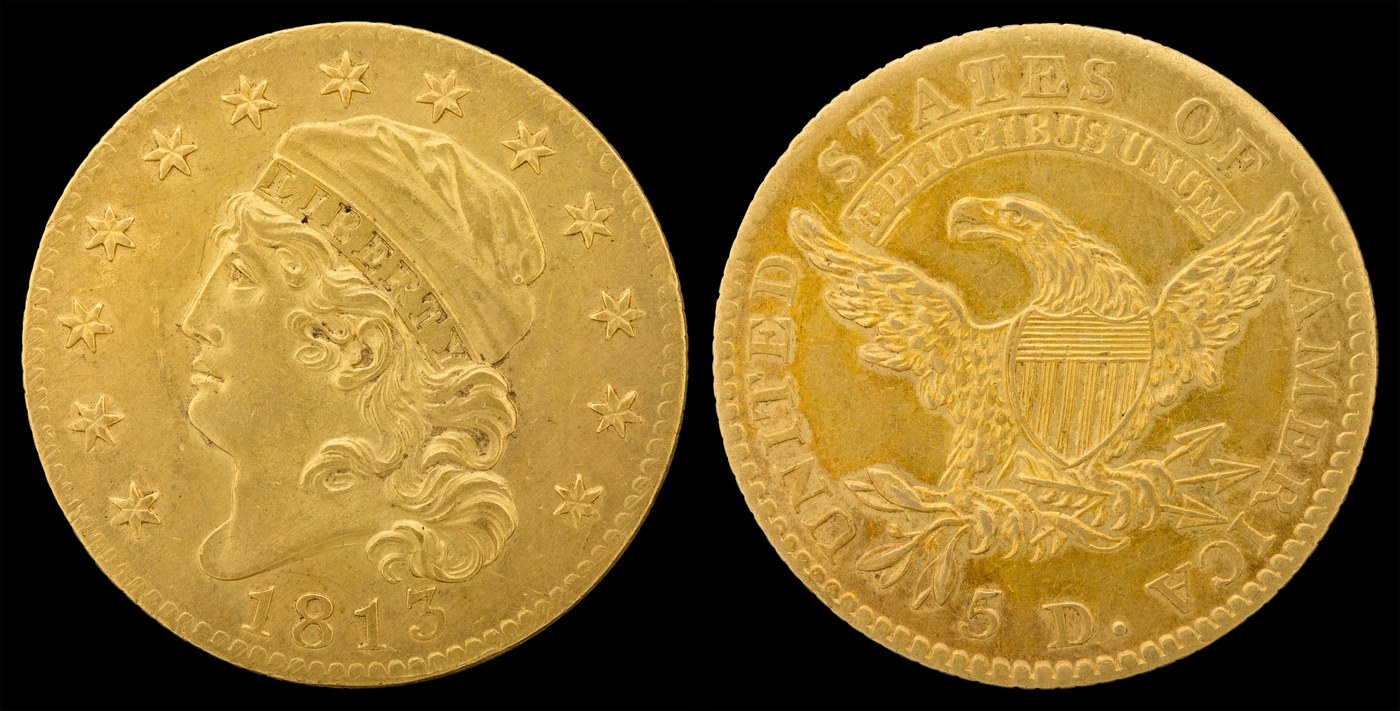
A U.S. five-dollar gold coin struck 1813–1834, showing a left-facing capped Liberty with stars and a heraldic eagle bearing a shield and E PLURIBUS UNUM.
- Country
- United States
- Denomination
- Five Dollars ($5)
- Metal
- Gold (.9167 fine)
Got a coin like this?
Identify any coin from a photo, free.
Overview
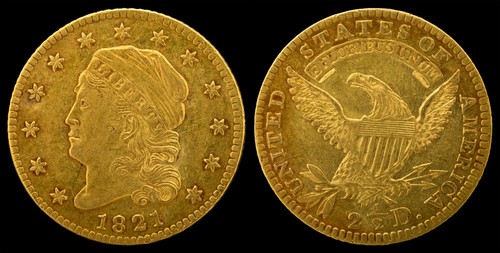
The Capped Head Half Eagle is a United States five-dollar gold coin produced at the Philadelphia Mint from 1813 through 1834. It is a refinement of the earlier Capped Bust design by John Reich, with Liberty now facing left in a cloth cap inscribed LIBERTY and encircled by stars, over the date. The reverse carries a spread-winged eagle with a shield on its breast, an olive branch and arrows in its talons, and the motto E PLURIBUS UNUM.
Because the gold in these coins was soon worth more than their face value, the great majority were melted, exported, or hoarded during their own era. As a result the type survives in very small numbers and is one of the classic rarity series of early American gold. The 1813 issue shown here is a first-year strike of the design and the large-diameter format that opened the series.
History & Background
The half eagle was among the first coins authorized under the Coinage Act of 1792 and had been struck in the Capped Bust format since 1795. In 1813 the design was modified into the Capped Head type, with Liberty's portrait reoriented to the left and the composition tightened. Engraving of the era is credited to John Reich and later Mint hands who reworked his motifs.
The series divides into two formats. The large-diameter Capped Head coins were struck from 1813 to 1829 at roughly 25 mm, while a reduced-diameter version of about 22.5 mm followed from 1829 through 1834. Throughout the run, rising gold prices meant the coins were worth more melted than spent, so mintages that survive are tiny relative to the numbers struck. The type ended in 1834 when the lighter Classic Head half eagle was introduced to bring the coin's gold value back below face value. The series is famous for containing several of the rarest U.S. coins, including the celebrated 1822 half eagle.
How to Identify
The obverse shows Liberty facing left in a soft cloth cap bearing the word LIBERTY, ringed by stars with the date below. The reverse depicts an eagle with a shield on its breast, holding an olive branch and arrows, with a ribbon reading E PLURIBUS UNUM above, the legend UNITED STATES OF AMERICA around, and the denomination expressed as 5 D. The photographed coin, dated 1813 with a left-facing capped Liberty, stars, and a shield-bearing eagle above E PLURIBUS UNUM, matches this type.
The coin was struck in gold of .9167 fineness and weighs about 8.75 grams, with a reeded edge. Diameter depends on year: large-diameter issues of 1813–1829 measure roughly 25 mm, while the 1829–1834 issues are near 22.5 mm; the 1813 date belongs to the large-diameter group. There is no mint mark, as every Capped Head Half Eagle was struck at Philadelphia. Star counts, letter spacing, and other die details vary by year and are used by specialists to attribute individual varieties.
Value & Collectibility
The Capped Head Half Eagle is a scarce and valuable series in every grade because so few examples survived contemporary melting. Even circulated, problem-free coins of the more available dates typically trade from the mid four figures into five figures, while higher-grade and rarer-date pieces routinely reach well into five and six figures at auction. Value is driven strongly by date, die variety, strike, and surface condition.
Among the dates, 1813 is generally considered one of the more obtainable issues of the type, though it remains a genuinely scarce and costly early gold coin. Later dates such as 1815, 1819, 1821, 1822, 1825/4, and 1828/7 include some of the greatest rarities in American numismatics. Because values are high and early gold is frequently counterfeited, third-party authentication is strongly recommended before any significant purchase.
Frequently asked questions
What is a Capped Head Half Eagle?
It is a United States five-dollar gold coin struck at the Philadelphia Mint from 1813 to 1834, showing a left-facing capped Liberty and a heraldic eagle reverse.
How is it different from the earlier Capped Bust Half Eagle?
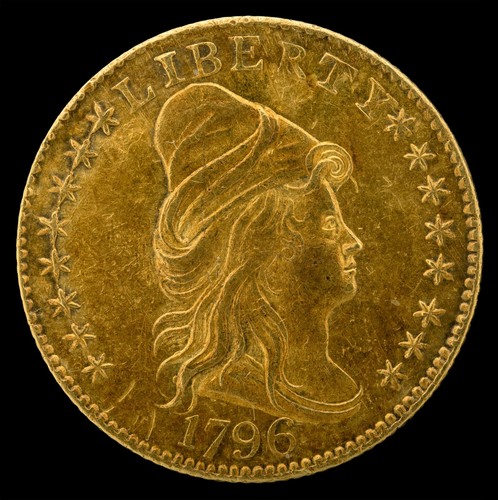
The Capped Head type, beginning in 1813, reoriented Liberty to face left and tightened the design, whereas the earlier Capped Bust half eagles (from 1795) show a right-facing bust.
What is it made of and how big is it?
It is struck in gold of .9167 fineness, weighs about 8.75 grams, and measures roughly 25 mm for 1813–1829 issues (about 22.5 mm for 1829–1834), with a reeded edge.
Does it have a mint mark?
No. All Capped Head Half Eagles were struck at the Philadelphia Mint and carry no mint mark.
Why are these coins so rare?
Because their gold content was soon worth more than five dollars, most were melted, exported, or hoarded during the period, leaving very few survivors today.
Capped Head Half Eagle guides
In-depth guides for identifying, valuing, and collecting Capped Head Half Eagle.