How to Identify the Kennedy Half Dollar
Identify a Kennedy Half Dollar by its JFK profile obverse and Presidential-eagle reverse, and use the date and edge to tell silver 1964 coins from clad ones.
Read the full Kennedy Half Dollar encyclopedia entry →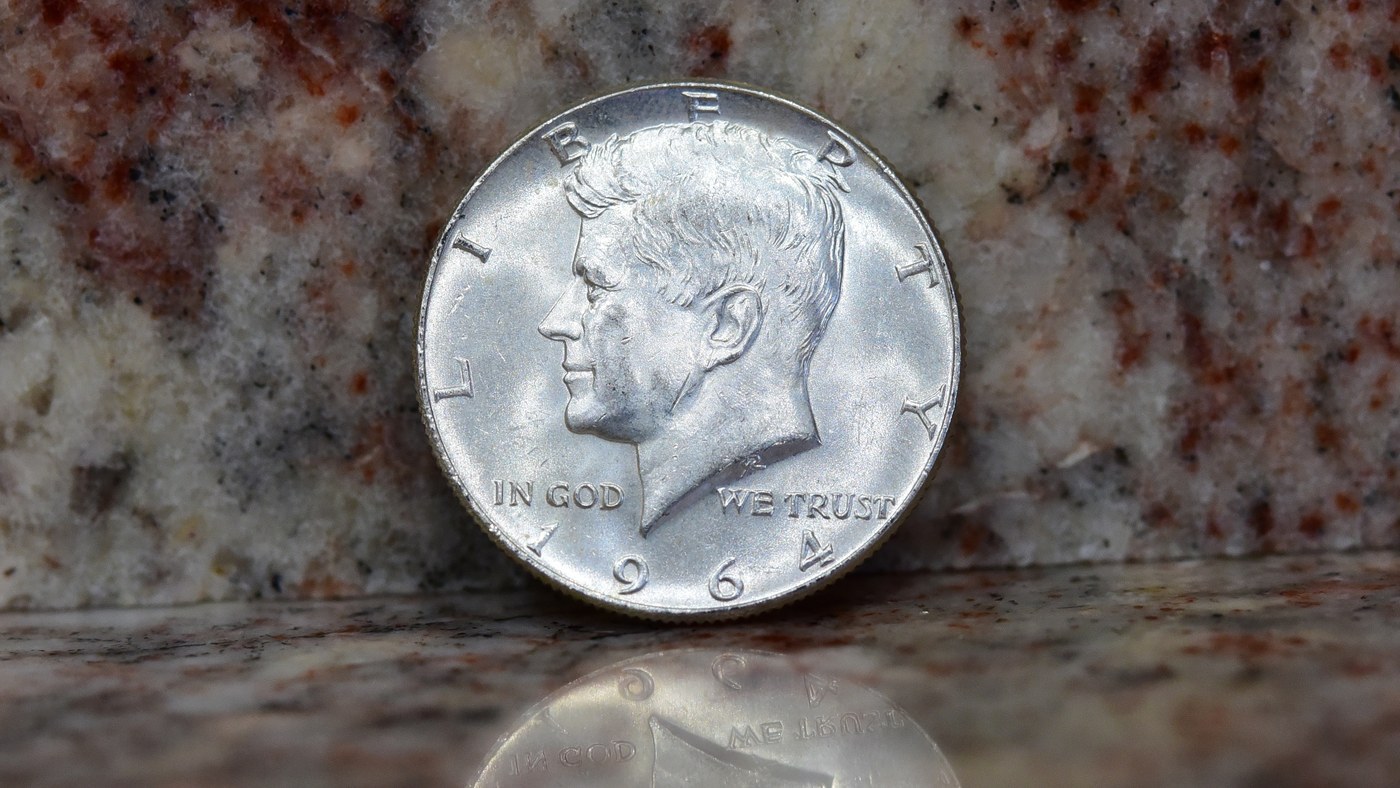
What It Is
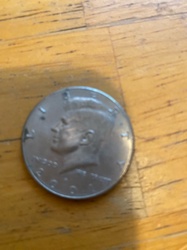
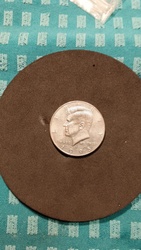
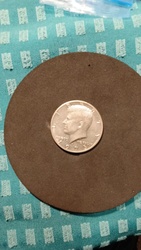
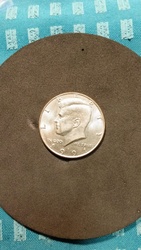
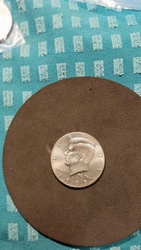
The Kennedy Half Dollar is a U.S. fifty-cent coin introduced in 1964 to memorialize President John F. Kennedy. The obverse portrait was modeled by Gilroy Roberts and the Presidential-eagle reverse by Frank Gasparro. The coin pictured is a 1964 example—the first year of issue and the only date struck in full 90% silver.
Obverse (Front)
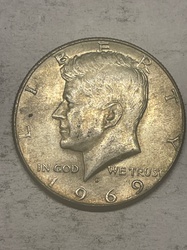
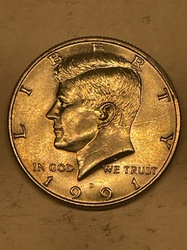
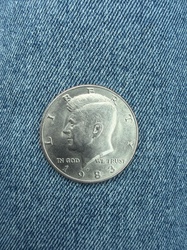
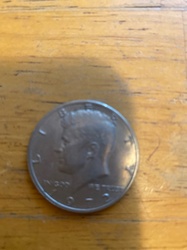
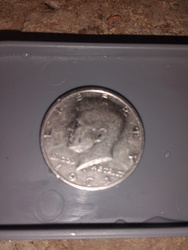
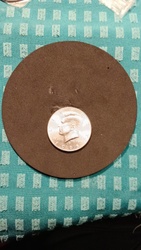
Look for a bare-headed profile bust of Kennedy. "LIBERTY" arcs across the top, "IN GOD WE TRUST" is split into two lines flanking the base of the neck, and the four-digit date sits at the bottom. The clean, modern portrait distinguishes it instantly from older half-dollar designs such as the Franklin or Walking Liberty types.
Reverse (Back)
The reverse shows a heraldic Presidential-seal eagle with a striped shield on its breast, clutching an olive branch and a bundle of arrows, surrounded by a ring of stars and clouds. "UNITED STATES OF AMERICA" curves around the top and "HALF DOLLAR" runs along the bottom, with a small "E PLURIBUS UNUM" scroll above the eagle. This eagle differs from the Franklin half's Liberty Bell and from earlier eagle designs.
Date, Metal, and Edge
The date is the fastest way to judge metal. A 1964 coin is 90% silver (about 12.5 g, roughly 30.6 mm); 1965–1970 coins are 40% silver and slightly lighter; 1971 and later circulating coins are copper-nickel clad. Tip the coin and inspect the edge: clad coins reveal a reddish copper stripe between silver-colored faces, while true silver coins show a uniform gray edge. On the 1964 issue the mint mark is on the reverse near the eagle's lower-left leg (a "D" for Denver, or none for Philadelphia); from 1968 it sits on the obverse above the date.
Look-Alikes and Cautions
Don't confuse the Kennedy half with the earlier Franklin Half Dollar (Benjamin Franklin obverse, Liberty Bell reverse) or with the smaller quarter and dollar coins. Be cautious of coins with altered dates meant to fake a 1964 silver piece, and of cleaned or polished surfaces that reduce value. Weigh questionable coins—silver 1964 pieces run near 12.5 grams—and, for any coin sold as a scarce variety or high grade, seek authentication from a reputable third-party grading service before paying a premium.
Frequently asked questions
How do I know if my Kennedy half is silver?
Check the date first: only 1964 is 90% silver and 1965–1970 are 40% silver, while 1971-and-later circulating coins are clad. Then look at the edge—a copper stripe means clad, a solid gray edge means silver.
Where is the mint mark located?
On 1964 coins the mint mark is on the reverse near the eagle's lower-left leg ("D" for Denver, none for Philadelphia). Starting in 1968 it moved to the obverse, just above the date.
How is a Kennedy half different from a Franklin half dollar?
The Kennedy half shows JFK's profile with a Presidential-eagle reverse; the Franklin half (1948–1963) shows Benjamin Franklin with a Liberty Bell reverse. Both are the same size, so use the portraits and reverse designs to tell them apart.
Could a 1964 date be faked?
Occasionally later clad coins are altered to appear as a valuable date, so verify weight (about 12.5 g for silver), inspect the edge for a copper stripe, and have any high-value claim confirmed by a professional grading service.
Kennedy Half Dollar identified by the community
Recent Kennedy Half Dollar coins identified with Coin Identifier.