
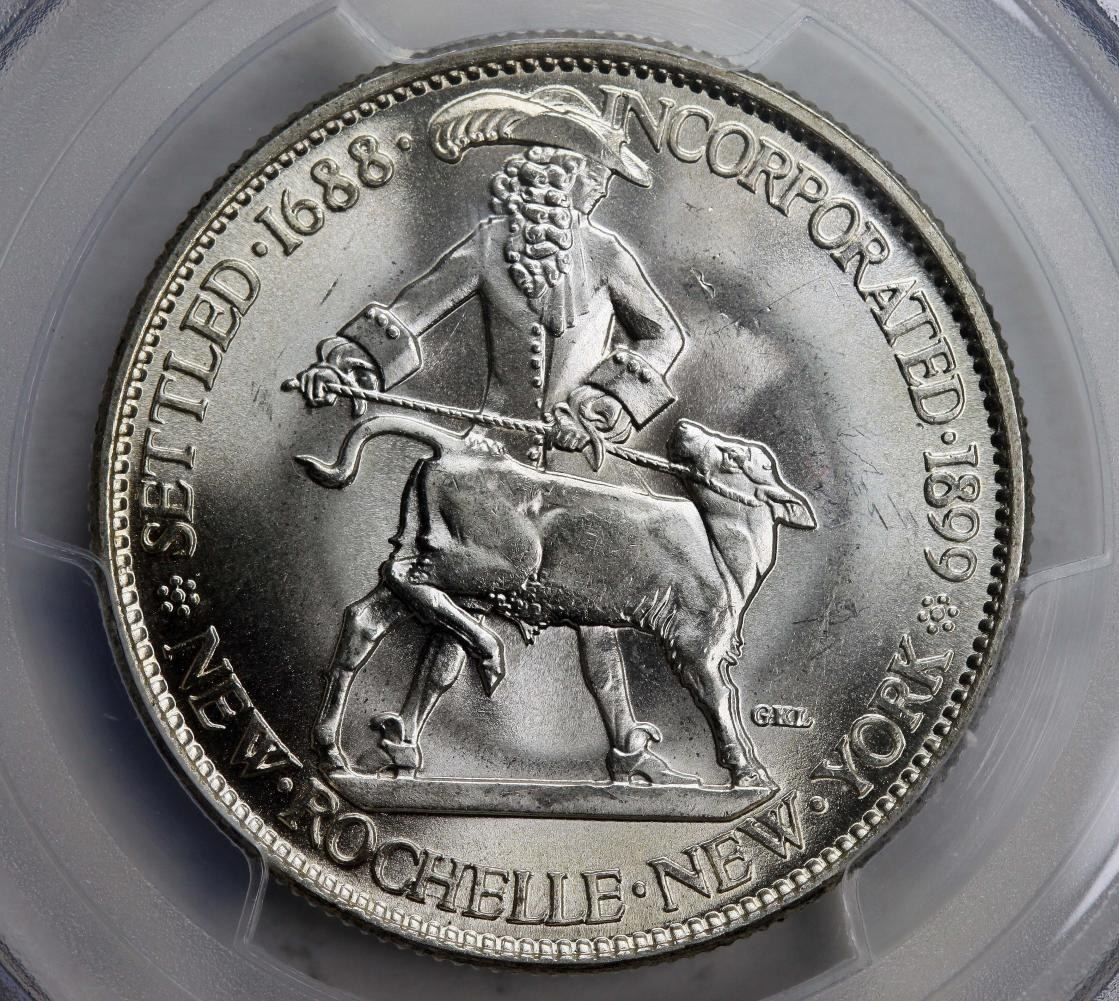
New Rochelle Half Dollar
A 1938 U.S. silver half dollar marking the 250th anniversary of New Rochelle, New York, with a Huguenot founder leading a fatted calf and a fleur-de-lis reverse.
- Country
- United States
- Denomination
- 50¢
- Metal
- Silver
Got a coin like this?
Identify any coin from a photo, free.
Overview
The New Rochelle Half Dollar is a United States silver commemorative fifty-cent piece struck in 1938 to mark the 250th anniversary of the founding of New Rochelle, New York, settled by French Huguenot refugees in 1688. It belongs to the "classic" commemorative half dollar series that ran from 1892 to 1954, in which Congress authorized special half dollars to honor an event and allowed them to be sold at a premium to raise funds.
The coin was designed by sculptor Gertrude K. Lathrop. Its obverse recalls a colonial land-grant condition tied to New Rochelle's founding, while the reverse carries a fleur-de-lis drawn from the city's seal, a nod to the settlers' French origins and the town's namesake, La Rochelle in France. The dual dates 1688 and 1938 on the coin frame the 250-year span it commemorates.
Struck in the standard 90% silver alloy of a regular half dollar, it was never meant for circulation and was distributed to collectors and the public through a local committee. Today it is collected as one of the more attractively designed and relatively low-mintage issues of the classic commemorative set.
History & Background
New Rochelle was founded in 1688 by Huguenots who had fled religious persecution in France, and who named their new settlement after La Rochelle, the French port many had left. When the community's 250th anniversary approached, Congress authorized a commemorative half dollar and the coins were struck in 1938 at the Philadelphia Mint. They were sold at a premium above face value, following the fundraising model used throughout the classic commemorative program.
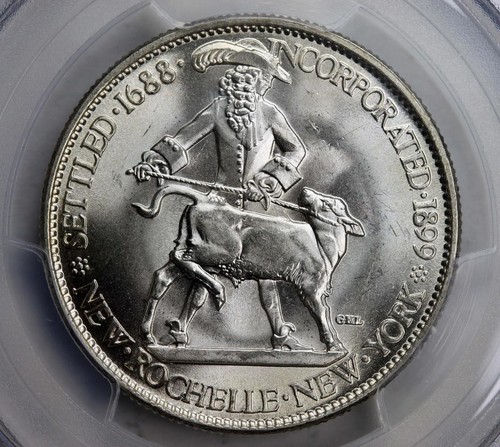
The design is the work of Gertrude K. Lathrop, a respected American sculptor. The obverse motif of a man leading a fatted calf refers to a condition attached to the 1689 land grant that established the town: the settlers were to present a fatted calf to the lord of the manor, John Pell, each year if it was demanded. The reverse fleur-de-lis is adapted from New Rochelle's municipal seal and points to the French Huguenot heritage of its founders.
Distribution was modest. Only a limited number of coins were released to collectors and the public, with a portion of the authorized total left unsold and returned to the Mint to be melted. Net distribution ran to roughly the mid-ten-thousands of pieces, making the New Rochelle issue one of the lower-mintage single-date commemoratives of its era and a coin that has long enjoyed steady collector demand.
How to Identify
Identify the type by its design and dual dating. The obverse shows a standing figure leading a fatted calf, together with the paired dates 1688 and 1938 that bracket the 250th-anniversary period. The reverse displays a stylized fleur-de-lis taken from the New Rochelle city seal, accompanied by the coin's statutory lettering, including the denomination and national inscriptions.
The coin is a standard-size half dollar: about 30.6 mm in diameter, roughly 12.5 grams, struck in 90% silver with a reeded edge. It was made only in 1938 and only at Philadelphia, so a genuine example carries no mint mark.
Because it is a commemorative rather than a circulating coin, neither side resembles the Walking Liberty half dollar being struck for circulation at the same time. The calf-and-figure obverse and the fleur-de-lis reverse are unlike any regular-issue coin, and together they are the surest identifiers of the type.
Value & Collectibility
As a classic silver commemorative with a relatively low distribution, the New Rochelle Half Dollar generally trades well above both its face value and its silver content. It is one of the more consistently sought pieces in the classic commemorative half dollar series, valued for its low mintage and its well-regarded design.
Uncirculated examples, which is how most survive since the coins were sold to collectors rather than spent, typically bring figures ranging from around the low hundreds of dollars into higher levels for premium-quality, well-struck pieces with original surfaces. Condition, eye appeal, toning, and third-party grade all strongly affect price.
Because values move with the collector market and with a coin's grade, any specific example should be checked against recent auction results and current price guides rather than a single fixed figure.
Frequently asked questions
What does the New Rochelle Half Dollar commemorate?
It marks the 250th anniversary of the founding of New Rochelle, New York, which was settled by French Huguenot refugees in 1688. The dual dates 1688 and 1938 on the coin frame that span.
What is the man and calf on the obverse about?
The figure leading a fatted calf refers to a condition of the 1689 land grant that created the town: the settlers were to present a fatted calf to the lord of the manor, John Pell, each year if demanded.
Why is there a fleur-de-lis on the reverse?
The fleur-de-lis is adapted from New Rochelle's city seal and references the French Huguenot heritage of the founders and the town's namesake, La Rochelle in France.
Is it made of silver?
Yes. Like a regular U.S. half dollar of the era, it is struck in 90% silver with 10% copper, about 12.5 grams and 30.6 mm across, with a reeded edge.
Does it have a mint mark?
No. The coins were struck only at the Philadelphia Mint in 1938, so genuine examples carry no mint mark.
New Rochelle Half Dollar guides
In-depth guides for identifying, valuing, and collecting New Rochelle Half Dollar.
Other coins you may enjoy
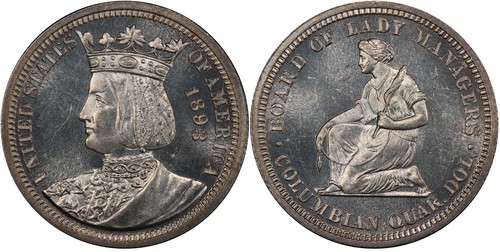
Isabella Quarter
1893
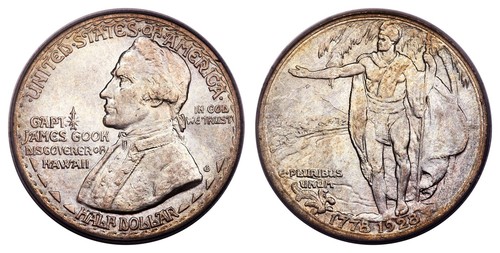
Hawaiian Sesquicentennial Half Dollar
1928
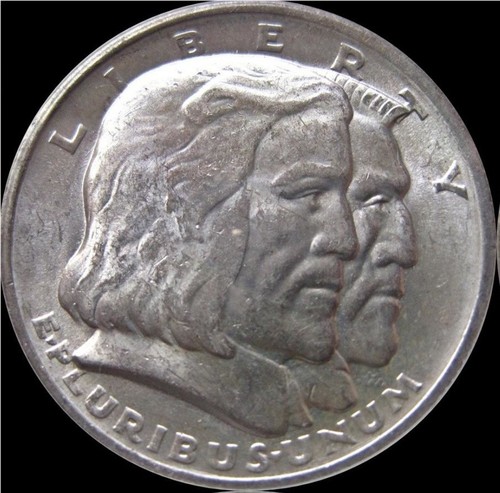
Long Island Tercentenary Half Dollar
1936
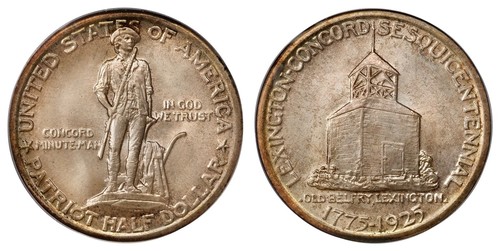
Lexington-Concord Sesquicentennial Half Dollar
1925
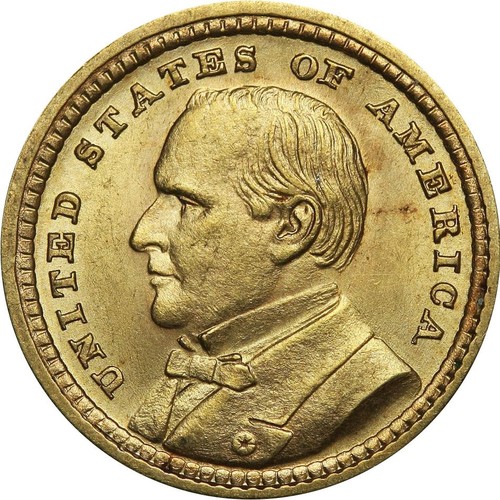
Louisiana Purchase Exposition Dollar (Jefferson)
1903
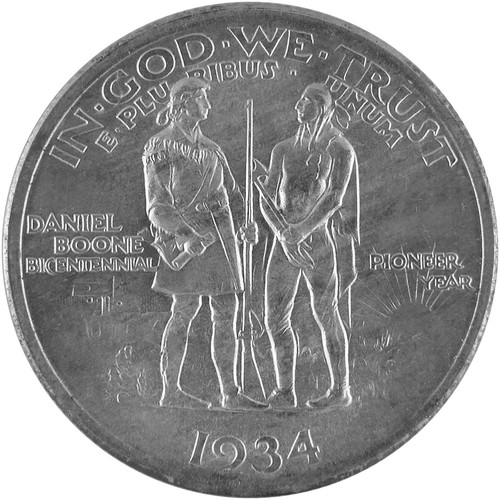
Daniel Boone Bicentennial Half Dollar
1934–1938
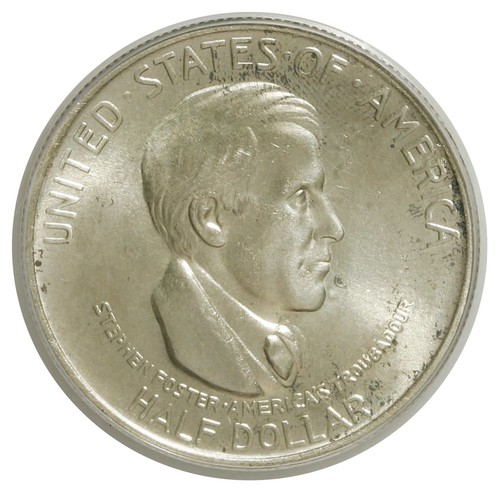
Cincinnati Music Center Half Dollar
1936
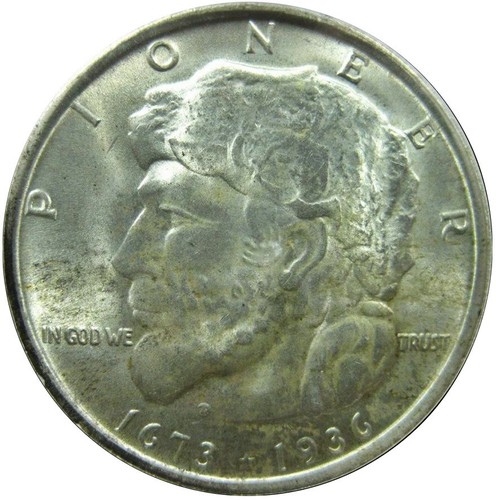
Elgin Illinois Centennial Half Dollar
1936
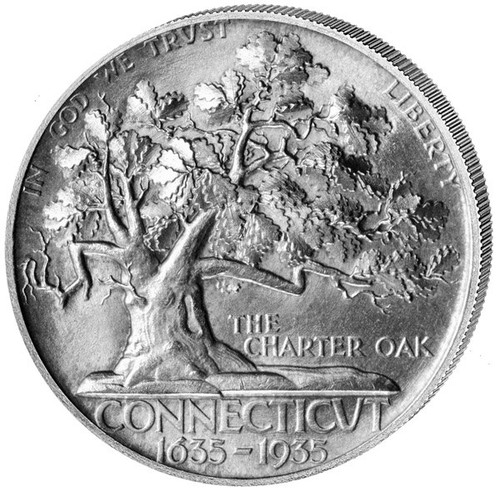
Connecticut Tercentennial Half Dollar
1935
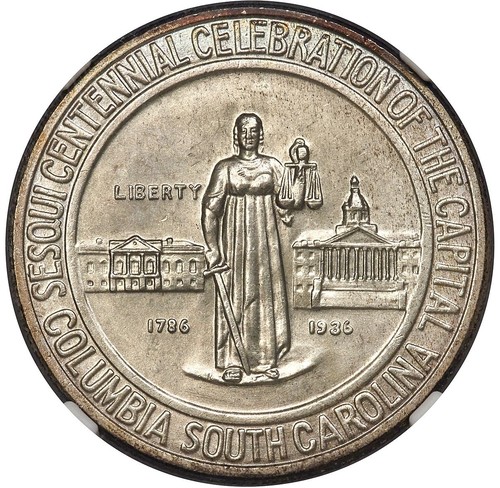
Columbia South Carolina Sesquicentennial Half Dollar
1936
Sesquicentennial of American Independence Quarter Eagle
1926
Pilgrim Tercentenary Half Dollar
1920-1921