
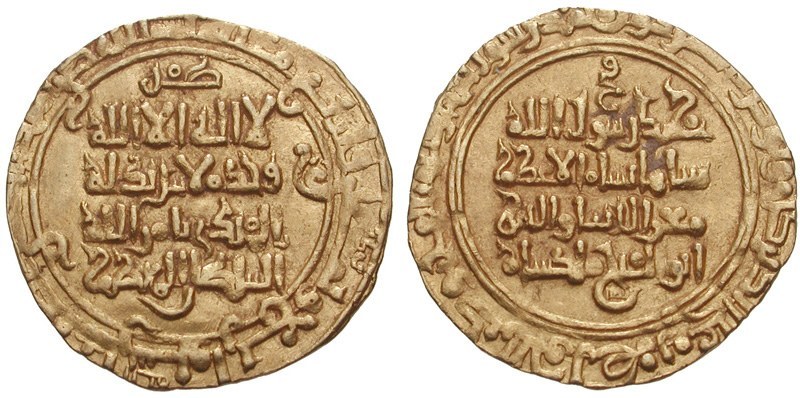
Gold Dinar of Malik Shah I
A hand-struck Seljuk gold dinar naming Malik Shah I (r. 1072–1092), covered in Arabic inscriptions with the ruler's titles and genealogy and an ornamental cartouche.
- Country
- Seljuk Empire
- Denomination
- Dinar
- Metal
- Gold
Got a coin like this?
Identify any coin from a photo, free.
Overview
The gold dinar of Malik Shah I is a medieval Islamic coin of the Great Seljuk Empire, struck during the reign of the sultan Malik Shah I (AH 465–485 / 1072–1092 CE). The example shown carries circular Arabic inscriptions on the obverse giving the ruler's titles and genealogy, and a central ornamental cartouche on the reverse framing the ruler's name and further legends.
The dinar was the standard gold denomination of the Islamic monetary world, ranking above the silver dirham and the copper fals. Under the Seljuks it functioned as a high-value coin used in major transactions, tribute, and the display of sovereign authority, and its gold content made it a prestige piece as well as a unit of exchange.
Like other Islamic coinage of its era, the coin is entirely aniconic: it bears no portrait or figural image, only Arabic calligraphy. Its legends express religious formulas together with the names and titles of the caliph and the Seljuk sultan, reflecting the way Seljuk coins acknowledged both the Abbasid caliph as spiritual authority and the sultan as temporal ruler.
History & Background
The Great Seljuks were a Turkic dynasty that rose to dominate much of the central Islamic world in the eleventh century, ruling a vast empire stretching across Iran, Iraq, and neighbouring lands. Malik Shah I, who reigned from 1072 to 1092 CE, presided over the empire at its height, a period associated with administrative consolidation and cultural achievement, guided in large part by his famous vizier Nizam al-Mulk.
Seljuk gold dinars of this reign follow the long-established epigraphic tradition of Islamic coinage. They typically name the reigning Abbasid caliph alongside the Seljuk sultan, a reflection of the political arrangement in which the Seljuks held real power while formally recognising the caliph in Baghdad as the head of the Muslim community. The titles and genealogy on the obverse assert the sultan's legitimacy and lineage.
A date within AH 465–485 corresponds to 1072–1092 CE, the span of Malik Shah's rule. Dinars of this era carry religious declarations together with the names of the authorities and, where legible, the mint and year of striking, serving both a devotional purpose and a practical role in proclaiming sovereignty across the territories where the coins circulated.
How to Identify
A gold dinar of Malik Shah I is a hand-struck gold coin, roughly circular but often slightly irregular in outline because each piece was struck individually from dies. Gold gives it a warm yellow tone that does not tarnish, distinguishing it at a glance from silver or copper Islamic coins. Striking can be uneven, so parts of the outer legend may run off the flan.
Both faces are covered in Arabic script rather than imagery. On this coin the obverse shows circular inscriptions carrying the ruler's titles and genealogy, generally a central statement surrounded by one or more concentric legends. The reverse features a central ornamental cartouche enclosing the ruler's name, with further inscriptions around it. The date is expressed in written Arabic words as part of the mint-and-date formula, not as numerals.
The surest way to attribute the coin is to read the Arabic legends. The religious formulas mark it as an Islamic issue, while the names and titles identify the Seljuk sultan and the acknowledged caliph, and the mint-and-date formula ties the piece to a specific place and year within Malik Shah's reign. The complete absence of any portrait, animal, or Latin lettering, together with the yellow colour of gold, separates it from later or non-Islamic coinages.
Value & Collectibility
Great Seljuk gold dinars are, as a class, scarce and valuable coins. They are struck in gold, associated with a major medieval dynasty, and named for a celebrated sultan, all of which make them sought after by collectors of Islamic and world gold coinage. As a rule they command far higher prices than the common copper fulus of the period.
Value within the series depends heavily on the mint, the exact date, the completeness and legibility of the inscriptions, the weight and purity of the gold, and the overall state of preservation. Well-centered strikes with full, sharp legends, pieces from scarcer mints, and coins with attractive, undamaged surfaces are more desirable than weakly struck, clipped, or worn examples where the names and titles cannot be read.
Because hand-struck gold dinars vary so much and because pricing turns on grade, mint, and specialist demand, figures should be treated as general context rather than fixed quotes. For a coin like this, a clear reading of the ruler's name, the mint, and the AH date is the single biggest factor in establishing both its attribution and its value, and authentication by a specialist is advisable given the value of the metal.
Frequently asked questions
Who was Malik Shah I?
Malik Shah I was a sultan of the Great Seljuk Empire who reigned from 1072 to 1092 CE. His rule is generally regarded as the high point of Seljuk power, aided by his famous vizier Nizam al-Mulk.
What is a dinar?
The dinar was the standard gold coin of the Islamic monetary system, ranking above the silver dirham and the copper fals. It was a high-value denomination used in major transactions and as a mark of sovereign authority.
How old is this coin?
It dates to Malik Shah's reign, AH 465–485 in the Islamic (Hijri) calendar, which corresponds to 1072–1092 CE, placing it in the late eleventh century.
Why are there no pictures on the coin?
Islamic coinage of this period is aniconic by design, avoiding portraits and figural images. Instead it carries Arabic inscriptions with religious formulas along with the names and titles of the ruler and caliph.
Are Seljuk gold dinars valuable?
Yes. As scarce medieval gold coins of a major dynasty named for a celebrated sultan, they are prized by collectors. Value depends on the mint, date, legibility, gold content, and preservation.
Gold Dinar of Malik Shah I guides
In-depth guides for identifying, valuing, and collecting Gold Dinar of Malik Shah I.
Other coins you may enjoy
Gold Dinar of Jaqmaq
1438-1453 CE
Ilkhanid Dirham
13th–14th century (Ilkhanate, c. 1256–1335 CE)
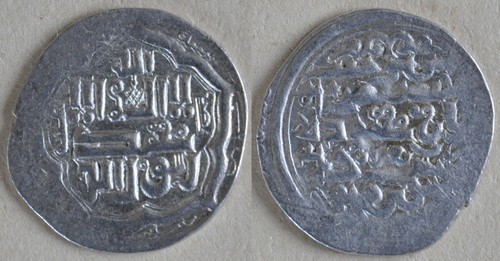
Ilkhanid Dirham of Ghazan
14th century (c. 1295-1304 CE)
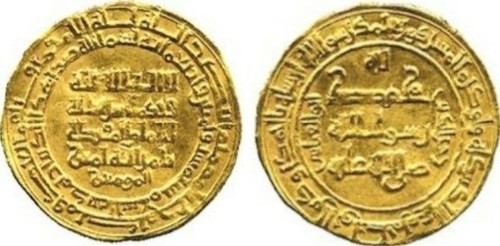
Gold Dinar of al-Muqtadi
c. 467-475 AH (1074-1082 CE)
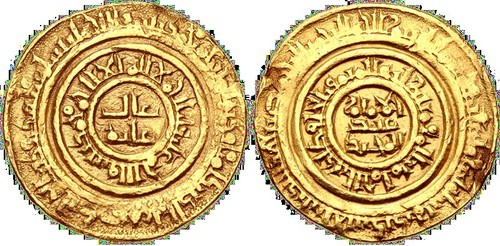
Gold Dinar of al-Hafiz li-Din Allah
AH 544 (AD 1149–1150)
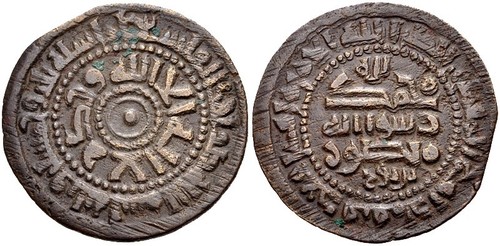
Samanid Dirham
9th–10th century CE (roughly AH 3rd–4th century)
Copper Fals of Barquq
1382–1389 CE (first reign of Barquq)
Copper Fals of as-Salih Salih
Mid-14th century CE (reign of as-Salih Salih, AH 752–755 / 1351–1354 CE)
Ilkhanid Dirham of Abu Said
c. 1316-1335 CE (AH 716-736)
Silver Dirham of Salm ibn Ziyad
c. 682-683 CE
Silver Dirham (LACMA M.2002.1.437)
8th century CE (roughly AH 80s–190s)
Imitation Abbasid Dirham
8th–9th century CE